Understanding Acid Corrosion and Its Control
This guide explains 산 부식, the Korean term commonly associated with acid corrosion, including its electrochemical mechanism, influencing conditions, material effects, inspection methods, and prevention strategies. Acid corrosion occurs when acidic environments accelerate metal dissolution and hydrogen-related damage, particularly in carbon steel, galvanized components, and vulnerable alloys. The article distinguishes acid corrosion from controlled acid etching, outlines safe laboratory and industrial practices, and presents an objective framework for selecting materials, inhibitors, coatings, monitoring methods, and maintenance controls.
What 산 부식 Means in Engineering
산 부식 is a Korean expression generally translated as acid corrosion. It describes the deterioration of a metal, alloy, coating, lining, or related construction material caused or accelerated by contact with an acidic medium. The medium may be an aqueous mineral acid, an acidic process solution, an acidified condensate, contaminated water, an acid-cleaning bath, an acidic gas stream, or a localized deposit that creates a low-pH environment at the material surface.
In ordinary language, 산 부식 may be used to describe any visible damage associated with acid exposure. In engineering, however, the term should be connected to a specific mechanism, material, environment, and time period. Acid corrosion is not simply a matter of measuring pH and deciding that a system is safe or unsafe. Corrosion behavior also depends on temperature, acid identity, concentration, dissolved oxygen, electrical conductivity, flow velocity, contaminants, surface condition, stress, geometry, and exposure duration. Two systems with the same measured pH can therefore experience very different corrosion rates.
Acid corrosion is primarily an electrochemical process. At anodic areas on a metal surface, atoms leave the solid structure and enter the solution as ions. At cathodic areas, a reduction reaction consumes electrons. In many acidic environments, hydrogen ions accept those electrons and form hydrogen gas. A simplified anodic reaction for iron is:
Fe → Fe2+ + 2e−
In a sufficiently acidic solution, the corresponding cathodic reaction may be represented as:
2H+ + 2e− → H2
Depending on the environment, oxygen reduction may occur at the cathode as well. The combination of these anodic and cathodic reactions can reduce wall thickness, damage surface integrity, contaminate process streams, weaken supports, and create conditions for leakage or rupture. The visible result may be uniform thinning, pitting, grooving, blistering, cracking, hydrogen damage, or discoloration, depending on the alloy and operating environment.
Why Acid Corrosion Requires Early Attention
Acid corrosion can progress without an obvious external warning. A vessel may retain its original shape while its wall gradually becomes thinner. A pipe may appear serviceable while local attack develops beneath deposits, at welds, near stagnant sections, or inside a crevice under a gasket. In other cases, the damage is visible but its cause is misunderstood. Red-brown scale, for example, indicates iron oxidation but does not by itself identify the original acid exposure, the corrosion rate, or the responsible process upset.
The greatest risk is often not chemical attack alone but the combination of chemical attack and incomplete decision-making. A material may be selected based on general acid-resistance information but installed in a system containing chlorides, oxidizers, abrasive particles, or thermal cycling. A coating may perform well during commissioning but fail after poor surface preparation. An inhibitor may reduce corrosion while creating downstream treatment, product-quality, or waste-management concerns.
Corrosion may also be intermittent. A component may spend most of its service life in a relatively mild liquid but experience concentrated acid during startup, shutdown, cleaning, evaporation, or an abnormal feed condition. Short-duration exposures can initiate pits or cracks that continue to grow during otherwise normal operation. For this reason, operating history is as important as the nominal design condition.
Effective control requires a complete corrosion-management cycle:
- Define the chemical and operating environment, including normal, transient, and upset conditions.
- Identify the susceptible materials and credible failure modes.
- Measure or estimate the corrosion rate using a suitable method.
- Select controls that address both the electrochemical mechanism and the operational cause.
- Verify performance through inspection, testing, monitoring, and documented review.
When the consequences of failure are significant, decisions should be reviewed by qualified corrosion, materials, process, mechanical-integrity, and safety professionals. A general material chart, an isolated pH reading, or a supplier’s broad compatibility statement should not be treated as a complete design basis.
The Electrochemical Mechanism Behind Acid Attack
Metal corrosion requires an electrochemical circuit. Four elements are usually involved: an anodic region, a cathodic region, an electrolyte, and an electronic path through the metal. Acidic solutions act as electrolytes and often increase conductivity, allowing corrosion currents to move more readily across the surface. Surface irregularities, inclusions, welds, deposits, and differences in oxygen concentration can create small anodic and cathodic areas.
On carbon steel, the anodic reaction commonly involves iron dissolution. Hydrogen-ion reduction can dominate the cathodic reaction in strongly acidic solutions, particularly when dissolved oxygen is limited. Where oxygen is present, oxygen reduction may also contribute. The balance between these reactions affects the morphology of the damage. Hydrogen-ion reduction can be associated with general dissolution and hydrogen entry, while oxygen concentration differences can support localized corrosion beneath deposits or within crevices.
Acid corrosion is strongly influenced by the stability of surface films. Some metals form protective oxides or passive layers that substantially reduce further attack. Stainless steels, nickel alloys, titanium, aluminum, and several other corrosion-resistant materials can rely on such films under suitable conditions. However, passivity is not guaranteed. Chloride ions, reducing acids, high temperatures, mechanical damage, crevices, contamination, and insufficient oxygen can destabilize or prevent the protective layer.
Acids can also interact chemically with corrosion products. A rust layer may appear protective in one environment but dissolve continuously in another. If the corrosion product is soluble, the metal surface remains exposed and the reaction can continue. If the product is porous or poorly adherent, it may trap liquid and generate under-deposit corrosion. The composition and physical structure of scale should therefore be considered during failure analysis.
Hydrogen can affect certain high-strength steels and other susceptible materials. In an acidic environment, atomic hydrogen may enter the metal rather than immediately combining into molecular hydrogen. Under appropriate conditions, this can contribute to hydrogen embrittlement, blistering, cracking, or loss of ductility. The likelihood depends on material strength, microstructure, stress, surface condition, acid chemistry, cathodic reaction conditions, and exposure duration. A component can therefore suffer a serious mechanical failure even when its average corrosion rate is not especially high.
Acid Corrosion Versus Acid Etching
The terms acid corrosion and acid etching are related but should not be treated as identical. Acid etching is a controlled surface-treatment process used to remove scale, activate a surface, create a texture, reveal a microstructure, or prepare a component for a subsequent operation. Acid corrosion usually refers to unintended or excessive deterioration during service, storage, handling, or processing.
| Characteristic | Controlled Acid Etching | Unintended Acid Corrosion |
|---|---|---|
| Primary objective | To modify or clean a surface under defined conditions | Usually an unwanted loss of material or performance |
| Process control | Specified chemistry, temperature, time, agitation, and rinsing | May involve changing or poorly understood exposure conditions |
| Inspection focus | Surface uniformity, roughness, dimensions, and cleanliness | Wall loss, pits, cracks, deposits, leakage, and residual damage |
| Typical conclusion | Acceptable when the intended surface condition is achieved | Requires root-cause analysis and corrective action |
Even a planned acid-treatment operation can create corrosion problems if concentration, temperature, dwell time, agitation, or rinsing is not controlled. Residual acid trapped in joints, threads, crevices, porous coatings, insulation, or dead legs can continue attacking the material after the nominal treatment has ended. Rinsing water can also become acidic or contaminated with dissolved metal and may spread damage to areas that were not originally part of the treatment.
Acid cleaning should therefore include a defined sequence for pre-cleaning, chemical exposure, neutralization where appropriate, rinsing, drying, inspection, and post-treatment protection. The sequence must be compatible with the material, gasket, lining, instrumentation, and waste-treatment system. A cleaning procedure designed for one alloy or one type of scale should not automatically be applied to a different construction material.
Materials Commonly Affected by 산 부식
Carbon and Low-Alloy Steels
Carbon steel is widely used because it offers mechanical strength, manufacturability, weldability, and comparatively low acquisition cost. It is nevertheless vulnerable to many acidic environments. Mineral acids can dissolve iron rapidly, especially when temperature rises, flow exposes fresh metal, or the solution contains species that prevent protective film formation.
Carbon-steel performance should not be judged by acid name alone. Concentration can change corrosion behavior significantly. Some acids become less aggressive at particular concentrations because of reduced water activity or the formation of protective films, while dilute solutions may be more damaging. These effects are chemical-system specific and require validated data rather than assumptions.
Low-alloy steels may provide improved strength or selected environmental resistance, but alloying additions do not automatically make them suitable for acid service. Higher strength can increase sensitivity to hydrogen-assisted cracking. Welding, heat treatment, hardness, and residual stress should be evaluated along with the bulk chemical composition.
Stainless Steels
Stainless steels depend on a chromium-rich passive film. They may perform well in certain oxidizing environments but suffer localized corrosion in chloride-bearing solutions, crevices, deposits, or weld-affected regions. A stainless grade that performs satisfactorily in one acid service may fail in another because of differences in temperature, impurities, aeration, and acid concentration.
Surface contamination by carbon-steel particles can create misleading rust staining and localized sites. Improper welding, heat tint, rough finishing, and inadequate post-weld cleaning can also reduce resistance. Material selection should therefore include fabrication condition, not merely nominal grade. Crevice design is particularly important because even a generally resistant alloy may experience severe attack in a narrow region where acid becomes concentrated and oxygen is depleted.
Aluminum and Its Alloys
Aluminum forms a protective oxide film in many environments, but strong acids or strongly alkaline solutions can dissolve or destabilize that film. Some acidic solutions cause rapid attack, while others may produce a more complex response depending on concentration and temperature. Galvanic contact with dissimilar metals can further complicate the assessment.
Aluminum equipment may also be vulnerable during cleaning, especially when an alkaline prewash is followed by an acidic step without proper control. The oxide film can be altered by chemical exposure, and localized damage may occur at fasteners, scratches, or areas with embedded particles. Alloy temper and fabrication condition should be included in the review.
Copper and Copper Alloys
Copper and its alloys may resist some nonoxidizing acids but can be vulnerable to oxidizing conditions, ammonia-containing environments, or combinations of acidity and dissolved oxygen. Selective leaching may affect certain brass alloys, changing composition and mechanical behavior even when general wall loss appears modest.
Acidic condensates in heat exchangers, cooling systems, and electrical equipment can also attack copper components where deposits retain moisture. The resulting corrosion products may contaminate fluids or create conductive paths on electrical surfaces. Compatibility must be evaluated for the complete system, including water treatment chemicals and dissimilar-metal connections.
Nickel Alloys and Titanium
Nickel alloys and titanium can provide strong resistance in selected acid services, but no alloy is universally resistant. Titanium, for example, depends on a stable oxide film and may be vulnerable in particular reducing acids or when fluoride-containing species are present. Nickel alloys vary widely in performance according to alloying additions and process conditions.
Specialty alloys can be highly effective, but they may introduce higher cost, difficult fabrication, welding requirements, limited availability, and potential galvanic interactions with adjacent carbon steel. Their use should be supported by application-specific data. A high-alloy material is not a substitute for process control when the environment is poorly characterized.
Polymers, Linings, and Composite Materials
Nonmetallic materials can offer useful resistance to acid corrosion, but they have their own limitations. A polymer may absorb chemicals, soften, permeate, swell, embrittle, or lose adhesion. Rubber linings may be damaged by temperature, mechanical impact, or poor bonding. Fiber-reinforced composites require attention to resin chemistry, permeation, liner integrity, structural design, and the possibility of acid reaching the reinforcement through cracks or pinholes.
Plastic components can also be affected by ultraviolet exposure, thermal cycling, and mechanical stress. A lining selected for liquid service may not be suitable for hot vapor service or for a system that alternates between acid and solvent. The expected pressure, vacuum, temperature, chemical concentration, and support arrangement should all be considered.
Key Variables That Accelerate Acid Corrosion
pH and Acid Concentration
Low pH often increases metal dissolution, but pH alone is insufficient to predict damage. The identity of the acid, concentration, dissociation behavior, buffering capacity, and presence of oxidizers or complexing agents all matter. Measurements should be taken at representative points because the bulk process value may not reflect conditions at a hot surface, dead leg, or deposit interface.
A solution can become more aggressive when evaporation concentrates the acid. Conversely, dilution can sometimes increase attack if it changes the balance between protective and nonprotective species. Sampling should account for stratification, intermittent flow, and the possibility that the most severe environment exists only during a process transient.
Temperature
Higher temperature commonly accelerates electrochemical reactions and diffusion. It may also reduce the stability of protective films, increase chemical activity, and intensify evaporation or condensation. Small temperature differences can create major changes in localized corrosion, especially in heat exchangers, reactors, acid-pickling systems, and exhaust-gas condensate zones.
Temperature cycling is significant because heating and cooling can repeatedly expand and contract coatings, linings, welds, and deposits. A coating that is chemically compatible at a constant temperature may crack or detach when exposed to repeated thermal changes.
Flow and Turbulence
Flow can either reduce or increase damage. A moving stream may remove deposits and improve uniformity, but high velocity can strip protective films and produce erosion-corrosion. Turbulence near elbows, valves, reducers, tees, pump outlets, and partially open control valves often creates localized attack. Very low flow can produce stagnant conditions, concentration cells, and deposit-related corrosion.
Suspended solids intensify the problem by mechanically removing films and coatings. Flow-induced vibration can add fatigue stress to a chemically weakened component. Design reviews should consider velocity distribution rather than relying only on the average line velocity.
Chlorides and Other Contaminants
Chloride ions are especially important for many stainless steels because they can destabilize passive films and promote pitting or crevice corrosion. Fluorides, sulfides, oxidizers, metal ions, and organic compounds may also change the reaction pathway. Process contamination should be investigated rather than dismissed as a minor variation.
Contaminants may enter through raw materials, recycled water, cleaning chemicals, atmospheric exposure, maintenance activities, or cross-contamination from another process line. A change in supplier or feedstock can therefore alter corrosion behavior even when the formal process recipe appears unchanged.
Stress and Fabrication Features
Residual stress from welding, cold forming, machining, or assembly can influence cracking. Welds may contain changes in microstructure, surface oxides, and geometry that affect local electrochemistry. Crevices under gaskets, deposits, clamps, insulation, or bolted joints can concentrate acid and restrict rinsing.
Sharp corners, incomplete weld penetration, undercut, lack of drainage, and rough internal surfaces may become preferred sites for attack. Fabrication inspection is therefore part of corrosion prevention. A sound material can still fail prematurely if it is assembled in a geometry that concentrates the environment.
Surface Condition
Rough surfaces retain moisture and contaminants more readily than properly finished surfaces. Scratches, inclusions, scale, machining marks, and damaged coatings can become initiation points. Surface cleanliness is particularly important when applying a lining or coating intended to isolate the metal from the process environment.
Typical Forms of Acid Corrosion Damage
- Uniform corrosion: relatively even thinning across a broad area, often associated with general acid exposure.
- Pitting: small, deep cavities that can penetrate a wall faster than general corrosion would suggest.
- Crevice corrosion: localized attack within shielded gaps where chemistry differs from the surrounding solution.
- Grooving: directional attack near flow disturbances, welds, deposits, or interfaces.
- Erosion-corrosion: combined chemical dissolution and mechanical removal caused by high velocity or suspended solids.
- Galvanic corrosion: accelerated attack on one metal when it is electrically connected to a more noble material in an electrolyte.
- Hydrogen damage: cracking, blistering, embrittlement, or reduced ductility associated with hydrogen entry and accumulation.
- Under-deposit corrosion: attack that develops beneath scale, sludge, biological matter, or process residue.
- Condensation corrosion: attack caused by acidic liquid films formed when acidic vapors condense on cooler surfaces.
- Selective dissolution: preferential removal of one alloying element, leaving a weakened or porous surface.
The same component may exhibit several forms at once. A pipe can experience general wall thinning in the main stream, pitting beneath deposits, and galvanic attack at a flange connection. Inspection planning must therefore consider multiple mechanisms rather than relying on one measurement method.
How Engineers Diagnose 산 부식
A reliable diagnosis begins with evidence collection. The investigator should document the component’s material, service history, process chemistry, temperature profile, flow conditions, maintenance events, cleaning chemicals, coating history, and location of damage. Samples of deposits or corrosion products may provide valuable information, but they should be collected and analyzed under controlled procedures.
Visual Examination
Visual inspection can identify discoloration, scale, blistering, coating failure, weld-related patterns, leakage paths, and deposits. It is a screening method, not a complete corrosion-rate assessment. Surface appearance should be photographed with a scale and linked to a location drawing or asset record.
Thickness Measurement
Ultrasonic thickness testing is commonly used to evaluate remaining wall thickness and identify trends over time. Accurate results depend on calibration, surface condition, probe selection, geometry, access, and operator competence. A single reading should not be interpreted without knowing the original nominal thickness, manufacturing tolerance, previous readings, and measurement uncertainty.
Localized pitting can be missed if measurement points are too widely spaced. Scanning methods, pit-depth gauges, radiography, or other targeted approaches may be needed when the surface is irregular or the expected damage is highly localized. Readings should be mapped so that future inspectors can return to comparable locations.
Corrosion Coupons
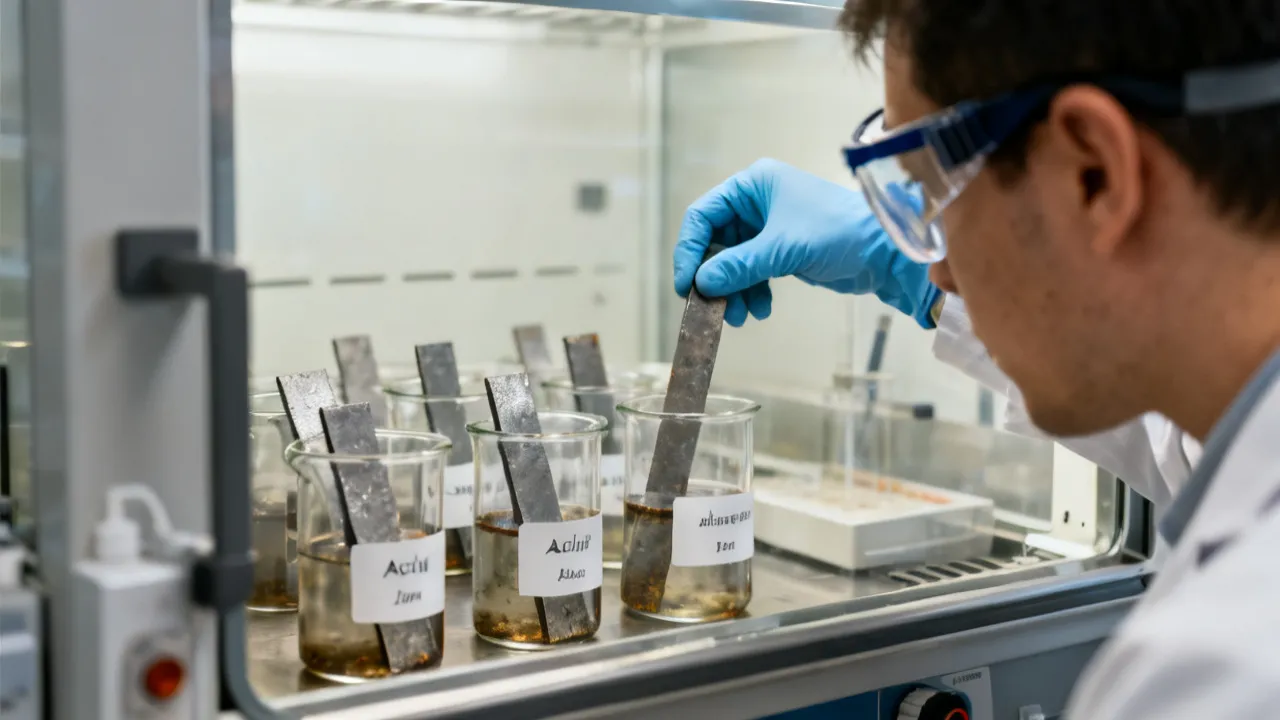
Coupons are small material samples exposed to the service environment for a defined interval. Their mass loss can provide an estimated average corrosion rate. Coupons are useful for comparing conditions and evaluating inhibitor performance, but they may not reproduce crevices, welds, stress, flow patterns, or deposits found in the actual equipment.
Coupon results should be interpreted with exposure time, surface preparation, cleaning method, and location in mind. A coupon placed in a well-mixed area may underestimate corrosion in a stagnant dead leg. Conversely, a coupon positioned directly in a turbulent region may not represent the average equipment condition.
Electrical Resistance and Electrochemical Monitoring
Electrical-resistance probes can track changes in a sensing element as it loses material. Electrochemical techniques may provide rapid indications of corrosion tendency under controlled conditions. These systems require appropriate installation, calibration, interpretation, and protection from process interference.
Monitoring data should be connected to process data. A sudden change in corrosion signal may correspond to a temperature excursion, acid-concentration change, loss of inhibitor, contamination event, or flow change. Monitoring is most effective when alarms have defined response actions rather than being recorded without review.
Surface and Failure Analysis
Metallographic examination, scanning electron microscopy, chemical analysis, hardness testing, and fracture analysis may be appropriate when cracking or unexpected failure is suspected. Such techniques should be selected according to the failure question. For example, identifying hydrogen-related damage requires more than measuring surface rust.
Corrosion-product analysis can help distinguish acid attack from atmospheric rusting, high-temperature oxidation, microbiologically influenced corrosion, or contamination. The analysis should be combined with morphology and operating history because chemical signatures alone may not prove causation.
Practical Risk Assessment Framework
An effective acid-corrosion assessment can be organized into five questions.
- What is the exposure? Identify acids, concentration ranges, pH, contaminants, water content, gas phase, liquid phase, and possible transient conditions.
- What is the material? Confirm the actual alloy, heat treatment, weld condition, coating, lining, gasket, and fabrication history.
- What damage is plausible? Consider uniform thinning, pitting, cracking, hydrogen damage, erosion-corrosion, and galvanic effects.
- What is the consequence? Evaluate pressure, temperature, toxicity, flammability, environmental release, production interruption, and personnel exposure.
- What evidence will confirm the decision? Select inspection, testing, monitoring, and documentation methods that can distinguish competing causes.
Risk ranking should account for both probability and consequence. A slow but widespread loss of wall thickness may be more significant than a visually dramatic stain, while a small crack in a high-pressure component may demand immediate action even if general corrosion is limited.
Uncertainty should also be treated explicitly. If the actual acid concentration is unknown, the material certificate is missing, or inspection coverage is poor, the assessment should not quietly assume favorable conditions. Uncertainty may justify additional sampling, conservative operating limits, temporary monitoring, or a shorter inspection interval.
Prevention and Control Strategies
1. Improve Material Selection
Material selection should begin with a complete process envelope rather than a single acid label. Define minimum and maximum concentration, operating and upset temperatures, oxygen exposure, chlorides, impurities, flow, pressure, cleaning cycles, and expected service life. Review compatibility data from recognized technical references, supplier documentation, laboratory testing, and field experience relevant to the exact environment.
Where uncertainty is material to safety or cost, conduct laboratory immersion testing, electrochemical testing, or a controlled field trial. Testing should use representative temperatures, concentrations, flow conditions, surface finishes, weld conditions, and exposure periods. A short test may screen candidates but cannot automatically predict long-term localized corrosion.
Material selection should include secondary components. Gaskets, bolts, weld filler metals, thermowells, valves, instruments, supports, and coating systems may experience a different exposure from the main vessel wall. Failure of a small accessory can cause leakage or introduce contamination even when the primary construction material remains intact.
2. Apply Coatings and Linings Correctly
Coatings and linings can separate the substrate from the acidic environment. Their performance depends on chemical compatibility, adhesion, film thickness, permeability, curing, temperature, impact resistance, and inspection. Surface preparation is often the decisive factor. Oil, moisture, salts, rust, mill scale, and dust can cause premature failure.
Coating selection should also consider holidays, pinholes, seams, penetrations, repairs, and differential movement. A lining that performs well on a flat wall may fail at a nozzle, weld, corner, or flange. Quality control should include surface-profile checks, environmental-condition records, dry-film-thickness measurements, and suitable holiday detection where appropriate.
When a coating fails, simply applying another layer over the failed surface may conceal active corrosion. The substrate should be examined, damaged areas repaired, and the cause of blistering, delamination, cracking, or permeation determined before recoating.
3. Use Corrosion Inhibitors Carefully
Inhibitors can reduce the corrosion rate by affecting anodic dissolution, cathodic reactions, or both. Their effectiveness depends on concentration, temperature, flow, metal type, acid composition, residence time, and surface condition. Inhibitor programs require dosing control and confirmation through coupons, probes, or other monitoring methods.
Inhibitors may introduce concerns involving product contamination, wastewater treatment, worker exposure, foaming, downstream catalysts, and compatibility with seals or coatings. They should not be treated as a substitute for correcting an avoidable process upset or selecting an unsuitable material.
4. Control Process Conditions
Reducing unnecessary acidity, limiting temperature excursions, preventing contamination, and eliminating stagnant zones can substantially reduce risk. Good drainage and effective rinsing are particularly important after acid cleaning or pickling. Equipment should be designed so that acidic liquids cannot remain trapped in low points, dead legs, crevices, or insulation systems.
Automated controls can help maintain acid concentration, temperature, inhibitor dosage, and flow within an approved range. Alarms should be linked to practical operating responses. For example, an out-of-range acid concentration may require reducing feed, diverting the stream, increasing dilution, or placing equipment in a controlled shutdown condition.
5. Manage Galvanic Couples
Where dissimilar metals are joined, engineers should evaluate the galvanic series for the specific electrolyte and operating condition. Electrical isolation, suitable gasket materials, protective coatings, and favorable area ratios may reduce galvanic attack. Coating only the cathodic member can sometimes worsen the condition if a small exposed anodic area remains connected to a large protected cathode.
6. Establish Inspection and Monitoring
Inspection intervals should reflect corrosion rate, uncertainty, component criticality, process variability, and regulatory requirements. Baseline measurements are essential. Repeated readings at mapped locations provide more useful information than occasional unstructured checks.
A sound monitoring program may combine visual examination, ultrasonic thickness measurements, corrosion coupons, electrical-resistance probes, process-chemistry records, inhibitor-residual checks, and targeted non-destructive examination. The data should be trended and reviewed after changes in feedstock, cleaning practice, temperature, flow, or equipment configuration.
7. Improve Drainage and Geometric Design
Design changes can eliminate many recurring corrosion sites. Sloped piping, self-draining vessels, accessible inspection openings, reduced dead legs, properly designed gaskets, smooth transitions, and avoidance of unnecessary crevices can reduce acid retention. Weld profiles should be suitable for the service, and internal attachments should not create inaccessible pockets.
Good design also supports maintenance. If a component cannot be inspected, cleaned, rinsed, or repaired effectively, its theoretical corrosion resistance may provide little practical benefit. Accessibility should be treated as an integrity requirement, not merely a convenience.
Safe Handling of Acidic Systems
Acid corrosion control is also a worker-safety issue. Acidic liquids, vapors, contaminated deposits, and corrosion products can present chemical, thermal, inhalation, and mechanical hazards. Safety procedures should be based on the specific substance and workplace assessment rather than generic assumptions.
- Consult the current safety data sheet and site chemical-management procedure.
- Use compatible gloves, eye protection, protective clothing, and respiratory controls where required.
- Verify ventilation and access controls before opening equipment or entering a process area.
- Isolate, depressurize, drain, and decontaminate equipment according to approved procedures.
- Use appropriate containment for sampling, rinsing, neutralization, and waste handling.
- Never mix acids with incompatible chemicals, particularly oxidizers, reducers, or alkaline materials, unless the process is specifically designed and controlled.
- Inspect lifting points, platforms, vessels, and supports because corrosion can weaken mechanical structures.
Emergency response planning should address splashes, vapor exposure, releases, damaged containers, and failure of acid-resistant materials. Eyewash and emergency-shower arrangements should be assessed in accordance with applicable workplace requirements and the hazards of the installation.
Opening equipment that has carried acid requires particular caution. Liquid trapped behind deposits or insulation may be released unexpectedly. Corrosion products may be unstable, contaminated, or sharp. Personnel should not assume that a drained vessel is chemically safe until it has been tested, rinsed, ventilated, and formally released according to the site procedure.
Comparison Table: Common Control Options
| Control option | Main benefit | Important limitation | Best application |
|---|---|---|---|
| Material upgrade | Can provide inherent resistance without relying on a surface film | Higher acquisition cost, fabrication constraints, and possible unexpected localized attack | New equipment or severe service where lifecycle value justifies the selection |
| Coating or lining | Separates the substrate from the acidic medium | Can blister, permeate, crack, or detach if preparation and inspection are inadequate | Large surfaces, tanks, ducts, and repair programs with controlled application |
| Corrosion inhibitor | May reduce attack without replacing the main construction material | Requires continuous control and may affect product or wastewater systems | Acid cleaning, stimulation, pickling, and other managed chemical processes |
| Process adjustment | Addresses temperature, concentration, contamination, or stagnation at the source | May affect production capacity or product specifications | Systems where chemistry and operating conditions can be changed |
| Monitoring and inspection | Provides evidence of actual performance and supports maintenance timing | Detects or tracks damage but does not inherently prevent it | Existing assets requiring evidence-based risk management |
| Design modification | Eliminates crevices, dead legs, poor drainage, and turbulence zones | May require significant engineering work or shutdown time | New designs and major maintenance projects |
Step-by-Step Guide to Investigating Acid Corrosion
Step 1: Secure the Area and Define the Immediate Risk
Before detailed examination, determine whether there is active leakage, pressure, elevated temperature, toxic vapor, structural instability, or a risk of sudden failure. Restrict access and follow the site’s emergency and isolation procedures. Investigation should never expose personnel to an uncontrolled hazard.
Step 2: Preserve Evidence
Record photographs, process readings, alarm histories, operating changes, cleaning records, and the exact location of damage. Avoid washing away deposits or removing failed coatings before samples and observations are documented, unless urgent safety action requires it. Record the sequence of events leading to discovery because timing can distinguish a gradual mechanism from a sudden process upset.
Step 3: Confirm the Material and Construction
Review drawings, purchase records, material certificates, weld documentation, coating specifications, repair history, and previous inspection reports. If records are uncertain, consider positive material identification or laboratory analysis. Incorrect assumptions about an alloy are a common source of corrosion-management errors.
Step 4: Characterize the Environment
Measure or obtain reliable records for pH, acid identity, concentration, temperature, pressure, flow, oxygen, chlorides, contaminants, and exposure duration. Include startup, shutdown, cleaning, maintenance, and upset conditions. Corrosion may occur during a short transient rather than during normal steady operation.
Step 5: Map the Damage
Mark the affected areas on drawings and record dimensions, depth, orientation, proximity to welds, flow direction, deposits, supports, and dissimilar-metal connections. Use appropriate non-destructive examination to identify hidden or subsurface damage. A map allows the team to compare damage morphology with equipment geometry and process flow.
Step 6: Develop Competing Hypotheses
Consider acid corrosion, chloride pitting, erosion-corrosion, galvanic attack, microbiologically influenced corrosion, fabrication defects, fatigue, stress-corrosion cracking, and mechanical damage. A disciplined investigation tests alternatives rather than confirming the first plausible explanation.
Step 7: Test the Most Relevant Variables
Laboratory testing may compare the actual material with candidate replacements, evaluate inhibitor performance, or reproduce a suspected transient. Test methods should be selected for the failure mode. Immersion testing may be useful for general corrosion, while stressed specimens or specialized electrochemical methods may be needed for cracking concerns.
Step 8: Select Corrective Actions
Corrective action may include replacing a component, changing the alloy, repairing a lining, improving drainage, reducing temperature, controlling contamination, changing the cleaning procedure, installing monitoring equipment, or revising inspection intervals. The best solution usually combines more than one measure.
Step 9: Verify and Document
After implementation, confirm that the process condition is within specification, the repaired surface meets quality requirements, and monitoring data show the expected improvement. Document assumptions, test results, responsible personnel, acceptance criteria, and follow-up dates.
Conditions and Requirements for a Reliable Corrosion-Control Program
| Requirement | Why it matters | Evidence to retain |
|---|---|---|
| Defined chemical envelope | Acid concentration and contaminants can change rapidly during operation | Process specifications, laboratory results, sampling records, and upset history |
| Verified material identity | Nominal appearance or outdated drawings may not represent the installed alloy | Material certificates, positive material identification, and fabrication records |
| Representative inspection baseline | Future corrosion-rate calculations depend on dependable starting measurements | Thickness maps, photographs, test locations, and calibration information |
| Qualified personnel | Incorrect examination or interpretation can lead to unsafe decisions | Training records, procedures, qualifications, and technical reviews |
| Compatible repair materials | Repairs can create new galvanic, thermal, or adhesion problems | Repair specifications, compatibility reviews, and quality-control reports |
| Change management | New chemicals, temperatures, suppliers, or cleaning methods may alter corrosion risk | Approved change records, updated risk assessments, and revised procedures |
| Follow-up verification | Controls must be shown to work under actual service conditions | Trend data, repeat inspections, inhibitor records, and closure reports |
Estimating Corrosion Rate and Remaining Life
For relatively uniform corrosion, an approximate corrosion rate can be calculated by comparing thickness measurements taken at the same location over a known period. The basic concept is the loss of thickness divided by exposure time. The result must be adjusted for measurement uncertainty, surface condition, original manufacturing variation, and the possibility that the selected location is not the most severely damaged area.
Localized corrosion requires greater caution. A measured average rate may be low while individual pits are deep. Remaining-life decisions should consider the minimum measured thickness, pit geometry, pressure design requirements, stress concentration, crack indications, and the reliability of inspection coverage. Fitness-for-service assessment may be required for pressure-containing components or structures with significant damage.
Corrosion rates should not be extrapolated blindly. A change in acid concentration, temperature, flow, inhibitor dosage, feedstock, or cleaning frequency can invalidate a historical trend. A stable trend is meaningful only when the relevant operating conditions have remained sufficiently comparable.
Standards, References, and Technical Sources
Corrosion programs should use recognized standards and authoritative technical references appropriate to the equipment and industry. Depending on the application, useful sources may include standards and recommended practices from ASTM International, the International Organization for Standardization, the American Society of Mechanical Engineers, the European Committee for Standardization, and AMPP, formerly known as NACE International.
These organizations publish methods for corrosion testing, coating preparation, thickness measurement, materials evaluation, cathodic protection, and inspection qualification. Pressure equipment may also be subject to national legislation, plant rules, and sector-specific requirements. The applicable edition and jurisdiction should be confirmed before a standard is cited in a design, inspection plan, or compliance document.
Manufacturer corrosion-compatibility data can be valuable, but it should be evaluated critically. Data generated for a pure chemical at room temperature may not apply to a contaminated, hot, flowing, or cyclic process stream. Supplier recommendations are strongest when the stated test conditions match the actual service envelope.
Technical references should be retained as part of the design and integrity record. When a material or coating is selected, the record should identify the source of the compatibility information, the relevant test conditions, the assumptions made, and the limits beyond which the recommendation no longer applies.
Common Mistakes in Managing Acid Corrosion
Relying Only on pH
pH indicates hydrogen-ion activity but does not identify all corrosive species or describe temperature, concentration, flow, or localized conditions. It is an important parameter, not a complete corrosion model.
Assuming Stainless Steel Is Universally Resistant
Stainless steels can suffer pitting, crevice corrosion, weld-related attack, and stress-corrosion cracking. Grade selection should be based on the complete chemistry and construction details.
Ignoring Cleaning and Shutdown Periods
Acid exposure may occur during descaling, pickling, chemical cleaning, commissioning, or preservation. A component designed for normal service can be damaged by a short, concentrated cleaning step.
Applying a Coating Over an Unsuitable Surface
Coatings cannot compensate for oil, salts, moisture, weak rust, poor profile, or incompatible previous layers. Surface preparation and application conditions must be verified.
Using a Single Inspection Method
Ultrasonic thickness testing may miss narrow cracks, while visual inspection may miss internal wall loss. A combination of methods is often required for credible diagnosis.
Changing Chemistry Without Formal Review
A new cleaning agent, feedstock, inhibitor, or operating temperature can alter corrosion behavior. Management-of-change procedures should be used before implementation.
Replacing Equipment Without Correcting the Cause
Installing a new component without addressing contamination, stagnation, poor drainage, or an incorrect cleaning method can lead to repeated failure. Replacement is sometimes necessary, but it should be combined with root-cause correction.
Economic and Operational Considerations
The economic evaluation of 산 부식 should include the full lifecycle rather than the initial purchase price alone. Relevant costs may include inspection, chemical treatment, coating renewal, replacement parts, production interruption, waste handling, energy use, and potential environmental or safety consequences.
A higher-alloy material may be justified if it reduces repeated shutdowns and maintenance. In another application, a correctly engineered lining may be more practical than replacing an entire vessel. For a short-duration chemical treatment, an inhibitor and controlled exposure procedure may provide a suitable solution, provided monitoring confirms performance.
Suppliers should be evaluated on technical evidence, traceability, compatibility data, application support, quality documentation, and after-sales service. Price comparisons are meaningful only when the materials, thicknesses, test conditions, warranties, delivery requirements, and inspection scope are equivalent. No supplier, price, or location-specific recommendation has been provided here; procurement decisions should be based on the verified service conditions of the intended application.
Reliability-centered decisions should compare not only expected corrosion rates but also the consequences of uncertainty. A more expensive material may be economical when inspection access is limited or failure consequences are severe. Conversely, a low-cost material may be appropriate in a well-monitored, low-consequence service with predictable chemistry and easy replacement.
Environmental and Waste-Management Issues
Acid corrosion control can generate spent acids, rinse water, metal-bearing sludge, contaminated absorbents, and used inhibitor solutions. These streams may require characterization, neutralization, treatment, recovery, or controlled disposal according to local environmental requirements.
Neutralization should be engineered rather than improvised. Mixing acids and bases can generate heat, splashing, vapor, or rapid gas evolution. Metals dissolved during corrosion may remain in the treated liquid even after pH adjustment. Waste classification should therefore consider both acidity and dissolved contaminants.
Material selection can support environmental performance by extending service life and reducing replacement waste, but the production and disposal impacts of coatings, specialty alloys, and chemical inhibitors should also be considered. A balanced lifecycle assessment is more informative than focusing on one stage of the equipment’s use.
Spill prevention is part of corrosion management. Storage tanks, transfer lines, pumps, valves, secondary containment, and drainage systems should be inspected for compatibility and integrity. A small leak from a corroded connection can damage concrete, structural steel, electrical equipment, or nearby drainage systems even when the released quantity is limited.
When Professional Review Is Necessary
Specialist review is strongly advisable when acid corrosion affects pressure-retaining equipment, load-bearing structures, toxic or flammable service, high-temperature systems, critical utilities, or components with uncertain material identity. It is also appropriate when cracking, rapid wall loss, repeated coating failure, hydrogen damage, or unexplained localized attack is observed.
An expert review should integrate process engineering, materials science, inspection, mechanical integrity, and safety. The objective is not merely to name the corrosion mechanism. It is to determine whether the asset remains fit for service, what controls are required, and how the organization will verify continued integrity.
Professional review is also valuable before changing a material or treatment method. A proposed repair may introduce galvanic couples, alter heat transfer, change product contamination risk, or create a new failure mode. Technical review before installation is generally less costly than discovering incompatibility after an unexpected shutdown.
FAQs About 산 부식
What is the English meaning of 산 부식?
산 부식 is commonly translated as acid corrosion. It refers to metal deterioration caused or accelerated by acidic conditions. Depending on context, it may also be discussed alongside acid attack, acid damage, or acid-induced corrosion.
Is 산 부식 the same as acid etching?
No. Acid etching is generally a planned and controlled surface-treatment operation. Acid corrosion usually describes unintended or excessive deterioration. Poorly controlled etching can, however, become a source of corrosion damage.
Does a lower pH always mean a higher corrosion rate?
Not necessarily. Lower pH often increases the tendency for metal dissolution, but corrosion rate also depends on acid identity, concentration, temperature, dissolved oxygen, impurities, flow, surface films, and material condition. Some concentrated acids can behave differently from dilute solutions.
Which metal is best for acid service?
There is no universally best metal. The appropriate choice depends on acid type, concentration, temperature, contaminants, flow, stress, fabrication method, and required service life. Carbon steel, stainless steel, nickel alloys, titanium, lined equipment, and nonmetallic materials each have specific application limits.
Can stainless steel prevent acid corrosion?
Stainless steel can resist many environments, but it is not immune to acid corrosion. Chlorides, crevices, deposits, weld conditions, high temperatures, and reducing acids can cause localized or general attack. The exact grade and service chemistry must be evaluated together.
How can acid corrosion be detected early?
Early detection may combine process-chemistry monitoring, visual examination, corrosion coupons, electrical-resistance probes, ultrasonic thickness measurements, and targeted non-destructive examination. The most suitable combination depends on whether the expected damage is general thinning, pitting, cracking, or erosion-corrosion.
Are corrosion inhibitors a complete solution?
Usually not. Inhibitors can reduce corrosion when properly selected, dosed, and monitored, but they may fail during temperature excursions, contamination, underdosing, poor mixing, or excessive flow. They should support, not replace, suitable materials, sound design, process control, and inspection.
What should be done if a corroded vessel is leaking?
Follow the site emergency procedure, isolate the source where safe, control access, and obtain qualified technical and safety support. Do not touch deposits, attempt an improvised patch, or enter the area without assessing chemical, pressure, vapor, and structural hazards.
Can a coating stop acid corrosion permanently?
No coating should be assumed permanent. Performance depends on chemical compatibility, surface preparation, application quality, thickness, permeability, temperature, mechanical damage, and inspection. Coatings require a defined maintenance and verification plan.
Why can corrosion occur during equipment shutdown?
Shutdowns can leave acidic liquid, condensate, deposits, or humid gas in low points and crevices. Oxygen concentration cells may develop, and residual chemicals can become concentrated as water evaporates. Preservation, drainage, rinsing, drying, and inspection procedures should address these conditions.
What information is needed before selecting a corrosion-resistant material?
At minimum, identify the chemical species, concentration range, pH, temperature, pressure, flow, contaminants, oxygen level, exposure duration, stress, welding condition, cleaning chemistry, and required service life. Equipment geometry and inspection access are also important.
Can acid corrosion happen in apparently neutral water?
Yes. Localized deposits, acidic condensates, microbial activity, dissolved gases, and concentration cells can create aggressive microenvironments even when a bulk sample appears near neutral. Sampling location and timing are therefore important.
Is rust proof that acid corrosion occurred?
No. Rust proves that iron-containing material oxidized, but it does not establish the cause. Atmospheric moisture, oxygenated water, galvanic effects, high-temperature oxidation, and several other mechanisms can produce rust. Morphology, chemistry, process history, and thickness data are needed for a reliable conclusion.
Conclusion
산 부식 is best understood as a system problem involving chemistry, materials, design, fabrication, operation, inspection, and safety. Acidic environments can dissolve metals, destabilize passive films, promote localized attack, and contribute to hydrogen-related damage. Yet the outcome is not determined by pH alone.
The most dependable strategy combines accurate exposure characterization, evidence-based material selection, sound design, controlled chemical use, qualified coating or lining application, effective monitoring, and documented maintenance. When the mechanism is uncertain or the consequence of failure is high, professional corrosion analysis should precede repair or continued operation.
By treating acid corrosion as a managed engineering risk rather than an isolated surface defect, organizations can make more defensible decisions about integrity, reliability, safety, environmental control, and lifecycle performance. The practical goal is not merely to select a material that survives a laboratory exposure. It is to create a complete system in which the chemical environment is understood, the equipment is inspectable, operating changes are controlled, damage is detected early, and corrective action is verified.