Understanding 산 부식 in Industrial Materials
This guide explains 산 부식, or acid corrosion, including its chemical mechanisms, visible forms, material-specific behavior, inspection methods, prevention strategies, and workplace safety requirements. Acid corrosion occurs when acidic environments promote electrochemical or chemical degradation of metals and other materials. The article distinguishes uniform attack, pitting, crevice corrosion, stress-related damage, and acid etching, while emphasizing that concentration, temperature, exposure time, impurities, flow conditions, and alloy composition determine severity. Practical recommendations are presented from an industrial materials perspective.
Executive Overview
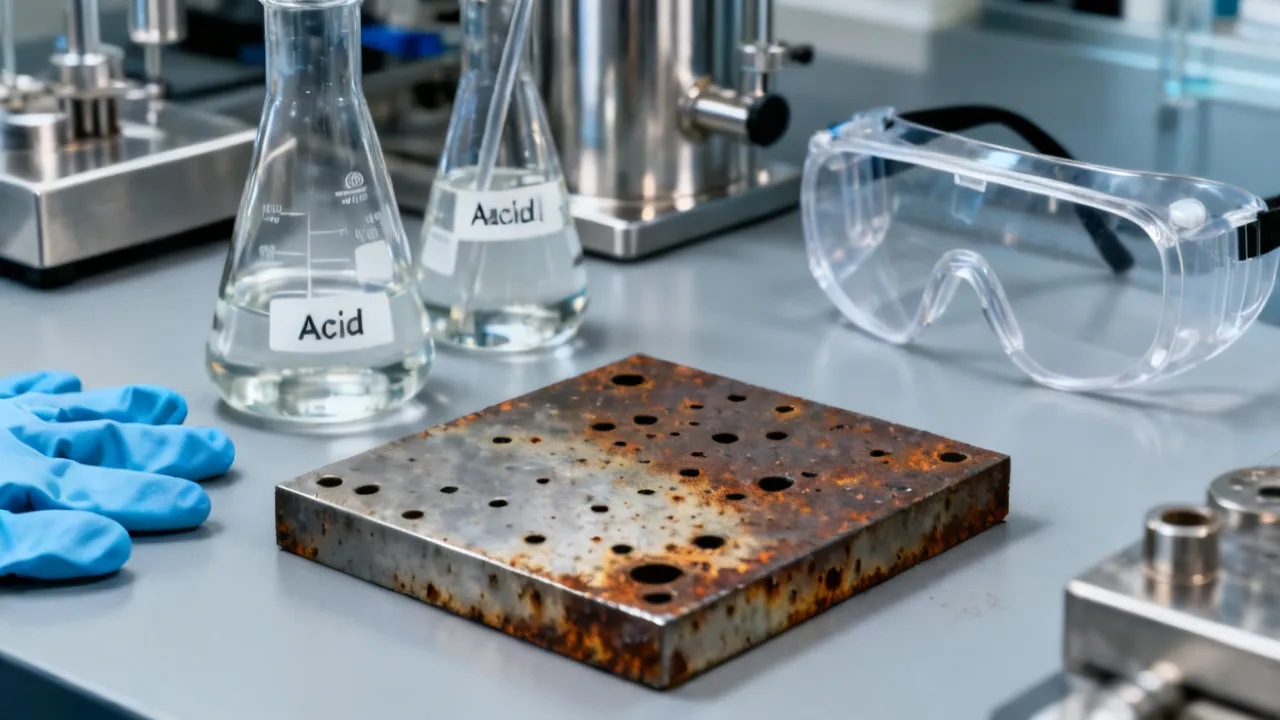
산 부식 is commonly translated as acid corrosion. It describes the deterioration of a material caused by contact with an acidic substance, including mineral acids, organic acids, acidic process liquids, acidified water, acid cleaning solutions, and condensed acidic vapors. Although the term is often associated with visible rust or metal loss, acid corrosion can also produce localized pits, cracks, surface roughness, discoloration, hydrogen-related damage, coating failure, loss of mechanical strength, and contamination of a process stream.
Acid corrosion is particularly important in chemical processing, mining, petroleum refining, power generation, food processing, metal finishing, battery manufacturing, semiconductor production, wastewater treatment, pharmaceutical manufacturing, and laboratory operations. Equipment exposed to acids may include storage tanks, pressure vessels, piping, pumps, heat exchangers, valves, filters, ducts, scrubbers, transfer hoses, fasteners, structural supports, and protective linings.
The most important engineering conclusion is that acid corrosion is not controlled by pH alone. Two environments with the same measured pH can produce very different corrosion rates because acid type, concentration, temperature, dissolved oxygen, oxidizing species, flow velocity, impurities, geometry, and the selected material all influence the reaction. A suitable investigation therefore requires more than a single pH reading.
From an industry expert’s perspective, the safest approach is to treat 산 부식 as a combined materials, process-control, inspection, maintenance, and safety issue. A corrosion-resistant alloy may perform well under one set of conditions and fail rapidly under another. Likewise, a coating that appears effective during short exposure may blister, undercut, permeate, or become damaged at a seam during long-term service.
- Identify the environment: Determine the acid, concentration range, temperature, pressure, contaminants, moisture conditions, and exposure duration.
- Identify the damage mechanism: Establish whether the problem is general metal loss, pitting, crevice attack, cracking, erosion-corrosion, hydrogen damage, galvanic corrosion, or a combination.
- Verify the material: Confirm the alloy grade, heat treatment, weld condition, surface finish, lining system, and fabrication history.
- Control the process: Reduce unnecessary temperature, residence time, acid concentration, stagnation, contamination, and uncontrolled chemical mixing.
- Inspect systematically: Use visual inspection as an initial step, then apply thickness measurement, surface examination, chemical analysis, or nondestructive testing as appropriate.
- Manage worker exposure: Acid corrosion control must never compromise chemical handling, ventilation, emergency response, or personal protective equipment requirements.
What 산 부식 Means
In technical use, acid corrosion refers to the chemical or electrochemical degradation of a material in an acidic environment. Metals are particularly vulnerable because corrosion commonly involves oxidation of metal atoms at an anodic area and reduction reactions at a cathodic area. In a simplified example, iron can lose electrons and enter solution as iron ions, while hydrogen ions may accept electrons and form hydrogen gas.
Anodic reaction: metal → metal ions + electrons
Cathodic reaction in an acidic environment: hydrogen ions + electrons → hydrogen gas
These equations are simplified representations rather than complete descriptions of every operating system. Oxygen reduction, reduction of oxidizing ions, microbial activity, and secondary chemical reactions may also contribute. Acidic solutions can remove protective oxide films, increase electrical conductivity, and accelerate the movement of ions between anodic and cathodic regions.
At a practical level, corrosion requires an electrochemical cell. The anodic region is where metal dissolves, the cathodic region is where a reduction reaction occurs, the electrolyte is the conductive liquid or moisture film, and the metallic structure provides an electrical path. Acidic environments often make the electrolyte more conductive and provide hydrogen ions that support the cathodic reaction. If a protective film is damaged, the exposed area may corrode rapidly while the surrounding surface acts as a cathodic area.
It is also important to distinguish acid corrosion from acid etching. Acid etching is a controlled surface-treatment process intended to remove a thin layer, improve adhesion, reveal microstructure, or prepare a surface for subsequent processing. Acid corrosion is uncontrolled or excessive degradation that reduces integrity, function, appearance, cleanliness, or service life. The chemical principle may overlap, but the engineering objective and process controls are different.
Why Acidic Environments Attack Materials
Many metals are thermodynamically capable of reacting with acidic solutions. In practice, the rate depends on whether a protective film forms and remains stable. Some stainless steels, aluminum alloys, nickel alloys, titanium alloys, and specialty materials rely on passive films for protection. An acid may dissolve, destabilize, or prevent the formation of that film.
Acidic liquids can also increase the conductivity of a surface moisture layer. This helps sustain electrochemical current between different areas of the material. A small defect, inclusion, weld discontinuity, or contaminated region may become anodic relative to a larger surrounding surface. The result can be highly localized attack even when the overall surface appears acceptable.
Acid solutions may attack metals through several related processes. Direct dissolution can remove metal atoms from the surface. Film dissolution can expose fresh metal underneath a protective oxide. Complex formation can keep dissolved metal ions in solution and prevent the formation of a protective deposit. Acid concentration can also change as water evaporates, creating a more aggressive liquid at a wall, flange, roof, or low point.
Several conditions commonly increase the likelihood of 산 부식:
- Elevated temperature, which often accelerates reaction kinetics.
- Long exposure or prolonged residence time.
- High acid concentration, although some acids show complex concentration-dependent behavior.
- Low-flow or stagnant zones where acidic liquid remains trapped.
- High flow velocity that removes protective films or creates erosion-corrosion.
- Chloride, fluoride, sulfide, or other aggressive contaminants.
- Dissolved oxygen or oxidizing species that change electrochemical behavior.
- Dissimilar-metal contact, which can create galvanic corrosion.
- Surface deposits that create differential aeration or crevice conditions.
- Residual stress, cold work, or unfavorable weld conditions.
- Repeated wetting and drying, especially where acidic residues become concentrated.
- Improper dilution, uncontrolled chemical mixing, or contamination during cleaning.
These factors interact. A material that performs adequately in a dilute, cool, continuously drained environment may experience severe damage in a warmer system with evaporation, deposits, and intermittent operation. A component may also remain intact during normal operation but fail during shutdown because acid remains trapped while temperature and concentration change.
Main Forms of Acid Corrosion
Uniform Corrosion
Uniform corrosion causes relatively even material loss over a broad surface. It is easier to detect and calculate than localized attack because the surface condition is comparatively consistent. Engineering decisions may be based on a measured corrosion rate, a design allowance, and the required service period. Nevertheless, uniform corrosion can become dangerous when wall thickness approaches a minimum allowable value.
Typical signs include general discoloration, a roughened surface, thinning over a large area, and a gradual reduction in pressure-containing capacity. Storage tanks, piping, heat exchangers, and process vessels may all experience this form when exposed to compatible or partially compatible acidic fluids.
A calculated average corrosion rate should not be treated as a guarantee of uniform behavior. If a component loses 0.2 millimeters per year on average, a localized area may lose several times that amount. Thickness measurements should therefore include enough locations to identify both broad thinning and concentrated attack.
Pitting Corrosion
Pitting is a localized form of corrosion that creates small cavities or deep holes. It is often more hazardous than uniform corrosion because a component may retain most of its original surface appearance while containing a critical penetration. Pits can initiate at inclusions, scratches, deposits, weld imperfections, or areas where a passive film has broken down.
Acidic conditions may enlarge existing pits or prevent repassivation. Chloride contamination is a well-known factor in localized corrosion of many stainless steels, but the exact response depends on alloy, temperature, potential, acid chemistry, and surface condition. Inspection should therefore focus on likely initiation sites rather than relying only on average thickness.
Pits often have a narrow opening and a wider cavity beneath the surface. This geometry can make visual detection difficult and can cause conventional spot-thickness readings to miss the deepest point. Ultrasonic thickness mapping, pit-depth measurement, close visual examination, and suitable surface preparation may be needed.
Crevice Corrosion
Crevice corrosion occurs in narrow gaps where liquid becomes stagnant and chemical conditions differ from those on the exposed surface. Common locations include gasket interfaces, lap joints, threaded connections, under deposits, flange faces, and fastener assemblies.
Inside a crevice, oxygen depletion and the concentration of aggressive ions can create a self-reinforcing environment. Acidification may occur within the crevice even when the bulk process liquid is less aggressive. Design improvements include reducing unnecessary gaps, selecting suitable gasket arrangements, improving drainage, avoiding deposit accumulation, and ensuring that inspection can reach concealed surfaces.
Crevice attack is especially important for passive alloys. The open surface may remain bright and apparently unaffected while severe corrosion develops under a gasket or deposit. During maintenance, removing a gasket or deposit may reveal damage that was not visible during normal operation.
Galvanic Corrosion
When two dissimilar conductive materials are electrically connected in an electrolyte, one may become the anode and corrode preferentially. Acidic solutions often provide sufficient conductivity for this process. The risk increases when a small anodic area is connected to a large cathodic area.
Examples include carbon-steel fasteners attached to stainless-steel equipment, copper components connected to aluminum, or a metallic fitting installed in a lined vessel where the lining has been damaged. Prevention may involve material compatibility review, electrical isolation, suitable fastener selection, coatings, drainage improvement, and avoiding unfavorable area ratios.
Coatings require special care. If a coating on the anodic material is damaged while the cathodic material remains exposed, localized attack can become more severe at the defect. Electrical isolation must also be maintained after maintenance, because a replacement bolt, instrument, or temporary clamp can unintentionally reconnect dissimilar metals.
Erosion-Corrosion
Erosion-corrosion combines chemical dissolution with mechanical removal of protective films. High velocity, turbulence, impingement, suspended solids, sharp elbows, control valves, and pump discharge zones can be vulnerable. Acidic liquids may soften or remove surface films, while fluid movement exposes fresh material.
Inspection should consider process hydraulics, not only chemical composition. A material may be chemically acceptable under static conditions but unsuitable at a high velocity or at a point where flow changes direction abruptly. Changes in pump operation, production rate, pipe diameter, or valve position can change the damage rate without changing the acid itself.
Stress Corrosion Cracking
Stress corrosion cracking occurs when a susceptible material is exposed to a particular environment while under tensile stress. The stress may result from applied loads, residual welding stress, forming, thermal gradients, or assembly conditions. Cracks can grow with limited general metal loss, making this mechanism difficult to identify through ordinary visual inspection.
Acidic environments can contribute to cracking in certain material and process combinations. The susceptibility is not universal; it depends on alloy, heat treatment, stress level, temperature, acid chemistry, contaminants, and electrochemical conditions. Engineering assessments should avoid broad claims that any acid will crack any metal.
Cracking is particularly serious because a small flaw can grow through a pressure boundary or load-bearing section. When cracking is suspected, ordinary thickness measurement may be insufficient. Dye penetrant, magnetic particle, ultrasonic crack examination, radiography, metallography, or fracture-mechanics analysis may be appropriate.
Hydrogen-Related Damage
Some acid-metal reactions generate atomic hydrogen at the material surface. A portion may combine into molecular hydrogen and leave as gas, while some hydrogen can enter the metal. In susceptible high-strength steels and other materials, absorbed hydrogen may contribute to embrittlement, blistering, cracking, or loss of ductility.
The risk depends on material strength, microstructure, surface condition, applied stress, acid chemistry, poisons or recombination inhibitors, temperature, and exposure time. When high-strength components, springs, fasteners, or stressed pressure parts contact acidic media, hydrogen-related damage should be considered during material selection and failure analysis.
Hydrogen damage may continue to develop after the component has been removed from the acid. Delayed cracking is possible in susceptible materials, so recently exposed high-strength parts should be handled and evaluated carefully. Repair welding, grinding, or mechanical loading should not begin until the potential for hydrogen-related damage has been assessed.
Acid Types and Their Typical Engineering Considerations
Different acids create different corrosion environments. The name of an acid alone is not sufficient for material selection, but several broad observations are useful.
| Acid or acidic environment | Important variables | Typical engineering concerns |
|---|---|---|
| Hydrochloric acid | Concentration, temperature, chloride level, oxygen, alloy grade | Rapid attack on many common steels; localized corrosion and hydrogen-related effects may occur in susceptible materials. |
| Sulfuric acid | Concentration, temperature, oxidizing conditions, water content | Corrosivity can change substantially with concentration; material performance should be confirmed for the exact operating range. |
| Nitric acid | Concentration, temperature, impurities, passive-film stability | Some stainless steels perform well under suitable conditions, while contamination or unfavorable conditions can undermine passivity. |
| Hydrofluoric acid | Concentration, temperature, moisture, material composition | Highly hazardous to personnel and capable of attacking materials that resist other mineral acids; specialist design and emergency planning are essential. |
| Phosphoric acid | Impurities, temperature, concentration, deposits | Behavior varies with contaminants and process conditions; deposits can create localized environments. |
| Acetic and other organic acids | Acid strength, water content, temperature, oxygen, biological activity | Weak acids can still cause significant damage when concentrated, heated, or combined with other contaminants. |
| Acidic condensate | Gas composition, dew point, moisture, surface temperature | Thin moisture films may produce localized corrosion in exhaust, ventilation, combustion, or process equipment. |
| Acid cleaning solutions | Cleaning time, inhibitor use, temperature, agitation, rinsing, residue | Short-term cleaning can create severe attack if the wrong material, concentration, or contact time is used. |
This table is a screening aid, not a substitute for corrosion testing or a qualified materials compatibility assessment. Product data, laboratory results, industrial experience, and recognized standards should be reviewed before final selection. Mixtures require particular caution because one acid may alter the behavior of another, and contaminants can be more aggressive than the principal chemical.
Material Behavior in Acidic Service
Carbon Steel
Carbon steel is widely used because of its availability, strength, and fabrication advantages. It can, however, experience substantial metal loss in many acidic environments. The apparent corrosion rate may be influenced by temperature, flow, acid concentration, inhibitors, deposits, and the presence of oxygen or other oxidizing species.
Carbon steel may remain suitable where corrosion allowances, lining systems, inhibitors, process controls, and inspection programs are properly established. It should not be selected solely because an acid is described as dilute. The actual range of concentration and operating upset conditions must be considered. Low-cost carbon steel can become expensive over the lifecycle if frequent replacement, leakage, contamination, or shutdowns occur.
Stainless Steel
Stainless steel depends on a chromium-rich passive film for resistance. Acids, chlorides, deposits, welding effects, and elevated temperatures can destabilize that film. Austenitic, ferritic, duplex, and precipitation-hardening grades do not behave identically.
Welded areas deserve particular attention. Heat-affected zones, weld discoloration, iron residues, and inadequate post-weld cleaning may create sites for localized attack. A higher alloy number is not automatically a complete solution; the material must be evaluated for the actual chemistry and fabrication condition.
Surface cleanliness is also important. Carbon-steel grinding dust, embedded iron particles, workshop contamination, and chloride-bearing residues can damage the passive condition of stainless steel. Pickling, passivation, electropolishing, or other treatments may be appropriate in some applications, but they must be selected and controlled by competent personnel.
Nickel Alloys
Nickel-based alloys can provide strong performance in selected acidic environments, particularly where ordinary stainless steels are inadequate. Their resistance varies significantly by alloy and acid combination. They may be selected for severe chemical-processing applications, but cost, fabrication requirements, welding procedures, and susceptibility to particular contaminants must be evaluated.
Nickel alloys can also have limitations involving weld heat-affected zones, chloride-bearing environments, sulfur compounds, or high-temperature reducing conditions. Their use should be based on specific data rather than the general assumption that nickel alloys are resistant to every acid.
Aluminum Alloys
Aluminum forms a protective oxide film in many environments, yet that film is vulnerable to certain acids and alkaline solutions. Localized attack, surface discoloration, and rapid dissolution may occur under unsuitable conditions. Contact with dissimilar metals in an acidic electrolyte can add galvanic risk.
Aluminum equipment should be protected from acidic condensates and residues even when the primary process is not strongly acidic. Small amounts of acid trapped beneath a gasket, label, bracket, or deposit can create a concentrated local environment.
Copper Alloys
Copper and copper alloys can show useful resistance in some organic or mildly acidic systems, while oxidizing acids and certain contaminants may cause significant attack. The alloy composition matters, particularly where dezincification, erosion, or deposit-related effects are possible.
Copper ions released into a process stream may also affect product quality, catalysts, biological systems, or downstream equipment. Material selection should therefore consider both structural corrosion and contamination consequences.
Titanium
Titanium often performs well because of its stable oxide film, but it is not universally resistant. Reducing acids, fluoride-containing environments, high-temperature conditions, and crevice chemistry may create serious limitations. Titanium selection requires attention to the exact environment rather than general reputation.
Polymers, Elastomers, and Linings
Nonmetallic materials can provide valuable protection against acids, but they have their own failure modes. Chemical swelling, softening, embrittlement, permeation, cracking, blistering, loss of adhesion, and temperature-related degradation are possible. A polymer that resists an acid at room temperature may not remain suitable at elevated temperature or under pressure.
Elastomer compatibility is especially important at gaskets, seals, pump diaphragms, expansion joints, and flexible hoses. A seal may retain its shape initially but lose elasticity, become brittle, or extrude under pressure after prolonged chemical exposure. The concentration, temperature, compression, and cyclic movement should all be included in the assessment.
Lining systems must be evaluated at seams, corners, penetrations, welds, supports, and areas exposed to mechanical impact. Inspection should include adhesion, thickness where applicable, holiday detection, and evidence of underfilm attack. A lining should not be regarded as a permanent substitute for inspection of the underlying pressure boundary.
Variables That Control Corrosion Rate
A professional corrosion assessment begins by documenting the complete operating envelope. The following variables are especially important:
- Acid identity: Record the chemical name, purity, mixture composition, and possible decomposition products.
- Concentration: Document normal, minimum, maximum, startup, shutdown, cleaning, and upset concentrations.
- Temperature: Include bulk temperature, wall temperature, local hot spots, and heat-up or cool-down cycles.
- Exposure duration: Consider continuous, intermittent, batch, splash, immersion, and condensation exposure.
- Flow conditions: Record velocity, turbulence, suspended solids, impingement, and stagnant zones.
- Contaminants: Identify chlorides, fluorides, sulfur compounds, dissolved metals, oxygen, oxidants, and process residues.
- Moisture: Determine whether acidic vapors can condense and whether surfaces dry between exposures.
- Mechanical stress: Review internal pressure, vibration, thermal stress, residual welding stress, and cyclic loading.
- Surface condition: Examine roughness, deposits, scratches, oxide films, weld discoloration, and coating defects.
- Geometry: Check crevices, dead legs, drainage limitations, gasket interfaces, and abrupt flow transitions.
One of the most common investigation errors is analyzing only the nominal process condition. Many failures occur during cleaning, dilution, shutdown, maintenance, or accidental mixing. A complete assessment includes these temporary conditions because a short but highly aggressive exposure can initiate damage that later progresses under milder service.
Temperature deserves special attention. A small increase may significantly accelerate corrosion, particularly when it also changes vapor pressure, evaporation, acid concentration, or passive-film stability. The temperature at the metal surface can differ from the temperature recorded by a bulk process sensor, especially near heating coils, steam jackets, exothermic mixing zones, and poorly insulated surfaces.
Inspection and Diagnosis
Inspection should proceed from simple observations to targeted testing. The objective is not merely to confirm that corrosion exists, but to determine its mechanism, extent, rate, and consequence.
Step 1: Collect Operating History
Review process records, chemical deliveries, concentration measurements, temperature trends, cleaning procedures, maintenance activities, leaks, spills, and changes in suppliers or operating recipes. Interview operators who may know where liquid accumulates or where equipment regularly becomes discolored.
Step 2: Conduct Visual Examination
Look for general thinning, pits, blisters, cracks, staining, deposits, coating delamination, weld attack, leakage tracks, and unusual product discoloration. Photographs should include scale references and location identifiers. Visual evidence is valuable, but an apparently clean surface does not rule out concealed or subsurface damage.
Step 3: Measure Wall Thickness
Ultrasonic thickness measurement can identify thinning in many metallic components. A meaningful survey requires a defined grid, repeatable measurement locations, calibrated instruments, suitable surface preparation, and attention to pits or rough surfaces. Readings should be compared with original design thickness, previous inspection data, and the minimum allowable thickness.
Step 4: Examine Localized Damage
Pit-depth gauges, replication techniques, optical equipment, dye penetrant testing, magnetic particle testing, radiography, or other methods may be selected based on material and suspected mechanism. Dye penetrant testing is useful for surface-breaking defects in suitable nonporous materials, while magnetic particle testing applies to ferromagnetic materials and can reveal certain surface and near-surface discontinuities.
Step 5: Analyze Deposits and Fluids
Samples of process liquid, residue, scale, or corrosion products may help identify the active chemistry. Laboratory analysis should follow appropriate sampling, labeling, preservation, and chain-of-custody procedures. Corrosion products alone may not reveal the original cause because they can transform after exposure to air or water.
Step 6: Confirm the Material
Material certificates, positive material identification, heat numbers, weld maps, repair history, and hardness data can clarify whether the installed component matches the design specification. Unidentified substitutions and mixed materials are recurring causes of unexpected performance.
Step 7: Estimate the Rate and Consequence
Where historical thickness data exist, a corrosion rate can be estimated from thickness change over time. The estimate should account for measurement uncertainty, localized attack, changes in operating conditions, and the shortest credible remaining wall thickness. Consequence analysis should consider leakage, personnel exposure, environmental release, fire or reaction hazards, production interruption, and loss of containment.
Inspection results should be documented in a way that allows future comparison. The same reference points, measurement equipment, surface condition, and inspection method should be used whenever possible. A single inspection is much less valuable than a reliable trend showing whether deterioration is stable, accelerating, or changing location.
Preventing 산 부식
Material Selection
Material selection should be based on verified compatibility data for the full operating envelope. Useful sources include manufacturer corrosion data, recognized materials handbooks, industry standards, published laboratory studies, and qualified corrosion specialists. When data are uncertain, laboratory screening or a controlled field trial may be appropriate before large-scale installation.
Selection should also consider fabrication. A material may have favorable bulk corrosion resistance but become vulnerable after welding, machining, cold forming, grinding, contamination, or heat treatment. The final component—not only the original mill product—must be assessed.
Process Control
Controlling the environment can be more effective than replacing an entire system. Measures may include reducing temperature, limiting acid concentration, improving drainage, shortening residence time, preventing contamination, controlling oxygen or oxidizing species, and eliminating unnecessary recirculation.
Automated monitoring can help detect departures from normal conditions. Depending on the process, useful parameters may include pH, conductivity, acid concentration, temperature, flow, oxidation-reduction potential, chloride concentration, or specific contaminant levels. Monitoring systems require calibration, maintenance, alarm management, and a documented response procedure.
Inhibitors
Corrosion inhibitors may reduce attack by changing interfacial reactions or promoting protective surface films. Their performance depends on dosage, acid composition, temperature, flow, contamination, metallurgy, and residence time. An inhibitor should never be assumed effective merely because it performs well in another system.
Before use, evaluate compatibility with the process, downstream equipment, product quality, wastewater treatment, worker exposure, and environmental requirements. Inhibitor control should include concentration verification and a contingency plan for underdosing or loss of injection.
Coatings and Linings
Coatings and linings separate the substrate from the acidic environment. Their performance depends on surface preparation, application thickness, curing, adhesion, holiday control, mechanical damage, thermal cycling, and chemical permeation. A coating defect can concentrate damage at a small area, so inspection and repair procedures are essential.
Design Improvements
Good design reduces the opportunity for acid to remain in contact with vulnerable surfaces. Drainable piping, minimized dead legs, accessible inspection points, appropriate slope, smooth transitions, reduced crevice geometry, and effective ventilation can all help. Equipment should be designed for cleaning without creating trapped acidic residues.
Drainage is often underestimated. A small low point can retain acidic liquid after a vessel is emptied, and repeated cycles can gradually produce severe localized attack. Where complete drainage is impossible, flushing, neutralization, drying, or a compatible lining may be required.
Cathodic Protection
Cathodic protection can be useful in selected aqueous environments, but it is not a universal solution for acid corrosion. Strongly acidic systems, complex geometries, high temperatures, hydrogen generation, coating interactions, and process constraints may limit its application. A qualified corrosion engineer should determine whether the method is technically suitable.
Safe Handling and Workplace Requirements
Acid corrosion control must be integrated with chemical safety. A corroded tank, pipe, drum, or fitting may lose mechanical strength while still containing hazardous liquid. Before inspection or repair, personnel should verify isolation, depressurization, drainage, decontamination, ventilation, access control, and emergency arrangements.
Requirements vary according to the acid, concentration, quantity, facility, and jurisdiction. A site-specific risk assessment should address:
- Chemical identification and current safety data documentation.
- Compatible gloves, face protection, eye protection, protective clothing, and respiratory controls where required.
- Ventilation and monitoring for corrosive vapors or reaction gases.
- Emergency showers and eyewash facilities placed and maintained according to applicable rules.
- Procedures for dilution, transfer, neutralization, spill containment, and waste handling.
- Inspection of hoses, pumps, valves, gaskets, secondary containment, and storage areas.
- Permit controls for confined spaces, hot work, line breaking, and maintenance.
- Training for operators, contractors, laboratory personnel, and emergency responders.
Acid should be added to water only when the applicable procedure specifically requires that sequence and provides suitable control. Mixing chemicals without a validated procedure can generate heat, gas, pressure, or violent reactions. The correct sequence and equipment depend on the chemical system and must be established by qualified personnel.
Workers should also understand that corrosion products and residues can remain hazardous after the equipment appears empty. A drained vessel may contain concentrated acid in deposits, trapped liquid beneath a lining, or toxic gases in a confined space. Cleaning and decontamination must be verified rather than assumed from drainage alone.
Comparison of Common Control Strategies
| Control strategy | Primary benefit | Limitations or conditions | Best application |
|---|---|---|---|
| Material upgrade | Provides intrinsic resistance when correctly selected | Higher purchase cost, fabrication constraints, and possible localized vulnerabilities | New equipment or severe service where long-term integrity is critical |
| Protective lining | Separates the substrate from the acid | Requires strong adhesion, repair control, and inspection for holidays or blistering | Tanks, vessels, ducts, and large surfaces |
| Corrosion inhibitor | Reduces reaction rate without major equipment replacement | Requires reliable dosing, monitoring, and process compatibility | Controlled liquid systems with stable chemistry |
| Temperature reduction | Often slows reaction kinetics and film breakdown | May affect production efficiency or product quality | Processes where heat is not essential |
| Flow and drainage improvement | Reduces stagnant zones, deposits, and erosion points | May require piping or equipment redesign | Systems with dead legs, pooling, or turbulence |
| Inspection-based management | Detects deterioration before loss of containment | Does not prevent corrosion and requires competent interpretation | Existing assets with established inspection access |
| Process chemistry control | Reduces aggressive contaminants and unexpected excursions | Needs reliable sampling, sensors, alarms, and operator response | Continuous or batch processes with measurable chemistry |
Step-by-Step 산 부식 Investigation Guide
- Define the component: Record equipment type, dimensions, material, wall thickness, welds, lining, coating, operating pressure, and service history.
- Define the exposure: Identify every acidic liquid, vapor, condensate, cleaning solution, spill, and residue that may contact the component.
- Map the damage: Mark pits, thinning, cracks, discoloration, deposits, leaks, and coating defects on a drawing or digital model.
- Separate possible mechanisms: Compare the damage pattern with uniform corrosion, pitting, crevice corrosion, erosion-corrosion, galvanic attack, cracking, and hydrogen-related damage.
- Review deviations: Examine startup, shutdown, cleaning, dilution, upset, maintenance, and chemical transfer records.
- Perform targeted testing: Select thickness mapping, surface crack testing, metallography, fluid analysis, hardness testing, or material identification according to the suspected mechanism.
- Assess remaining integrity: Compare measured conditions with design requirements and applicable engineering codes or company standards.
- Choose immediate controls: Isolate unsafe equipment, reduce exposure, install temporary containment, or change operating conditions when necessary.
- Develop permanent controls: Consider material change, lining, inhibitor, redesign, improved drainage, monitoring, and revised maintenance procedures.
- Verify effectiveness: Repeat measurements, review chemical trends, inspect repaired areas, and confirm that the corrective action addresses the mechanism rather than only the symptom.
Conditions and Requirements for a Reliable Assessment
A meaningful acid corrosion assessment requires accurate information. At minimum, the investigation team should have access to the following:
| Information category | Required details |
|---|---|
| Process chemistry | Acid identity, concentration range, contaminants, pH where relevant, oxidizing conditions, and chemical changes during operation |
| Thermal conditions | Normal and maximum temperatures, local hot spots, thermal cycling, and condensation risk |
| Equipment construction | Material grade, weld details, heat treatment, surface finish, coating or lining, gasket, and fastener materials |
| Exposure pattern | Continuous immersion, intermittent contact, splash, vapor, condensate, cleaning, storage, and shutdown conditions |
| Mechanical conditions | Pressure, stress, vibration, flow velocity, impact, erosion potential, and loading cycles |
| Inspection history | Previous thickness readings, photographs, repairs, leaks, nonconformance reports, and changes in corrosion rate |
| Safety controls | Isolation procedure, ventilation, chemical protective equipment, emergency response, access restrictions, and waste controls |
If important information is unavailable, the assessment should state its assumptions and uncertainty. A conservative operating envelope may be needed until the missing data are verified. Decisions involving pressure equipment, lifting components, transport containers, or high-consequence chemical service should be reviewed by qualified engineering personnel.
Common Errors in Acid Corrosion Management
Relying Only on pH
pH is useful for aqueous systems, but it does not capture every factor controlling corrosion. Concentrated acids, nonaqueous systems, mixed solvents, temperature effects, buffering, activity, and localized chemistry may not be represented by a simple pH value. Process composition and material-specific data are essential.
Choosing Materials by Reputation
Statements such as “stainless steel resists acid” or “plastic is immune” are too broad for engineering use. Grades, temperatures, contaminants, weld conditions, mechanical loads, and exposure patterns change performance. Material compatibility must be tied to the exact service.
Inspecting Only Accessible Areas
External surfaces are convenient to examine, but the most severe attack may be under insulation, beneath deposits, inside crevices, behind linings, or at internal welds. Inspection planning should be based on damage likelihood and consequence, not convenience alone.
Ignoring Temporary Operations
Cleaning solutions, acid transfers, rinsing failures, trapped liquid during shutdown, and accidental dilution can be more aggressive than routine operation. Operating procedures should identify these events and specify compatible materials and controls.
Repairing Without Removing the Cause
Replacing a corroded section without correcting the chemistry, drainage, flow, or contamination problem may only move the failure to a nearby location. Root-cause analysis should accompany repair planning.
Applying Coatings Without Surface Preparation
Coating failure frequently begins with inadequate cleaning, residual salts, poor profile, incorrect mixing, insufficient curing, or unsuitable environmental conditions during application. Surface preparation and quality verification are as important as the coating brand or nominal chemical resistance.
Assuming a Corrosion Allowance Solves the Problem
A corrosion allowance is useful for predictable, relatively uniform loss, but it may not protect against pitting, cracking, erosion-corrosion, or rapid attack during an upset. The allowance should be combined with mechanism-specific inspection and process controls.
Standards, Guidance, and Reliable Sources
Technical decisions should be supported by recognized engineering references rather than unsupported product claims. Depending on the equipment and jurisdiction, useful sources may include:
- ISO standards addressing corrosion control, protective coatings, and corrosion testing.
- ASTM standards for corrosion testing, thickness measurement, material characterization, and coating evaluation.
- NACE and AMPP technical practices concerning corrosion prevention, materials selection, cathodic protection, coatings, and inspection.
- ASME construction and inspection codes for pressure-containing equipment where applicable.
- Occupational safety regulations and chemical-handling guidance issued by the relevant national authority.
- Manufacturer technical data supported by defined test conditions and recognized laboratory methods.
- Peer-reviewed corrosion research and established materials handbooks.
Examples of authoritative background include the National Institute of Standards and Technology for materials information, the U.S. Occupational Safety and Health Administration for workplace chemical-safety guidance, the European Chemicals Agency for regulatory chemical information, and national occupational or environmental agencies in the country where the facility operates. The correct source depends on jurisdiction and equipment type. Regulations and standards should be checked in their current official editions before implementation.
When using laboratory corrosion data, the test conditions should be compared carefully with the actual service. A coupon test conducted at room temperature in a fresh acid may not represent a welded component exposed to contaminated acid at elevated temperature under flowing conditions. Test duration, surface preparation, specimen orientation, aeration, agitation, and measurement method can all affect the result.
Economic and Operational Considerations
Corrosion management is often evaluated as a cost issue, but the wider consequences can be more important than the initial repair expense. A leak may result in product contamination, environmental response, production interruption, emergency shutdown, worker exposure, or damage to adjacent equipment. A material upgrade can therefore be economically reasonable even when its purchase price is higher.
Conversely, a costly alloy is not always the best answer. A moderate material combined with effective drainage, temperature control, inhibitor monitoring, coating protection, and inspection may provide a more balanced lifecycle solution. The decision should compare capital cost, installation, maintenance, monitoring, downtime, replacement frequency, safety, and consequence of failure.
Risk-based prioritization is useful when many assets are exposed to acidic conditions. Equipment can be ranked according to probability of deterioration and consequence of failure. High-priority items generally include pressure boundaries, inaccessible vessels, components with known localized damage, assets containing highly hazardous chemicals, and equipment where a leak could affect people or the environment.
Reliability programs should also consider spare parts. If a particular gasket, pump seal, valve, or lining repeatedly fails because of acid exposure, stocking the same part without investigating compatibility can create recurring downtime. Procurement specifications should identify chemical resistance, temperature limits, material grade, documentation, and inspection requirements.
Frequently Asked Questions
What is the English meaning of 산 부식?
산 부식 generally means acid corrosion. It refers to material degradation caused by acidic liquids, vapors, condensates, residues, or process environments. In some contexts, related Korean terminology may describe acid etching or acid pickling, which are controlled surface-treatment operations rather than unintended corrosion.
Is acid corrosion the same as rust?
No. Rust specifically refers to corrosion products associated primarily with iron and steel, while acid corrosion describes the broader mechanism of acid-induced degradation. Acidic attack may produce dissolved metal ions, dark deposits, pits, cracks, hydrogen effects, or other products rather than conventional reddish-brown rust.
Does a low pH always mean a high corrosion rate?
No. Low pH can indicate a potentially aggressive environment, but corrosion rate also depends on acid type, concentration, temperature, material, flow, contaminants, passive-film stability, and exposure time. A reliable assessment must consider the full chemistry and operating conditions.
Which metal is best for acidic service?
There is no universal best metal. Carbon steel, stainless steel, nickel alloys, titanium, copper alloys, and nonmetallic materials each have specific strengths and limitations. The correct selection depends on acid identity, concentration, temperature, impurities, flow, stress, fabrication, and required service life.
Can stainless steel prevent 산 부식?
Stainless steel can resist many environments when the grade and conditions are suitable, but it is not immune to acid corrosion. Passive-film breakdown, chloride contamination, crevices, weld effects, high temperature, and reducing acids can cause localized or general attack.
Are polymers always safer than metals?
No. Polymers may resist particular acids, but they can swell, soften, embrittle, permeate, blister, or lose mechanical strength. Temperature, pressure, concentration, stress, joints, and long-term exposure must be included in compatibility decisions.
How can pitting be detected?
Visual inspection may reveal pits, but small or concealed pits can be missed. Thickness mapping, pit-depth measurement, appropriate surface examination, ultrasonic methods, radiography, or other nondestructive techniques may be required. The method should match the material, geometry, and suspected damage.
Can corrosion inhibitors solve every acid corrosion problem?
No. Inhibitors are environment-specific and require correct dosage, mixing, monitoring, and compatibility. They may not protect areas with stagnant liquid, deposits, severe flow effects, coating defects, or unsuitable metallurgy. Inhibitors should supplement, not replace, sound design and inspection.
Why do welds sometimes corrode faster?
Welding can change microstructure, surface chemistry, residual stress, geometry, and passive-film condition. Heat tint, contamination, crevices, incomplete cleaning, and dissimilar filler metals may contribute. Weld procedures and post-weld treatment should be reviewed when corrosion is concentrated near welds.
What should be done when a corroded pipe is leaking?
Protect people first, isolate the source when it can be done safely, control access, activate the site emergency procedure, and prevent uncontrolled release. Do not tighten fittings, weld, grind, or patch a contaminated component without an approved risk assessment. A qualified team should determine whether temporary containment, replacement, or permanent repair is appropriate.
How often should acidic equipment be inspected?
There is no single interval suitable for every asset. Frequency should reflect corrosion rate, damage mechanism, accessibility, consequence of failure, operating variability, inspection confidence, and applicable codes or regulations. New information or an unexpected process change should trigger a review of the inspection plan.
Can acid corrosion occur in a vapor space?
Yes. Acidic vapor can condense on cooler surfaces and form a thin, highly conductive liquid film. The resulting corrosion may be concentrated near the dew point, vessel roof, vents, insulation interfaces, exhaust ducts, or areas where evaporation repeatedly concentrates residues. Vapor-space corrosion should be considered even when the bulk liquid is not in contact with the affected surface.
Why can a dilute acid be dangerous?
Dilute acid may still attack an unsuitable alloy, particularly at elevated temperature or during prolonged exposure. Evaporation can increase concentration at local hot spots, and contaminants may introduce more aggressive chemistry. “Dilute” should therefore be treated as a process description, not as proof of material safety.
Conclusion
산 부식 is a broad and technically significant form of material degradation. Its severity is governed by the interaction of chemistry, temperature, flow, time, material condition, geometry, stress, and process control. The most dependable management strategy combines accurate exposure data, material compatibility review, sound equipment design, controlled operating conditions, suitable protection, systematic inspection, and rigorous chemical safety.
The central lesson is to avoid simple assumptions. A low pH value, a familiar alloy name, a short exposure test, or a visually clean surface cannot by itself establish service suitability. Industrial decisions should be based on the actual operating envelope and supported by recognized standards, reliable technical data, and qualified professional judgment.
Effective acid corrosion management is also continuous rather than one-time. Materials should be reviewed when process chemistry changes, equipment is modified, a new cleaning agent is introduced, operating temperature increases, or inspection data show an unexpected trend. When these elements are integrated throughout design, operation, maintenance, and retirement, acid corrosion can be identified earlier, controlled more effectively, and managed with greater confidence across the equipment lifecycle.