Understanding Cavi Tone Treatments and Safety
This guide explains what “캐비 톤,” often written as “Cavi Tone” or “Cavitone,” may refer to in aesthetic treatment settings, how related ultrasound and body-contouring procedures are evaluated, and what consumers should verify before booking. Because the term is not a universally standardized medical classification, the article focuses on device identity, intended use, evidence, practitioner qualifications, contraindications, treatment expectations, aftercare, and informed decision-making.
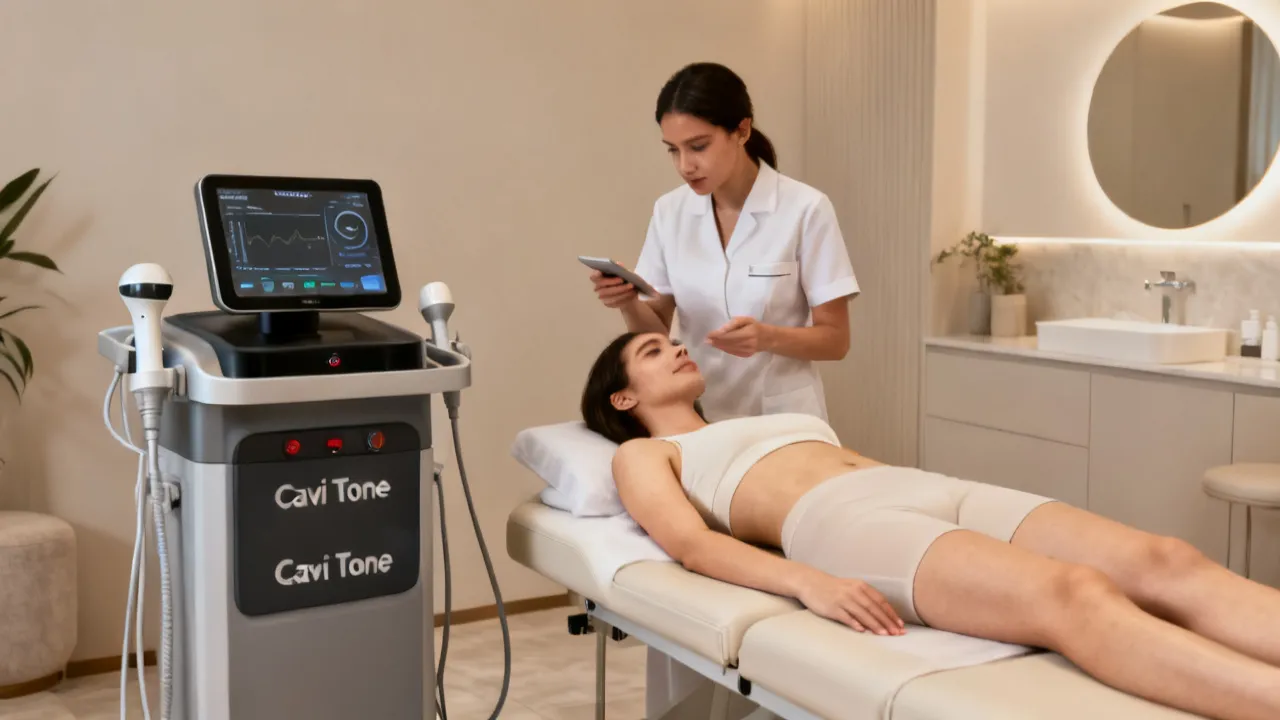
What “캐비 톤” Usually Means
The Korean search term 캐비 톤 may be used to describe an aesthetic treatment, a body-contouring service, or a device associated with ultrasonic or cavitation-based procedures. In English-language marketing, similar terms may appear as “Cavi Tone,” “Cavitone,” “cavitation treatment,” “ultrasonic body contouring,” or “non-invasive body shaping.” These names can refer to different machines, treatment protocols, and service models, so the term alone does not identify a single standardized technology.
The most important step is to establish exactly what a provider means by 캐비 톤 before discussing price, results, or suitability. A responsible clinic or salon should be able to explain the device manufacturer, model, intended purpose, operating principle, regulatory status in the relevant market, practitioner training, treatment area, expected sensations, and known limitations. If a business presents the name as though it were a universally recognized medical procedure but cannot provide basic product information, consumers should proceed cautiously.
From an industry perspective, a name such as 캐비 톤 is best treated as a commercial or service label until the underlying device has been verified. The technology may involve ultrasound, radiofrequency, vacuum massage, mechanical massage, infrared energy, or a combination of modalities. Those technologies do not have identical effects, risks, or evidence. A consultation should distinguish them rather than grouping them under one attractive marketing phrase.
Key conclusion: Do not judge a 캐비 톤 treatment solely by its name, promotional photograph, or advertised package. Identify the actual device and treatment method, confirm whether the service is appropriate for your health status, and evaluate expected results using realistic clinical criteria.
Why Device Identification Matters
Non-invasive aesthetic equipment is not a single category. Devices that use ultrasound may differ in frequency, intensity, pulse pattern, applicator design, treatment depth, and intended body area. Some equipment is designed for diagnostic imaging, while other equipment is intended for aesthetic use. A device may also be marketed differently in different jurisdictions, and regulatory authorization for one purpose does not automatically validate every promotional claim made by a provider.
The name “Cavi Tone” may be used by unrelated businesses or manufacturers. In some settings, the term may describe a specific branded system. In others, it may be a convenient name for a package that combines ultrasonic energy with massage or skin-warming technology. This creates an important distinction:
- Brand identity: the registered or commercial name of a product.
- Technology: the physical energy or mechanism used by the equipment.
- Service description: the way a clinic packages and sells the treatment.
- Clinical claim: the outcome the provider says the equipment can produce.
These four elements should not be treated as interchangeable. For example, a provider may use the word “cavitation” to describe a service, but that does not establish that the treatment will cause meaningful fat reduction, improve cellulite, tighten skin, or produce a permanent change. The strength of each claim depends on the precise device, treatment protocol, patient selection, and quality of supporting evidence.
Consumers can ask to see the device label, user instructions, treatment consent form, and information about the provider’s qualifications. They can also ask whether the service is intended to treat a medical condition or only to provide cosmetic body contouring. This distinction is especially important because cosmetic services should not be presented as substitutes for diagnosis or treatment of obesity, metabolic disease, liver disease, lymphatic disorders, or other medical conditions.
Device identification also matters when comparing prices. Two providers may advertise an apparently identical 캐비 톤 service while using machines with different energy outputs, applicator sizes, treatment times, and supervision requirements. A lower price may reflect a shorter appointment, treatment of a smaller area, a less powerful home-use product, or a package that excludes assessment and follow-up. Comparing names without comparing equipment and protocols can therefore create a misleading impression of value.
How Ultrasound-Based Body Treatments Work in General
Ultrasound refers to sound energy above the range normally heard by humans. In aesthetic applications, ultrasound may be used for several purposes, depending on the device design and settings. It can create mechanical effects in tissue, produce localized heating, or support a combination of energy delivery and massage. The clinical effect is determined by variables such as frequency, power, exposure time, coupling medium, applicator movement, and the tissue being treated.
Some body-contouring systems are promoted as using acoustic cavitation. In technical terms, cavitation describes the formation and behavior of gas-filled bubbles in a liquid environment when exposed to sound energy. The behavior of these bubbles can vary according to acoustic conditions and tissue characteristics. Marketing language sometimes simplifies this complex process into a promise that fat cells will be “destroyed” or “removed.” Such wording should be treated carefully unless it is supported by device-specific clinical evidence.
Even when a treatment produces a visible change, several explanations may be possible. The appearance may be influenced by temporary fluid shifts, tissue compression, skin tension, posture, lighting, measurement technique, or changes in swelling. A single session does not reliably demonstrate long-term fat reduction. A careful assessment should use consistent measurements and an appropriate follow-up period rather than relying only on immediate photographs.
Other systems marketed alongside 캐비 톤 may use radiofrequency or vacuum technology. Radiofrequency devices deliver electromagnetic energy that can heat tissue, while vacuum systems use controlled suction and may be combined with mechanical manipulation. These mechanisms have different safety considerations. A provider should explain which modality is being used and why it is suitable for the selected body area.
Ultrasound energy also depends on the way the applicator is coupled to the skin. Air between the applicator and the skin can interfere with energy transmission, which is why gels or other coupling substances may be used. The practitioner should follow the manufacturer’s instructions for the coupling medium, movement pattern, pressure, and contact time. Improvised techniques, excessive pressure, or leaving an applicator stationary when it should be moving may increase the risk of discomfort or tissue injury.
The treated tissue is not uniform. Fat, connective tissue, skin, muscle, blood vessels, and organs may respond differently to energy. This is one reason that body areas cannot automatically be treated interchangeably. A protocol suitable for a broad lateral thigh may not be appropriate for the abdomen, back, upper arm, or an area close to a bony prominence. The provider should identify the tissue target and avoid areas restricted by the device instructions.
What Consumers Can Reasonably Expect
Non-invasive body-contouring procedures are generally designed to alter the appearance of a localized area rather than provide broad weight management. A person may seek treatment for a small area that remains resistant to changes in diet and physical activity, but expectations should remain modest. These procedures are not a replacement for nutrition care, physical activity, medical evaluation, or evidence-based management of body weight.
Results may vary according to body composition, skin elasticity, age, treatment area, device settings, practitioner technique, and the interval between sessions. Some people may notice little visible change. Others may report a temporary improvement in smoothness or contour. The degree and durability of any result should not be assumed from a package description or from testimonials.
A qualified practitioner should describe:
- What the procedure is intended to change.
- What the procedure is not designed to change.
- How many sessions may be considered and why.
- When an assessment is likely to be made.
- What factors could reduce the visible result.
- Whether maintenance appointments may be discussed.
- What complications or unexpected effects may occur.
Language such as “permanent,” “guaranteed,” “instant,” or “detoxifying” requires particular scrutiny. The body’s response to treatment is not identical for every individual, and long-term outcomes depend on the technology and protocol used. A credible provider should be comfortable discussing uncertainty instead of presenting a single guaranteed result.
It is also important to understand that body contouring is not the same as weight loss. Weight may remain stable even if a localized contour changes, and a person may lose weight without seeing a large change in the specific area being treated. The provider should not use a treatment result to make claims about overall health or fitness unless those claims are independently supported.
People with loose skin may also need a separate discussion about skin elasticity. Reducing the appearance of a small fat deposit does not necessarily tighten substantial excess skin. Conversely, a treatment promoted for skin firmness may not remove fat. Clarifying whether the primary target is fat, skin, fluid, or the visual appearance of cellulite can prevent disappointment.
Potential Benefits and Limitations
The possible appeal of a 캐비 톤 service is that it may not involve an incision, general anesthesia, or a long surgical recovery period. Depending on the equipment, the appointment may involve the application of a handheld applicator to the skin with conductive gel or another coupling medium. The client may feel vibration, warmth, pressure, suction, or a mild buzzing sensation. Some appointments are relatively brief, but duration depends on the body area and device instructions.
These practical advantages do not eliminate risk. Non-invasive means that the skin is not surgically opened; it does not mean that the procedure is risk-free. Energy-based devices can cause pain, burns, bruising, swelling, altered sensation, skin irritation, or other unwanted effects if used improperly or applied to an unsuitable person or body area.
Limitations are also significant. A body-contouring service does not generally address the underlying causes of weight gain. It cannot be assumed to improve blood pressure, blood glucose, cholesterol, liver function, or cardiovascular fitness. It should not be promoted as a treatment for a medical diagnosis unless the relevant health authority has authorized that specific use and the service is delivered by an appropriately qualified professional.
Consumers should also distinguish between a change in circumference and a change in body fat. Circumference can fluctuate for ordinary reasons, including hydration, meals, bowel contents, menstrual-cycle changes, posture, and measurement location. If a provider uses measurements to demonstrate results, the same method, time of day, body position, and measuring points should be used at each assessment.
Another limitation is that the visual result may be subtle. A localized cosmetic procedure is often intended to create a modest refinement rather than a dramatic transformation. The person’s starting anatomy and expectations influence whether a small change feels meaningful. Providers should not use a dramatic surgical before-and-after image to represent what a non-surgical service typically achieves.
Safety Considerations Before Treatment
A pre-treatment consultation is a basic safety requirement, not an unnecessary formality. The practitioner should ask about relevant medical history, current symptoms, medications, implanted devices, recent procedures, skin conditions, pregnancy status where relevant, and the presence of pain or unexplained swelling in the proposed treatment area.
Conditions and circumstances that may require postponement, medical clearance, or avoidance can include:
- Pregnancy or the early period after childbirth, depending on the modality and provider policy.
- Active skin infection, open wounds, severe dermatitis, or unexplained rash in the treatment area.
- Unexplained lumps, persistent swelling, significant pain, or suspected vascular problems.
- Known liver, kidney, or lymphatic conditions that could affect fluid handling or recovery.
- Recent surgery, liposuction, injections, implants, or other procedures near the intended area.
- Implanted electronic devices or metal components, where the equipment’s instructions identify a possible interaction.
- Bleeding disorders or medicines that increase bruising risk.
- Reduced sensation or neuropathy that could make discomfort or excessive heat difficult to detect.
- Active cancer or a history requiring individualized medical guidance.
- Any condition specifically listed as a contraindication in the manufacturer’s instructions.
This list is not a diagnosis tool and does not replace medical advice. Contraindications differ by device and energy type. An ultrasound-based system, a radiofrequency system, and a vacuum system may have different restrictions. The manufacturer’s instructions and the assessment by an appropriately qualified professional should control the decision.
A provider should not pressure a client to omit medical information, sign a consent form without reading it, or proceed despite unanswered safety questions. A request to begin treatment immediately without a history and assessment is a meaningful warning sign.
Special caution is appropriate when the proposed treatment area is close to the eyes, neck, breast tissue, reproductive organs, major vessels, or internal organs. The acceptable treatment zones depend on the device. A general statement that a machine is “safe on the body” does not establish that every body region is appropriate.
Possible Side Effects and When to Seek Help
Temporary redness, warmth, mild tenderness, or minor swelling may occur after some aesthetic energy treatments. The expected duration depends on the device, settings, treatment area, and individual response. The provider should explain what is normal and what requires follow-up.
Seek prompt medical advice if there is severe or increasing pain, blistering, extensive bruising, marked swelling, persistent numbness, weakness, skin discoloration, fever, drainage, shortness of breath, or any symptom that seems disproportionate to the treatment. Unexplained abdominal pain or systemic symptoms should not be dismissed as a routine reaction.
Clients should receive written aftercare information, including whether to avoid heat, vigorous exercise, alcohol, pressure, sun exposure, or specific skincare products for a specified period. General advice should not be presented as a universal rule because aftercare depends on the device and the individual’s condition.
Bruising may be more likely when suction or vigorous mechanical manipulation is used, particularly in people taking medicines that affect clotting. Warmth may be more noticeable with radiofrequency or other heating modalities. Temporary tingling or altered sensation may occur after some procedures, but persistent or worsening sensory changes should be evaluated.
If an adverse reaction occurs, take photographs when appropriate, record when symptoms began, and contact the provider. Do not continue additional sessions until the problem has been assessed. If symptoms are severe, contact emergency services or an appropriate medical service rather than waiting for a cosmetic clinic to respond.
How to Evaluate a Provider
The quality of the provider is as important as the equipment. A responsible clinic should explain who will perform the procedure, what formal training they have received, and whether a licensed healthcare professional oversees the service where required by local law. Licensing and scope-of-practice requirements differ by jurisdiction, so consumers should verify the rules applicable to their location.
Consider the following questions during a consultation:
- What is the exact manufacturer and model of the device?
- What energy or combination of technologies does it use?
- What is the intended cosmetic purpose of the procedure?
- Is the equipment authorized or registered for this use in the relevant jurisdiction?
- Who will perform the treatment, and what training do they hold?
- What body areas can be treated according to the manufacturer?
- What are the known risks and contraindications?
- How are treatment settings selected and documented?
- What happens if the client experiences an adverse reaction?
- What is included in the quoted price and cancellation policy?
Cleanliness and equipment maintenance also matter. The applicator should be cleaned according to the manufacturer’s instructions, conductive materials should be handled hygienically, and the treatment room should support privacy and professional conduct. The clinic should maintain records of the device, settings, treatment area, consent, and relevant observations.
Before-and-after photographs can be useful only when they are presented transparently. The images should use consistent lighting, distance, posture, clothing, and time intervals. Edited photographs, selective examples, or images without dates do not provide reliable evidence of typical results.
Observe how the provider handles questions. A technically competent practitioner may not know every answer immediately, but they should be willing to check official documentation and provide accurate information later. Evasive answers, exaggerated promises, criticism of medical advice, or claims that “everyone is suitable” indicate poor professional communication.
Pricing and Package Evaluation
No price information was supplied for 캐비 톤, and prices can differ substantially by country, clinic, device, body area, appointment length, practitioner credentials, and whether the service includes several technologies. A responsible article should not invent a typical price or imply that a particular fee is standard across the market.
Instead, consumers should request a written quotation that separates the following elements:
- Initial consultation or assessment fee.
- Price per appointment.
- Number of treatment areas covered.
- Estimated duration of each session.
- Whether post-treatment review is included.
- Whether taxes, booking charges, or consumables are added.
- Package expiry date and transfer conditions.
- Cancellation, refund, and rescheduling terms.
- Charges for medical review or referral if a concern arises.
A package is not automatically better value than a single appointment. Before purchasing multiple sessions, ask what evidence supports the proposed schedule and whether the provider will reassess progress after an appropriate interval. A business should not use urgency, expiring discounts, or repeated sales pressure to discourage a second opinion.
Price should also be considered alongside safety. A very low fee may reflect limited practitioner training, poorly maintained equipment, unclear insurance arrangements, or the use of a device that is not suitable for the advertised purpose. A high fee, on the other hand, does not prove superior effectiveness. The strongest purchasing decision combines transparent pricing with verifiable qualifications and clear risk communication.
Ask whether the package is transferable if the provider later determines that treatment is unsuitable. Some businesses sell packages that cannot be refunded even when the client develops a contraindication or experiences an adverse reaction. The contract should explain those circumstances before payment is made. Keep receipts, written promises, and copies of promotional claims if a dispute later arises.
Comparison of Related Treatment Categories
| Category | Typical mechanism | Common consumer objective | Important verification point |
|---|---|---|---|
| Ultrasound or cavitation-based service | Sound energy delivered through an applicator, with effects depending on the device and settings. | Localized cosmetic body contouring. | Confirm the exact device, intended use, energy parameters, and treatment restrictions. |
| Radiofrequency body treatment | Electromagnetic energy that may create controlled tissue heating. | Appearance of skin firmness or localized contouring. | Ask how temperature is monitored and whether implants or reduced sensation affect suitability. |
| Vacuum-assisted treatment | Controlled suction, sometimes combined with massage or another energy source. | Temporary changes in skin appearance or tissue mobility. | Discuss bruising risk, vascular history, and the specific suction protocol. |
| Manual massage | Hands-on pressure and movement applied to soft tissue. | Relaxation, temporary comfort, or perceived reduction in tightness. | Unexplained swelling, pain, or vascular symptoms should be assessed before massage. |
| Surgical body contouring | Removal or repositioning of tissue through an invasive procedure. | More substantial structural change in selected candidates. | Requires surgical consultation, formal risk assessment, and recovery planning. |
This comparison is intended to clarify categories, not to rank them. The most suitable option depends on the individual’s goals, health status, anatomy, tolerance for downtime, and professional assessment. A provider should not describe all categories as equivalent simply because they are marketed under similar body-contouring language.
Surgical procedures may create more noticeable structural changes, but they generally involve greater risks, recovery time, cost, and medical planning. Non-invasive services may be more convenient but may also create more modest or less predictable results. The appropriate comparison should consider the balance between expected benefit and risk rather than focusing only on the speed or size of the advertised result.
Step-by-Step Guide to Assessing 캐비 톤
Step 1: Define the goal
Write down the specific concern. Is the goal a small contour change, an improvement in skin appearance, relief of perceived tightness, or weight reduction? If the goal is general weight loss or a health-related change, begin with a qualified medical professional rather than an aesthetic package.
Step 2: Request the device identity
Ask for the manufacturer, model, instruction manual or official product information, and intended treatment area. The provider should not rely only on a generic term such as 캐비 톤 or “cavitation.” If the device information is withheld, postpone the appointment until the identity can be confirmed.
Step 3: Verify the provider
Check the practitioner’s credentials, local licensing requirements, relevant training, and experience with the specific device. If the service is offered in a medical clinic, ask who provides clinical oversight and how complications are managed.
Step 4: Complete a health screening
Disclose medical conditions, current medicines, implants, allergies, prior procedures, pregnancy status where relevant, and any symptoms in the intended area. Do not assume that a condition is irrelevant because the procedure is described as non-invasive.
Step 5: Review the evidence and limitations
Ask what outcome the provider expects, how it will be measured, and whether the evidence applies to the exact device. A general article about ultrasound does not necessarily validate a particular commercial machine or treatment package.
Step 6: Obtain written pricing
Request a complete quotation before paying. Confirm whether the price covers one area or multiple areas, whether follow-up is included, and what happens if a treatment must be postponed for safety reasons.
Step 7: Read the consent document
The consent form should identify the procedure, expected sensations, possible side effects, alternatives, and circumstances requiring medical review. Take time to ask questions. Consent is meaningful only when the client understands the service and has a genuine opportunity to decline.
Step 8: Confirm aftercare and follow-up
Obtain written instructions and a contact route for concerns. Ask when the provider recommends assessing results. Immediate visual changes should not be treated as proof of a permanent outcome.
Step 9: Document the baseline
If measurements or photographs are used, ensure that the method is consistent and respectful of privacy. Keep copies of the consent form, quotation, device information, and appointment record.
Step 10: Reassess before purchasing more sessions
Do not automatically extend a package. Review whether the result matches the original objective, whether side effects occurred, and whether further appointments remain appropriate. A lack of meaningful improvement is a reason for reassessment, not necessarily a reason to intensify treatment.
Step 11: Consider alternatives
Ask whether another treatment, medical evaluation, exercise program, nutrition consultation, or simple observation would better address the concern. A responsible provider should be able to explain why the recommended service is reasonable compared with available alternatives.
Conditions and Requirements for Responsible Treatment
| Requirement | Why it matters | What the consumer should receive |
|---|---|---|
| Clear device identification | Different machines may use different energy types and safety limits. | Manufacturer, model, intended purpose, and relevant instructions. |
| Qualified practitioner | Correct assessment and technique reduce preventable risks. | Credential information and an explanation of clinical oversight. |
| Health screening | Some conditions, medicines, or implants may alter suitability. | A documented history and opportunity to disclose concerns privately. |
| Informed consent | Clients need to understand limitations and possible adverse effects. | Written consent material in a language they can understand. |
| Transparent pricing | Packages can contain exclusions or conditions that affect total cost. | A written quotation, refund policy, and cancellation terms. |
| Emergency and follow-up process | Unexpected reactions require prompt communication and escalation. | Aftercare instructions and a clear contact pathway. |
| Privacy and documentation | Photographs, measurements, and health details are sensitive information. | Secure record handling and written permission for advertising use. |
Evidence, Regulation, and Responsible Claims
Consumers should evaluate claims using a hierarchy of evidence. A personal testimonial may describe one person’s experience, but it cannot establish typical effectiveness. A laboratory explanation may describe how an energy source behaves, but it does not prove a visible cosmetic benefit in humans. A small uncontrolled study may offer preliminary information, while a well-designed clinical study that evaluates the exact device and protocol provides stronger support.
Regulatory authorization should also be interpreted accurately. Depending on the jurisdiction, a device may be registered, listed, cleared, approved, or otherwise subject to a regulatory pathway. These terms have specific meanings and should not be used interchangeably. Authorization for a limited aesthetic indication does not support unrelated claims about disease treatment, detoxification, or guaranteed weight loss.
In the United States, consumers can consult information from the U.S. Food and Drug Administration regarding legally marketed medical devices and non-invasive body-contouring technologies. In other regions, relevant sources may include national health-product regulators, medical-device agencies, or official professional registers. The appropriate authority depends on where the device is marketed and where the service is delivered.
International standards may provide guidance on the safety and performance of medical electrical equipment, but the existence of a standard does not by itself confirm that a particular product meets every requirement. Consumers should be wary of vague statements such as “internationally certified” when no certifying body, certificate, or scope is identified.
Reliable health information should come from official regulators, recognized medical organizations, peer-reviewed research, and qualified clinicians. Marketing pages can be useful for identifying a service, but they should not be the only source used to judge safety or effectiveness.
When reading studies, note whether the participants resemble the intended client, whether the study included a comparison group, whether results were measured objectively, and how long participants were followed. A study showing a short-term change immediately after treatment may not answer whether the result persists for months. Likewise, a study of one specialized device should not automatically be applied to a different device with a similar name.
Home Devices Versus Professional Services
Some products marketed under names resembling 캐비 톤 may be sold for home use. Home equipment may have different output levels, applicators, instructions, and intended users than professional equipment. A home product should not be assumed to produce the same effect as a clinic-based system, and a professional device should not be operated at home without appropriate authorization and training.
Before using a home device, read the complete instructions and verify whether the product is intended for the selected body area. Do not use it over an area with broken skin, unexplained pain, suspected infection, or a recent procedure unless a qualified professional has specifically advised that it is appropriate. Avoid modifying settings, attaching unapproved accessories, or extending treatment time in an attempt to accelerate results.
Home users may have less ability to monitor temperature, tissue response, and changes in sensation. This is especially relevant for individuals with neuropathy or other conditions that reduce their ability to feel discomfort. A product purchased online may also have unclear warranty, electrical-safety, or regulatory information. Product documentation and seller transparency should be assessed before purchase.
Do not assume that a device is safe because it has been sold through a popular marketplace. Check whether the seller provides a complete manufacturer identity, instructions in an understandable language, electrical specifications, warnings, warranty information, and a customer-support pathway. Products with missing labels, unusual plugs, counterfeit branding, or exaggerated medical claims should not be used.
Preparing for an Appointment
Preparation should be simple and based on the provider’s written instructions. Wear clothing that allows access to the intended area while preserving comfort and privacy. Bring a list of medicines and relevant medical records if requested. Avoid concealing symptoms in order to qualify for a package.
At the appointment, the practitioner should inspect the treatment area and confirm the planned settings. The client should be able to stop the procedure if the sensation becomes painful or unusual. Mild warmth or vibration may be expected with some technologies, but sharp pain, burning, or rapidly increasing discomfort should be reported immediately.
Clients should avoid comparing their experience with another person’s appointment. Similar-looking machines may have different settings, and the same setting may affect individuals differently. Personalization should be based on safety, the device instructions, the treatment area, and the person’s response rather than on a promise that stronger intensity produces better results.
Ask whether the provider will perform a small test area when appropriate. A test may not predict every reaction, but it can help identify obvious intolerance or problems with contact. The provider should also confirm whether lotions, oils, tattoos, scars, piercings, or implanted materials affect the treatment plan.
Aftercare and Results Monitoring
Follow the clinic’s specific aftercare instructions and observe the treated area. If the provider recommends hydration, ordinary fluid intake is generally sufficient unless a healthcare professional has given different guidance. Claims that a particular drink, supplement, or “detox” program is required should be evaluated critically.
Record symptoms, their timing, and any changes in appearance. A brief period of redness or tenderness may be expected for certain procedures, but symptoms that worsen or persist should be reported. Do not apply harsh products, use excessive heat, or perform aggressive massage unless those actions are included in the provider’s instructions.
Results should be assessed after the interval recommended for the specific device. Use the same lighting and measurement approach when comparing photographs or circumference. Consider whether the original goal has been met rather than focusing only on a marketing-defined measurement. If no meaningful benefit is observed, discuss alternatives with a qualified professional instead of assuming that additional sessions will solve the problem.
Privacy should be maintained when documenting results. Store photographs securely and ask how the clinic will use them. A client should not be required to allow public use of images as a condition of receiving treatment. If images are used for advertising, written permission should specify whether the face, tattoos, scars, or other identifying details will appear.
Common Marketing Statements That Need Clarification
| Marketing statement | Question to ask |
|---|---|
| “Permanent fat removal” | What exact evidence supports permanence for this device and protocol? |
| “Detoxification” | What biological outcome is being measured, and which independent source supports the claim? |
| “No risk” | What adverse effects and contraindications are listed in the device instructions? |
| “Works for everyone” | Which people were studied, and who should avoid the treatment? |
| “Immediate transformation” | How are immediate changes separated from temporary swelling, fluid shifts, or photographic effects? |
| “Medical-grade” | What does the term mean in this jurisdiction, and what is the exact regulatory status? |
| “One session is enough” | What follow-up evidence demonstrates that the result is typical and durable? |
| “The body eliminates all released fat immediately” | What physiological process is being described, and is the claim supported for this exact device? |
Ethical and Professional Standards
Ethical aesthetic practice is based on truthful communication, respect for autonomy, confidentiality, appropriate referral, and accurate record keeping. The provider should not exploit insecurity, use shame-based language, or imply that a person’s value depends on changing their body. A consultation should allow the client to consider alternatives, including choosing not to undergo treatment.
Professional boundaries are equally important. Clients should know who will perform the procedure, how personal information and photographs will be stored, and whether images may be used for advertising. Written permission should be obtained before any identifiable image is published. A provider should explain the complaint process and maintain appropriate professional insurance where required.
Referral is a sign of responsible practice, not a failure to make a sale. If a client reports unexplained swelling, severe pain, a new lump, or symptoms suggestive of an underlying health problem, the appropriate action may be medical evaluation rather than aesthetic treatment. Similarly, if a client’s expectations are unrealistic or the treatment is unlikely to address the stated concern, postponing the service may be the most professional recommendation.
Ethical advertising should show typical outcomes, identify when images have been edited, and avoid implying that results are guaranteed. Discounts may be offered legitimately, but they should not be combined with misleading countdowns, fear-based messaging, or claims that a client will lose an opportunity forever by taking time to consider the decision.
Questions to Ask Before Paying for a Package
Package purchases can make it harder to change plans later, so ask direct questions before making payment:
- What exactly is included in each appointment?
- Is the treatment performed with the same device throughout the package?
- Can the provider change the plan if the initial assessment suggests the procedure is unsuitable?
- What is the policy if a medical issue arises after purchase?
- Are unused appointments refundable or transferable?
- How long does the package remain valid?
- Are follow-up assessments included?
- What additional costs could occur?
- Who should be contacted if an adverse reaction develops?
- What outcome would lead the practitioner to recommend stopping?
A trustworthy provider should answer these questions without hostility or pressure. Written terms should match the verbal explanation. If a sales representative cannot explain the procedure and a practitioner is unavailable for consultation, delay the purchase.
Ask whether the clinic offers a cooling-off period or cancellation window under local consumer law. Rules vary, and not every service is refundable once performed, but the provider should still explain the applicable terms clearly. Do not rely on verbal assurances that are absent from the contract or receipt.
Frequently Asked Questions
What is 캐비 톤?
캐비 톤 is a Korean search expression that may refer to a branded or commercially named aesthetic treatment. It is not, by itself, a sufficiently precise medical description. The underlying service may involve ultrasound, cavitation-related technology, radiofrequency, vacuum treatment, massage, or a combination. Ask for the exact device and method.
Is Cavi Tone the same as ultrasound cavitation?
Not necessarily. Some providers may use Cavi Tone as a name for an ultrasound-related service, while others may use it for a broader body-contouring package. The only reliable way to determine the relationship is to verify the manufacturer, model, energy type, and official intended use.
Can 캐비 톤 be used for weight loss?
It should not be treated as a replacement for medical weight-management care. A localized cosmetic body-contouring procedure may be intended to alter the appearance of a selected area, but that is different from reducing body weight or treating an obesity-related condition.
Are results guaranteed?
No cosmetic procedure should be assumed to provide a guaranteed result. Outcomes vary with the device, protocol, treatment area, tissue characteristics, and individual response. A provider should explain uncertainty and describe how progress will be evaluated.
How many sessions are needed?
There is no universal schedule for every service called 캐비 톤. The appropriate number depends on the exact device, the treatment objective, the manufacturer’s instructions, and the practitioner’s assessment. Be cautious if a provider sells a large package before examining the treatment area or discussing alternatives.
Does the treatment hurt?
Sensation varies. Depending on the technology, a person may feel warmth, vibration, pressure, suction, or mild discomfort. Sharp pain, burning, or unusual and increasing discomfort should be reported immediately. The provider should explain expected sensations before treatment begins.
Can anyone receive a 캐비 톤 treatment?
No. Suitability depends on health history, medicines, implants, skin condition, recent procedures, treatment area, and the device’s contraindications. A proper consultation is required, and medical clearance may be appropriate in some circumstances.
Can the treatment remove cellulite?
Marketing descriptions often use broad language about cellulite, but cellulite has several structural and biological contributors. A temporary improvement in skin appearance does not establish that the underlying condition has been permanently corrected. Ask what outcome the exact device has been studied to produce.
Is a home device equivalent to a clinic treatment?
No assumption should be made that the two are equivalent. Home and professional devices may differ in output, design, instructions, and regulatory status. Follow the home product’s instructions and seek professional advice if you have a health condition or uncertainty about safe use.
Should I exercise or change my diet after treatment?
Follow the provider’s specific instructions, but remember that nutrition and physical activity remain central to general health and body-weight management. A treatment should not be marketed as a substitute for sustainable health habits or medical care.
What should I do if I experience a serious reaction?
Stop using the device or service and contact a qualified healthcare professional. Severe pain, blistering, extensive swelling, persistent numbness, fever, drainage, breathing difficulty, or other concerning symptoms require prompt attention. Use the provider’s emergency contact pathway where available.
How can I compare clinics?
Compare the exact device, practitioner qualifications, consultation process, safety screening, written consent, pricing transparency, aftercare, complaint procedure, and evidence supporting the claims. A polished website or large social-media following is not a substitute for these fundamentals.
Can the treatment be performed over a tattoo or scar?
The answer depends on the energy type, the age and condition of the scar, and the manufacturer’s instructions. Ask the practitioner to inspect the area and explain whether the tattoo or scar changes the treatment plan. Do not assume that a stable-looking skin mark is automatically suitable for every device.
Should I continue if I do not see results after one session?
Do not automatically continue or intensify treatment. Some protocols require a follow-up period, but the provider should explain that schedule and assess whether the treatment remains appropriate. If there is no meaningful improvement or if side effects occur, seek a reassessment before purchasing more sessions.
Source and Verification Framework
Because 캐비 톤 may identify different products or services, verification should focus on authoritative and device-specific material. Useful source categories include:
- Official medical-device regulators in the country where the equipment is marketed.
- Manufacturer instructions for use and technical documentation.
- Peer-reviewed clinical studies evaluating the exact device or a clearly comparable system.
- Recognized medical and dermatological organizations.
- Official professional licensing registers and local scope-of-practice rules.
- Public health guidance on non-invasive body-contouring procedures.
When reviewing a source, check its date, authorship, conflict-of-interest statement, study population, treatment protocol, follow-up period, and whether the findings apply to the device being considered. A generic page about ultrasound should not be treated as proof for every product using the word “ultrasonic.” Similarly, a manufacturer’s promotional claim may be informative but should be interpreted alongside independent evidence.
Official sources such as the U.S. Food and Drug Administration, national medical-device regulators, and government health agencies can help consumers understand regulatory terminology and known safety communications. These sources should be supplemented with advice from a qualified healthcare professional when personal medical circumstances are involved.
Search results and social-media posts can help identify common terminology, but popularity is not evidence of safety or efficacy. A large number of positive comments may reflect customer service, temporary satisfaction, or promotional incentives rather than a measured clinical outcome. Look for information that identifies the device, describes limitations, and reports follow-up rather than relying only on attractive images.
Professional Assessment: What Matters Most
From an industry expert’s perspective, the central issue is not whether the name 캐비 톤 sounds modern or attractive. The central issue is whether the service is specific, verifiable, appropriately supervised, and aligned with the client’s actual objective. A high-quality consultation should narrow the discussion from a broad marketing label to a defined protocol.
The most credible providers tend to make several distinctions clear. They distinguish cosmetic contouring from weight management, temporary appearance changes from durable tissue change, product registration from proof of effectiveness, and practitioner experience from clinical evidence. They also recognize that a client’s safety may require declining treatment or seeking medical assessment first.
Consumers should give greater weight to transparency than to promotional intensity. A provider who discusses limitations, alternatives, contraindications, and uncertain outcomes is demonstrating a more reliable professional approach than one who promises rapid transformation with little explanation.
Good practice also involves ongoing quality improvement. Providers should record treatment settings, monitor adverse events, maintain equipment according to manufacturer requirements, and update their training. They should be able to explain how they respond when a client does not obtain the expected result. A clinic that treats every concern by increasing intensity or selling additional sessions may be prioritizing revenue over responsible care.
Final Checklist
- Identify exactly what the term 캐비 톤 means at the selected provider.
- Record the device manufacturer, model, technology, and intended use.
- Verify practitioner qualifications and local legal requirements.
- Complete a detailed health and skin assessment.
- Review contraindications, possible side effects, and emergency procedures.
- Ask for evidence that applies to the exact device and stated outcome.
- Obtain a complete written quotation before purchasing a package.
- Read the consent form and ask questions without time pressure.
- Use consistent methods to evaluate any reported result.
- Protect the privacy of photographs and personal health information.
- Seek medical advice for severe, persistent, or unusual symptoms.
캐비 톤 can be a useful search term for exploring non-invasive aesthetic services, but it should be the beginning of an investigation rather than the conclusion. The safest decision comes from understanding the actual technology, checking the provider’s qualifications, keeping expectations realistic, and ensuring that cosmetic treatment is not being used in place of appropriate medical care.