A Practical Guide to Insurance Claim Documents
This guide explains how to prepare 보험금 청구 서류, the Korean term for insurance claim documents, with emphasis on accuracy, completeness, submission methods, and follow-up. Claim requirements differ according to the policy, type of loss, claim amount, and insurer. Typical materials may include a claim form, identity verification, payment account details, receipts, medical records, repair estimates, or proof of an incident. Readers should confirm the current requirements directly with their insurer before submitting documents.
Understanding 보험금 청구 서류
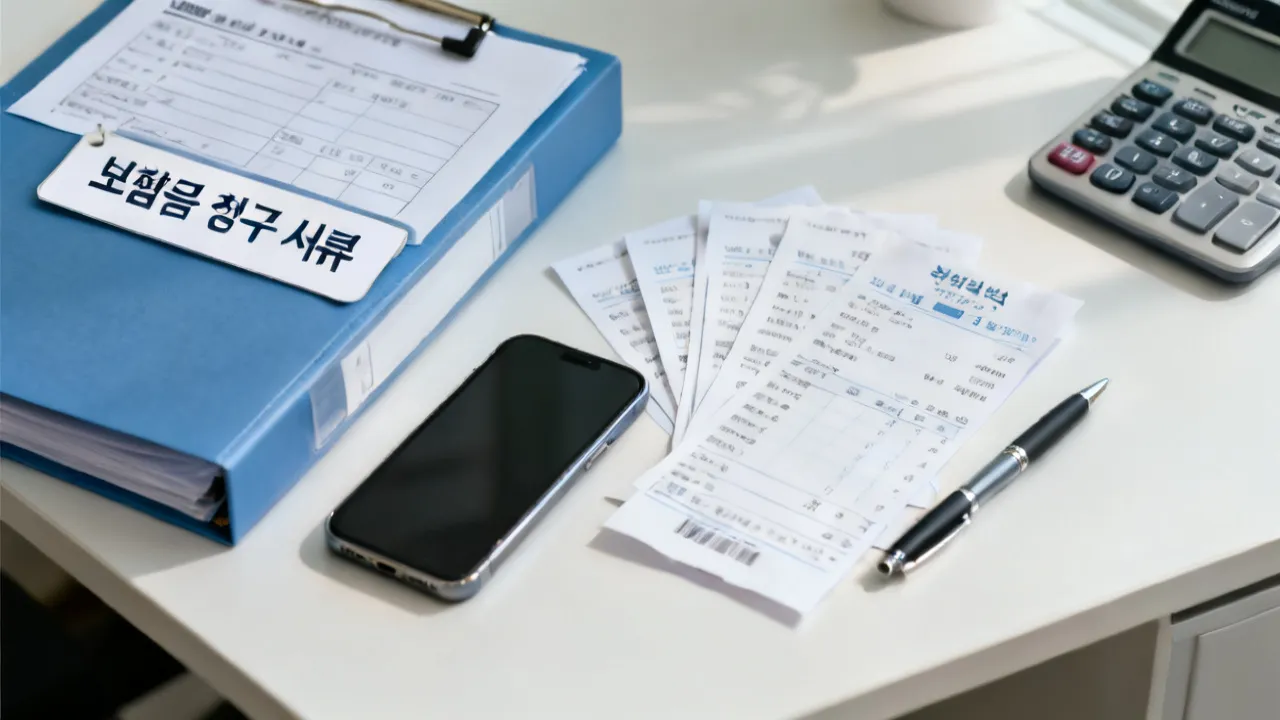
When an insured event occurs, the quality of the submitted documentation can significantly affect how efficiently an insurer reviews the claim. The Korean expression 보험금 청구 서류 refers to the documents required to request an insurance payment. In English, it is commonly translated as “insurance claim documents” or “documents for an insurance benefit claim.” These materials allow the insurer to verify the policy, establish that an insured event occurred, assess the amount of the loss, and determine whether the claim falls within the policy’s coverage.
The most important principle is simple: submit documents that are relevant, legible, consistent, and obtained from an appropriate source. A long packet is not necessarily a strong packet. In many cases, a concise set of well-prepared records is more useful than a large collection of unrelated papers. The exact requirements vary by insurer and product, so a policyholder should treat any general checklist as a starting point rather than a definitive instruction.
Insurance claims may involve health, accident, life, travel, automobile, property, liability, or other coverage. Each category creates different evidentiary needs. A medical claim may depend on clinical records and payment receipts, while a vehicle claim may require photographs, a repair estimate, a police report, or documents showing ownership. A property claim may require proof of damage, purchase records, and an explanation of how the incident occurred.
Documents are not merely administrative attachments. Together, they create a factual record of the claim. A reviewer must usually determine who was involved, what happened, when and where it happened, what loss resulted, and whether the policy responds. If the documents answer those questions in a clear order, the review may be more straightforward. If they contain unexplained gaps or contradictions, the insurer may need to request additional information even when the underlying claim is legitimate.
What Documents Are Usually Required?
Although requirements differ, most insurance claim processes are built around several common document groups. Understanding their purpose makes it easier to identify omissions before submission.
| Document group | Typical examples | Purpose in the review |
|---|---|---|
| Claim identification | Insurance claim form, policy number, claimant contact information | Connects the request to the correct policy and claimant |
| Identity and authority | Identity verification, power of attorney, representative documents | Confirms who is making the claim and whether they are authorized |
| Payment information | Bank account details or other payment instructions | Allows an approved benefit to be transferred to the proper recipient |
| Occurrence evidence | Medical records, accident reports, photographs, repair estimates | Shows that the claimed event occurred |
| Loss or expense evidence | Receipts, invoices, treatment statements, proof of damage | Supports the amount being requested |
| Relationship or status evidence | Family relationship records, employment records, ownership documents | Establishes eligibility when the policy requires it |
The final list may be shorter or longer depending on the circumstances. An insurer may request supplementary evidence if the initial submission does not answer a material question. Such a request does not automatically mean that the claim will be rejected. It often means that the reviewer needs additional information to distinguish a covered event from an excluded event or to calculate the payable amount.
It is useful to divide documents into three levels. The first level is essential material, such as the claim form and a record proving the event. The second level is supporting material, such as photographs, receipts, statements, and correspondence. The third level is explanatory material, such as a chronology, written explanation, or clarification of an unusual circumstance. Preparing documents in this order helps the reviewer understand the central issue before examining details.
A policyholder should also consider whether a document proves the event itself or only supports a related fact. For example, a bank statement may show that a payment was made, but it may not identify the treatment or cause of the loss. A photograph may show a broken window, but it may not prove whether the damage resulted from a covered storm, accidental impact, or intentional act. Matching each document to its specific purpose makes the submission more persuasive and easier to evaluate.
The Core Claim Form
The claim form is usually the central document in a claim file. It commonly asks for the policyholder’s name, policy number, contact information, date and location of the incident, description of what happened, and requested payment details. Some forms also include consent provisions relating to the collection and use of personal or medical information.
Complete the form using factual language. A clear description should identify what happened, when it happened, where it happened, and what immediate consequences followed. Avoid guessing about medical causes, legal responsibility, or the final amount of damage unless those matters are supported by a professional record. If a detail is unknown, it is generally better to state that it is unknown or under confirmation than to provide an unsupported estimate.
Before signing, check that names, dates, policy numbers, telephone numbers, and bank account information are accurate. A small transcription error can create a verification delay. If the claim is filed by a parent, guardian, family member, employer, or other representative, the insurer may require additional proof of authority.
Use the same spelling of names and the same date format throughout the claim file whenever possible. If a document uses a different transliteration, abbreviated name, or former address, explain the difference if it could create confusion. When describing an incident, use a chronological sequence rather than emotional or speculative language. For example, identify the initial condition, the event, the immediate response, the resulting treatment or repair, and the expense incurred.
Do not sign a form that contains unanswered questions unless the insurer has confirmed that the question does not apply. If a field is not relevant, write an appropriate indication such as “not applicable” rather than leaving it blank. Review the form after completing it because digital forms may fail to save certain entries, and handwritten forms may contain corrections that require initials or confirmation.
Identity Verification and Representative Claims
Identity documents help the insurer confirm that the person submitting the claim is the policyholder, beneficiary, insured individual, or an authorized representative. The exact form of verification depends on the insurer’s channel and internal procedures. Digital platforms may use electronic identity verification, while paper submissions may require a copy or other acceptable evidence.
Representative claims require particular care. A representative may need a signed authorization, power of attorney, relationship documentation, or proof of legal authority. In a death-related claim, the insurer may request documents showing the insured person’s death and the claimant’s status as a beneficiary or legally recognized recipient. In a minor’s claim, a guardian may need to provide documents confirming guardianship.
Personal information should be shared through the insurer’s designated channel. Avoid sending sensitive identification data to an unverified address, informal messenger account, or third party whose role cannot be confirmed. The Korea Financial Supervisory Service and relevant insurance associations publish consumer guidance on insurance practices, but the insurer handling the policy remains the primary source for the current submission method.
When a claim involves several beneficiaries or representatives, each person’s role should be identified clearly. The insurer may require separate forms or signatures, especially when payment rights are divided. A claimant should not assume that being a close relative automatically establishes authority to receive insurance proceeds. Relationship and authority are related but not always identical legal concepts.
If a document contains more personal information than appears necessary, ask the insurer whether a partially redacted copy is acceptable. However, do not remove names, dates, signatures, account information, or other details without confirmation when they may be relevant to identification or payment. The safest practice is to follow the insurer’s privacy and document-submission instructions and retain a record of what was provided.
Medical 보험금 청구 서류
Medical claims are among the most frequently submitted insurance claims, and they often require several types of records. Depending on the product and treatment, the insurer may ask for a claim form, medical payment receipt, treatment statement, diagnosis-related document, prescription, medication receipt, admission or discharge record, or details of a procedure.
Not every medical claim requires every possible record. The appropriate document depends on the policy wording, treatment category, amount involved, and internal verification rules. A routine outpatient claim may need a relatively limited set of evidence, whereas hospitalization, surgery, disability, or long-term treatment may require more detailed records.
Medical documents should normally identify the patient, healthcare provider, treatment date, nature of the service, and amount paid. If a receipt does not explain the treatment sufficiently, the insurer may request an additional statement. A payment receipt proves that money was paid, but it may not by itself establish the diagnosis, clinical necessity, or policy classification of the treatment.
Policyholders should not alter medical documents or attempt to rewrite a provider’s description. If a record contains an error, request a correction from the issuing medical institution. Maintaining the original document and a clear scan or photograph can also help if the insurer later asks for clarification.
For repeated treatment, organize records by date. A table showing the treatment date, institution, service, amount paid, and document number can prevent duplicate submissions. If several family members received treatment under related policies, create a separate folder for each patient and policy. Mixing records may cause uncertainty about whose expenses are being claimed.
Hospitalization claims may involve admission and discharge dates, room charges, treatment details, surgery records, and payment statements. If the policy distinguishes between inpatient and outpatient services, the dates and type of care should be especially clear. For prescription claims, retain both the prescription or medication statement and the payment receipt when the insurer requests evidence of the medicine supplied.
Medical records are sensitive, and a claimant may feel uncomfortable providing more information than expected. The insurer should identify the purpose of an additional request and explain the acceptable method of submission. Where a claim depends on a particular medical definition, the relevant question may need to be answered by a healthcare professional rather than by the claimant’s personal description.
Accident and Injury Claims
Accident claims require a timeline that connects the event to the injury or loss. Useful evidence may include emergency treatment records, medical certificates, photographs of the scene, witness information, incident reports, or statements from relevant institutions. The appropriate evidence depends on the type of accident and the coverage being claimed.
A strong accident file is internally consistent. The reported date should align with the medical visit, the location should correspond with photographs or reports, and the description should not contradict the available records. If treatment occurred several days after the incident, explain the reason accurately rather than assuming the reviewer will infer it.
For workplace incidents, the employer or relevant public authority may hold records that help establish the circumstances. For traffic incidents, vehicle, police, repair, and medical records may each address a different part of the claim. The insurer may also distinguish between property damage, bodily injury, liability, and personal accident coverage, each of which can have separate requirements.
When an accident has multiple witnesses, record their names and contact information only through lawful and appropriate means. Do not pressure a witness to use specific wording. A factual witness statement is generally more useful than a statement that appears coached or exaggerated. If emergency services or a public authority created an official report, obtain it through the proper procedure rather than relying solely on an informal summary.
Injury claims can also involve ongoing symptoms. Keep records of follow-up appointments, prescribed treatment, transportation expenses where relevant, and work-related documents if the policy provides a benefit connected to disability or inability to work. These records should not be submitted as proof of coverage unless the policy actually addresses the relevant loss, but they may help establish the duration and financial consequences of the injury.
Automobile Insurance Claims
Vehicle claims are usually supported by evidence of the event, ownership or use of the vehicle, the damage, and the cost of restoration. Common examples include photographs from multiple angles, a repair estimate, an invoice, a vehicle registration record, a police report where applicable, and information about other involved parties.
Photographs should show both the overall scene and close views of the damage. Take them before repairs whenever it is safe and practical to do so. Include stable reference points, road conditions, signs, or surrounding objects when they help establish context. Do not place yourself or others at risk to obtain a photograph.
A repair estimate is not always the same as a final invoice. The estimate forecasts the expected cost, while the invoice records work performed and payment requested. The insurer may ask for one or both, depending on whether the vehicle has already been repaired. If a vehicle is declared a total loss or cannot be repaired economically, additional valuation and ownership documents may be requested.
Notify the insurer promptly after a collision or other covered vehicle event, especially when towing, emergency repair, inspection, or liability issues may arise. Do not admit legal responsibility or agree to a settlement with another party solely to resolve immediate pressure unless the circumstances and policy allow it. Provide an accurate account to the insurer and preserve relevant evidence.
For theft, attempted theft, or vandalism, the claimant may need to provide a police report, vehicle registration details, key information, purchase or lease records, and evidence of when the vehicle was last seen. For damage caused by weather, photographs of the surrounding area and records showing the timing of the weather event may help establish the circumstances. The insurer’s requirements may differ depending on whether the claim concerns comprehensive damage, collision damage, liability, or another benefit.
Property and Home Insurance Claims
Property claims often require evidence showing the condition before the incident, the nature of the damage, and the cost of repair or replacement. Useful records may include photographs, repair estimates, contractor invoices, purchase receipts, warranties, inventory lists, ownership documents, and reports from emergency services or building management.
Photograph damaged items before disposal or repair when possible. Keep damaged property in a safe location if it presents no health or safety risk. If immediate action is necessary to prevent further damage, document the condition first and retain invoices for reasonable emergency measures. A policy may impose duties to mitigate loss, but those duties should not be interpreted as permission to take unsafe action.
For theft or vandalism, the insurer may request a police report, a description of the missing items, proof of ownership, and information about access or security conditions. For water damage in a residential building, records from a building manager, maintenance provider, or contractor may help identify the source and timing of the incident.
When original purchase receipts are unavailable, alternative evidence may include credit card records, online order histories, warranty registrations, photographs taken before the loss, manufacturer records, or a detailed inventory. Alternative evidence does not guarantee that a value or ownership question will be accepted, but it may help establish the facts. Be transparent about whether a record is an original receipt, a replacement copy, or a personal reconstruction.
For expensive property, a valuation, appraisal, serial number, or maintenance record may be particularly useful. The amount originally paid is not always the same as the amount payable under the policy, because coverage may apply limits, depreciation, replacement-cost conditions, deductibles, or special sublimits. The policy wording should be reviewed before assuming that every damaged item is reimbursed at its full purchase price.
Travel, Life, and Other Claims
Travel claims can involve cancellation, interruption, medical care abroad, baggage delay, lost property, or transportation disruption. Depending on the claim, relevant records may include booking confirmations, cancellation notices, airline or carrier statements, receipts, medical documents, police reports, and proof of additional expenses.
For delayed or lost baggage, retain baggage tags, carrier reports, purchase receipts for essential replacement items, and written confirmation of the delay or loss. For a canceled trip, distinguish between the original booking cost, amounts refunded by the carrier, cancellation fees, and additional expenses. An insurer may need to know what amount was recovered from another source before calculating any remaining benefit.
Life insurance claims may require a claim form, proof of death, beneficiary information, identity verification, and documents establishing the claimant’s authority or relationship. The insurer may request further records when the policy includes special conditions, exclusions, or benefit classifications. Because life claims may involve several beneficiaries, accurate contact and payment information is particularly important.
For disability or critical illness claims, the insurer may require medical documents that address the policy’s defined condition rather than a general statement of illness. Policy definitions can be technical. A diagnosis alone does not necessarily establish that the contractual definition has been met, so claimants should review the relevant policy language and ask the insurer which medical evidence is needed.
Liability claims may require a demand letter, a description of the alleged responsibility, photographs, witness information, contracts, correspondence, and evidence of the claimant’s loss. The insured person should forward legal notices or demands to the insurer promptly and should not destroy relevant messages or documents. Liability coverage often involves questions about both the event and the insured’s legal relationship to the injured party.
How to Prepare 보험금 청구 서류 Step by Step
- Identify the policy and coverage. Locate the policy number, product name, insured person, and relevant coverage section. If several policies may apply, make a separate list for each.
- Report the event promptly through the proper channel. Use the insurer’s official customer service channel, application, website, branch, agent, or other recognized method. Ask for a claim reference number if one is issued.
- Request the insurer’s current checklist. Requirements can differ even within the same product category. Confirm whether originals, copies, certified records, electronic files, or specific forms are required.
- Separate essential records from supporting records. Put the claim form, identity evidence, and primary occurrence documents first. Keep supplementary materials organized by date or subject.
- Check consistency. Compare names, dates, addresses, diagnosis descriptions, incident details, amounts, and policy numbers across every document.
- Prepare readable copies. Make sure scans and photographs show all corners, text, stamps, signatures, and page numbers. Avoid glare, shadows, and cropped sections.
- Submit through a secure, approved channel. Retain confirmation of submission, including the date, method, reference number, and list of documents sent.
- Respond to supplementary requests carefully. Read the request line by line and provide only relevant materials. If a document cannot be obtained, explain why and ask what substitute evidence may be acceptable.
- Review the decision notice. Check the approved amount, deductions, excluded portions, explanation, and any appeal or inquiry procedure stated by the insurer.
- Keep a complete record. Store the submitted claim form, copies, receipts, correspondence, and decision notice in a secure location for future reference.
Before beginning, establish a basic claim log. Record the policy number, incident date, date reported, contact person, submission method, and current status. If a household has several claims, separate the logs so that documents from one event are not mistakenly attached to another. This is particularly important when several family members visit the same hospital or when multiple vehicles are involved in one accident.
When requesting records from a hospital, repair shop, employer, police station, building manager, or other institution, ask for the precise document name and the expected issue date. Some institutions use similar names for different records. Clarifying the purpose in advance can reduce the chance of receiving a document that does not contain the information the insurer needs.
Paper, Digital, and Assisted Submission Channels
Insurers may accept claims through mobile applications, online portals, customer centers, branches, postal services, or authorized representatives. Digital submission can be convenient for clear, standard documents, while paper or in-person submission may be more suitable for complex cases, large files, or documents that require physical handling.
Before using a digital channel, verify the application or website through the insurer’s official customer service information. Confirm file size limits, accepted formats, page order, naming conventions, and whether a signed form is required. A successful upload does not always mean that the claim has been formally accepted for review; retain the submission confirmation and await the insurer’s acknowledgment.
When using a representative or intermediary, understand which party is transmitting the information and which party is responsible for claim communication. The policyholder should receive a copy of the submitted documents and remain able to contact the insurer directly.
For scanned documents, use sufficient resolution to make small print readable without making the file unnecessarily large. Review every page after scanning. A scanner may reverse the order of pages, omit the back of a document, or produce a blank page when a receipt is thin. When taking photographs, place the document on a flat surface, use even lighting, and make sure the entire document is visible.
Keep the original digital file when a photograph or video is relevant. Do not rely only on a compressed image sent through a messaging application. If a file is too large for the insurer’s portal, ask whether a secure alternative is available rather than dividing the file among unverified channels.
Common Reasons for Delays
- Missing signatures or consent: An unsigned form may prevent the insurer from processing personal or medical information.
- Unreadable files: Blurry images, cropped pages, and heavy glare can make otherwise valid evidence unusable.
- Inconsistent dates: Differences between the claim form, receipt, medical record, and incident report may require clarification.
- Unclear payment information: An incorrect account number or mismatch between the claimant and account holder can interrupt payment.
- Insufficient proof of authority: Claims submitted by family members or representatives may need additional authorization.
- Unexplained changes: Altered receipts, handwritten corrections, or edited photographs can raise verification concerns.
- Documents unrelated to the coverage: A large volume of irrelevant material can obscure the central facts of the claim.
- Failure to answer a supplementary request: A claim may remain unresolved when requested information is not provided or explained.
From an industry perspective, the best response to a delay is not to submit a random collection of additional documents. First identify the precise question the insurer is trying to answer. If the question concerns the date of an event, provide a reliable chronological record. If it concerns the amount of damage, provide an invoice, estimate, or valuation record. If it concerns authority, provide the document that establishes the representative’s role.
Another common source of delay is an unexplained gap between the event and the first report. A delay does not necessarily invalidate a claim, but it may create a question about causation or timing. If there was a practical reason for the delay, such as emergency treatment, travel, hospitalization, or an initially minor symptom, state that reason accurately and support it with available records.
How to Create a Clear Claim File
Organization improves communication between the claimant, medical provider, repair company, representative, and insurer. Use a simple file structure such as:
| Section | Recommended contents |
|---|---|
| 01 Claim overview | Claim form, policy number, short factual summary, claim reference number |
| 02 Identity and authority | Identity verification, authorization, relationship or guardianship records |
| 03 Event evidence | Incident report, medical record, police report, photographs, witness information |
| 04 Financial evidence | Receipts, invoices, estimates, payment records, bank information |
| 05 Communications | Emails, letters, call notes, supplementary requests, responses, decision notice |
Use descriptive file names such as “2025-03-12-hospital-receipt-page-1” only when the date is accurate and relevant. Since the article does not establish a particular filing period, do not assume that the date of a document determines eligibility. Instead, follow the policy and the insurer’s current instructions.
A short chronology can be especially useful. Record the incident date, first notification, medical or repair visit, payment date, submission date, supplementary request, and response date. This chronology does not replace official evidence, but it helps identify gaps and prevents contradictory explanations.
For a large claim, add an index at the beginning. The index can list the document number, date, issuing institution, and fact supported. For example, a medical record may support the date and nature of treatment, while a payment receipt supports the amount paid. This approach allows the reviewer to locate relevant evidence without searching through every page.
Keep a “submitted” copy that exactly matches what was sent. Do not continue changing a working folder and later assume it reflects the original submission. If additional documents are sent, save them in a separate supplementary folder with the submission date. This creates a reliable history if the claim is reviewed later.
Privacy and Information Security
Insurance claim files may contain identification numbers, medical details, financial information, addresses, and photographs of private property. Share only what is needed for the stated claim purpose and use an approved transmission method. Avoid publishing documents on public social media or sending them to unknown contacts.
When storing digital copies, use device security, access controls, and sensible file management. If a document contains information unrelated to the claim, ask the insurer whether redaction is acceptable before removing anything. Do not obscure a section that may be material to coverage without guidance.
Third-party documents should also be handled respectfully. Photographs may include bystanders, vehicle registration information, or other personal details. Keep the original file when possible, because editing metadata or content can create questions about authenticity.
Be cautious of fraud attempts that imitate insurers or claims handlers. A caller may request an account password, one-time verification code, or an unnecessary transfer fee. Use the insurer’s official telephone number or application to confirm any unusual request. A legitimate document request should identify the claim or policy and provide a reasonable explanation of why the information is needed.
Assessing Evidence from an Expert Perspective
An insurance reviewer generally evaluates evidence through several connected questions:
- Is there an active policy that may respond to the event?
- Is the claimant an insured person, beneficiary, owner, or authorized representative?
- Did the event occur during the relevant coverage period?
- Does the evidence establish the event and its consequences?
- Does the loss fall within the policy’s covered risks and definitions?
- Are exclusions, deductibles, limits, waiting periods, or other conditions relevant?
- Is the requested amount supported by reliable financial evidence?
This framework explains why one document rarely settles every issue. A receipt may support the amount paid but not the cause of the loss. A photograph may show damage but not prove when it occurred. A medical certificate may describe a condition but not determine whether the policy’s contractual definition is satisfied. Strong claims connect different records without asking any single document to prove more than it can reasonably establish.
Evidence can also be assessed for reliability. A record issued close to the time of the event may provide useful timing information. A document created by an independent institution may address certain questions more objectively than a personal recollection. However, no document should be treated as automatically conclusive without considering its content, source, date, and relationship to the other records.
Consistency does not require every document to use identical wording. A hospital record, police report, and claimant statement may describe the same event in different professional terms. The important issue is whether the differences are understandable and whether they change a material fact. If terminology varies, include a short explanation rather than assuming the reviewer will interpret every term in the same way.
When a Claim Is Questioned or Partially Paid
If the insurer requests clarification, read the wording carefully and identify whether the issue concerns coverage, causation, eligibility, amount, authenticity, or missing authority. Ask for the request in writing when practical. Provide a structured response that answers each point and identifies the attached document supporting the answer.
If a claim is partially paid or declined, review the insurer’s explanation and the applicable policy provisions. The decision may distinguish between covered and excluded expenses, eligible and ineligible treatment, or damage caused by different events. An objective review should compare the decision with the policy wording and the evidence submitted, not with informal expectations or examples from unrelated policies.
Consumers in Korea may consult the insurer’s complaint or reconsideration process and may seek guidance from relevant financial consumer protection bodies when appropriate. The available procedure can depend on the insurer, product, and nature of the dispute. Keep all correspondence and submit a reasoned explanation supported by documents rather than relying on emotional or unsupported statements.
When requesting reconsideration, identify the exact decision being challenged, the policy provision involved, and the evidence that may have been misunderstood or overlooked. A focused request is generally more useful than resending the entire file without explanation. If new evidence is available, explain why it was not included initially and what issue it addresses.
Complex claims may involve medical interpretation, construction damage, vehicle valuation, legal responsibility, or multiple insurance policies. In those circumstances, a claimant may consider obtaining independent professional assistance. Any adviser should explain the scope of the service, fees, authority to communicate with the insurer, and responsibility for handling personal information before documents are shared.
Conditions and Requirements Checklist
The following checklist is a practical preparation tool. It is not a substitute for the insurer’s official requirements.
| Question | What to verify |
|---|---|
| Policy identification | Is the policy number, product, insured person, and coverage section correct? |
| Claimant status | Is the submitting person the policyholder, insured person, beneficiary, owner, or authorized representative? |
| Event details | Are the date, place, circumstances, and immediate consequences described consistently? |
| Primary evidence | Does an official or professional record establish the incident, treatment, damage, or loss? |
| Amount requested | Are receipts, invoices, estimates, or other financial records available and readable? |
| Signatures and consent | Have all required signatures, authorizations, and privacy consents been completed? |
| Submission channel | Is the method approved by the insurer, and has confirmation been retained? |
| Supplementary evidence | Can additional documents be obtained if the insurer asks a specific follow-up question? |
It is also helpful to check whether any document is approaching an expiration or validity issue. Some certificates, authorizations, estimates, or identification records may need to be current at the time of submission. The insurer’s instructions should control, but checking the dates before filing can prevent avoidable reissuance.
Practical Examples
Example One: Outpatient Medical Treatment
A policyholder visits a clinic and later seeks reimbursement under a medical policy. The initial file may contain the claim form, identity verification if requested, payment receipt, and treatment statement. If the receipt does not identify the service sufficiently, the insurer may ask for a diagnosis-related document or additional clinical information. The policyholder should provide the requested record through the approved channel and retain copies of everything submitted.
Example Two: Vehicle Collision
After a collision, the claimant photographs the vehicles and road layout when safe, records the other driver’s information, contacts the insurer, and obtains a repair estimate. The file may later include a police or incident report, repair invoice, vehicle ownership record, and medical evidence if injuries are claimed. The photographs address visible damage, while the estimate or invoice addresses cost. Each document serves a different evidentiary function.
Example Three: Water Damage in a Residence
A resident discovers water damage and documents the affected ceiling, flooring, furniture, and surrounding area. The resident contacts the insurer and building manager, arranges necessary mitigation, and retains contractor records. A maintenance report may help establish the source, while invoices help establish the cost. If some items are discarded for safety reasons, photographs and an inventory should be retained whenever possible.
Example Four: Travel Cancellation
A traveler becomes unable to take a scheduled trip because of a documented event covered by the policy. The claim file may include the booking confirmation, cancellation receipt, medical or other supporting record, refund information from the airline or travel provider, and receipts for nonrefundable expenses. The claimant should separate amounts that were refunded from amounts that remain unpaid, because the insurer may calculate the benefit based on the actual unrecovered loss.
Example Five: Claim Filed by a Guardian
A guardian submits a claim on behalf of a minor. In addition to the claim form and records proving the event, the insurer may request identity information for both the child and guardian, evidence of the guardianship relationship, and payment instructions appropriate to the minor’s claim. The guardian should confirm whether a separate authorization or signature is required and should not assume that a family relationship alone satisfies every procedural condition.
What Not to Do
- Do not submit altered, incomplete, or misleading documents.
- Do not assume that a document accepted for one policy will satisfy another insurer.
- Do not sign a blank form or authorization whose scope you do not understand.
- Do not discard damaged property before documenting it, unless safety requires immediate disposal.
- Do not send sensitive information through a channel that has not been verified.
- Do not promise a particular payment result based on informal advice.
- Do not ignore a supplementary request; ask for clarification if the request is unclear.
- Do not rely on social media posts or anecdotal claims as proof of your own coverage.
Do not manufacture a document simply because an insurer has requested one. If a record does not exist, state that fact and ask whether an alternative is acceptable. A truthful explanation of why a document is unavailable is safer and more useful than an inaccurate substitute. Similarly, do not exaggerate the value, severity, duration, or frequency of a loss. Claim documentation should describe the actual circumstances, including facts that may not appear favorable to the claimant.
Frequently Asked Questions
What does 보험금 청구 서류 mean?
보험금 청구 서류 means the documents used to request an insurance payment in Korea. The exact list depends on the insurer, policy, type of event, claimant status, and amount or nature of the loss.
What is usually the first document to prepare?
The claim form is usually the starting point. It is commonly accompanied by policy information, identity or authority evidence, payment details, and records proving the event and financial loss. Confirm the insurer’s current checklist before completing the file.
Do all claims require a medical certificate?
No. A medical certificate may be relevant to certain injury, hospitalization, surgery, disability, or illness claims, but it is not automatically required for every medical expense claim. The insurer should specify what evidence is needed for the particular coverage.
Is a receipt enough for a medical claim?
A receipt can prove that a payment was made, but it may not explain the diagnosis, treatment, or policy classification. If the receipt lacks necessary detail, the insurer may request a treatment statement or another medical record.
Can a family member submit the claim?
In some situations, a family member may submit documents, but the insurer may require authorization, identity verification, proof of relationship, guardianship evidence, or other authority documentation. The requirements vary according to the claimant and policy.
Should original documents be submitted?
That depends on the insurer and submission channel. Some claims can be reviewed using digital copies, while others may require originals or certified records. Ask whether the insurer will return originals before sending them.
What should I do if a document contains an error?
Contact the institution that issued the document and request a correction through its formal procedure. Do not edit the document yourself. Keep the original and any correction record so the change can be explained if necessary.
How should I respond to a request for more documents?
Identify the specific issue, collect the requested evidence, and submit a concise response that connects each document to the question raised. If the document is unavailable, explain the reason and ask whether alternative evidence is acceptable.
Can photographs support an insurance claim?
Photographs can be useful evidence of damage, conditions, location, and context. They should be clear, dated when possible, and preserved in their original form. Photographs usually support other evidence rather than replacing official reports, invoices, or professional records.
What if several insurance policies may cover the same event?
Review each policy and notify the relevant insurers according to their instructions. Do not assume that benefits or reimbursement operate identically across policies. Keep separate claim files and provide accurate information about other applicable coverage when requested.
Where can Korean consumers seek general guidance?
Consumers can begin with the insurer’s official customer service channel and review consumer information from the Korea Financial Supervisory Service or relevant insurance associations. For a dispute, consult the insurer’s formal complaint process and consider professional advice when the issues are complex.
Can I submit documents in English?
The answer depends on the insurer, product, document source, and type of claim. A foreign medical record, police report, invoice, or death certificate may require a translation or additional verification. Ask the insurer whether an English document is acceptable, whether a Korean translation is needed, and whether the translation must meet a particular certification standard.
What happens after the documents are submitted?
The insurer generally registers the claim, checks whether the file is complete, reviews coverage and evidence, and may request additional information. The policyholder should keep the claim reference number and monitor official communications. The review process and timing can vary according to complexity, product, and the need for external records or professional assessment.
Final Review Before Submission
Before submitting 보험금 청구 서류, conduct one final review. Confirm that the claim form is signed, the policy number is correct, identity and authority requirements are satisfied, and all dates tell the same story. Check that receipts and invoices are legible, photographs show relevant damage, and the payment information belongs to the appropriate recipient. Remove unrelated material unless the insurer has requested it, but do not conceal information that may affect the assessment.
Record the submission date, method, claim reference number, and name or department of the contact person. Save the complete file in both a secure digital location and, where appropriate, a physical folder. If the insurer asks for clarification, respond to the precise issue and maintain a written record of the exchange.
Well-prepared documentation does not guarantee approval, because payment depends on the policy’s terms, exclusions, limits, conditions, and evidence. It does, however, give the insurer a clearer basis for review and gives the claimant a reliable record of the facts. The most effective approach is methodical: understand the coverage, document the event, organize the evidence, protect personal information, and verify all requirements directly with the insurer before filing.
The goal is not to create the largest possible file. The goal is to create a trustworthy, understandable, and complete explanation of the claim. A reviewer should be able to identify the policy, claimant, event, loss, requested amount, and supporting evidence without having to reconstruct the entire story from disconnected attachments. Careful preparation also protects the claimant by preserving a record of communications, expenses, and explanations throughout the process.