Understanding Insurance Claim Documents in Korea
This guide explains how to prepare 보험금 청구 서류, or insurance claim documents, accurately and efficiently in Korea. It outlines the records commonly requested for medical, accident, hospitalization, surgery, and property claims, while emphasizing that requirements vary by policy, insurer, claim type, and payment amount. Readers will learn how to check policy terms, organize evidence, submit documents securely, respond to additional requests, and avoid delays caused by missing or inconsistent information.
What Insurance Claim Documents Are Designed to Prove
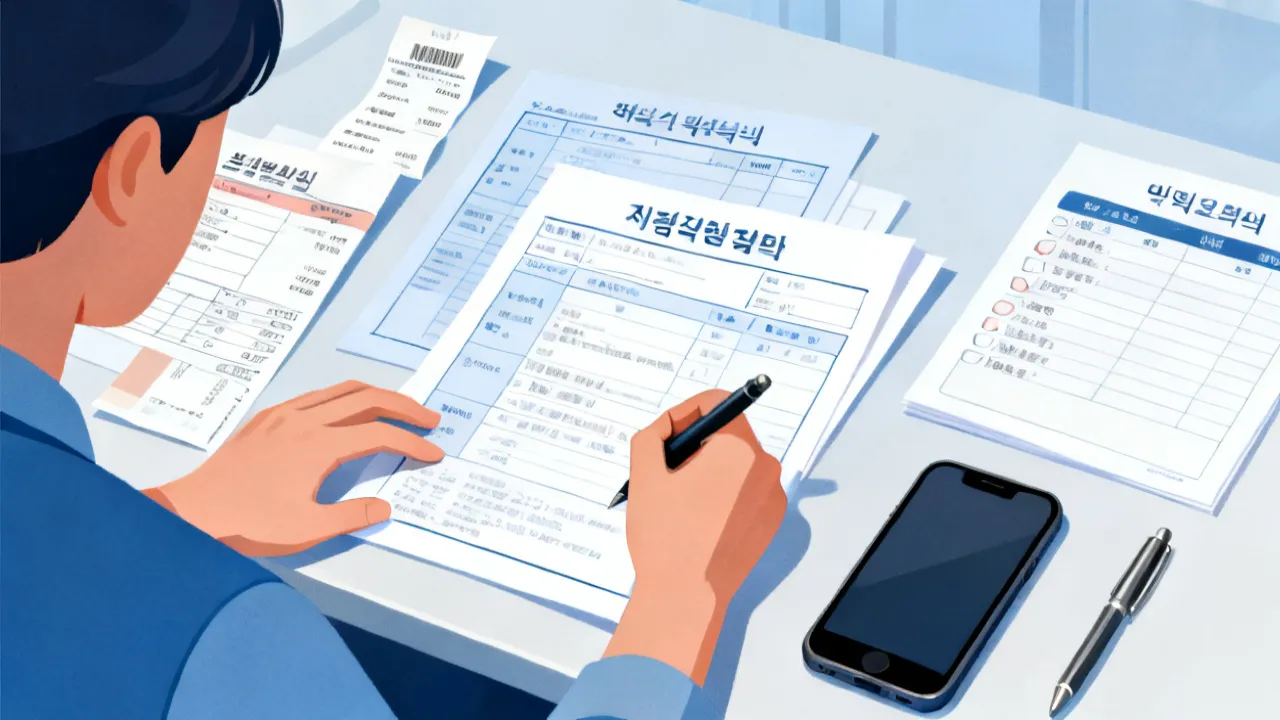
보험금 청구 서류 are the documents used to establish that an insured event occurred, that the claimant is entitled to make a claim, and that the amount requested is supported by evidence. In English, the term is commonly translated as “insurance claim documents,” although the exact paperwork differs according to the insurance contract and the nature of the loss.
From an industry perspective, the most important principle is simple: submit documents that connect the policy, the event, the financial loss, and the person making the claim. A receipt by itself may show that money was paid, but it may not explain why treatment was required. A medical certificate may describe a diagnosis, but it may not establish the final amount paid. An effective claim package brings these elements together.
For a typical medical claim in Korea, the core materials may include an insurance claim form, proof of identity, a medical expense receipt, a detailed statement of medical treatment, and a bank account document for payment. Additional records can be required for hospitalization, surgery, cancer treatment, disability, death, traffic accidents, or claims involving a third party.
There is no universal document list that applies to every insurer or every policy. The appropriate checklist is determined by several factors:
- The type of insurance, such as health, accident, life, travel, automobile, property, or liability coverage.
- The specific benefit being claimed under the policy.
- The date and circumstances of the incident.
- The size of the claim and the insurer’s verification procedures.
- Whether the claimant is the policyholder, insured person, beneficiary, legal representative, or authorized agent.
- Whether the claim involves another insurer, an employer, a public institution, or a responsible third party.
Before collecting paperwork, read the relevant policy wording and contact the insurer’s official claims channel. This first check can prevent a common mistake: obtaining a document that appears relevant but does not contain the information required for the benefit under review.
It is also helpful to distinguish between documents that prove eligibility and documents that prove amount. Eligibility documents may establish the diagnosis, accident, disability, death, or insured status. Amount documents may establish the treatment cost, repair expense, lost income, or other financial consequence. Some documents perform both functions, but many do not. Understanding this distinction makes it easier to identify what is missing from a claim package.
The Core Document Set for Many Claims
Although requirements vary, many insurance claims begin with a similar foundation. The following documents usually help an insurer identify the claimant, confirm the event, and calculate the benefit.
- Insurance claim form: This normally records the policy number, claimant information, date of loss, description of the event, requested benefit, and payment account.
- Identity verification: A resident registration card, driver’s license, passport, or another accepted identification document may be requested, subject to the insurer’s procedures.
- Evidence of the event: This may be a medical record, accident report, police report, repair estimate, death certificate, travel document, or other record appropriate to the claim.
- Evidence of financial impact: Receipts, itemized billing statements, invoices, wage-loss records, repair invoices, or settlement documents may be needed.
- Payment information: The insurer may request a bank account in the claimant’s name or evidence explaining why payment should be made to another person.
- Authority documents: If a representative submits the claim, documents proving the representative’s authority may be required.
Copies and electronic files should be clear, complete, and legible. A photograph with glare, a cropped page, or an image that hides the document number can cause an avoidable request for resubmission. Keep the original documents until the claim has been concluded, particularly when the insurer asks for copies rather than originals.
A useful way to organize the core set is to divide it into four folders. The first folder can contain policy and identity materials. The second can contain documents describing the event. The third can contain expenses and calculations. The fourth can contain correspondence, submission confirmations, and later requests from the insurer. This organization is particularly useful when a claim remains open for several weeks or involves multiple institutions.
Claimants should also check whether the insurer accepts electronic copies, scanned documents, photographs, or electronic medical certificates. Some insurers permit simplified digital claims for certain products and claim amounts, while other claims may require signed forms, original records, or a face-to-face identity verification process. The document itself may be correct, but the submission method can still be unsuitable.
Medical Insurance Claim Documents
Medical claims are among the most frequent situations in which people search for 보험금 청구 서류. The precise documents depend on whether the claim concerns outpatient treatment, hospitalization, surgery, prescription medicine, a serious illness diagnosis, or a disability benefit.
Outpatient treatment
For a routine outpatient claim, an insurer may request a claim form, proof of identity, a medical expense receipt, and a detailed medical treatment statement. The treatment statement can be important because a receipt may show the amount paid without identifying each service, procedure, or medication.
Some claims may require a diagnosis document or a treatment confirmation. This is more likely when the benefit is tied to a particular diagnosis, procedure, injury code, or medical classification. The document should generally identify the patient, institution, treatment date, diagnosis, and physician or medical institution details, as applicable.
When several outpatient visits relate to the same condition, arrange the records chronologically. A short cover note can explain that the visits form one course of treatment. This is not always required, but it can help prevent the reviewer from treating each document as an unrelated event. If treatment occurred at different institutions, explain whether one institution referred the patient to another or whether the treatment was independent.
Hospitalization
A hospitalization claim commonly requires evidence of admission and discharge. Depending on the contract, the insurer may request a hospitalization confirmation, discharge summary, itemized bill, treatment statement, and medical records related to the covered condition. If the benefit is calculated according to the number of days hospitalized, the admission and discharge dates must be consistent across the submitted records.
When a claimant has been transferred between institutions, documents from each relevant facility may be needed. Gaps between admission and discharge dates should be explained rather than left for the claims reviewer to interpret.
Hospital records can contain several different dates, including the date of admission, date of surgery, date of discharge, date of billing, and date on which a document was issued. These dates are not interchangeable. A document issued on a later date does not necessarily show that treatment occurred on that date. If the benefit depends on the treatment period, the underlying admission and discharge dates should be clearly identified.
Surgery and procedures
A surgery benefit often depends on the type of procedure, the medical reason for it, and the policy’s definition of a covered operation. A surgery confirmation or operative record may therefore be more useful than a general receipt. The insurer may also request a diagnosis certificate, procedure record, pathology report, or hospital statement.
Medical terminology can differ from the wording used in an insurance contract. A procedure that is described as surgery in ordinary conversation may not fall within the policy’s defined category. Conversely, a procedure described with a technical term may qualify if the policy’s conditions are met. The claims decision should be based on the contract and the evidence, not only on the name commonly used by a patient.
Some policies distinguish among open surgery, laparoscopic procedures, endoscopic procedures, catheter-based procedures, injections, and minor operations. The document should identify what was actually performed rather than merely stating that the patient received treatment. If the medical institution uses a general term, the claimant can ask whether a more detailed operative or procedure record is available.
Prescription medicine
Claims involving prescription medicine may require the pharmacy receipt and the prescription or medication statement. The documents should identify the date, patient, pharmacy, medication, and amount paid where relevant. If a prescription was filled on multiple occasions, organize the records by date and attach them to the corresponding treatment period.
Pharmacy documents may separate covered and non-covered medication, dispensing fees, and other charges. Do not assume that the total amount on a payment receipt is automatically the amount eligible under the policy. The insurer may calculate reimbursement based on the contract, the type of medicine, and applicable deductibles or limits.
Serious illness and diagnosis benefits
Critical illness, cancer, stroke, heart disease, and similar benefits often involve stricter documentary requirements because payment may depend on a defined diagnosis rather than on the existence of medical expenses alone. The insurer may request a diagnosis certificate, pathology report, imaging report, clinical record, or other specialist evidence.
Patients should avoid asking a medical institution to issue a document using wording that does not accurately reflect the medical record. The appropriate approach is to request the institution’s standard official documentation and ask the insurer whether further records are necessary.
For cancer or pathology-based benefits, a pathology report may be particularly significant because the policy may define coverage by pathological classification, stage, or confirmed tissue findings. For stroke or heart disease benefits, imaging reports, specialist records, and clinical findings may be relevant. The required evidence depends on the policy language, so a general diagnosis label should not be assumed to answer every coverage question.
Disability and long-term impairment
Disability benefits may require more than a diagnosis or a single treatment record. The insurer may request a disability diagnosis, functional assessment, permanent impairment evaluation, physician’s opinion, rehabilitation records, or evidence showing that the condition has stabilized. Some policies use specific impairment tables or definitions, while others focus on the claimant’s ability to perform particular activities.
A temporary inability to work is not necessarily the same as a contractual disability. Likewise, a serious diagnosis does not automatically prove permanent functional impairment. The documents should address the standard used by the policy, including duration, degree, and effect on daily or occupational activities when relevant.
Life Insurance, Death Benefits, and Beneficiary Documents
Death benefit claims involve a different documentary structure because the insurer must confirm the death, the identity of the insured person, and the person entitled to receive payment. Common documents may include a claim form, death certificate, family relationship records, beneficiary identification, and bank account information.
Depending on the circumstances, the insurer may also request a medical death certificate, autopsy report, police investigation report, accident report, or hospital records. These additional documents can be relevant when the policy contains different benefits for natural death, accidental death, or death caused by a particular event.
Beneficiary information should be reviewed carefully. A family member may believe that being related to the deceased automatically establishes entitlement, but the policy designation and applicable succession rules may determine who can claim. If a beneficiary has died, lacks legal capacity, is a minor, or is represented by another person, additional legal or authority documents may be required.
Where several beneficiaries exist, the insurer may request documents for each beneficiary or a written arrangement concerning payment. A mismatch between the name on the policy and the name on an identity document may require evidence of a legal name change. These issues are administrative rather than medical, but they can significantly affect processing time.
Accident, Injury, and Liability Claims
Accident claims require a clear account of what happened, when it happened, who was involved, and what loss resulted. The documents vary substantially depending on whether the accident occurred at home, at work, on a road, during travel, or on another person’s property.
- Personal accident: Medical receipts, diagnosis documents, treatment records, photographs, and a written description of the incident may be relevant.
- Traffic accident: A police report, accident confirmation, vehicle repair estimate, medical documents, and settlement or compensation records may be requested.
- Work-related incident: Workplace incident records, employment information, medical evidence, and documents from relevant public or occupational institutions may be needed.
- Liability claim: Evidence of the claimant’s loss, proof of responsibility, correspondence with the affected party, and payment or settlement records may be important.
- Travel accident: Travel itinerary, boarding information, local reports, medical records, and receipts may be requested depending on the policy.
Photographs can support a claim, but they should be preserved in their original form when possible. Editing, excessive compression, or removing metadata may make it harder to establish when and where an image was taken. A photograph is evidence, not a substitute for an official report when the policy or circumstances require one.
For a traffic accident, separate the documents into accident evidence, medical evidence, vehicle damage evidence, and compensation evidence. The accident evidence may show the location, time, vehicles, parties, and reported circumstances. Medical evidence may show the injury and treatment. Repair estimates may show the physical damage, while settlement documents may show amounts already paid by another party or insurer.
In a liability claim, responsibility may be disputed. A claimant should preserve messages, photographs, CCTV-related information, witness contact details, invoices, and notices exchanged with the responsible party. Do not make a premature admission of legal responsibility merely to resolve a conversation quickly. Describe the facts accurately and allow the insurer or appropriate professional to assess liability under the relevant policy.
Property, Fire, and Household Claims
Property claims usually require evidence of both the damage and the value of the affected property. A claimant may need to provide photographs, repair estimates, purchase records, invoices, ownership evidence, and a detailed description of the incident.
For water damage, fire, theft, or electrical incidents, prompt notification is especially important. The claimant should take reasonable steps to prevent further damage, but should not dispose of damaged items before the insurer or an appointed assessor has had an opportunity to inspect them, unless leaving them in place creates a safety risk.
Useful records may include:
- Photographs showing the overall scene and close-up damage.
- Receipts or invoices demonstrating purchase or replacement value.
- Repair estimates from qualified service providers.
- Police, fire department, building management, or utility company records.
- Lease, ownership, or inventory documents where responsibility is disputed.
- Temporary accommodation or emergency expense receipts when the policy covers those costs.
Do not exaggerate the condition or value of an item. An accurate inventory separated into damaged, missing, and unaffected property is more persuasive than a broad estimate with no supporting records.
For household contents, document the item’s brand, model, approximate purchase date, condition before the incident, and replacement or repair cost. If the original receipt is unavailable, alternative evidence may include a card transaction record, warranty registration, photographs showing possession, an online order history, or a repair provider’s assessment. The insurer may apply depreciation or a policy limit, so purchase price and payable benefit are not necessarily identical.
For theft claims, report the incident promptly to the police and retain the report number. List missing property carefully and avoid adding an item merely because it might have been present. For fire or major water damage, keep records of emergency measures, temporary storage, cleaning, and accommodation expenses if the policy potentially covers them.
Travel Insurance Claim Documents
Travel claims often involve documents issued in more than one country. The claimant may need to provide a policy certificate, passport identification page, travel itinerary, boarding pass, local medical records, receipts, airline correspondence, baggage reports, or police reports.
For medical treatment abroad, documents should identify the patient, treatment date, diagnosis, services provided, and amount paid. If the records are written in a language the insurer cannot readily review, a translation may be requested. Ask the insurer whether a full certified translation is necessary or whether a basic translation of key information is sufficient.
For delayed or canceled flights, obtain an official confirmation from the airline or travel provider stating the scheduled and actual times, reason for delay or cancellation, and any compensation or alternative arrangements. A boarding pass alone may establish that the passenger traveled, but it may not prove the length or cause of the delay.
For lost or delayed baggage, file the appropriate report with the airline or airport before leaving the relevant facility when possible. Retain baggage tags, receipts for essential replacement items, delivery records, and correspondence with the airline. A claim for personal property may require both proof of the baggage incident and evidence of the value of the contents.
Comparison of Common Claim Types
The table below provides a practical comparison. It is a planning aid rather than a substitute for the insurer’s official checklist.
| Claim type | Typical primary evidence | Possible additional evidence | Main review issue |
|---|---|---|---|
| Outpatient medical treatment | Claim form, identity document, medical receipt | Detailed treatment statement, diagnosis confirmation, prescription record | Whether the service and expense fall within the policy |
| Hospitalization | Admission and discharge confirmation, itemized bill | Discharge summary, treatment records, nursing or procedure records | Covered condition and eligible hospitalization period |
| Surgery | Surgery confirmation or operative record | Diagnosis certificate, pathology report, medical records | Whether the procedure meets the policy definition |
| Accident injury | Accident description and medical records | Police report, photographs, witness information, settlement documents | Cause, timing, responsibility, and resulting injury |
| Property damage | Incident report, photographs, repair estimate | Purchase evidence, ownership record, inspection report | Cause of damage, ownership, and reasonable loss amount |
| Death benefit | Death certificate and beneficiary information | Family relationship records, legal representative documents | Identity of beneficiary and policy conditions |
| Travel delay | Travel itinerary and official delay confirmation | Boarding pass, meal or accommodation receipts, airline correspondence | Whether the delay satisfies the policy threshold |
How to Prepare 보험금 청구 서류 Step by Step
A structured process reduces omissions and makes later communication easier. The following sequence is suitable for many personal insurance claims.
Step 1: Identify the exact benefit
Start with the benefit name, not merely the general event. “Hospitalization” may involve a daily hospital benefit, reimbursement of medical expenses, surgery coverage, or an illness-related lump-sum benefit. Each may use different eligibility rules and documents.
If several benefits may apply to the same event, list them separately. A single accident could produce an outpatient expense claim, an injury benefit, a surgery benefit, and a disability claim. Treating all of these as one generic request can make it difficult to identify which evidence supports which benefit.
Step 2: Confirm the policy and claimant
Check the policy number, insured person, policyholder, beneficiary, and any co-insurance or duplicate coverage issues. If the claimant is not the policyholder, determine whether consent, family relationship evidence, or a power of attorney will be necessary.
Step 3: Ask for the current checklist
Use the insurer’s official website, mobile application, customer center, branch, or designated claims representative. Requirements can change according to internal procedures, policy terms, and the amount or complexity of the claim. Keep a note of the date, channel, and guidance received.
When speaking with a customer center, record the representative’s name or consultation number if available. A brief written record of the guidance can be useful if the requirements are later clarified or changed. This does not replace the policy, but it helps establish what instructions the claimant followed.
Step 4: Request documents from the relevant institution
Medical documents should be obtained from the hospital, clinic, or pharmacy. Accident documents may come from the police, employer, transport operator, or property manager. Ask for documents that accurately describe the event; do not request wording designed solely to produce a particular insurance outcome.
Ask the issuing institution how long the document will remain available and whether it can be reissued. Some documents are easier to obtain immediately after treatment or an incident than months later. If the institution uses an electronic certificate system, confirm whether the insurer accepts that format.
Step 5: Review consistency
Compare names, dates, diagnosis descriptions, accident locations, payment amounts, and account information across all documents. Minor formatting differences may be harmless, but a different treatment date or conflicting incident description can lead to questions and delay.
Pay particular attention to transliteration and name order when records include both Korean and English names. For foreign documents, confirm that the name matches the passport or policy record. If a claimant legally changed a name, include the appropriate evidence rather than assuming the insurer will infer the connection.
Step 6: Submit through a secure channel
Electronic submission is convenient, but the claimant should use the insurer’s authenticated application, official portal, or another verified method. Avoid sending sensitive medical records through an unconfirmed address or an informal messaging account.
Step 7: Save the submission record
Keep a copy of every file, the submission confirmation, the claim reference number, and correspondence with the insurer. A simple folder organized by claim date can be valuable if additional documents are requested.
Step 8: Respond to additional questions precisely
An insurer may ask for supplementary evidence because a document is unclear, a benefit requires further verification, or the facts do not yet establish coverage. Respond to each question separately and provide a short explanation when a requested record does not exist.
Step 9: Confirm the calculation
After payment, review the settlement statement or payment explanation when one is provided. Compare the paid amount with the claimed amount, deductible, benefit limit, and any excluded expenses. If the amount is different from what you expected, ask for the calculation basis rather than assuming that an error occurred.
Conditions and Requirements That Commonly Matter
Insurance claims are assessed under the contract, applicable law, and the evidence available. Several conditions deserve particular attention.
Notice of loss
Policies often require prompt notice of an incident. The exact period depends on the policy and the type of insurance. Delayed notice does not automatically determine the outcome in every case, but it can affect investigation, evidence preservation, or eligibility. Notify the insurer as soon as reasonably possible, especially after theft, fire, serious injury, or a claim involving another party.
Claim limitation periods
In Korea, insurance claim limitation rules may be affected by the Commercial Act, policy wording, and the nature of the claim. A commonly referenced statutory framework provides a three-year period for insurance claims, but readers should confirm the applicable rule for their circumstances and should not treat a general period as a substitute for legal advice. Waiting until the final months can create unnecessary risk.
Policy exclusions and waiting periods
A medical expense can be genuine and still fall outside coverage because of an exclusion, a waiting period, a pre-existing condition provision, a non-covered treatment rule, or a benefit-specific limitation. The claim documents establish the facts; the policy determines whether those facts qualify for payment.
Deductibles and non-covered expenses
Receipts may include both covered and non-covered services. The reimbursable amount may also be affected by a deductible, co-payment, benefit limit, or annual threshold. Submit the complete relevant records and allow the insurer to apply the contract terms rather than removing items based on guesswork.
Multiple insurance policies
When several policies cover the same medical expense or loss, the payment method can depend on whether the coverage is indemnity-based or fixed-benefit coverage. Do not assume that submitting the same expense to multiple insurers produces duplicate reimbursement. Review each policy and disclose overlapping coverage when required.
Keep records of payments received from other insurers, public programs, employers, or responsible parties. These records may be relevant to the insurer’s calculation, particularly where a policy reimburses actual loss rather than paying a fixed amount independent of the expense.
Representation and consent
A family member may assist with paperwork, but assistance does not always establish legal authority to receive confidential medical information or payment. The insurer may request a power of attorney, consent form, family relationship certificate, seal certificate, or other evidence. The exact requirements vary according to the claimant’s age, capacity, and relationship to the insured person.
Foreign documents and translations
Documents issued outside Korea may need translation, notarization, apostille-related verification, or confirmation from the issuing institution. The requirements depend on the insurer and the type of record. Before paying for a formal translation, ask whether the insurer accepts an informal translation or requires a certified version.
Digital Submission and Paper Submission
Digital claims can reduce delivery time and make it easier to track a submission. They are particularly practical for smaller medical claims when the insurer permits electronic receipt images or electronic certificates. Paper submission may remain appropriate when original documents are required, the claim is complex, the claimant lacks access to digital tools, or the records contain details that are difficult to capture clearly.
| Submission method | Advantages | Points to check |
|---|---|---|
| Insurer mobile application | Convenient upload, claim tracking, electronic notifications | File size, image clarity, authentication, supported document types |
| Official web portal | Suitable for organized digital records and desktop scanning | Correct domain, secure login, confirmation number, upload completion |
| Branch or customer center | Opportunity to ask questions and present complex paperwork | Business hours, appointment requirements, original-document policy |
| Postal submission | Useful when paper originals or signed records are requested | Copies, delivery tracking, document inventory, retention of originals |
Industry practice increasingly favors digital intake, but convenience should not replace document quality. A high-resolution scan of a complete page is preferable to several low-quality photographs. If an application shows that a file was uploaded but does not display a final submission confirmation, contact the insurer and retain evidence of the attempted submission.
Before photographing a document, place it on a flat, contrasting surface and ensure that all four corners are visible. Avoid shadows, reflections, and folded pages. Review the image at full size to confirm that small characters, seals, signatures, and amounts can be read. If the application limits the number of files, combine pages into a single PDF only when doing so does not reduce readability.
Common Reasons for Delays
Most delays are not caused by one dramatic mistake. They often result from small gaps that prevent the reviewer from completing the basic verification.
- The claim form is unsigned or contains a missing policy number.
- The medical receipt is submitted without the detailed treatment statement needed for review.
- The diagnosis document does not identify the relevant date or condition.
- The claimant’s name differs across the claim form, medical document, and bank account.
- The payment account belongs to another person without an explanation or authority document.
- Photographs do not show the full extent or location of property damage.
- The accident description changes between the claim form and supporting records.
- A requested original, translation, consent form, or official report is missing.
- The claimant submits only a summary document when the insurer needs underlying evidence.
A useful quality-control method is to create a one-page index. List each document, its date, the event or expense it supports, and whether it is an original or copy. This helps the reviewer and gives the claimant a clear record of what has been submitted.
Another common source of delay is submitting documents in several separate batches without identifying how they relate to the original claim. If additional documents are sent later, include the claim number in the file name or message subject and state whether the materials are replacements, supplements, or corrections. This reduces the risk that a document will be attached to the wrong file.
Privacy and Document Security
Insurance claim documents can contain resident registration information, medical diagnoses, bank details, family relationships, and accident circumstances. Treat them as sensitive personal information.
- Submit documents only through a verified insurer channel.
- Check the recipient address before sending email.
- Do not upload documents to public forums or social media.
- Use passwords and device security when storing digital files.
- Share only the records relevant to the claim unless broader disclosure is requested through a legitimate process.
- Retain submission confirmations and delete unnecessary duplicate files from shared devices.
Redaction should be handled cautiously. Removing unrelated personal information may protect privacy, but covering a policy number, diagnosis, date, or amount that the insurer needs can make the document unusable. If uncertain, ask the insurer whether a particular field can be masked.
When using an agent, family member, claims assistant, or translation service, provide only the authority necessary for the task. Confirm how the third party will store and delete the records. A claimant should be especially careful with documents containing medical history and account information because these may be reused or forwarded if not handled securely.
How Experts Evaluate a Claim Package
An experienced claims professional generally examines five questions in sequence:
- Identity: Is the claimant connected to the policy and authorized to request payment?
- Occurrence: Did the insured event happen during the relevant period?
- Cause: Does the evidence explain the cause of the illness, injury, accident, or property loss?
- Coverage: Does the event meet the policy’s definition and avoid applicable exclusions?
- Amount: Is the requested benefit supported by receipts, dates, limits, and calculation rules?
This framework explains why adding unrelated paperwork does not necessarily strengthen a claim. The strongest file is relevant, consistent, and traceable. If a document does not answer one of these questions, it may be less useful than a concise explanation that connects the evidence already provided.
When an insurer requests additional records, the request should be read carefully. It may be asking for one missing page, clarification of a date, proof of authority, or evidence concerning a policy exclusion. Providing a large volume of unorganized material can obscure the answer. Respond with the requested document and a brief cover note describing what it establishes.
Claims reviewers also consider whether the evidence was created close to the time of the event and whether it comes from a reliable source. An official medical record, police report, invoice, or institutional confirmation generally has a different evidentiary function from a personal recollection. A claimant’s written statement remains useful, particularly when it explains chronology, but it should complement rather than replace independent records when those records are available.
Writing an Effective Incident Description
Many claim forms include a section asking the claimant to describe the event. This section should be factual, chronological, and specific. State the date, approximate time, location, people involved, what occurred, immediate symptoms or damage, and the steps taken afterward. Avoid speculation about legal responsibility or medical causation unless the statement is supported by professional evidence.
For example, an accident description can explain that the claimant slipped on a wet surface at a particular location, experienced pain in a particular body area, notified the property manager, and attended a medical institution later that day. It should not state that the property manager was legally negligent unless that conclusion has been established. Similarly, a medical claim should identify the onset or treatment circumstances without claiming that a condition was caused by an event if the medical record does not say so.
If the claimant does not remember an exact time, use an accurate approximation and identify it as such. Guessing an exact time can create an unnecessary conflict with CCTV, transport, or medical records. Corrections should be made transparently, with an explanation of why the earlier information was incomplete or mistaken.
What to Do When a Claim Is Delayed or Disputed
A delay and a denial are different situations. A delay may mean that the insurer is still collecting records, reviewing medical information, verifying responsibility, or calculating the amount. A denial means the insurer has determined that payment is not available under its interpretation of the policy or evidence.
If processing appears delayed, ask for:
- The current status of the claim.
- The specific document or issue preventing completion.
- The name or reference number of the claim.
- The expected next procedural step.
- Whether any submitted document was unreadable or incomplete.
If a claim is denied, request the decision explanation in writing and compare it with the policy wording. Check whether the insurer relied on an exclusion, a definition, a waiting period, insufficient evidence, or a calculation issue. If the explanation is unclear, ask a focused question rather than resubmitting the same documents without comment.
For a serious or disputed matter, a claimant may consider consulting a qualified insurance professional, legal adviser, medical-record specialist, or an appropriate consumer dispute-resolution organization in Korea. The correct avenue depends on the insurer, the product, the amount, and the nature of the disagreement. Keep all correspondence factual and avoid making unsupported allegations.
If the dispute concerns a medical interpretation, ask which medical fact is unresolved. If it concerns a policy definition, identify the exact clause relied upon. If it concerns the amount, request the calculation. Separating these issues can make the review more productive than arguing generally that the claim is unfair.
Practical Checklist Before Submission
Use the following checklist as a final review:
- Have you identified the exact benefit being claimed?
- Is the policy number correct?
- Are the policyholder, insured person, claimant, and beneficiary clearly identified?
- Is the claim form complete, dated, and signed where required?
- Do the dates match across medical, accident, and payment records?
- Have you included the itemized statement when the receipt alone is insufficient?
- Does the evidence explain both the event and the financial amount?
- Is the payment account appropriate and properly documented?
- Have you obtained authority documents if someone is acting for the claimant?
- Are digital files legible, complete, and securely uploaded?
- Have you saved copies and the submission confirmation?
- Have you checked whether the insurer may request originals?
If the answer to one item is “not yet,” resolve it before submission when possible. If a document cannot be obtained, explain why and ask what alternative evidence the insurer accepts.
For a complex claim, add a separate calculation sheet. Show the date of each expense, the provider, the total amount, any payment received from another source, and the amount being claimed under the relevant benefit. A calculation sheet does not override the policy, but it allows the insurer to identify the requested amount efficiently and helps the claimant detect duplicate or omitted entries.
Frequently Asked Questions
What does 보험금 청구 서류 mean?
보험금 청구 서류 means the documents submitted to request insurance payment. Depending on the claim, they can include an application form, identity verification, medical or incident evidence, receipts, payment details, and documents proving authority to act for another person.
Can one document list be used for every insurer?
No. Insurers and policies can differ in terminology, benefit definitions, submission methods, and verification requirements. A general checklist is useful for preparation, but the insurer’s current official instructions should control.
Is a medical receipt enough for a medical claim?
Not always. A receipt may establish the amount paid, while a detailed treatment statement or diagnosis document may be needed to identify the service, condition, or procedure. Ask whether the insurer requires supporting medical records for the specific benefit.
Do I need a diagnosis certificate for every outpatient visit?
Not necessarily. Some routine expense claims may be assessed with a claim form, identity verification, receipt, and treatment statement. A diagnosis document becomes more likely when the benefit depends on a named illness, injury, surgery, or defined diagnosis.
Can a family member submit the documents?
A family member may assist, but the insurer can require consent or proof of authority. Requirements are especially important when the family member requests medical information, acts for a minor or incapacitated person, or receives payment on another person’s behalf.
Should original documents be sent?
Only when the insurer specifically requires them or the submission channel is designed for originals. Preserve originals whenever possible, send copies when permitted, and confirm whether documents will be returned after review.
What should I do if a document contains an error?
Contact the issuing institution to request a correction or reissue. Do not alter the document yourself. If the error is minor but cannot be corrected immediately, explain it to the insurer and provide evidence that clarifies the correct information.
Can I submit a claim electronically?
Many insurers support electronic submission for selected products and claim amounts. The available method may depend on the insurer, the claimant’s authentication, the document type, and whether an original is required. Confirm that the upload was completed and save the confirmation number.
Why might an insurer ask for more medical records?
The insurer may need to verify the diagnosis, treatment date, cause of illness, procedure type, or relationship between the event and the claimed benefit. Additional requests do not by themselves determine whether the claim will be paid; they indicate that the initial file does not yet answer a review question.
What if I lost a receipt?
Ask the medical institution, pharmacy, repair provider, or other issuer whether a duplicate receipt, transaction record, itemized statement, or alternative official document can be provided. Tell the insurer what is unavailable and ask which substitute evidence is acceptable.
Does a small claim require fewer documents?
Some insurers use simplified procedures for certain lower-value claims, but this is not universal. A small amount does not remove the need to establish the insured event, the claimant’s identity, and the relationship between the expense and the policy.
How long should I keep the documents?
Keep the policy, submitted documents, correspondence, and payment record until the claim is fully resolved and any applicable review or limitation period has passed. For significant or disputed claims, longer retention may be prudent. Digital copies should be backed up securely.
Can I submit documents after receiving an initial payment?
Sometimes. An initial payment may relate to only one benefit or one portion of a claim. Ask the insurer whether the claim is closed, partially paid, or still open. If additional treatment or damage occurs, determine whether it is a continuation of the original event or a new claim requiring separate notification.
What if the insurer requests information I believe is excessive?
Ask why the information is needed and how it relates to the coverage review. Medical and personal information should be handled under appropriate privacy procedures, but an insurer may legitimately request relevant evidence for a disputed or complex claim. If the request remains unclear, seek an explanation through the insurer’s formal complaint or customer-service process.
Sources and Verification Approach
This guide reflects general insurance-claim practice and publicly recognized principles concerning policy interpretation, personal information protection, medical documentation, and claim administration in Korea. For authoritative verification, consult the relevant insurance policy, the insurer’s official claims guidance, the Financial Supervisory Service’s consumer information, the Korea Consumer Agency’s insurance-related resources, and applicable provisions of Korean law, including the Commercial Act where relevant.
Official guidance should be checked for the current procedure because document requirements, electronic submission standards, and contact channels can change. A source should be evaluated according to its authority and date, and an insurer’s product-specific instructions should take priority over general online advice.
Readers should also distinguish between general information and advice about a specific dispute. A policy may have been amended, renewed, converted, or supplemented by special terms. The version in force on the date of the insured event is often important. If the claim involves a large amount, possible fraud allegations, a serious injury, death, permanent disability, or a disputed exclusion, professional advice may be appropriate.
Conclusion
Preparing 보험금 청구 서류 is not simply a matter of collecting as many papers as possible. The goal is to present a coherent record showing who is claiming, what happened, when it happened, which policy applies, and how the requested amount was calculated. Start with the exact benefit, confirm the insurer’s current checklist, gather accurate records from the relevant institutions, review every date and name, and submit through a secure channel.
When additional information is requested, respond directly and preserve a complete file of the communication. This organized approach cannot guarantee payment, because coverage remains governed by the insurance contract and applicable rules, but it can reduce avoidable confusion and help the claim proceed on a clearer evidentiary basis.
The most reliable claim packages are accurate rather than excessive. They contain documents that answer the insurer’s central questions, explain any unusual circumstances, and show a transparent calculation of the requested amount. By treating the claim as an organized evidentiary record instead of a collection of unrelated attachments, a claimant can improve clarity, protect personal information, and manage the process more effectively.