Understanding Non-Covered Medical Reimbursement Insurance
This guide explains how 비급여 실비, or reimbursement claims for non-covered medical expenses, generally work in South Korea. It distinguishes National Health Insurance coverage from private indemnity insurance, reviews deductibles, exclusions, claim limits, required documents, and policy-generation differences, and outlines a practical filing process. Actual eligibility depends on the policy wording, treatment records, medical necessity, and insurer review, so readers should confirm the applicable terms before receiving care or submitting a claim.
What 비급여 실비 Means
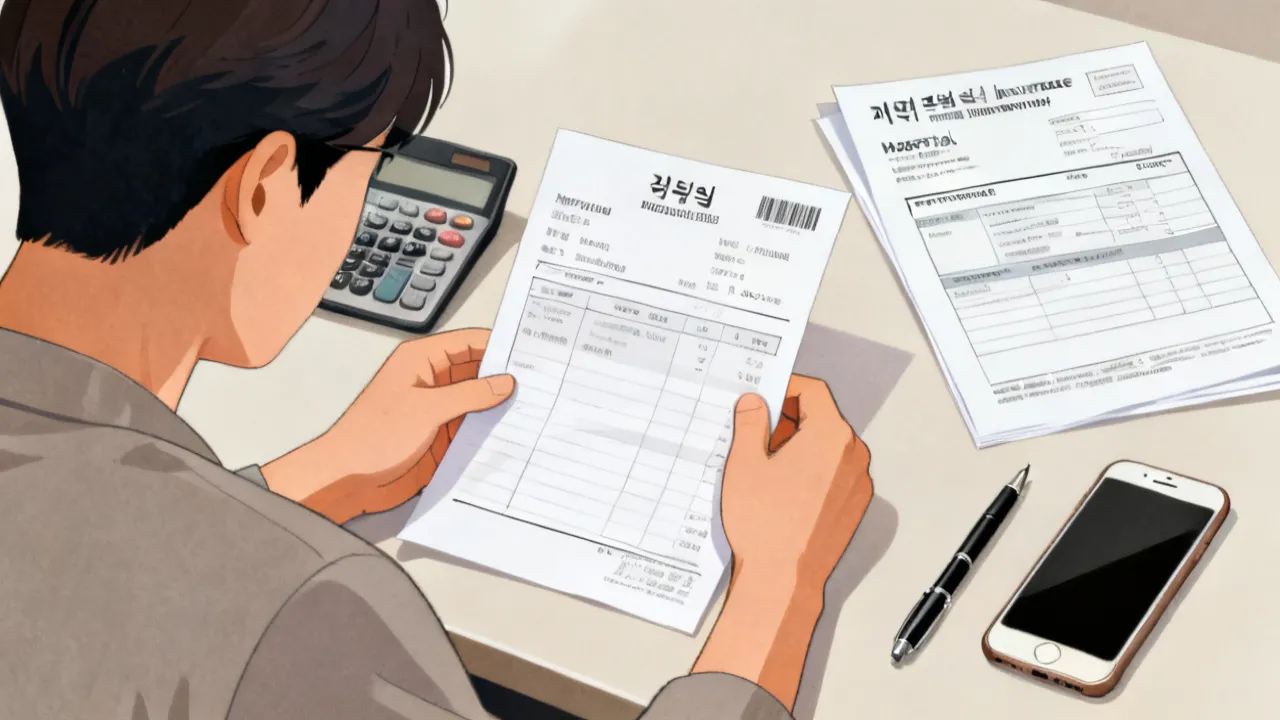
비급여 실비 refers to the process of seeking reimbursement through private indemnity health insurance for medical expenses that are classified as non-covered under Korea’s National Health Insurance system. The expression is widely used in everyday conversation, but it does not mean that every non-covered charge will automatically be reimbursed. The outcome depends on the insurance contract, the purpose of treatment, the medical records, the amount actually paid, and any applicable exclusions or limits.
The most important distinction is between two systems. National Health Insurance determines whether a medical service is covered by public health insurance. Private indemnity insurance then examines whether a patient’s remaining expense, including an eligible non-covered amount, falls within the scope of the individual insurance policy. A service can therefore be non-covered by National Health Insurance while being partly reimbursable under a private policy, or it can be excluded by both systems.
From an insurance-industry perspective, the central question is not simply whether an item appears on a receipt as “non-covered.” The insurer normally evaluates several connected issues:
- Whether the treatment was actually provided to the insured person.
- Whether the expense is recognized under the policy terms.
- Whether the treatment was medically necessary rather than primarily cosmetic, elective, or convenience-oriented.
- Whether a deductible, co-payment, annual limit, frequency limit, or special exclusion applies.
- Whether the submitted documents adequately connect the diagnosis, treatment, and payment.
Accordingly, 비급여 실비 is best understood as a claims-review issue rather than a simple reimbursement promise. Careful document management and a clear understanding of the policy can reduce avoidable disputes, but no general article can determine the result for an individual claim.
Why Non-Covered Treatment Requires Careful Review
Under the Korean healthcare system, medical services are generally classified as covered or non-covered according to public insurance rules and related administrative standards. Covered treatment is subject to National Health Insurance rules and usually involves a patient contribution. Non-covered treatment is not paid under the ordinary National Health Insurance benefit structure, although some items may be managed under separate arrangements or special categories.
Private indemnity insurance operates on a separate contractual basis. Its purpose is generally to compensate eligible medical expenses actually incurred by the policyholder, subject to the conditions of the contract. It is not designed to create a financial gain from illness. If the same expense has already been reimbursed by another payer, the insurer may consider coordination or duplicate-payment rules.
This distinction explains why a hospital receipt alone may not settle a claim. A receipt can show that a payment was made, but it may not explain:
- What diagnosis justified the service.
- Which body part or condition was treated.
- Whether the procedure was medically indicated.
- Whether the charge represented a treatment, examination, material, room fee, prescription, or administrative service.
- Whether the item was part of a package or bundled with another service.
For that reason, insurers may request additional documents such as a diagnosis certificate, treatment confirmation, medical record excerpt, physician’s opinion, itemized statement, or detailed explanation of a procedure. The exact requirement varies by claim amount, treatment type, policy wording, and internal review process.
It is also useful to separate the question of billing classification from the question of insurance eligibility. A hospital or clinic classifies and bills a service under healthcare rules. The insurer later evaluates the resulting expense under a private contract. If the provider correctly classifies a service as non-covered, the patient should not ask the provider to describe it inaccurately merely to improve the possibility of reimbursement. If the classification itself appears wrong, the patient can request an explanation or pursue the appropriate administrative inquiry.
The Core Principles of 비급여 실비 Claims
1. The policy version matters
Private indemnity insurance has changed over time. Policies issued in different periods may use different benefit structures, deductibles, annual limits, non-covered categories, and claim-review standards. A policyholder should identify the contract version, not rely solely on the generic phrase “실비보험.”
For example, two people receiving a similar procedure may have different reimbursement results because their policies were issued under different terms. One contract may apply a combined outpatient limit, while another may separate covered and non-covered treatment. A later policy may impose a higher patient share for certain categories of non-covered services. These differences are contractual rather than evidence that one policyholder was treated unfairly.
Policyholders should also check whether the original contract has been renewed, converted, or changed. Some products are renewed periodically, and the applicable terms may be affected by a renewal date. A document received when the policy was first purchased may not fully describe the terms currently used for a later treatment date. The policy certificate, benefit schedule, special provisions, and renewal notices should therefore be reviewed together.
2. “Non-covered” does not automatically mean “excluded”
A non-covered classification describes the relationship between a medical service and National Health Insurance. It does not, by itself, determine private insurance eligibility. Some non-covered expenses may be included within the private policy’s benefit scope, while others may be expressly excluded.
Common reasons for exclusion can include treatment that is primarily cosmetic, services not considered medically necessary, expenses incurred for convenience, certain health screening activities, particular types of alternative treatment, and categories specifically listed in the policy. The wording differs among products, so broad assumptions are unsafe.
The purpose and context of treatment can matter. A service with a name commonly used in cosmetic clinics may be prescribed as part of treatment for a documented injury or disease, while the same service may be provided to a different person solely for appearance enhancement. Conversely, describing a cosmetic service in medical language does not by itself establish coverage. The insurer may examine the actual diagnosis, clinical findings, treatment plan, and records created at the time of care.
3. Reimbursement is usually based on actual eligible expense
Indemnity insurance generally examines the amount the insured actually paid, then applies policy rules such as deductibles, co-payments, limits, and exclusions. A higher hospital bill does not necessarily produce a proportionally higher payment. Nor does a doctor’s recommendation, by itself, remove all contractual restrictions.
The insurer may calculate the result in stages:
- Confirm that the claimant and treatment fall within the policy’s coverage period.
- Identify the total amount paid by the patient.
- Separate covered, non-covered, excluded, and uncertain items.
- Apply the applicable deductible or patient contribution.
- Check daily, visit-based, procedure-based, or annual limits.
- Determine the final payable amount under the contract.
For instance, a receipt may show a total payment of 300,000 won, but the insurer may identify only part of that amount as an eligible medical expense. A deductible may then be applied, followed by a policy-based patient share or limit. The final payment can therefore be substantially lower than the amount shown on the receipt. This is not necessarily a denial; it may be a partial payment under the calculation method in the contract.
4. Medical necessity is often central
Medical necessity is not a casual judgment about whether a patient wanted treatment. It is assessed through the diagnosis, symptoms, examination findings, treatment plan, clinical records, and the relationship between the condition and the service. When the treatment is commonly associated with appearance enhancement, wellness, convenience, or general prevention, the insurer may examine the medical basis more closely.
That does not mean a procedure with an aesthetic element is automatically excluded, nor does it mean a non-covered service is automatically covered. The relevant question is how the specific treatment was prescribed and documented in the individual case. Clear records are therefore important.
Medical necessity may also be considered in relation to the timing and repetition of treatment. One session may be consistent with an acute condition, while a long series of identical sessions may prompt questions about the continuing clinical reason. This does not mean repeated treatment is invalid. It means the records should explain why treatment continued, whether the patient’s condition changed, and how the provider evaluated the response.
5. The claimant must generally show a genuine financial loss
Private indemnity coverage is ordinarily connected to expenses actually incurred by the insured. The person submitting the claim should be able to show that the treatment was received and that the claimed amount was paid. Discounts, refunds, loyalty points, employer payments, government subsidies, and other contributions may affect the amount that remains the claimant’s actual expense.
Patients should report relevant reimbursements or third-party payments when the insurer asks for them. Submitting the gross hospital charge when another party paid part of it may create an inaccurate claim. The correct amount is determined under the policy’s coordination and loss-compensation rules, so the claimant should provide complete information rather than attempt to calculate around those rules.
How National Health Insurance and Private Insurance Interact
| Issue | National Health Insurance | Private indemnity insurance |
|---|---|---|
| Primary function | Determines public health insurance benefits and patient contributions. | Reimburses eligible expenses according to the individual contract. |
| Meaning of non-covered | The service is outside ordinary public insurance benefits or is handled under a separate rule. | The item may be eligible, partly eligible, or excluded depending on policy wording. |
| Main evidence | Public benefit standards, billing classification, and healthcare administration records. | Policy terms, receipts, itemized statements, diagnosis, treatment records, and payment evidence. |
| Payment principle | Public benefit rules and statutory patient contributions. | Actual eligible expense after deductibles, limits, and exclusions. |
| Review focus | Whether the treatment is a covered public benefit. | Whether the expense satisfies the private contract and is medically supported. |
This comparison is useful because patients sometimes ask a hospital to “change” a non-covered item into a covered one for insurance purposes. A medical provider must bill according to the applicable healthcare and billing rules, and an insurer must assess the claim under the policy. A patient should not request inaccurate records or descriptions. If a billing classification appears incorrect, the appropriate route is to ask the medical institution for an explanation and, where appropriate, consult the relevant public health insurance or medical review authority.
There can also be a difference between a service that is entirely non-covered and an amount that is a patient contribution for a covered service. These amounts may appear together on a hospital statement but have different meanings. An itemized statement can help distinguish the public-insurance portion, the patient’s contribution, and separate non-covered charges. The private policy may treat each portion differently, so the claimant should avoid treating the entire bill as one undivided category.
Types of Expenses That May Need Close Examination
The following categories are not automatic decisions. They are examples of expenses that often require a closer review of the policy and medical records.
Diagnostic examinations
Advanced imaging, laboratory tests, and specialized examinations may be classified differently depending on the clinical circumstances and public insurance rules. The same examination may have different coverage treatment when ordered for different symptoms or diagnoses. A claim should therefore show why the examination was ordered, not merely that the examination occurred.
A preventive health checkup and an examination ordered to investigate a symptom may involve similar equipment but serve different purposes. The insurer may review the medical record to determine whether the examination was connected to a diagnosed or suspected illness. If the receipt uses a general description, the claimant may need a treatment confirmation or physician’s statement explaining the reason for the examination.
Injections and infusion treatment
Injection charges may involve a medication cost, administration fee, materials, or a treatment service. The policy may handle each component differently. Documentation should identify the medication or treatment, the indication, the date, and the amount paid. Promotional descriptions used by clinics should not be treated as proof of insurance eligibility.
Some injection claims are reviewed closely because the same product may be marketed for several purposes. The label used in an advertisement may emphasize fatigue, beauty, immunity, or general wellness, while insurance review focuses on the documented diagnosis and clinical indication. The patient should ask for an accurate medical description and should not select a description merely because it appears more likely to satisfy an insurer.
Physical therapy and rehabilitation
Rehabilitation services can be subject to visit limits, frequency rules, treatment-specific conditions, or separate non-covered categories. The insurer may examine the diagnosis, functional impairment, treatment plan, and progression of care. Repeated sessions may receive greater scrutiny if the records do not explain continued medical need.
Useful records may include the initial assessment, range-of-motion findings, pain or function measurements, treatment goals, and a progress note. The existence of a prescription or referral is relevant, but it may not answer every question about the services actually delivered. The statement should identify the dates and types of therapy, particularly when several services were provided during one visit.
Medical devices and materials
Charges for braces, supports, implants, special materials, or disposable items may depend on whether the item was supplied as part of a covered procedure, separately billed, medically necessary, or excluded by contract. A detailed statement is particularly useful when the receipt combines treatment and material charges.
For a device, the insurer may ask whether it was custom-made, temporary, reusable, or necessary for recovery. The purchase of a general-purpose health product from a retail store may be treated differently from a device supplied and fitted by a medical provider as part of documented treatment. The claimant should retain any prescription, fitting record, delivery confirmation, and payment evidence when relevant.
Room and convenience-related charges
Private rooms, upgraded accommodation, meals, administrative services, and other convenience-related charges may have distinct rules. The fact that a patient stayed in a hospital does not mean every hospital-related cost is a medical expense eligible for reimbursement.
When a room upgrade is medically required, the record may need to explain the reason. When the upgrade is selected for personal preference, the policy may treat it as a convenience expense or apply a separate limitation. The statement should distinguish the ordinary room cost from the additional upgrade amount wherever possible.
Dental, vision, and other specialized care
Dental and vision treatment often involve policy-specific restrictions. Some products exclude ordinary dental care, glasses, contact lenses, or routine services unless a particular event or condition is covered. The policy schedule should be reviewed before assuming that a receipt can be submitted successfully.
Accidental injury, surgical treatment, and treatment of an illness may be handled differently from routine maintenance or elective services. Even when a claim is potentially eligible, the policy may cover only a defined part of the expense. A dental or vision provider can explain the treatment and charge, but the insurer determines private policy eligibility.
Prescription medication and pharmacy expenses
Prescription expenses may be treated differently from medication administered inside a hospital or clinic. The claimant should keep the pharmacy receipt, prescription details, and any relevant medical documentation. Over-the-counter products, supplements, cosmetics, and general wellness products may not be treated like prescription medicine even when they were recommended during a medical consultation.
Telemedicine, consultation, and administrative services
Remote consultations and administrative charges can be affected by the date of service, applicable healthcare rules, and the policy’s definition of medical treatment. A charge for issuing a document is not necessarily the same as a charge for a consultation. The itemized statement should show what service was actually provided and what amount was paid.
Deductibles, Patient Shares, and Limits
Even when a non-covered expense is within the broad scope of a policy, the payable amount can be reduced by contractual deductions. A deductible is the portion the policyholder must bear before reimbursement is calculated. A co-payment or patient share is another portion that remains the policyholder’s responsibility under the policy structure. These terms may operate differently, so they should not be treated as interchangeable.
Limits can also apply at several levels:
- Per outpatient visit.
- Per admission.
- Per procedure or treatment category.
- Per day.
- Per year.
- Across covered and non-covered benefits combined.
Some contracts use separate limits for specific non-covered categories. Others apply a higher patient share to selected treatments. Policyholders should read the benefit schedule together with the general terms and special provisions, because a summary sheet may not contain every exclusion or calculation rule.
From a professional review standpoint, a useful question is not “How much did the hospital charge?” but “Which portion of the amount paid remains eligible after the contract’s calculation rules?” This approach prevents unrealistic expectations and helps explain why two claims with similar receipts may result in different payments.
Limits may be measured by treatment date, claim date, or another contractual reference point. A policyholder who has already submitted several claims should review the cumulative use of benefits rather than evaluating one receipt in isolation. When the insurer’s calculation appears inconsistent with the policy schedule, request a breakdown showing the amount recognized, the deduction applied, and the remaining limit.
Required Documents for a Claim
Document requirements vary, but a well-organized claim commonly includes the following:
| Document | Purpose | Points to check |
|---|---|---|
| Medical expense receipt | Confirms the total amount paid. | Patient name, date, provider, and payment amount should be clear. |
| Itemized medical expense statement | Breaks the bill into individual services and charges. | Non-covered items, materials, medication, and procedures should be identifiable. |
| Diagnosis confirmation | Connects treatment to a medical condition. | Diagnosis details should match the treatment date and medical record. |
| Treatment confirmation | Shows what was performed and when. | Useful when the receipt does not describe the procedure sufficiently. |
| Medical records or physician statement | Provides clinical context and medical necessity. | May be requested for high-value, repeated, or unusual claims. |
| Payment evidence | Supports the amount actually paid. | Card records or other payment documentation may be requested. |
Not every claim requires every document. Small outpatient claims may be handled with a receipt and itemized statement, while inpatient care or complex non-covered treatment may require more. The insurer should explain its request through the appropriate claim channel. If a request is unclear, the claimant can ask which policy provision or review issue makes the additional document relevant.
Documents should be consistent in the patient’s name, date, provider, diagnosis, and service description. A minor formatting difference does not necessarily invalidate a claim, but discrepancies can delay review. If a date on a document is incorrect, the claimant should ask the provider to issue a corrected document rather than editing the original personally.
Step-by-Step Guide to Filing a 비급여 실비 Claim
Step 1: Identify the policy and coverage period
Locate the policy certificate, benefit schedule, special provisions, and any later amendment. Confirm that the treatment date falls within the coverage period and identify the product version. If multiple indemnity policies exist, check whether coordination rules apply.
Step 2: Request an itemized statement from the medical provider
Ask the hospital or clinic for a document that separates treatment, examination, medication, materials, accommodation, and other charges. A general receipt may be insufficient for non-covered claims because it does not show what the payment represented.
Step 3: Confirm the medical description
Review whether the diagnosis and treatment description accurately reflect the care received. If the record contains an error, discuss it with the medical institution. Do not alter documents personally or submit descriptions that do not match the actual treatment.
Step 4: Check for obvious policy issues
Before submitting, review exclusions involving cosmetic care, preventive services, convenience expenses, pre-existing conditions, waiting periods, treatment limits, and specific non-covered categories. This is not a substitute for insurer review, but it can identify questions early.
Step 5: Submit through an approved channel
Depending on the insurer, claims may be submitted through an application, website, email, post, customer center, or another designated channel. Use the method stated by the insurer and keep a copy of all submitted material. If an electronic claim system is used, confirm that each attachment is legible.
Step 6: Respond to additional inquiries accurately
An insurer may ask when symptoms began, whether another provider was consulted, how many sessions occurred, or why a particular treatment was selected. Answers should be factual and consistent with the medical record. Speculation or incomplete explanations can create unnecessary confusion.
Step 7: Review the decision
When the claim is paid, compare the payment explanation with the deductible and limit provisions. When it is reduced or declined, ask for the specific reason and relevant contract clause. A decision may involve more than one reason, such as partial eligibility plus a deductible.
Step 8: Preserve the communication record
Keep the claim number, submission date, documents sent, requests received, and payment explanation. If an issue later becomes disputed, a chronological record helps identify what information was available at each stage. Written communication is particularly useful when a claim involves repeated requests for additional evidence or a change in the insurer’s explanation.
How to Evaluate a Claim Denial or Reduction
A claim decision should be read as a contract-based assessment, not simply as a statement that the treatment was “not medical.” Ask for a precise explanation of the issue. Common categories include:
- The service is expressly excluded.
- The expense falls outside the policy period.
- The submitted documents do not establish the diagnosis or treatment.
- The insurer considers the service insufficiently connected to medical necessity.
- A deductible, limit, or prior payment rule reduces the payable amount.
- The expense was paid by another source or cannot be treated as the claimant’s actual loss.
If the claimant believes the decision misunderstood the records, a written review request can identify the disputed item, explain the factual basis, and attach relevant evidence. The request should focus on the policy clause and clinical documentation rather than general dissatisfaction. A medical provider may be able to explain the treatment record, but it cannot guarantee private insurance payment.
A useful review request normally includes the claim number, treatment date, disputed charge, reason the claimant believes the decision should be reconsidered, and the documents supporting that position. If only one line item is disputed, identify that line item rather than resubmitting an entire file without explanation. Specific requests are easier for both the claimant and the insurer to track.
For unresolved disputes, policyholders may consider the complaint and mediation procedures available through the insurer and relevant financial consumer protection institutions in Korea. The Financial Supervisory Service and other official bodies publish consumer guidance concerning insurance complaints and dispute procedures. Procedures can change, so the current instructions should be checked through official channels.
Industry Expert Perspective: What Strong Claims Have in Common
From an industry-review perspective, strong claims are usually consistent, specific, and document-based. The receipt, diagnosis, treatment record, and claimant’s explanation tell the same story. The dates align, the billed item is identifiable, and the medical reason for care is understandable without relying on promotional language.
Weak claims often contain one or more of the following problems:
- A receipt lists only a broad package name.
- The diagnosis is absent or unrelated to the billed service.
- The provider’s advertisement emphasizes appearance or convenience while the claim describes a medical condition without supporting records.
- Repeated treatments are submitted without evidence of clinical progress or continuing need.
- The claimant submits a document from a different date or provider.
- The policyholder assumes that a physician’s recommendation overrides an exclusion.
These issues do not automatically prove an invalid claim. They indicate that the insurer may need clarification. A claimant should distinguish between a missing document, a factual error, and a genuine contractual exclusion. Each requires a different response.
Another important review issue is the difference between a provider’s commercial package and the individual medical services actually delivered. A package may include consultation, examination, medication, materials, and several procedures. If the receipt presents only one total price, it may be difficult to determine which parts are potentially eligible. Asking for a detailed breakdown before or immediately after treatment can prevent later uncertainty.
Practical Questions to Ask Before Treatment
When a medical provider proposes a non-covered service, patients can ask neutral, practical questions:
- What diagnosis or clinical concern is this treatment intended to address?
- Which part of the proposed cost is covered and which part is non-covered?
- Will the provider issue an itemized statement?
- What are the alternatives, including covered treatment where medically appropriate?
- How many sessions are expected, and how will the treatment response be evaluated?
- Are materials, medication, examination, and administration charges billed separately?
- What records will show the medical reason for the treatment?
These questions are not a method for obtaining a predetermined insurance result. They help the patient understand the financial and medical aspects of the proposed care. Coverage should be confirmed with the insurer, not inferred from a clinic’s statement that a procedure is commonly reimbursed.
Patients should also ask about refunds, cancellation terms, and unused portions of prepaid packages. If treatment is interrupted and the provider refunds part of the payment, the insurer may need to recalculate any reimbursement. Keeping the original contract, payment receipt, and refund record can be important when a package treatment is involved.
Common Misunderstandings About 비급여 실비
Misunderstanding 1: Every non-covered item is reimbursable
Incorrect. Non-covered status only describes public health insurance treatment. Private indemnity insurance may cover some items, exclude others, or reimburse only part of the cost.
Misunderstanding 2: A hospital receipt is always sufficient
Incorrect. A receipt proves payment but may not establish the diagnosis, medical purpose, or exact service. An itemized statement and additional clinical documentation may be necessary.
Misunderstanding 3: A doctor’s recommendation guarantees payment
Incorrect. Medical judgment is important evidence, but the insurer must also apply the policy’s exclusions, limits, and eligibility rules.
Misunderstanding 4: Similar treatment means identical reimbursement
Incorrect. Policy generation, deductible, annual limit, patient share, claim history, diagnosis, and documentation can differ between policyholders.
Misunderstanding 5: Delaying a claim always improves the result
Not necessarily. Waiting may make records harder to obtain and may create uncertainty about deadlines. Claimants should review the policy’s notification and submission requirements and preserve documents promptly.
Misunderstanding 6: A verbal explanation is enough
Verbal guidance can be helpful, but important decisions should be confirmed in writing. Written explanations make it easier to compare the insurer’s position with the policy wording and medical evidence.
Misunderstanding 7: A clinic’s usual experience proves coverage
Incorrect. A clinic may have seen other patients receive reimbursement for a similar service, but those patients may have different diagnoses, policy versions, deductibles, or documents. Past reimbursement is not a guarantee that a new claim will receive the same result.
Misunderstanding 8: A claim should be described in the most favorable terms
Incorrect. The description should be accurate, complete, and consistent with the medical record. Choosing an inaccurate diagnosis or omitting a relevant fact can create more serious problems than a straightforward claim review.
Sources and Institutional Framework
Readers researching 비급여 실비 should distinguish between promotional content and information issued by recognized institutions. The National Health Insurance Service provides public information about National Health Insurance benefits and patient contributions. The Health Insurance Review and Assessment Service publishes and manages information related to medical treatment review and healthcare billing standards, including public explanations of non-covered medical services. The Financial Supervisory Service provides consumer information concerning insurance contracts, claims, complaints, and financial dispute procedures. The Korea Insurance Association also offers general insurance-related information.
These institutions explain the public and regulatory framework, but the individual policy remains decisive for a private claim. A general government explanation cannot replace the actual policy certificate, benefit schedule, special provisions, or insurer’s written claim decision. When sources appear to conflict, the reader should check the publication date, the applicable legal or administrative rule, and the terms of the specific contract.
Online posts, short-form videos, and advertisements can be useful for identifying questions, but they often simplify complicated distinctions. Information may also become outdated after policy revisions or changes in healthcare administration. Before relying on a claim-related explanation, check who issued it, when it was published, whether it refers to the same policy generation, and whether it discusses the specific type of treatment at issue.
Conditions and Requirements Checklist
| Category | Checklist | Why it matters |
|---|---|---|
| Policy | Confirm product version, coverage period, exclusions, deductible, and limits. | Different contracts can produce different outcomes for the same treatment. |
| Medical basis | Check diagnosis, symptoms, physician’s treatment plan, and clinical records. | Supports the connection between the condition and the expense. |
| Billing | Obtain receipt and itemized statement showing each charge. | Allows the insurer to identify eligible and excluded items. |
| Payment | Keep evidence that the policyholder actually paid the expense. | Supports the amount claimed and helps address duplicate-payment questions. |
| Timing | Review claim deadlines and submit documents promptly. | Reduces the risk of missing contractual or procedural requirements. |
| Accuracy | Ensure that all descriptions and dates match the provider’s records. | Inconsistencies can lead to requests for clarification or a delayed review. |
Record-Keeping Practices for Patients
Good record keeping does not require complicated equipment. Patients can create a dated folder containing the policy information, appointment details, receipts, itemized statements, prescriptions, examination results, and communications with the insurer. If treatment occurs over several visits, a simple chronological list can show when symptoms were reported, what was performed, and what was paid.
Digital files should be readable and labeled consistently. A practical file name might include the treatment date, provider type, and document category. Personal identification numbers and sensitive medical information should be protected when documents are stored or transmitted. Patients should use the insurer’s designated secure channel rather than sending confidential records through an unsuitable public platform.
For recurring care, review the cumulative amount and treatment frequency against the policy’s limits. A single visit may appear eligible while the total annual benefit has already been reached. Tracking claims also helps identify whether a later payment explanation includes a deductible or prior reimbursement adjustment.
It is helpful to retain both the original document and the version submitted electronically. Some application systems compress images or reject pages that are too large, and a claimant may later need to confirm exactly what was provided. A claim folder can include a submission confirmation, claim reference number, and any messages received from the insurer.
Privacy and Personal Information Considerations
Medical records contain sensitive personal information. Patients should submit only documents relevant to the claim unless the insurer properly explains why broader information is necessary. When an insurer requests extensive records, the claimant can ask about the purpose, period, and specific review issue. This does not mean that every request is improper; it means that the patient should understand how the information relates to the claim.
When using an agent or family member to submit documents, confirm the required consent or authorization process. Do not share login credentials unnecessarily. If a document is sent by email or messenger, check whether the channel is officially supported and whether the recipient address is correct. Protecting personal information is especially important when documents include resident registration information, account details, genetic information, or a detailed medical history.
When Professional Assistance May Be Useful
Most straightforward outpatient claims can be organized by the policyholder. Additional assistance may be useful when the claim involves surgery, lengthy admission, multiple providers, substantial non-covered charges, disputed medical necessity, or a complex policy history. Assistance should focus on interpreting documents and procedures, not on changing medical records or promising an outcome.
A qualified professional may help compare the claim decision with the policy, identify missing evidence, or prepare a structured review request. Patients should verify the qualifications, fees, and scope of any service before engaging it. They should be cautious of anyone who guarantees reimbursement, encourages inaccurate descriptions, or suggests that documents be altered.
Professional help may also be useful when several insurers are involved or when a treatment was paid partly by an employer, accident compensation program, or another responsible party. In those circumstances, the amount of actual loss and the order of reimbursement can become complicated. The claimant should disclose the relevant facts and obtain advice based on the specific contracts rather than relying on a general internet explanation.
Frequently Asked Questions
Is 비급여 실비 the same as National Health Insurance?
No. National Health Insurance is the public healthcare insurance system. 비급여 실비 generally refers to seeking reimbursement under a separate private indemnity insurance contract for eligible expenses not covered by the public system. The two systems use different rules and should be evaluated separately.
Can I claim every item listed under non-covered expenses?
No. A non-covered label does not establish private insurance eligibility. The insurer may exclude the item, apply a special patient share, limit the benefit, or request evidence of medical necessity. Review the policy and submit accurate supporting documents.
What is the most important document?
There is no single document that is always decisive. For many claims, the receipt and itemized statement establish the payment, while the diagnosis and treatment record explain the medical basis. The combination must be consistent with the policy requirements.
Why does the insurer request a diagnosis certificate?
A diagnosis certificate can help connect the treatment to a documented medical condition. It may be requested when the receipt does not show the diagnosis clearly, when the treatment category requires additional review, or when the claim amount or frequency warrants more evidence.
Does a non-covered injection qualify automatically?
No. Eligibility may depend on the medication, indication, treatment record, policy exclusions, deductible, and limits. The patient should obtain an itemized statement and confirm the applicable policy terms.
What if the clinic says that the treatment is reimbursable?
A clinic can explain its billing and provide medical records, but the private insurer makes the contractual claim decision. Ask the clinic for accurate documents and ask the insurer for written confirmation based on the specific policy.
Can I submit a claim after several months?
Possibly, but the policy may contain a claim-submission period or other procedural requirement. Documents can also become more difficult to obtain over time. Check the contract and submit promptly after treatment whenever practical.
What should I do if the claim is partially paid?
Read the payment explanation and identify whether the reduction resulted from a deductible, limit, excluded item, missing evidence, or another rule. If the explanation is unclear, request a detailed written basis and compare it with the policy provisions.
Can I claim the same expense from several policies?
Coordination and duplicate-reimbursement rules may apply. Disclose other relevant insurance where required and avoid presenting the same expense as though it were a separate loss. The insurer can explain how overlapping policies are handled.
Are cosmetic procedures always excluded?
Not necessarily in every contractual situation, but procedures primarily intended for appearance may be excluded or reviewed closely. The policy wording, diagnosis, treatment purpose, and medical records determine the analysis. Do not rely solely on the procedure’s commercial name.
Does medical necessity guarantee reimbursement?
No. Medical necessity may support eligibility, but the claim must also satisfy the policy’s covered categories, exclusions, limits, deductible, timing, and documentation requirements.
What if the treatment was recommended by a different hospital?
A referral or recommendation from another provider may help explain the clinical background, but it does not automatically establish private coverage. The insurer may review the records from both providers, the actual service received, and the policy terms. Keep referral documents and treatment confirmations when they are relevant.
Can I submit an estimate before treatment and receive confirmation?
Some insurers may provide general guidance or a preliminary review, but a final decision usually depends on the actual treatment, billing, records, and payment. If seeking advance guidance, provide the exact policy and proposed service description and ask whether the response is only general information or a formal coverage determination.
Where can I seek further information?
Start with the insurer’s customer service or claims department and request the relevant policy provision in writing. For broader public information, consult the National Health Insurance Service, the Health Insurance Review and Assessment Service, the Financial Supervisory Service, and other recognized Korean insurance or healthcare authorities. Use current official guidance because administrative standards and procedures can change.
Final Takeaway
비급여 실비 claims are governed by the interaction of public healthcare classification and private insurance contract terms. The label “non-covered” is only the starting point. A sound assessment requires the policy version, accurate billing documents, evidence of medical purpose, proof of actual payment, and a calculation that accounts for deductibles and limits.
Patients can improve clarity by asking for itemized bills, preserving medical records, checking exclusions before treatment, submitting claims through an approved channel, and requesting a written explanation when a payment is reduced or declined. The most reliable approach is factual and document-based: understand what the medical provider billed, understand what the policy promises, and compare the two without assuming that any single receipt or verbal statement determines the result.
In practical terms, the best time to prepare for a 비급여 실비 claim is before treatment or as soon afterward as possible. Ask what is being provided, why it is being provided, how it will be billed, and what documentation will be available. Then review the private policy separately and submit the actual facts. This approach protects the patient’s interests, supports efficient claim review, and avoids the risks that arise when public insurance classification, medical necessity, and private reimbursement are treated as though they were the same question.