Understanding the 감액 기간 in Benefit Policies
This guide explains how 감액 기간, or a benefit reduction period, affects payment amounts, eligibility, and claim planning. The Korean term is used across several administrative, insurance, pension, employment, and contractual settings, but its precise meaning depends on the governing rules. Readers will learn how to identify the applicable period, distinguish temporary reductions from permanent adjustments, review notices, calculate potential changes, document decisions, and avoid common interpretation errors. Because conditions vary by program, official documents and the responsible institution remain the decisive sources.
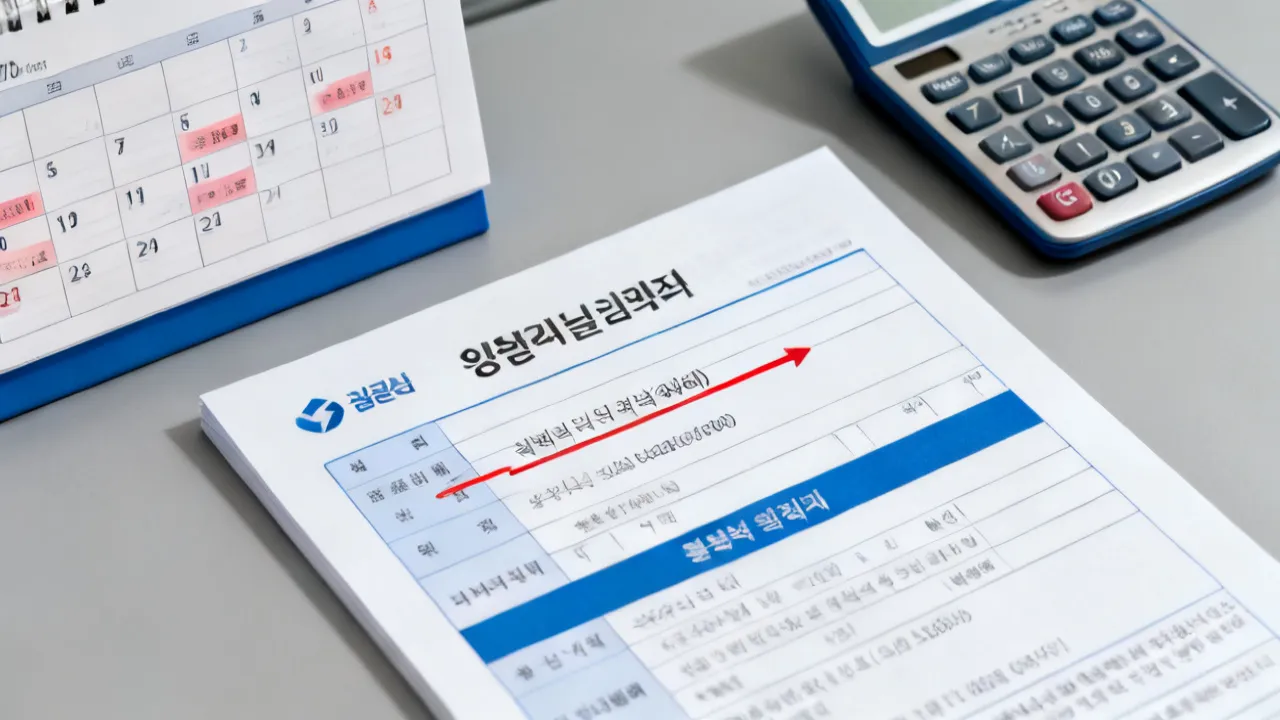
What 감액 기간 Means
감액 기간 generally means a defined period during which a benefit, payment, allowance, refund, insurance amount, or contractual entitlement is reduced according to established rules. In English, it may be translated as “reduction period,” “benefit reduction period,” or, depending on the context, “period of reduced payment.” The translation alone, however, does not establish the legal or financial effect. The relevant policy, notice, contract, or administrative regulation determines what is reduced, when the reduction begins, how long it continues, and whether the original amount returns afterward.
This distinction is important because the same Korean expression can appear in very different systems. A pension notice may use a reduction concept when a person claims an entitlement earlier than the standard age. An insurance document may describe a period during which a payout is limited or adjusted. An employment-related benefit may be reduced because of earnings, overlapping support, reporting requirements, or a sanction period. A private contract may use the term to describe a temporary discount, reimbursement limitation, waiting arrangement, or scheduled adjustment.
From an industry perspective, the most important question is not simply, “How long is the 감액 기간?” The first question is, “What rule creates the reduction?” A period measured from an application date is different from one measured from an event date. A reduction that applies only to monthly payments is different from one that changes the total entitlement. A temporary adjustment is different from a permanent reduction in the underlying amount.
Key conclusion: Before calculating the effect of a 감액 기간, identify the responsible institution, the governing program, the start-date rule, the reduction formula, the end-date rule, and the conditions for restoration or review.
Why the Reduction Period Matters
A reduction period can influence household budgeting, retirement planning, business cash flow, and decisions about when to submit a claim. Even a modest adjustment may have a significant cumulative effect when it is applied over several months or years. Conversely, a reduction that appears substantial in a single payment may last only briefly and may not alter the long-term entitlement.
Many misunderstandings arise because people treat the reduction as a simple percentage deduction. In practice, the amount may be calculated through a fixed formula, a tiered schedule, an income test, a proportional adjustment, a statutory ceiling, or a combination of rules. Some programs apply the reduction before taxes or other deductions, while others apply it afterward. Some calculate the amount using the original entitlement; others use the amount remaining after a separate adjustment.
The timing of the reduction can also affect planning. A notice may state that a reduction applies from the month following an event, from the date of approval, from the first payment date, or from a later administrative review. The wording matters. “Effective date,” “payment date,” “assessment date,” and “notification date” are not interchangeable concepts.
An expert review therefore begins with the complete document rather than an isolated sentence. The title, footnotes, definitions, calculation examples, exceptions, appeal instructions, and renewal provisions may all affect the outcome. If the document refers to another regulation or schedule, that referenced material should also be checked before a final decision is made.
The Main Elements of a 감액 기간
Most reduction arrangements contain several core elements. Understanding each element creates a practical framework for reviewing a notice or policy.
- Trigger: The event that activates the reduction, such as early claiming, excess income, overlapping benefits, incomplete documentation, a policy condition, or a sanction period.
- Object of reduction: The payment, benefit, reimbursement, coverage, contribution, or other amount affected by the rule.
- Start date: The date from which the adjustment is calculated or applied.
- Calculation method: The percentage, fixed amount, formula, threshold, schedule, or assessment process used to determine the reduction.
- Duration: The period for which the reduced amount continues.
- End condition: A calendar date, age, administrative decision, change in income, completion of a requirement, or other event that ends or changes the reduction.
- Review mechanism: The process for correction, reconsideration, appeal, reassessment, or renewal.
These elements should be recorded in a simple timeline. For example, a person might note the triggering event on one line, the application date on another, the stated effective date on a third, and the first reduced payment on a fourth. Differences among these dates often explain why an applicant’s calculation does not match an institution’s calculation.
Temporary Reduction Versus Permanent Adjustment
The phrase 감액 기간 often suggests that the reduction is limited to a specified period, but that assumption should be tested. There are at least three broad possibilities.
- Temporary reduction: The payment returns to the prior amount when a stated period or condition ends.
- Conditional reduction: The amount remains reduced while a condition exists, such as income above a threshold or receipt of another payment.
- Permanent or long-term adjustment: The initial calculation is changed and does not automatically return to the previous level, even though the notice may describe the starting phase as a reduction period.
A temporary reduction may still have lasting financial consequences if missed payments are not restored later. Similarly, a conditional reduction may be recalculated periodically rather than ending on a fixed date. People should therefore look for phrases such as “until,” “while,” “subject to review,” “thereafter,” “restored,” “recalculated,” or “not recoverable.” These terms can reveal whether the adjustment is reversible.
Another important distinction is between an amount being reduced and a payment being withheld. A reduction changes the amount calculated under the policy. A withholding may temporarily delay payment while eligibility, identity, income, or documentation is checked. The two situations can produce similar short-term cash-flow effects but require different responses.
Where the Term Commonly Appears
Because 감액 기간 is context-dependent, readers should identify the administrative field before applying a definition. The following categories illustrate how the concept may operate without assuming that one rule applies to every program.
Pension and Retirement Benefits
Retirement systems may adjust an amount when a person claims a benefit before a standard age, has a particular contribution history, receives overlapping income, or falls under a special eligibility rule. The adjustment may be calculated according to age, months of early claiming, contribution records, or another statutory formula. Whether the reduction is permanent or limited to a specific period depends on the governing pension rules.
A pension review should distinguish among the normal entitlement age, the earliest claim age, the date of application, and the date payments begin. A person who compares only the application date with the standard age may overlook a separate rule governing the first payment month. The official estimate should be reviewed alongside the assumptions used to produce it.
Retirement decisions also involve an opportunity-cost question. Claiming earlier may create income sooner, but the amount received each month may be lower. Delaying a claim may increase the periodic amount, but the person gives up payments that could have been received during the waiting period. The 감액 기간 may therefore be one factor in a broader comparison involving life expectancy, other assets, employment income, taxes, household needs, and the possibility of future rule changes.
Employment-Related Benefits
Employment insurance and related support programs may reduce payments when a claimant has earnings, fails to meet a reporting obligation, receives another benefit, or does not satisfy a continuing condition. Some reductions may apply only to particular reporting periods. Others may affect eligibility for a longer period or require a new assessment.
In this context, accurate reporting is central. A claimant should retain employment records, wage statements, notices, attendance records, and correspondence concerning work activity. The relevant institution may use an assessment period that differs from the claimant’s personal pay cycle. A monthly salary, weekly wage, and administrative reporting month may not align.
A person should also determine whether work income reduces the payment dollar for dollar, according to a percentage, or only after an exemption or threshold is applied. The word “income” may include wages, business income, commissions, bonuses, severance amounts, or other payments depending on the governing system. A verbal assumption that occasional work is irrelevant can create a later overpayment if the rules require disclosure.
Insurance and Reimbursement
Insurance documents may contain reduced-benefit periods, exclusions, waiting periods, proportional payment rules, or limitations associated with a newly issued policy. The Korean term may be used informally by customers even when the formal contract uses a different expression. The policy wording should therefore take priority over a sales explanation or a short summary.
Important questions include whether the adjustment applies per claim, per policy year, per medical event, or across the entire contract. It is also necessary to determine whether the amount is reduced before a deductible, after a deductible, or alongside a coverage limit. A reduced reimbursement is not necessarily evidence that the claim was rejected; it may reflect a contractual calculation.
Insurance customers should distinguish a reduction period from a waiting period. During a waiting period, a covered event may not yet qualify for payment. During a reduction period, the event may qualify, but the amount paid may be limited. Some policies contain both arrangements, which makes it important to read the definitions section and any benefit schedule together.
Public Assistance and Administrative Payments
Public assistance programs may adjust payments based on household circumstances, income, assets, overlapping support, changes in residence, or failure to submit required information. The reduction period may begin after a review, a notice, or the date a change occurred. Administrative recovery rules may also apply if a later review determines that a prior payment exceeded the permitted amount.
Because public programs are governed by detailed rules, applicants should not rely on general online explanations when a formal notice is available. The notice normally identifies the reason, effective date, amount, and procedure for asking questions or requesting reconsideration.
Household changes should be reported carefully. Marriage, separation, a change in dependents, a move, a new source of income, or a change in care needs may affect the amount or the continuation of a benefit. The relevant date may be the date the change occurred rather than the date it was reported, so records should be kept even when the administrative notice arrives later.
Commercial Contracts and Service Arrangements
In commercial settings, 감액 기간 may refer to a period when a fee, commission, service credit, rental payment, or performance-related amount is adjusted. The reduction could be linked to service interruptions, a promotional term, a construction milestone, or a quality assessment. Contract interpretation requires attention to definitions, schedules, change-order clauses, and dispute procedures.
A business should document the agreed baseline amount and the evidence supporting the adjustment. Invoices, delivery records, inspection reports, correspondence, and acceptance documents may become important if the parties later disagree about the duration or calculation.
Commercial parties should also check whether notice must be given within a particular number of days. A contract may allow a payment reduction only if the customer gives timely notice, provides evidence of the affected service, or permits the supplier an opportunity to cure the problem. Even where the underlying service failure is clear, failure to follow the notice procedure can affect the amount that may be claimed.
How to Identify the Correct Start Date
The start date is one of the most frequently misunderstood parts of a reduction period. Several dates may appear in the same case:
- The date the triggering event occurred.
- The date the person submitted an application.
- The date the institution received complete documents.
- The date the institution approved or assessed the claim.
- The effective date printed on the notice.
- The date the first payment was issued.
- The date the reduced amount appeared in an account.
These dates may coincide, but they do not have to. A policy could state that a reduction applies from the month after an event, while a payment system might process the change later. Another program might use the date of approval rather than the date of application. The only reliable method is to locate the rule that defines the effective date.
When a notice is unclear, ask a precise question rather than a general one. Instead of asking, “Why is my payment lower?” ask, “Is the reduction calculated from the event date, the application date, or the first payment date, and which month is treated as the first month of the reduction period?” Specific wording encourages a specific answer.
It is also useful to ask whether the first and last months are treated as full months. Some systems calculate by calendar month even when the event occurred near the end of a month. Others prorate by day or use a separate partial-period formula. A difference of only a few days can matter when the payment is large or when several adjustments overlap.
How the Amount May Be Calculated
Reduction formulas vary considerably. The following models are common in administrative and contractual arrangements, although their use depends on the applicable rules.
| Calculation model | General structure | Review point |
|---|---|---|
| Fixed amount | Original amount minus a stated monetary deduction | Confirm whether the deduction applies once or in every payment period. |
| Percentage reduction | Original amount multiplied by a stated reduction rate | Check whether the rate applies before other deductions or limits. |
| Tiered schedule | Different rates or amounts apply to different periods or thresholds | Identify the point at which the next tier begins. |
| Income-tested adjustment | Payment changes according to assessed income or related resources | Confirm the assessment period and which income is counted. |
| Proportional calculation | Payment reflects a ratio such as covered time, contribution, or eligible service | Verify the numerator, denominator, and rounding method. |
| Maximum-limit calculation | Payment is limited by a statutory, contractual, or annual ceiling | Determine whether the limit applies per event, month, year, or contract. |
For a basic percentage example, suppose an original payment is represented by P and the reduction rate by r. The adjusted payment would generally be expressed as P × (1 − r), assuming the rule uses a straightforward percentage and no other deductions apply. This is only an illustration, not a substitute for the governing formula. Actual rules may use a base amount, rounding unit, threshold, or separate adjustment before the reduction is applied.
Rounding can matter. An institution may round to the nearest unit, discard decimals, or apply a monthly calculation before adding the total. A person who multiplies a rounded annual amount may obtain a different result from an institution that calculates each month separately. The notice should be checked for instructions concerning decimals and payment units.
The order of operations is equally important. For example, a program may first determine eligibility, then calculate a base entitlement, then apply an income adjustment, then apply the 감액 rule, and finally deduct tax or other charges. Reversing these steps can produce a different result. When reviewing a calculation, list each operation in the order shown in the notice.
Comparison of Different Reduction Arrangements
The following table provides a conceptual comparison. It does not replace the rules of a specific pension, insurance, employment, public assistance, or commercial program.
| Arrangement | Typical trigger | Possible duration | What to verify |
|---|---|---|---|
| Early-claim adjustment | Claim submitted before a standard eligibility point | May continue for an extended period or follow a specific schedule | Age rule, claim month, formula, and whether later restoration is possible |
| Income-related adjustment | Income or earnings exceed a relevant threshold | Often linked to an assessment or reporting period | Counted income, assessment dates, reporting duties, and reassessment process |
| Documentation-related hold or reduction | Required evidence is incomplete, late, or inconsistent | May continue until review or correction | Missing documents, submission deadline, and correction procedure |
| Contractual payment adjustment | Service level, milestone, quality, or performance condition | Defined by the contract or change agreement | Baseline, evidence, notice requirements, and dispute clause |
| Overlapping-benefit adjustment | Two or more benefits or payments cover a related period | May last while the overlap exists | Coordination rule, priority of payment, and recovery provisions |
A Step-by-Step Method for Reviewing 감액 기간
Step 1: Name the program or contract
Write down the exact name of the benefit, policy, service, or agreement. Avoid relying on a broad label such as “pension payment” or “insurance refund.” The precise program name may reveal which institution, regulation, or contract schedule controls the calculation.
Step 2: Locate the formal notice or governing document
Gather the approval letter, adjustment notice, policy schedule, contract, invoice, calculation sheet, and any later correction. A verbal explanation can be useful, but the formal text should be the primary reference. If several versions exist, compare their issue dates and identify which one is current.
Step 3: Mark the trigger and all relevant dates
Create a timeline beginning with the event that may have caused the reduction. Add the application date, document-completion date, assessment date, effective date, first affected payment, and expected end date. This makes inconsistencies easier to identify.
Step 4: Identify the amount before reduction
Find the base amount used by the institution. It may differ from the amount a person expected because the base may already reflect contribution history, a deductible, a ceiling, taxes, or another adjustment. Ask whether the stated amount is gross, net, estimated, provisional, or final.
Step 5: Copy the formula exactly
Do not paraphrase a formula too quickly. Record the rate, fixed amount, threshold, assessment period, rounding approach, and order of operations. If the notice includes an example, reproduce it using the same figures to test whether the logic is understood.
Step 6: Determine the end condition
Check whether the reduction ends on a fixed date, at a certain age, after a review, when income changes, once documentation is accepted, or when another payment stops. If no end condition appears, do not assume that the reduction is temporary.
Step 7: Check exceptions and overlapping rules
Look for provisions concerning disability, dependent status, employment, residency, contribution records, policy changes, retroactive applications, and other benefits. An exception may alter either the amount or the duration.
Step 8: Confirm the review or appeal deadline
Many notices contain a limited period for correction, reconsideration, objection, or appeal. Record the deadline immediately. A question submitted after a deadline may be treated differently from a formal review request.
Step 9: Compare the written result with the payment record
Review account statements, remittance details, invoices, or payment histories. The first reduced payment may not match the full-period calculation if the change began partway through a month. A partial-period payment should be distinguished from a new recurring amount.
Step 10: Obtain a written clarification
If uncertainty remains, request a written explanation that states the reason, formula, start date, duration, and end condition. Written clarification helps prevent later confusion and creates a reliable record for advisers or reviewers.
Conditions and Requirements to Check
The conditions attached to a 감액 기간 differ by program, but several requirements deserve consistent attention.
- Eligibility status: Confirm that the person or organization continues to meet the basic conditions of the program.
- Reporting duty: Determine whether income, employment, residence, household composition, or other changes must be reported.
- Evidence: Identify the documents required to establish dates, earnings, contributions, service delivery, medical circumstances, or contractual performance.
- Timeliness: Check submission dates, renewal dates, and response deadlines.
- Coordination: Determine whether another benefit, payment, reimbursement, or contract credit affects the calculation.
- Reassessment: Find out whether the amount is reviewed periodically or only after a reported change.
- Repayment risk: Read provisions concerning overpayment, retroactive correction, and recovery.
- Dispute process: Identify the available inquiry, correction, objection, mediation, or appeal channels.
Requirements should be separated into conditions that determine eligibility and conditions that determine amount. A person may remain eligible for a benefit but receive a lower amount because of an income test. Alternatively, a failure to submit evidence may interrupt eligibility rather than create a formal reduction. Using the correct category improves both communication and decision-making.
Applicants should also determine whether the rules impose a duty to notify the institution even when the change seems temporary. A short-term job, a one-time payment, a temporary move, or a brief change in household circumstances may still be relevant. If the policy uses a reporting threshold, record the threshold and the date on which it is measured instead of relying on memory.
Common Interpretation Errors
Assuming every reduction is temporary
The word “period” may encourage the belief that the amount will automatically return to its former level. That is not necessarily true. Some systems use a period to describe the time during which a calculation is applied, even when the resulting amount continues afterward. Always identify the restoration rule.
Using the notice date as the effective date
A notice may be issued after the adjustment has already become effective. Alternatively, it may announce a future change. The printed issue date is not automatically the date used for calculation.
Confusing a percentage with a percentage point
A reduction rate of a stated percentage is different from a change measured in percentage points. This distinction is especially important when a policy contains several rates, thresholds, or partial reductions.
Ignoring partial months
Some adjustments apply by calendar month, while others are prorated by day. A person who applies an entire-month formula to a partial period may overstate or understate the result.
Relying on an informal translation
감액 기간 may be translated in different ways depending on the subject. “Reduction period” is generally understandable, but a formal English document may use “reduced benefit period,” “payment adjustment period,” “benefit limitation period,” or another term. The underlying Korean rule remains more important than the English label.
Overlooking later reassessment
An initial amount may be provisional. Income-tested or document-based decisions can be changed after a later review. A person should retain supporting records until the relevant review cycle has concluded.
Calculating from the wrong base
If the reduction is applied to an adjusted base rather than the headline amount, a personal calculation may be inaccurate. Confirm whether the base is gross, net, annualized, monthly, insured, eligible, or otherwise defined.
Assuming similar programs use identical rules
Two benefits may both use the word 감액 while applying different thresholds, dates, or formulas. A rule for one pension, insurance product, or employment program should not be transferred to another merely because the terminology appears similar. Always confirm the program number, policy version, or statutory basis.
Financial Planning During a Reduction Period
When a reduction affects regular income, planning should be based on the amount that is documented rather than an assumed restoration. A practical budget can show three scenarios: the current reduced payment, the expected payment after the stated end condition, and a conservative scenario in which the reduction continues longer than expected. This approach does not predict the result; it highlights the financial exposure created by uncertainty.
Households should also identify fixed obligations that cannot easily be delayed, such as housing, utilities, taxes, insurance premiums, and essential care. Businesses may need to review payroll timing, supplier commitments, and working-capital requirements. The objective is to understand the timing of cash inflows and outflows while the reduction is active.
Where the amount is subject to reassessment, maintain a record of the information used in the original calculation. Changes in earnings, employment, household status, or policy conditions should be reported according to the applicable rules. Delayed reporting can create a later adjustment or repayment obligation.
Financial planning should not assume that a future increase will fully offset earlier reductions. Some programs restore an amount prospectively but do not repay the difference for previous months. Others may apply a new formula from the date of reassessment. The written policy determines the result.
It can also be useful to separate a reduction in entitlement from a reduction in cash received. The entitlement may be reduced by the governing formula, while the amount deposited may be further affected by taxes, insurance contributions, garnishments, bank charges, or other deductions. Comparing the gross amount on a notice with the net amount in an account without accounting for these items can create the impression of an unexplained reduction.
Record-Keeping and Evidence
Good records are particularly valuable when a reduction is based on dates, income, contributions, service performance, or changing circumstances. A complete file may include:
- The original application and confirmation of receipt.
- Approval, adjustment, suspension, or reassessment notices.
- Payment statements and account records.
- Income statements, employment records, or contribution histories.
- Insurance schedules, claim forms, and assessment reports.
- Contracts, invoices, delivery records, and inspection documents.
- Correspondence with the institution or counterparty.
- A dated timeline of phone calls and decisions.
- Evidence submitted in response to a request for clarification.
When submitting documents, use the method specified by the responsible institution and retain proof of submission. Personal information should be handled carefully. Copies sent to advisers or counterparties should contain only the information necessary for the question under review.
Digital records should be stored with clear file names that include the document date and subject. For example, a file name can identify whether a document is an original application, an adjustment notice, a payment statement, or a response to a review request. Keeping documents in chronological order makes it easier to establish what information was available at each stage.
Reliable Sources and How to Use Them
The strongest source for a specific 감액 기간 is the current official notice or contract governing the payment. General educational material can explain terminology, but it cannot determine an individual calculation. Depending on the subject, appropriate sources may include the relevant Korean public agency, the official pension or employment-insurance guidance, the insurer’s policy wording and claims rules, or the signed commercial agreement.
Readers should evaluate sources in the following order:
- Individual decision or payment notice: This normally explains how the rule was applied to the person or organization.
- Current governing regulation or policy: This establishes the general legal or contractual framework.
- Official calculation guidance: This may explain formulas, examples, thresholds, and reporting duties.
- Institutional inquiry response: A written answer can clarify how the rule is interpreted in a particular case.
- Professional advice: A qualified adviser may help with complex financial, tax, legal, or contractual consequences.
Search results, community posts, promotional explanations, and old summaries may help identify questions, but they should not be treated as conclusive evidence. Rules can change, and a result written for one program may be incorrectly applied to another. Always check the date, issuing body, scope, and cited authority of explanatory material.
When using online information, look for the publication date and any statement about amendments. A calculator or explanatory page may be technically accurate for an earlier version of a rule but unsuitable for a current application. If the notice refers to a specific article, schedule, or policy edition, locate that exact source rather than relying on a general summary.
When Professional Assistance Is Appropriate
Professional assistance may be useful when the reduction involves a large cumulative amount, multiple benefits, retroactive correction, taxation, a contract dispute, or a formal appeal. A pension specialist may help analyze claim timing and contribution records. An insurance professional may review policy definitions and coverage calculations. An accountant may assess income treatment, reporting, or repayment consequences. A lawyer may be appropriate when statutory interpretation or contractual enforcement is involved.
Before consulting an adviser, prepare a concise case summary. Include the program name, relevant dates, amount before reduction, amount after reduction, stated reason, end condition, and the specific question requiring an answer. Attach only the necessary documents and remove unrelated personal information. This preparation can make the review more efficient and reduce the risk that an important date is overlooked.
Professional advice should supplement, not replace, direct communication with the responsible institution. The institution generally controls the administrative record, while an adviser helps interpret implications and evaluate options.
Frequently Asked Questions
What is the simplest English meaning of 감액 기간?
The simplest translation is “reduction period” or “period of reduced payment.” The precise English expression depends on whether the subject is a pension, insurance benefit, employment support payment, public assistance, or commercial contract. The translation should not be used to infer the legal effect.
Does 감액 기간 always mean that the payment will return to its original amount?
No. Some reductions are temporary, some continue while a condition exists, and some reflect a long-term adjustment. Check the notice for the end date, restoration rule, reassessment provision, or language explaining what happens afterward.
Which date starts the reduction period?
It may be the event date, application date, approval date, effective date, first payment date, or another date defined by the governing rule. The notice or policy should identify the applicable date. If it does not, request written clarification.
Can a reduced payment be corrected later?
Correction may be possible if the institution made a calculation or administrative error, or if new evidence changes the assessment. The available procedure and deadline vary. Keep supporting records and follow the stated correction or review process.
Is a reduction the same as a suspension?
No. A reduction usually means that some amount remains payable, while a suspension generally means payment is paused. However, terminology varies. Read the formal notice to determine whether the payment is reduced, withheld, suspended, or terminated.
How can I verify the amount?
Identify the base amount, formula, start date, duration, rounding method, and other deductions. Recreate the calculation using the figures in the notice. If the result differs, ask the responsible institution to explain each step in writing.
What documents are usually useful?
Useful records may include the application, approval or adjustment notice, payment statements, income evidence, contribution records, policy documents, contracts, invoices, and correspondence. The exact requirements depend on the program.
Can income affect the 감액 기간?
In some programs, income or earnings can trigger or change a reduction. The relevant rule may specify which income counts, the assessment period, reporting frequency, and threshold. Do not assume that gross salary, taxable income, and assessed income are treated identically.
Does an appeal automatically stop the reduction?
Not necessarily. Some review procedures continue while the existing decision remains effective; others may have separate rules for interim payment or suspension. Check the official instructions and submit any request within the stated deadline.
Why might my calculation differ from the institution’s calculation?
Possible reasons include a different start date, a different base amount, partial-month treatment, rounding, other deductions, overlapping benefits, or a formula that is not a simple percentage. Ask for an itemized calculation rather than comparing only the final totals.
Can the same reduction apply to every payment?
Not always. A rule may apply only to a specific payment, reporting period, claim, policy year, or portion of an entitlement. Confirm the unit to which the reduction applies. A one-time deduction should not be confused with a recurring reduction.
What should I do if the notice uses unfamiliar Korean terms?
Identify the exact sentence and surrounding definitions rather than translating one word in isolation. Ask the issuing institution to explain the term in relation to the amount, period, and applicable rule. For important legal or financial matters, a qualified translator or specialist may be appropriate.
Practical Checklist
Before making a decision affected by 감액 기간, confirm the following:
- What exact program, policy, or contract applies?
- What event triggered the reduction?
- Which date starts the period?
- What amount is used as the calculation base?
- What formula, rate, threshold, or schedule applies?
- Are there partial-period or rounding rules?
- Is the reduction temporary, conditional, or long-term?
- What event or date ends the reduction?
- Will the amount be reviewed or recalculated?
- Are income, employment, residence, or other changes reportable?
- Could an overpayment or repayment obligation arise?
- What is the deadline for correction, reconsideration, or appeal?
- Which institution can provide an authoritative written answer?
For a practical review, place the answers in a written table with columns for the rule, evidence, date, amount, and unresolved question. This format is useful when speaking with a public agency, insurer, employer, financial adviser, or legal representative. It also prevents separate issues from being mixed together. For example, an incorrect start date may be one issue, while an incorrect base amount is another.
Conclusion
감액 기간 is best understood as a rule-defined window in which a payment or entitlement is reduced, but its practical meaning depends entirely on the system in which it appears. The most reliable analysis begins with the formal document, identifies the triggering event and effective date, reconstructs the calculation, and confirms whether the reduction ends automatically or remains subject to a continuing condition.
Readers should avoid relying on a translation, headline percentage, or informal explanation alone. A careful review separates eligibility from payment amount, distinguishes a reduction from a suspension, checks the treatment of partial periods and rounding, and records all deadlines for review. When the financial or legal consequences are significant, a written explanation from the responsible institution and advice from an appropriately qualified professional can provide additional certainty.
Used in this structured way, the concept of 감액 기간 becomes manageable: identify the rule, map the dates, verify the formula, monitor the conditions, and preserve the evidence supporting the decision.