Understanding Ultrasonic Tartar Removers
This guide explains how 초음파 치석 제거기 devices work, where they may fit within oral-care routines, and why professional assessment remains important. Ultrasonic tartar removers use high-frequency mechanical vibration to help disrupt deposits on tooth surfaces. Their design, intensity, tip condition, user technique, and suitability for individual dental conditions all affect safety and performance. The article reviews benefits, limitations, maintenance, purchasing considerations, and expert-informed precautions.
What 초음파 치석 제거기 Is and Why It Requires Care
A 초음파 치석 제거기 is an ultrasonic tartar remover designed to use high-frequency vibration, often combined with water flow, to help loosen deposits from tooth surfaces. In professional dentistry, ultrasonic scaling instruments are used by trained dental professionals as part of periodontal treatment and preventive cleaning. Consumer-oriented devices may resemble those instruments, but appearance alone does not establish equivalent performance, safety, or clinical suitability.
The most important point is simple: hardened tartar, also called dental calculus, is not the same as soft plaque. Plaque is a bacterial biofilm that can often be disrupted through regular brushing and interdental cleaning. When plaque mineralizes, it becomes calculus and generally requires controlled instrumentation for complete removal. A home device may assist with limited surface deposits in selected circumstances, but it should not be treated as a replacement for a dental examination or professional scaling.
From an industry expert’s perspective, the main purchasing question should not be whether a device vibrates strongly. It should be whether the instrument provides controlled energy, an appropriate tip, clear operating instructions, reliable hygiene features, and safeguards against misuse. A powerful motor without adequate control can increase the risk of enamel surface scratching, gum injury, sensitivity, or damage around restorations.
Key conclusion: A 초음파 치석 제거기 may have a role in carefully managed oral care, but professional diagnosis should come first when tartar is extensive, bleeding is persistent, gum recession is present, or dental implants, orthodontic appliances, crowns, or other restorations are involved.
How Ultrasonic Tartar Removal Works
Ultrasonic dental instruments generally generate rapid mechanical oscillation at the working tip. The vibration can help disrupt deposits and bacterial biofilm. Many professional systems also deliver water near the tip. This water helps cool the instrument, flush away debris, and support visibility during treatment. The precise action depends on the instrument’s frequency, power setting, tip design, contact angle, water delivery, and the operator’s movement.
Professional ultrasonic scalers are used with a light, controlled touch. The tip is normally kept moving rather than held against one spot. Dental professionals also select specialized tips for different surfaces, deposit levels, and periodontal conditions. This is one reason a consumer device should not be judged solely by its advertised vibration frequency. Performance depends on the entire system, including the tip geometry and the user’s ability to identify safe contact.
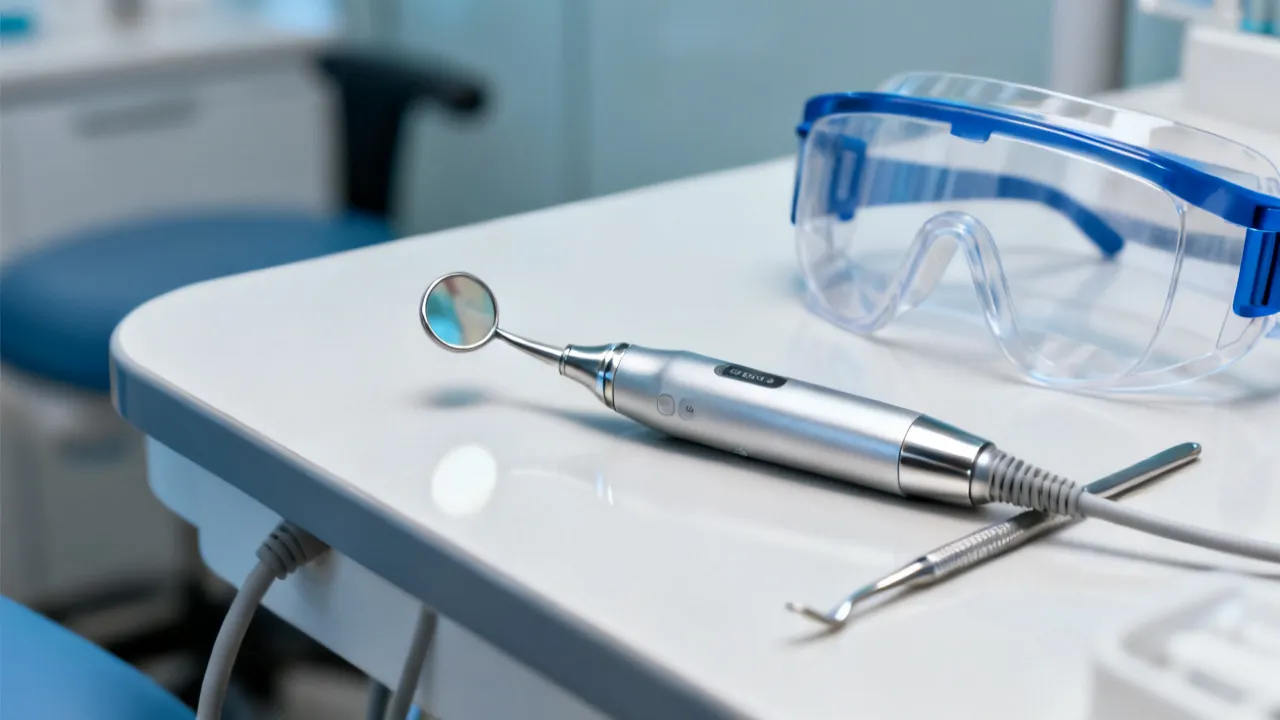
A home-use 초음파 치석 제거기 may use a vibrating metal or polymer tip, an LED light, several intensity levels, and a rechargeable battery. Some models include a water-resistant body or a small mirror. These features can improve visibility and convenience, but they do not automatically solve the central challenge: users may not be able to distinguish calculus from tooth-colored restorative material, exposed root surfaces, enamel irregularities, or deposits located below the gumline.
Ultrasonic movement may loosen material, but loosening is not the same as complete removal. A small fragment can remain attached near a contact point, beneath the gumline, or along a restoration margin. A user who repeatedly returns to the same area may unintentionally scrape healthy structures while trying to remove a deposit that requires clinical access. The instrument should therefore be viewed as a controlled adjunct, not as a miniature substitute for a full dental operatory.
Why Tartar Is Different from Plaque
Plaque develops continuously as bacteria, saliva, and food residues accumulate on oral surfaces. Toothbrushing with fluoride toothpaste and cleaning between teeth can help reduce it. Calculus forms when plaque absorbs minerals from saliva and hardens. The texture may feel rough, and it can collect along the gumline or behind the lower front teeth, where saliva ducts are nearby.
Once calculus has formed, brushing alone usually cannot remove it completely. Scraping at it without proper visibility can cause accidental contact with the gums or restorations. More importantly, visible tartar may be only part of the problem. Deposits can extend into periodontal pockets, where a household instrument may not safely or effectively reach.
The presence of tartar does not by itself reveal the severity of gum disease. A dental professional evaluates gum bleeding, pocket depth, tooth mobility, bone support, recession, plaque levels, and other clinical findings. Radiographs may be recommended when deeper disease or another dental concern is suspected. For that reason, an ultrasonic device should be considered a limited oral-care tool rather than a diagnostic instrument.
Calculus can also have different textures and colors. Freshly mineralized deposits may appear pale or yellowish, while older deposits can become brown or dark because of tobacco, coffee, tea, blood products, or other staining. Color does not reliably indicate whether a deposit is superficial or deep. A dark line near the gum may be calculus, staining, a restoration margin, or a sign of another dental issue. Visual assumptions are not a safe basis for aggressive scraping.
Potential Benefits of a 초음파 치석 제거기
When used within its intended scope, a 초음파 치석 제거기 may offer several practical benefits. These benefits are conditional and should not be interpreted as proof that every device is suitable for every user.
- Improved access to visible deposits: A narrow tip may reach selected areas that feel difficult to clean with a toothbrush alone.
- Added visibility: An integrated light or dental mirror can help users inspect the front surfaces of teeth.
- Adjustable operation: Multiple intensity settings may allow a cautious starting level, although lower power does not eliminate all risks.
- Routine awareness: Looking closely at the gumline can encourage users to arrange professional care when they notice bleeding, swelling, discoloration, or persistent roughness.
- Convenient storage: A compact device may be easier to keep available than a larger clinical unit.
- Support for maintenance between visits: For some users, a carefully selected device may help monitor visible surface buildup between scheduled professional cleanings.
- Improved understanding of oral surfaces: Using a mirror and light can encourage more deliberate brushing and interdental cleaning rather than hurried routine care.
These benefits are most relevant to visible, superficial areas and to users who have received clear guidance from a dental professional. They are less relevant when tartar is hidden below the gumline or when the user cannot reliably identify what the tip is touching.
A potential convenience benefit should also be balanced against the possibility of creating false reassurance. If a user removes a visible fragment and assumes that the mouth is now free of calculus, they may postpone a needed examination. The value of any home device is therefore greatest when it supports regular preventive care rather than replacing it.
Important Limitations and Safety Concerns
The limitations deserve as much attention as the potential advantages. A consumer ultrasonic tartar remover cannot determine whether a hard spot is calculus, a filling edge, a crown margin, a fractured tooth surface, or exposed root dentin. It also cannot measure periodontal pocket depth or assess the condition of supporting bone.
Excessive pressure or prolonged contact may irritate the gingiva. Repeated contact with an enamel surface can create unnecessary abrasion, particularly if the tip is damaged or contaminated with abrasive particles. Contact with a crown, veneer, bridge, implant component, orthodontic bracket, or bonding material may produce damage or dislodgement depending on the material and location.
Sensitivity is another concern. A user may interpret a sudden sharp sensation as evidence that the device is working, but pain can indicate contact with exposed dentin, inflamed tissue, a restoration, or a damaged tooth. Continuing in response to pain is not an appropriate operating strategy.
Water spray, saliva, and debris also create hygiene considerations. A device that cannot be thoroughly cleaned and dried may support microbial contamination between uses. Tips should not be shared unless the manufacturer provides a validated sterilization process suitable for the tip material. Wiping the exterior does not necessarily disinfect the working end.
There is also a handling risk. The user may need to work in a small space while looking through a mirror, with one hand holding the device and the other moving the cheek or lip. A sudden hand movement, cough, sneeze, or change in grip can direct the tip toward soft tissue. It is safer to use the instrument while seated, without rushing, eating, talking, or attempting to reach areas that cannot be seen clearly.
Consumers should be especially cautious with online demonstrations that show aggressive scraping, visible fragments breaking away, or use around the entire mouth in a few minutes. Demonstrations may omit discomfort, bleeding, surface damage, or the clinical history of the person being shown. A visually dramatic result is not proof of safe technique.
Who Should Seek Professional Advice Before Use?
Professional advice is particularly important for people in the following circumstances:
- Active gum bleeding, swelling, pus, persistent bad breath, or gum tenderness
- Loose teeth, significant gum recession, or a history of periodontal disease
- Dental implants, bone grafts, crowns, veneers, bridges, or extensive fillings
- Fixed or removable orthodontic appliances
- Known enamel defects, exposed roots, severe sensitivity, or cracked teeth
- Recent oral surgery, tooth extraction, periodontal treatment, or implant placement
- Medical conditions or medicines that affect bleeding, healing, immunity, or oral tissue response
- Children or adolescents who may not control pressure and placement reliably
- Users who cannot see the working area clearly or have limited hand control
- People with severe dry mouth, frequent mouth ulcers, or other conditions that make oral tissues more vulnerable
- People who have not had a dental examination for a long period and are unsure of their periodontal condition
These conditions do not automatically mean that every ultrasonic device is prohibited. They do mean that generalized online instructions are insufficient. A dentist or dental hygienist can explain which surfaces should be avoided, whether a device is appropriate, and what symptoms require an appointment.
People taking anticoagulants or antiplatelet medicines should not independently stop their medication to use a tartar remover. Medication decisions should be discussed with the prescribing clinician and dental provider. The presence of a medicine that affects bleeding does not necessarily prevent dental cleaning, but it makes uncontrolled home instrumentation a poor choice.
Professional Ultrasonic Scaling Compared with Home Devices
Professional ultrasonic scaling takes place in a clinical environment with controlled lighting, suction, infection-control procedures, and trained assessment. The clinician can alter technique based on the tooth surface, gum condition, restoration type, and the location of the deposit. Hand instruments may also be used to refine areas that ultrasonic vibration does not adequately address.
Professional care also includes evaluation before and after instrumentation. The clinician can determine whether the deposit is supragingival or subgingival, whether inflammation is present, and whether additional treatment is necessary. If the gum is bleeding because of periodontal disease, simply removing a visible fragment does not address the bacterial inflammation or loss of supporting tissue.
Home devices are typically designed for convenience and basic user operation. Their manuals may recommend use on visible tooth surfaces, but they generally cannot provide the same level of diagnosis or access as a clinical procedure. Some products may include several modes, but mode labels do not replace professional judgment.
| Consideration | Professional ultrasonic scaling | Home 초음파 치석 제거기 |
|---|---|---|
| Assessment | Performed by a trained dental professional before and during treatment | Usually depends on the user’s visual judgment and product instructions |
| Access | Designed to address selected supragingival and, when appropriate, subgingival areas | Generally limited to areas the user can see and safely reach |
| Water and visibility | Clinical water delivery, suction, lighting, and assistance are available | Features vary by model and may be less effective in a home environment |
| Infection control | Managed through regulated clinical cleaning and sterilization procedures | Depends on correct cleaning, drying, storage, and tip replacement |
| Personalization | Power, tip selection, and technique can be adapted to the patient | Adjustment options may be limited, and misuse is possible |
| Best role | Removal of clinically assessed deposits and periodontal care | Supplemental care for selected visible areas when appropriate |
Another important difference is feedback. During a professional appointment, the clinician can feel resistance, observe tissue response, change the angle, and stop when a surface has been adequately treated. A home user has much less information. The feeling of roughness may continue even after a deposit is removed because enamel, dentin, or a restoration naturally has texture. This makes it difficult to use sensation alone as a guide.
How to Evaluate Product Quality
Consumers often focus on vibration claims, battery capacity, or the number of included tips. Those specifications matter, but they should be considered alongside safety and accountability.
1. Clear intended-use statement
The product should state whether it is intended for household oral care, professional use, or another purpose. A vague label can make it difficult to understand the level of training expected. Marketing language that promises complete tartar removal, disease treatment, or guaranteed whitening should be treated cautiously unless supported by appropriate evidence and regulatory information.
2. Adjustable intensity with understandable controls
Adjustable output can help users begin cautiously, but an intensity dial is valuable only when the manual explains how and where to use each setting. A lockout, gradual start, or clearly marked low setting may improve handling. The controls should be operable without forcing the user to shift attention away from the mouth.
3. Tip design and replacement availability
Tips should have smooth, appropriately finished surfaces and should be replaceable according to the manufacturer’s schedule. A tip that is bent, rough, chipped, or visibly worn should not be used. Consumers should also confirm that replacement parts are supplied through an identifiable channel. A device that cannot be maintained may become less safe over time.
4. Water resistance and electrical protection
Because oral care involves moisture, the device should provide clear information about water resistance and charging requirements. Water resistance is not the same as permission to submerge a device. Charging should follow the manual, and a damaged cable, swollen battery, or cracked housing is a reason to discontinue use.
5. Cleaning instructions
The manufacturer should explain how to clean the tip, body, mirror, and storage case. Instructions should identify which substances are permitted and whether heat, alcohol, or immersion could damage the product. If the cleaning directions are absent or ambiguous, the device may be difficult to use hygienically.
6. Traceable manufacturer information
Packaging and documentation should identify the manufacturer or responsible supplier, model number, electrical specifications, warranty terms, and customer-support route. This information is useful when a safety notice, replacement-part issue, or operating question arises. Consumers should be cautious about products with no meaningful documentation or with instructions that conflict across listings.
7. Sensible safety warnings
A reliable product should identify situations in which it should not be used or should be used only after professional advice. Warnings about implants, braces, bleeding gums, recent surgery, children, and damaged tips are not merely legal language; they indicate whether the manufacturer has considered realistic use conditions.
8. Consistent performance rather than exaggerated power
Stable output, predictable controls, and a tip that remains securely attached are generally more useful than an extreme vibration claim. Consumers should look for evidence of quality control, clear test information, and a design that minimizes sudden starts or uncontrolled movement. A device that is difficult to hold or that changes intensity unexpectedly is unsuitable for delicate oral surfaces.
Understanding Materials and Dental Restorations
Teeth are not the only surfaces in the mouth. Many adults have composite fillings, ceramic crowns, porcelain veneers, metal restorations, bonded retainers, or implant-supported components. Each material has different properties, and the risk is influenced by the location of the restoration, its age, its margins, and the condition of the surrounding tooth and gum.
A tip that is acceptable on a visible natural tooth surface may be inappropriate near a restoration. The user may also mistake a rough filling margin for tartar and attempt repeated contact. This can worsen the margin or cause the restoration to feel rougher. When a deposit is close to a crown or veneer, professional inspection is the safer option.
Implants require special caution. The implant crown, abutment, and surrounding tissues are not identical to natural teeth. Instrument selection matters, and the user may not know which surfaces are susceptible to scratching or which cleaning methods the treating clinic recommends. Anyone with implants should follow the implant provider’s instructions rather than applying generic household-device advice.
Orthodontic appliances create additional surfaces where plaque can collect. Brackets, wires, aligners, and retainers can obstruct visibility and change the way pressure is distributed. A vibrating tip can catch on a wire or contact adhesive around a bracket. Orthodontic patients should use cleaning tools recommended by their orthodontic team, such as specialized brushes, interdental brushes, or approved water-based devices.
Step-by-Step Guide for Cautious Consideration
The following guide is intended to support safer decision-making, not to replace professional treatment. The manufacturer’s instructions and a dental professional’s advice take priority.
Step 1: Check whether the problem is suitable for home attention
Look for warning signs rather than focusing only on a visible hard spot. Bleeding without provocation, swelling, persistent pain, unpleasant taste, pus, loose teeth, or facial swelling should lead to dental evaluation. A device should not be used to delay care for these symptoms.
Step 2: Inspect the product documentation
Read the intended-use statement, warnings, charging instructions, cleaning procedure, and tip-replacement guidance. Confirm that the product is designed for the intended environment. Do not rely only on a short marketplace description or a demonstration video.
Step 3: Examine the working tip
Before each use, check for rough edges, bends, cracks, discoloration, or residue. A damaged tip should be replaced. Do not attempt to reshape or sharpen it at home, because an altered tip may vibrate unpredictably or create a sharper contact point.
Step 4: Prepare a clean and well-lit area
Wash the hands, clean the device as directed, and use a mirror with enough lighting to see the target area. The user should be seated or positioned securely. Poor visibility and awkward posture increase the chance of slipping into the gums or soft tissues.
Step 5: Begin at the manufacturer’s lowest appropriate setting
Start conservatively and avoid assuming that a stronger setting produces a better result. Excessive vibration can increase discomfort or tissue irritation. Never test the device by pressing it forcefully against a tooth to judge its strength.
Step 6: Limit contact to visible, accessible surfaces
Do not insert the tip into gum pockets, between teeth, under a gum flap, or around an area that cannot be clearly observed. Avoid contact with the tongue, cheeks, palate, and other soft tissues. Keep the working area small and stop if visibility becomes poor.
Step 7: Use light pressure and continuous movement
Follow the product’s instructions for movement and angle. Do not hold the tip against one location for an extended period. Pressure should remain light. Pain, persistent sensitivity, bleeding, heat, or an unusual vibration is a reason to stop rather than continue.
Step 8: Avoid chasing a fragment
If a small piece loosens but does not come away easily, do not increase force or repeatedly attack the same point. The fragment may be connected to a restoration or may be positioned in a way that requires professional instruments. Rinsing and returning to normal brushing is safer than escalating pressure.
Step 9: Clean, dry, and store the device
After use, follow the stated cleaning process. Separate removable parts if instructed, allow them to dry thoroughly, and store the device in a clean location. Do not place a wet tip into a sealed case if the manual does not permit it.
Step 10: Arrange an examination when deposits remain
Persistent roughness, recurring tartar, gum bleeding, or deposits that cannot be seen clearly should be assessed by a dental professional. Repeated home scraping may conceal the problem while increasing irritation.
Conditions and Requirements for Responsible Use
A reasonable home-use framework includes several conditions. First, the user should understand the difference between supplemental cleaning and treatment. Second, the device should be in good condition and supported by understandable documentation. Third, the target surface should be visible and accessible. Fourth, the user should be able to stop immediately when discomfort or bleeding occurs.
| Requirement | Why it matters |
|---|---|
| Visible treatment area | Reduces the likelihood of contacting soft tissue, restorations, or hidden periodontal surfaces |
| Healthy or professionally assessed oral condition | Helps distinguish routine surface care from a condition requiring clinical treatment |
| Undamaged, clean tip | Supports predictable contact and reduces hygiene and abrasion concerns |
| Low-pressure technique | Limits unnecessary force against enamel, gums, and dental work |
| Manufacturer-compliant cleaning | Reduces contamination risk between uses |
| Ability to monitor symptoms | Allows the user to stop and seek care when warning signs develop |
| Appropriate storage | Helps prevent moisture accumulation, accidental damage, and contamination |
| Professional review when uncertain | Prevents a user from treating a restoration, fracture, or periodontal problem as simple tartar |
Common Mistakes Users Make
Assuming stronger vibration means better cleaning
A high output level may feel effective because it produces a noticeable sensation. Yet oral tissues and dental materials respond to contact, pressure, duration, and angle. Stronger operation can be counterproductive if it causes the user to press harder or remain in one location too long.
Using the device on every rough area
Roughness may result from calculus, an uneven filling, enamel wear, a fractured edge, or a temporary change in tooth texture. Scraping every rough area can worsen the underlying issue. If a rough spot persists after ordinary brushing, professional assessment is more informative than repeated instrumentation.
Working below the gumline
The gumline is difficult to see even under good conditions. Inserting a tip beneath the gum may cause bleeding and tissue trauma. Subgingival deposits are part of a clinical assessment and should generally be managed by trained professionals.
Ignoring bleeding
Bleeding is often interpreted as proof that deposits are being removed. It may instead indicate inflammation, trauma, or periodontal disease. Repeated bleeding should not be normalized. The appropriate response is to stop, document the symptom, and seek dental advice.
Sharing tips or accessories
Oral-contact components should be treated as personal items unless the manufacturer provides a validated reprocessing method. Sharing can create hygiene concerns, especially when users have gum disease, oral lesions, or recent dental procedures.
Using an unverified accessory
Replacement tips from an unknown source may not match the instrument’s dimensions, material, or vibration characteristics. A poor fit can damage the device or create unpredictable contact. Compatible accessories should come from the manufacturer or an identifiable, authorized supply channel.
Trying to whiten teeth with the device
Ultrasonic vibration is not the same as tooth whitening. Attempting to remove normal tooth color, surface stains, or discoloration by repeated scraping can cause unnecessary wear. Stains may arise from diet, tobacco, enamel characteristics, decay, medication, or restoration materials, and each cause requires a different approach.
Using household chemicals to increase cleaning power
Some users may be tempted to apply abrasive powders, acidic liquids, bleach, or strong disinfectants. These substances can irritate oral tissues, damage dental materials, or create toxic exposure. Only products specifically recommended by the manufacturer or dental professional should be used with the device.
Maintenance and Hygiene Practices
Maintenance affects both the device’s useful life and the reliability of its contact with the tooth. Before cleaning, disconnect or switch off the unit according to the instructions. Remove visible residue using the stated method, paying attention to the tip connection and any grooves where moisture can collect.
Do not assume that household disinfectants, boiling water, ultraviolet storage boxes, or alcohol wipes are suitable. Some methods can degrade seals, dull surfaces, weaken plastics, or damage electronic components. The appropriate process depends on the product design. If the manufacturer does not state that a component can be sterilized, users should not apply clinical sterilization methods on their own.
Inspect the device at regular intervals. Cracks, loose parts, unusual noise, reduced water flow, overheating, battery swelling, or intermittent operation should be treated as maintenance concerns. A malfunctioning device should not be used simply because it still powers on.
Storage also matters. Keep the instrument away from sinks where it may be repeatedly splashed, and avoid a sealed, damp environment. Store tips so that they do not touch dirty surfaces. Replace components at the interval specified by the manufacturer, even when the visible appearance seems acceptable.
If multiple people in a household own or use similar devices, label personal tips clearly. Do not place used tips back into a shared container. A storage case should be cleaned according to its own instructions because the case can collect moisture and residue from the instrument.
How Oral Hygiene Reduces the Need for Tartar Removal
A 초음파 치석 제거기 addresses deposits after they develop; daily oral hygiene aims to limit the accumulation that precedes them. Brushing twice daily with fluoride toothpaste is widely recommended by dental authorities, while cleaning between teeth helps reach areas a toothbrush cannot adequately clean. The exact brush type, interdental aid, and technique should be adapted to the person’s mouth and dental advice.
Brushing should be gentle and systematic rather than forceful. Users should spend enough time on the gumline, inner surfaces, chewing surfaces, and hard-to-reach back teeth. Interdental brushes, floss, or water-based devices may be useful depending on the size of the spaces and the presence of orthodontic appliances or restorations.
Dietary habits also influence oral health. Frequent exposure to fermentable carbohydrates can support acid production by plaque bacteria, while tobacco and certain medications may affect gum health or dry-mouth symptoms. These factors do not make tartar inevitable, but they can change the level of preventive care needed.
Professional examinations remain useful even for people who maintain consistent home care. A clinician can identify deposits in areas that are difficult to inspect and can adjust preventive recommendations based on gum condition, decay risk, restorations, and medical history.
Technique is often more important than adding another tool. A soft-bristled brush, an appropriate brushing angle, gentle pressure, and consistent interdental cleaning can provide more meaningful long-term benefit than occasional aggressive removal of visible deposits. Mouthwash may be recommended for specific purposes, but it should not be viewed as a way to dissolve established calculus.
Evidence and Professional Guidance
Advice about ultrasonic instruments should be interpreted in the context of established oral-health guidance. Organizations such as the American Dental Association, the Centers for Disease Control and Prevention, and national dental associations generally emphasize plaque control, fluoride use, interdental cleaning, professional evaluation, and treatment of gum disease. These sources distinguish routine home care from procedures that require clinical skill.
Regulatory information is also relevant. Depending on the market, an oral-care device may fall under different product classifications. A regulatory registration or conformity mark can indicate that a product has met certain requirements, but it does not mean that the product is appropriate for every person or that every marketing claim is clinically established. Consumers should review the applicable authority’s database and the manufacturer’s intended-use statement where available.
When research is cited in product materials, readers should look for the study design, population, comparison method, outcome measured, and whether the research examined the exact device. Evidence from a professional scaler cannot automatically be transferred to a household product with a different tip and output profile. Similarly, laboratory testing on artificial surfaces does not establish clinical safety for gums, restorations, or natural teeth.
Consumers should also distinguish between an expert endorsement and a controlled clinical study. A dentist appearing in an advertisement may be discussing general ultrasonic technology rather than validating a particular household model. Product reviews can be useful for assessing battery life, noise, packaging, and usability, but they rarely measure enamel safety, periodontal outcomes, or long-term effects on restorations.
Purchasing Considerations Without Relying on Marketing Claims
Price can be useful as a budgeting factor, but it is not a direct measure of safety or clinical performance. A more expensive device may include better documentation, replaceable tips, stronger support, or improved construction. A less expensive device may still be suitable for its limited intended purpose, but missing safety information can create hidden costs and risks.
Before purchasing, consider the total ownership requirements:
- Initial device cost and any required accessories
- Availability and price of replacement tips
- Battery replacement or charging requirements
- Cleaning and storage supplies
- Warranty coverage and service contact
- Return conditions for a personal oral-care item
- Documentation in a language the user can understand
- Compatibility with the user’s restorations and dental-care plan
- Whether the product has a reliable date or lot system for accessories
- Whether safety warnings are easy to find before purchase
Supplier transparency is particularly important. A responsible supplier should identify the product model, operating instructions, warranty terms, and applicable safety information. Claims such as “professional results,” “removes all tartar,” or “repairs gums” need careful scrutiny. A device may assist with a narrow task without delivering the broad outcome suggested by promotional wording.
Look for independent customer information about problems such as overheating, tip loosening, water leakage, charging failure, and difficulty obtaining replacements. These practical issues can affect safety even if the basic technology works. However, online reviews should be interpreted cautiously because users may describe aggressive or inappropriate techniques as successful simply because a fragment came off.
When a Dentist Is the Better First Choice
A professional appointment is preferable when tartar has been present for a long time, when deposits are extensive, or when the user has symptoms. It is also the better first choice when a person cannot determine whether the hard material is calculus or part of a tooth or restoration.
Seek prompt dental advice for persistent bleeding, gum swelling, severe sensitivity, tooth mobility, facial swelling, fever, or pain that interferes with eating or sleeping. Facial swelling, difficulty swallowing, difficulty breathing, or rapidly worsening symptoms may require urgent medical attention. A household instrument should not be used as an emergency treatment.
People who have recently undergone dental treatment should ask the treating clinic when routine brushing, interdental cleaning, and any device-assisted care may resume. Healing tissues can be vulnerable, and instructions vary according to the procedure.
A dental examination can also prevent unnecessary spending. What appears to be tartar may be a chipped filling, an area of decay, a fractured cusp, or a calculus deposit associated with a deeper gum problem. Identifying the actual cause early may allow simpler treatment and reduce the temptation to repeatedly manipulate the area at home.
Expert Perspective: Balancing Convenience and Clinical Responsibility
The appeal of a 초음파 치석 제거기 is understandable. It appears compact, modern, and practical, and it may help users feel more involved in their oral care. However, the most effective oral-health decisions are based on diagnosis and prevention rather than device novelty.
An industry expert would evaluate the product in three layers. The first is biological safety: can the device be used without unnecessary injury to teeth, gums, and restorations? The second is usability: can an ordinary user see the area, control the pressure, understand the settings, and clean the device correctly? The third is clinical relevance: does the device address a problem that is appropriate for home care, or does the user actually need periodontal treatment?
This framework helps prevent two opposite mistakes. One is overconfidence, in which a user replaces dental care with repeated home scraping. The other is excessive concern about a device that may be appropriate for limited, visible surface care under professional guidance. The correct decision depends on the person’s oral condition, the product’s design, and the quality of instruction.
Responsible use also means accepting that “doing more” is not always better. Healthy enamel and gum tissue do not need to be polished repeatedly. A device should not become part of a daily ritual simply because it is available. If brushing and interdental cleaning are effective and a dentist sees no concerning buildup, adding frequent ultrasonic scraping may provide little benefit while increasing opportunities for irritation.
Practical Decision Checklist
Before using or purchasing a 초음파 치석 제거기, ask the following questions:
- Has a dental professional assessed the area recently?
- Is the deposit clearly visible and located on an accessible tooth surface?
- Does the device provide a complete manual with warnings and cleaning instructions?
- Are the tip material, replacement schedule, and supplier information clear?
- Are there crowns, veneers, implants, braces, fillings, or exposed roots nearby?
- Can the user maintain a light touch and stop immediately if discomfort occurs?
- Is the device stored and cleaned in a way that supports personal hygiene?
- Will use of the device complement, rather than delay, professional dental care?
- Is the user able to see the working area without repeatedly repositioning the tip?
- Is there a clear plan for what to do if bleeding, pain, or sensitivity develops?
If several answers are uncertain, arranging a dental consultation before use is the more prudent option.
Frequently Asked Questions
Is a 초음파 치석 제거기 the same as a professional dental scaler?
No. Professional dental scalers are used by trained clinicians who assess the mouth, select appropriate tips and settings, control water and suction, and adapt technique to each surface. A consumer 초음파 치석 제거기 may use a related vibration principle, but its performance, access, controls, and safety features can differ substantially.
Can an ultrasonic tartar remover remove all calculus?
It should not be expected to remove all calculus. Visible deposits may be easier to approach than deposits below the gumline or around restorations. Complete removal may require professional instruments, visibility, and periodontal assessment.
Does bleeding mean that the device is working?
No. Bleeding can reflect inflamed gums, accidental trauma, or an underlying periodontal problem. Stop using the device if bleeding occurs and seek professional advice when bleeding is persistent, recurrent, or accompanied by swelling or pain.
Can the device be used around crowns or veneers?
Do not assume that it is safe. Restoration materials and margins vary, and the user may not know which surfaces can tolerate the tip. Ask the dentist who placed or maintains the restoration for specific guidance.
Is a low setting always safe?
No. Lower intensity may reduce energy, but safety also depends on pressure, angle, duration, tip condition, and location. A low setting can still injure soft tissue or contact an unsuitable surface if the instrument is used incorrectly.
Can children use a 초음파 치석 제거기?
Children may have difficulty controlling pressure, maintaining visibility, and distinguishing tooth surfaces from gum tissue. Parents should consult a pediatric dentist before considering any powered tartar-removal instrument.
Can it replace brushing and interdental cleaning?
No. An ultrasonic tartar remover is not a substitute for daily plaque control. Brushing with fluoride toothpaste and cleaning between teeth remain central parts of routine oral hygiene, adjusted to individual dental advice.
How often should a home device be used?
There is no universal schedule that is appropriate for every product or user. Follow the manufacturer’s instructions and professional guidance. Repeated scraping is not justified merely because a tooth feels rough, and frequent use may increase irritation if technique is poor.
What should be done if the device causes sensitivity?
Stop using it and assess whether the sensation continues. Sensitivity may arise from exposed dentin, gum recession, enamel wear, inflammation, or contact with a restoration. If symptoms persist or worsen, arrange a dental examination.
Can the tips be disinfected with boiling water?
Only if the manufacturer specifically permits that method for the exact tip material. Heat can deform plastics, damage coatings, or affect the instrument’s fit. Use the stated cleaning procedure instead of applying an unverified disinfecting method.
Does a built-in light make the device clinically safer?
A light may improve visibility, but it does not diagnose gum disease or identify the composition of a hard deposit. Better visibility is helpful only when combined with appropriate technique and a clear understanding of the device’s limits.
What signs indicate that professional cleaning is needed?
Persistent tartar, bleeding, swollen gums, bad breath that does not improve with routine hygiene, gum recession, loose teeth, pain, and deposits in areas that cannot be seen are reasons to seek professional care. A clinician can determine whether scaling, periodontal treatment, or another procedure is needed.
Can an ultrasonic tartar remover fix bad breath?
It may remove a small amount of surface material, but it does not address every cause of bad breath. Odor can be associated with plaque, gum disease, tongue coating, dry mouth, cavities, sinus conditions, digestive concerns, or certain foods and medicines. Persistent bad breath should be discussed with a dental professional rather than treated only by scraping the teeth.
Why does tartar come back after professional cleaning?
Calculus can reform because plaque continues to develop and saliva continues to provide minerals. The rate varies according to oral hygiene, saliva composition, tooth position, diet, smoking, dry mouth, and individual biology. Recurrence does not necessarily mean that a professional cleaning was ineffective. It usually indicates the need for ongoing preventive care and an appropriate recall schedule.
Can water flow make a home device safer?
Water may help cool a tip and flush away debris, but it does not automatically make the device safe. Water flow can also reduce visibility if the user lacks suction or proper positioning. Safety still depends on the tip, energy level, pressure, movement, hygiene, and the condition of the mouth.
Final Assessment
A 초음파 치석 제거기 can be an appealing addition to a carefully planned oral-care routine, particularly when the user understands that it is intended for limited, visible surface care rather than diagnosis or comprehensive treatment. The key factors are controlled use, suitable product documentation, clean and intact tips, awareness of dental restorations, and attention to warning symptoms.
Professional dental care remains the appropriate route for extensive calculus, deposits below the gumline, gum disease, unexplained roughness, and post-treatment questions. The safest purchasing decision is therefore not based on vibration claims alone. It rests on transparent product information, realistic expectations, responsible maintenance, and a clear commitment to preserving natural teeth and oral tissues.
Used thoughtfully, a home ultrasonic device may support awareness and limited maintenance. Used aggressively or as a substitute for diagnosis, it can create avoidable problems. The practical standard is not whether the device can remove a visible piece of material, but whether its use contributes to healthier long-term habits without damaging the structures it is intended to protect.