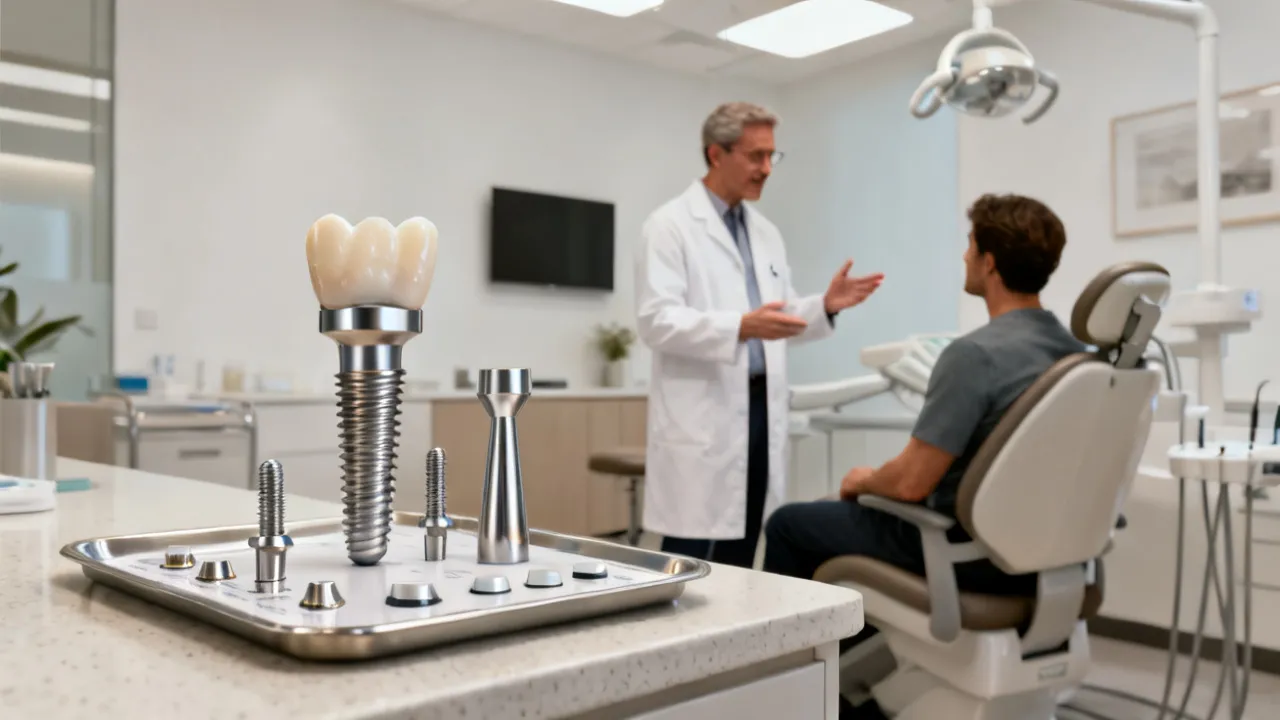
Navigating Low-Cost Dental Implants and Dental Plans
This guide explains how to evaluate low-cost dental implants and choose dental plans using reliable online resources. It reviews what sites like Www.dentalplans.com typically help consumers compare, summarizes clinic and insurance considerations, and outlines practical steps for implant planning, affordability checks, and cost expectations across major English-, Spanish-, and Portuguese-speaking regions.

1) Executive overview: what “low-cost” really means for dental implants
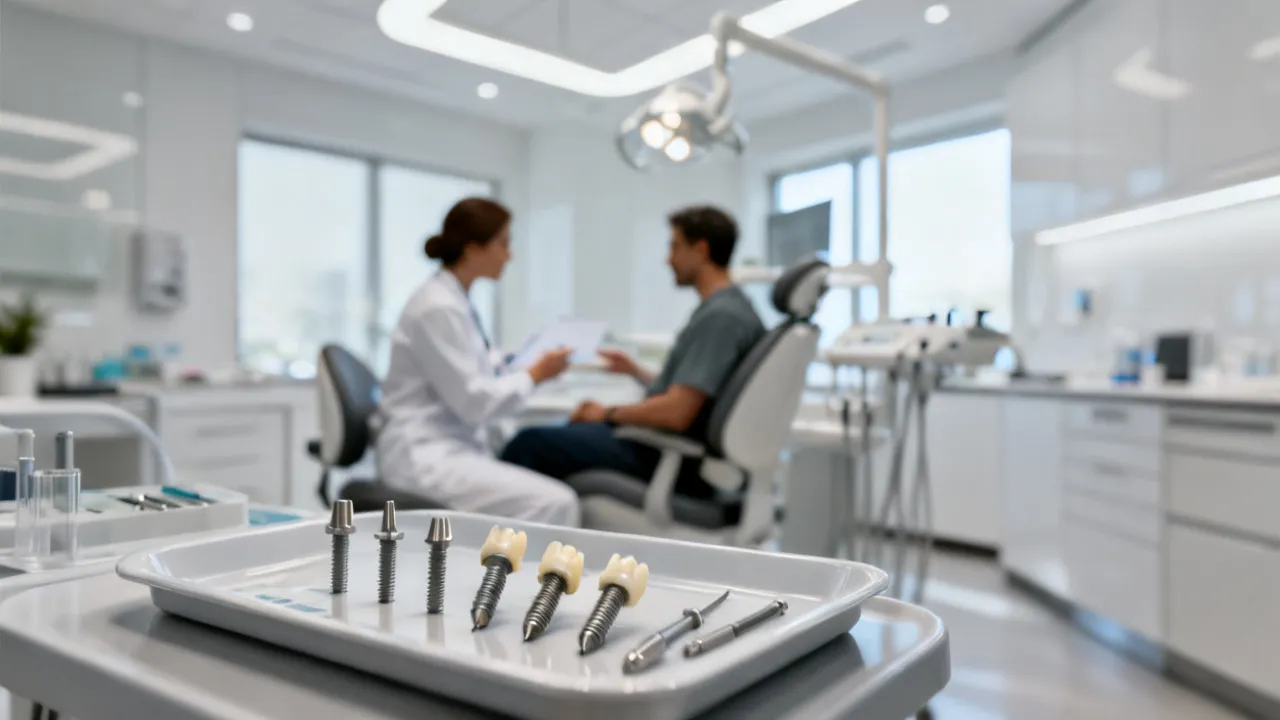
Low-cost dental implants are commonly marketed as affordable pathways to restore missing teeth. However, from an industry perspective, the price you see is only one part of the value equation—especially because implant outcomes depend on clinical suitability, surgical planning, and follow-up care. When consumers search for dental implant options and dental coverage tools such as Www.dentalplans.com, the very objective approach is to separate “lower upfront cost” from “lower overall risk.” That means reviewing whether the total treatment plan includes diagnostics, surgical guidance, the prosthetic component, hygiene maintenance, and clearly stated aftercare terms.
In practice, the phrase “low-cost” can be achieved through multiple different business and clinical mechanisms. Some mechanisms genuinely reduce administrative overhead or streamline scheduling and patient flow. Others reduce cost by altering the scope of included services—for example, limiting imaging, compressing follow-up, or using simpler prosthetic designs. These differences can be clinically meaningful. Two offers that both advertise a “low implant price” may produce very different experiences, different timelines, and different long-term outcomes if their scopes are not equivalent.
In English-speaking markets, sites such as DentalViews focus on the implant process and cost drivers; clinic networks like Atlantic Dental Group emphasize service access and appointment workflows; and dental tourism platforms like DentaVacation highlight cross-border affordability comparisons. In Spanish-speaking contexts, patient-facing clinics such as Rockville Dental Arts can help Hispanic communities navigate care in Spanish, while insurers’ educational material—such as Cigna’s guide to dental implants—helps users understand what implant therapy generally involves.
Across Portuguese-speaking countries, dental plan providers and clinics (e.g., DentalVidas, and clinics such as Rubi Odonto and Odontologia Velasco) typically frame affordability through a mix of financing, network access, and service bundles. As you evaluate options, aim to understand exactly what is included—because “low cost” can be achieved through different mechanisms, and not all mechanisms align with your medical needs.
To keep the decision grounded, consider “low-cost implant value” as a combination of: (1) clinical appropriateness (are you a candidate), (2) the completeness of the treatment scope (diagnostics, surgery, restoration, and aftercare), (3) transparency (clear itemization and documentation), and (4) long-term support (maintenance, warranty, and complication handling). When those components are missing, you may be paying less today but absorbing higher effort and expense later.
2) Key terms used by patients—and how to interpret them responsibly
Many consumer pages describe “low cost dental implants” using overlapping terms. To compare options objectively, it helps to interpret these phrases consistently and ask clarifying questions. Below are common marketing terms that can conceal meaningful differences in clinical scope.
- Implant (fixture) vs. implant system vs. crown/prosthesis: Some offers quote only the implant fixture and abutment; others include the crown. When prices are very low, confirm the scope, including whether the crown is included, what material is used, and whether a temporary restoration is part of the plan.
- Full mouth reconstruction vs. single-tooth replacement: A single implant has a different planning pathway than multi-site treatment. Single-tooth replacement may still require extraction planning, bone assessment, and prosthetic design. Full mouth cases often require multidisciplinary coordination—periodontics, orthodontics (sometimes), restorative planning, and sometimes occlusal rehabilitation—so cost structure and timelines are very different.
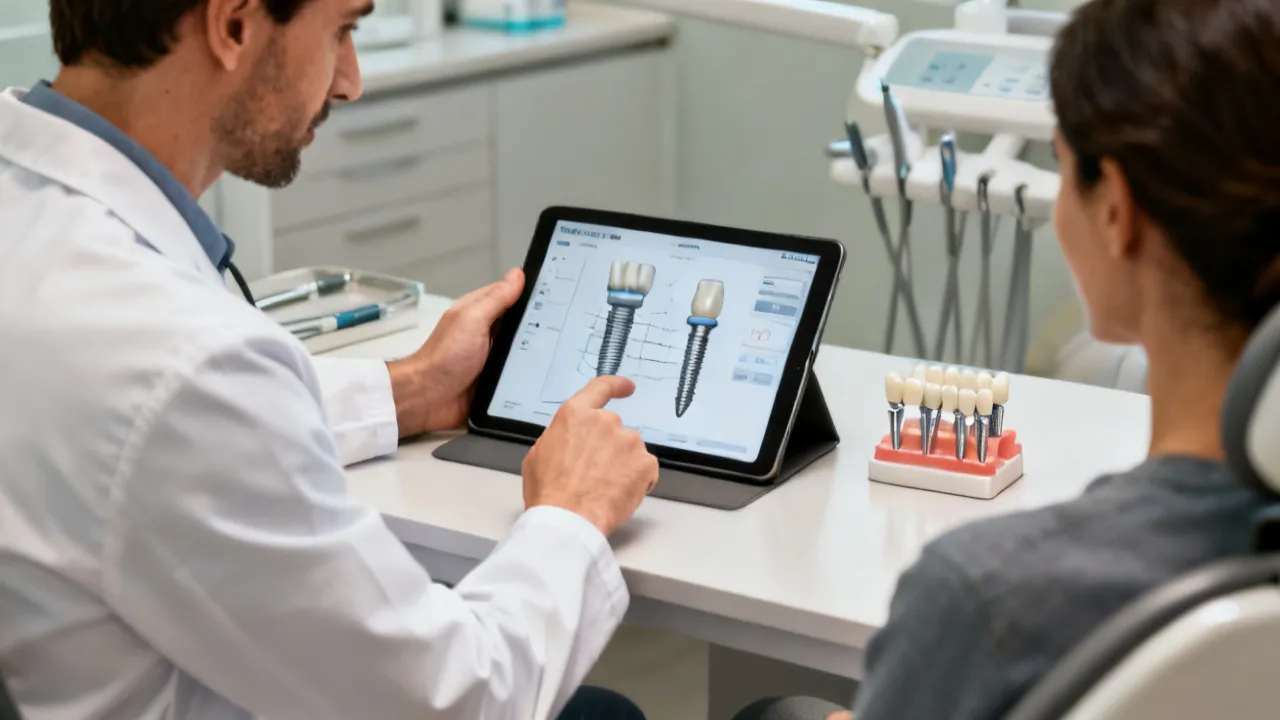
- Surgical guide / guided surgery: Some clinics emphasize imaging and surgical guidance. The presence of detailed planning can affect both safety and predictability. However, “guided surgery” can mean different levels of planning (e.g., basic guidance versus detailed prosthetically driven planning). Ask what the guide is used for, whether it’s based on CBCT and digital scans, and how it affects restorative outcomes.
- Maintenance and warranty: Aftercare (including follow-up visits) and prosthetic maintenance are central to good success—even when the “implant cost” seems capped. Verify the warranty’s coverage scope: Does it cover component replacement? Does it include adjustments or repairs? Does it include follow-ups?
- Dental plans vs. dental insurance: These are not identical in all countries. A dental plan may be a membership-style arrangement; insurance may require specific eligibility and prior authorization depending on the product. You should ask whether implants are covered directly, indirectly, partially, or excluded.
- “Same-day” implants vs. staging: Some marketing suggests you can get an implant and final restoration in one day. In reality, suitability varies based on bone quality, infection status, esthetic zone requirements, and whether primary stability is achievable. If a clinic advertises rapid timelines, ask what clinical criteria they use to qualify patients for that approach.
- “All-on-X” packages: These are often pitched as lower cost, especially for patients missing many teeth. “All-on-X” can still be a high-quality pathway, but the package must specify what is included: number of implants, prosthetic type, immediate versus delayed loading, and maintenance frequency.
- Mini implants: Mini dental implants may reduce cost in specific scenarios. But they are not universally indicated. Mini implants can face limitations related to load distribution and prosthetic design. Always request an imaging-based rationale and a clear occlusal plan.
3) What Www.dentalplans.com is typically used for in decision-making
When people reference Www.dentalplans.com, they are usually seeking a way to compare dental coverage options—whether that means understanding plan tiers, estimated out-of-pocket costs, or how to find participating providers. A rational consumer workflow is to treat such resources as coverage discovery tools, not as direct price guarantees for implant surgery.
From an expert viewpoint, the value of plan comparison resources is to answer questions before you book a procedure. Consider these decision points as “pre-flight checks,” because coverage details can significantly change your out-of-pocket cost even if the procedure itself costs the same.
- Is implant coverage included, excluded, or partially covered?
- Is there an annual maximum, waiting period, or frequency limit?
- Are there network restrictions that change the final price?
- Does the plan cover diagnostics, imaging, or only the prosthetic portion?
- What documentation do you need for a pre-treatment estimate?
- Are there codes or procedure categories that match implant therapy in your plan documents?
- Will the plan reimburse after-the-fact, or is it billed directly through a network provider?
Additionally, it’s useful to understand whether your plan reimburses based on “usual and customary” fees, contracted rates, or fixed allowances. These details can influence how much of the advertised “low-cost” claim remains after billing. If your plan uses contracted rates, you may need to see specific network providers to capture the expected savings.
Another important point: implant treatment is a multi-phase episode of care. Some plans may cover diagnostics and restoration steps but not the surgical component (or vice versa). That can lead to a situation where you thought you were buying a low-cost plan, but the key expense is either excluded or limited.
4) Source-based comparison: where “low-cost” information comes from
The table below summarizes how several online resources commonly present low-cost implant information. Note that the purpose is informational comparison of features and focus—not a pricing guarantee. The sites’ content may change over time. Also, even when the websites are accurate at the time of publication, “low cost” can vary by location, provider partner, and clinical suitability.
| Website (focus) |
|---|
| DentalViews — education on low-cost dental implants, including implant benefits, types of treatments, and cost factors. |
| Atlantic Dental Group — clinic service overview that typically supports appointment scheduling, comprehensive dentistry, and access to implant-related care. |
| DentaVacation — dental tourism framing, emphasizing cost comparisons across countries and travel coordination considerations. |
| ADHP (American Dental Health Plans) — dental insurance plan discovery and how coverage can reduce dental expenses. |
| Rockville Dental Arts (ES) — bilingual/service access for Spanish-speaking patients, describing implant-related services and clinical care delivery. |
| Cigna (ES) — Guide to Dental Implants — educational insurer content explaining key implant concepts and patient questions. |
| Union City Mini Dental Implants (ES) — focus on mini dental implants, often relevant for smaller missing-tooth areas and specific clinical indications. |
source: www.dentalviews.com
source: www.atlanticdentalgrp.com
source: www.dentavacation.com
source: rockvilledentalarts.com/es
source: www.cigna.com (ES)
source: unioncityminidentalimplants.com/es
When interpreting these sources, consider how each one is positioned in the “value chain.” Education sites can help you identify what’s typically included in good care. Clinic sites can help you understand availability and workflow. Insurance plan sites can help you estimate financial structure. Dental tourism sites can help you understand travel and consolidation—but they cannot replace your medical team’s assessment.
This is why responsible “low-cost” decision-making treats online sources like ingredients, not like the final meal. You want to combine them into a complete understanding: what you need clinically, what you qualify for, and what your financial plan actually covers.
5) Cost expectations for individual dental implants (by language regions)
Below are reference cost ranges for individual dental implants by country. These values are presented for consumer orientation only; the total “implant episode of care” can differ based on diagnostics, bone quality, whether additional procedures are required (e.g., bone grafting), and the prosthetic design. In many real-world cases, “single implant” pricing becomes only a starting point; the final total often includes several add-on components and follow-up milestones.
Also note that currency and taxes can change the consumer experience. Two patients may pay similar “headline” amounts but receive different levels of included care (like imaging, temporary crowns, or implant maintenance). Even within the same country, pricing can vary by city and by whether the clinic is part of a network with discounted provider fees.
| Country | Currency | Price range (single implant) |
|---|---|---|
| United States | USD | $3,000 - $6,000 |
| United Kingdom | GBP | £2,000 - £2,500 |
| Australia | AUD | AU$3,500 - AU$6,500 |
| Canada | CAD | CA$3,000 - CA$5,500 |
| Spain | EUR | €1,500 - €2,500 |
| Chile | CLP | CLP$800,000 - CLP$1,500,000 |
| Mexico | MXN | $15,000 - $25,000 |
| Colombia | COP | $2,000,000 - $4,000,000 |
| Peru | PEN | S/ 3,000 - S/ 6,000 |
| Argentina | ARS | $80,000 - $150,000 |
| Brazil | BRL | R$3,000 - R$8,000 |
| Portugal | EUR | €1,000 - €2,000 |
Because implant care is complex, it can be helpful to reframe these numbers as “anchor prices” rather than direct purchase prices. When you request an itemized treatment quote, you can see where your total comes from and whether it aligns with a standard implant pathway.
6) How to get dental implants at low cost: step-by-step approach
Below is a practical, step-by-step workflow aimed at helping patients in English-, Spanish-, and Portuguese-speaking environments identify lower-cost routes while controlling for clinical appropriateness. The goal is not just to spend less, but to reduce avoidable risk and administrative confusion.
Step 1: Confirm your clinical candidacy early
Low-cost strategies are only safe when they match your diagnosis. Expect an evaluation that typically covers medical history, oral exam, and imaging (often including CBCT in modern workflows). If bone volume is insufficient, additional procedures may be required—those can materially change your final cost. If periodontal disease is active, implant therapy may need staged periodontal stabilization first.
- If you smoke or have uncontrolled diabetes, ask how these factors affect surgical risk and implant success rates. Also ask what “control” looks like in your plan (e.g., glucose targets, timing before surgery, and follow-up monitoring).
- Ask whether a staged approach is planned (e.g., implant placement and later prosthetic delivery). Staging can change comfort and cost over time, especially if you need temporary teeth during healing.
- Ask about infection status: Do you have a current abscess, sinus involvement, or periapical pathology that must be addressed before implant placement?
- Ask about your bite: How will occlusal forces be distributed to reduce overload and prosthetic complications?
Step 2: Request a “total treatment quote,” not a partial price
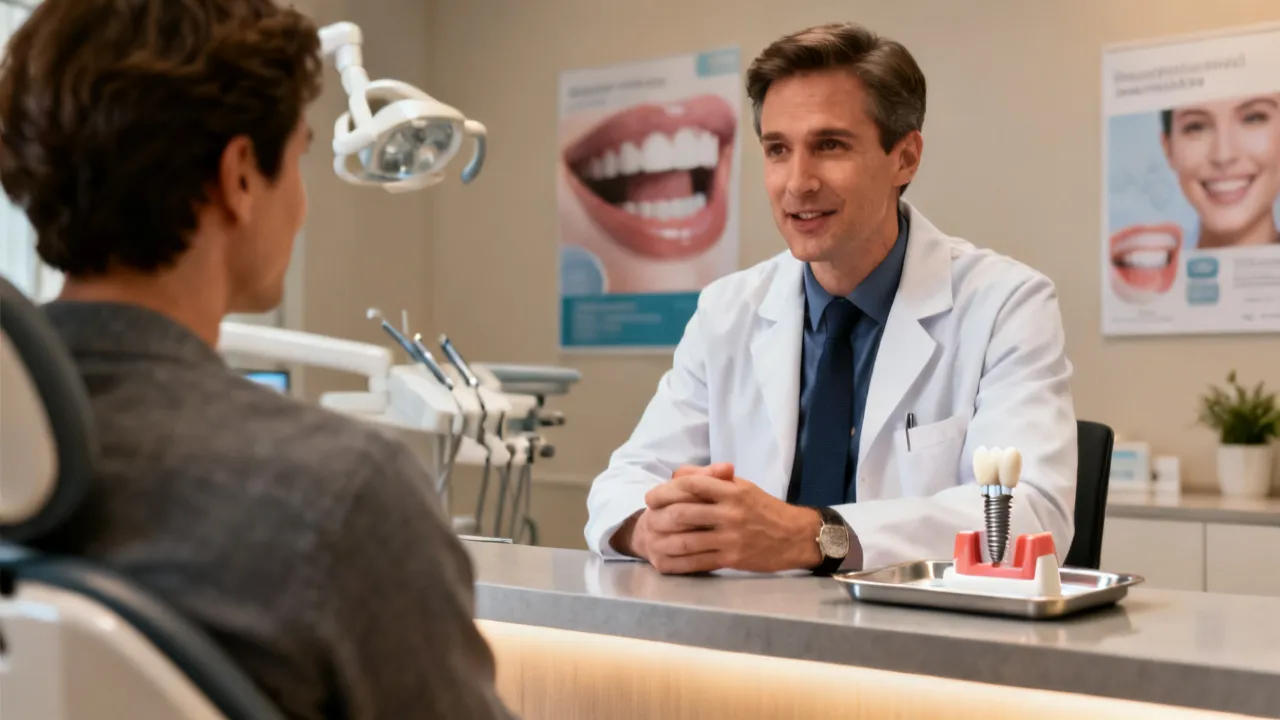
When comparing clinics and plan options, request an itemized estimate. A meaningful quote clarifies: diagnostics, surgical components, prosthetic components, and aftercare. If a quote is not itemized, you may struggle to compare it against other offers.
- Diagnostics and imaging (e.g., CBCT, intraoral scans, radiographs)
- Surgical components (implant fixture, abutment, any guided-surgery components)
- Prosthetic component (crown/bridge, materials, and whether it is provisional or final)
- Bone grafting and membrane (if needed, including type and whether it is from a donor or synthetic)
- Extractions and socket preservation (if relevant)
- Follow-up visits and maintenance timeline (including number and frequency of post-op visits)
- Temporary restorations (if your plan includes them)
- Post-treatment adjustments (especially important for prosthetics)
If you’re comparing multiple providers, insist on comparing “apples to apples”: same number of implants, similar prosthetic designs, and similar aftercare schedules. Otherwise, “low cost” may simply reflect fewer services or shorter warranties.
Step 3: Use dental plans and insurance tools to reduce out-of-pocket spend
Coverage mechanisms vary. For example, plan comparison resources like Www.dentalplans.com are often used to explore plan types and networks. In many cases, dental insurance/plan coverage may reduce routine dental costs more predictably than complex procedures; therefore, confirm whether implants are covered directly or indirectly (e.g., prosthesis coverage). You should also ask whether “implant” is treated as a major restorative procedure and how the plan defines it.
In addition to coverage, check administrative details:
- Is pre-authorization required?
- Does the plan reimburse based on receipts or direct billing?
- Is there an annual deductible or maximum?
- Are there specific waiting periods for implant coverage after plan start?
- Does the plan require you to see a network provider for implants specifically, not just for routine exams?
A low-cost strategy that relies on insurance still needs a clinical fit. A plan might pay more for a certain restoration type but less for others, so your prosthetic plan can become part of your “financial strategy.”
Step 4: Compare clinic experience and technology—especially for implants
From an expert’s perspective, clinic cost differences should be weighed against operational details: imaging protocols, implant system selection, prosthetic design planning, and aftercare pathways. A lower advertised price may reflect different levels of planning, fewer follow-up visits included, or narrower treatment scope.
Technology is not just a marketing buzzword—it affects planning and predictability. For instance, digital workflow can streamline diagnostics and prosthetic alignment, while CBCT can improve anatomy assessment. Still, technology should be considered alongside clinician experience. A clinic that invests in imaging and documentation may incur higher costs, but it could also reduce complications and need for revision.
When comparing clinics, ask questions such as:
- Which implant systems are used and why were they selected for your case?
- Will a prosthetically driven treatment plan be created?
- How many similar cases does the clinician perform each month or year?
- What follow-up schedule is included and who performs it?
- What is the process for handling complications or prosthetic adjustments?
Step 5: Consider mini implants only if clinically appropriate
In certain Spanish-speaking markets, clinics that emphasize mini dental implants (e.g., Union City Mini Dental Implants) often appeal to patients missing smaller tooth areas. However, suitability depends on bone conditions, occlusion, and good prosthetic requirements. Ask for a written rationale for why mini implants are recommended for you, including how the clinician plans to manage bite forces.
It can also help to ask how the prosthetic design differs from conventional implants for your situation. If your case requires strong stability in high-load areas, a mini implant approach may not be suitable. If cost is the primary driver, your clinician should explain why a lower-cost approach still meets your functional needs.
Practical patient questions include:
- What is the expected success rate for my specific diagnosis?
- What alternatives were considered (standard implants, bone augmentation, bridges)?
- What are the risks if mini implants do not meet stability requirements?
- How many follow-up visits are included in the price?
Step 6: Evaluate dental tourism carefully (when applicable)
Dental tourism can lower costs for some patients, a theme highlighted by sites like DentaVacation. Still, implant therapy is staged and requires follow-up. If you travel, confirm what happens during healing and how your continuity of care will be handled after your return.
When planning dental tourism, consider that complications may emerge weeks or months later. You should ensure you have documentation and access to follow-up care either through the travel provider or a trusted local dentist.
- What is covered during the post-procedure healing window (e.g., emergency visits, checkups, adjustments)?
- How complications are handled (revisions, additional appointments, re-imaging)?
- Whether your home-country dentist can provide continuity of care, including periodontal support and prosthetic adjustments.
- The clarity of documentation (treatment plan, implant identification, prosthetic records).
- Whether you will receive a full set of radiographs and the implant lot/serial information for medical records.
- Whether temporary prosthetics are included if you travel before final restoration.
A risk-reduction approach is to treat tourism as a “convenience plan,” not a “quality substitute.” You want consistent clinical standards: sterilization protocols, material specifications, and transparent aftercare.
Step 7: Negotiate with a documented plan and a defined schedule
To make “low cost” durable, ask for a schedule that spells out each phase. The more ambiguity exists, the more likely additional costs will arise later. You can often negotiate within the plan scope—sometimes the clinic can reduce cost through scheduling efficiency or by aligning restoration timelines—but you should not negotiate away clinical necessities.
- A defined timeline for each phase (surgery, healing, provisionalization, final prosthesis)
- Clear expectations for temporary vs. good prostheses
- Written confirmation of included appointments (number and timing)
- Refund/adjustment terms if timelines change (for example, due to healing variability)
- Written warranty and replacement policy for prosthetic components
Also ask whether you will have a point person for questions. Implant care often generates multiple touchpoints; having clear communication channels reduces the risk of missed follow-ups and unmanaged discomfort.
7) Localization insights by language community (practical considerations)
Affordability strategies work top when they align with patient communication needs and care navigation. The following points reframe the provided regional examples into patient-relevant guidance—focusing on how people can use the resources and what questions to ask next.
English-speaking environments: access, education, and plan discovery
In English-speaking countries, patients often compare clinic websites, educational resources, and insurance/plan platforms. For example:
- DentalViews (education on low-cost implant options) helps patients understand typical decision points—like how implants differ from other tooth replacement methods.
- Atlantic Dental Group represents a clinic-based approach, where the practical focus is usually appointment scheduling, service breadth, and access to comprehensive dental care.
- Dental tourism platforms like DentaVacation present affordability comparisons and travel arrangements, which can be relevant for patients who plan and consolidate care in a single trip.
If you are near the care networks implied by these resources, an objective next step is to ask your chosen provider how they handle documentation and good follow-up, particularly if you expect implants to remain in place for many years. Ask for a written care plan with milestones.
In addition, English-speaking patients benefit from learning the “language of scope.” For example: know the difference between “implant placement fee,” “prosthetic crown fee,” and “full treatment package.” If you can speak those terms during your consultation, you reduce the risk of misunderstandings.
Spanish-speaking environments: bilingual patient navigation and education
Spanish-speaking patients often benefit from clear explanations in Spanish and consistent care navigation. A Spanish-language clinic presence such as Rockville Dental Arts can reduce friction in understanding implant steps, costs, and emergency options.
Additionally, educational material from global insurers such as Cigna’s guide (Spanish) supports objective understanding of implant concepts. The ideal use of such resources is to translate them into questions for your consultation, including coverage scope and realistic timelines.
For some patients, clinics emphasizing mini implants (e.g., Union City Mini Dental Implants) may present a lower-cost pathway when clinically indicated. Still, ask for imaging review and an occlusion plan, since implant success depends on more than the implant itself. The clinic should explain how the prosthesis will manage chewing forces.
Spanish-speaking patients can also ask for written quotes and translated follow-up instructions. Implant aftercare includes hygiene instructions and sometimes medication guidance. When aftercare is understood, follow-up compliance tends to be better, and complications become less likely to be delayed or mishandled.
Portuguese-speaking environments: plan structures and network access
In Portuguese-speaking markets, affordability is commonly influenced by plan structures and provider networks. Dental plan providers like DentalVidas may offer emergency access and a broad dentist network, which can help stabilize your routine oral health—an important factor for implant longevity.
Meanwhile, clinics such as Rubi Odonto and Odontologia Velasco typically position themselves around orthodontics, esthetics, and implant services. For patients, the practical question is whether the clinic’s workflow supports continuous prosthetic maintenance and whether it offers transparent pricing for each phase.
In Portugal and Brazil, for example, financing models can influence patient decisions. Some clinics offer installment plans that reduce immediate stress. However, financing should be considered alongside what’s in the contract: included appointments, warranty rules, and replacement policy. A low monthly payment may still result in higher total out-of-pocket cost if the plan includes fees for follow-up visits or if it excludes necessary bone grafting.
8) What you should ask before committing to a low-cost implant
Below is an expert-style checklist designed to reveal whether lower cost is achieved through efficient care delivery (often good) or through omissions (often risky). Think of this as a “scope audit.” The best deals are not simply the cheapest—they are the ones where the scope matches your clinical needs.
- What exactly is included in the quoted price? Ask for itemization and definitions of each component.
- What type of imaging will be used? Confirm whether CBCT is included when relevant and whether images will be shared for your records.
- Which implant system and prosthetic components are planned? Ask about brand/model and the material used for the crown.
- How do you assess bone quality? Ask how bone grafting decisions are made, including what criteria trigger grafting.
- Will you place implants using guided surgery? If yes, ask what the guide is based on and what happens if the anatomy differs from the plan.
- Who will restore the prosthesis? Confirm whether the implant surgeon also handles prosthetic restoration or whether a prosthodontist/restorative specialist is involved.
- What is the aftercare schedule? Ask for follow-up visit dates and hygiene support. Also ask if you can access urgent visits if you experience unusual pain or swelling.
- Is there a warranty or adjustment policy? For prosthetics especially. Ask what’s covered (replacement, repairs) and the time period.
- What complications are you prepared to manage? Get a clear escalation pathway, including whether additional surgeries are billed or included.
- What is the estimated total time to final restoration? Low-cost approaches sometimes take longer; confirm your timeline.
- Are temporary restorations included and what type are they? Temporary teeth can affect comfort, speech, and esthetics during healing.
If you feel rushed during the consultation, that can be a red flag. Implant planning benefits from time and careful evaluation. A responsible clinic will explain the why behind each step and provide written materials.
9) FAQs (inverted pyramid emphasis: critical items first)
FAQ 1: Are low-cost dental implants always a safe choice?
No. “Low cost” can mean fewer included services (such as imaging, follow-up, or the prosthetic component) or it may reflect efficiency. The safest approach is to compare itemized quotes and confirm suitability for your anatomy and medical profile. Also, safety is not only about the surgery—it’s about the full pathway, including healing support and prosthetic adjustments.
FAQ 2: What is usually the biggest driver of dental implant price?
Common drivers include the need for bone grafting, diagnostic imaging requirements, the prosthetic design/materials, and the clinical planning approach. When comparing offers, ensure you are comparing the same scope of care—not just the implant fixture. In addition, the complexity of extraction sites (immediate implants versus delayed implants) can significantly influence cost.
FAQ 3: Does a dental plan or insurance automatically reduce implant costs?
Not automatically. Coverage varies by plan type, network, and the specific procedure. Use plan comparison tools (including resources like Www.dentalplans.com) to understand coverage details, then confirm implant-specific coverage and out-of-pocket estimates with the provider. You should also check maximums, waiting periods, and whether pre-authorization is required.
FAQ 4: Why do some clinics advertise mini implants or low-cost implant packages?
Mini implants may be suitable for specific indications, and package pricing can simplify administrative steps. However, suitability depends on occlusion, bone conditions, and prosthetic needs. Ask for imaging-based justification and a written occlusal plan. A low-cost package is only appropriate if it matches your clinical risk profile.
FAQ 5: If I consider dental tourism, how do I reduce risk?
Plan for staged follow-up and request full documentation: treatment plan, implant identification, prosthetic records, and written aftercare instructions. Confirm complication handling and continuity with a local provider after you return home. Also make sure you understand what emergency care options exist during your trip and how follow-up visits are scheduled if healing does not proceed as expected.
FAQ 6: What costs might be missed in the “single implant” price range?
Often missed elements include initial diagnostics, bone grafting, temporary restorations, and prosthetic maintenance or adjustments. Even when ranges exist for single implants, individual treatment episodes can differ. If the quote is not itemized, ask for a breakdown of every stage so you can compare offers fairly.
FAQ 7: How long do dental implants typically last?
Longevity depends on oral hygiene, periodontal health, prosthetic maintenance, occlusion, and patient factors such as smoking and diabetes control. Rather than relying on marketing claims, ask your clinician about good maintenance expectations in your specific case. Also ask what follow-up schedule they recommend and how complications are monitored over time.
FAQ 8: What documentation should I keep for future dental care?
Keep records of imaging reports, implant system details, surgery date(s), prosthetic component information, and follow-up notes. These records are particularly valuable if you change providers or move. Additionally, keep the implant serial/lot information if available and any warranties documentation that may be required for future repairs.
10) Conditions/requirements that often affect your final implant cost
Although low-cost implant marketing may highlight a baseline price, real-world pricing usually changes when any of the following apply. A responsible provider should explain these variables early and translate them into a clear cost “range” that is based on your clinical findings.
- Bone deficiency: If grafting or augmentation is needed, surgical scope increases. This can include block grafts or particulate grafts, and may require membrane placement and longer healing intervals.
- Infection or periodontal disease: Stabilization may require additional therapy before implant placement. This can include scaling and root planing, periodontal maintenance, and sometimes extraction of compromised teeth.
- Tooth position and spacing constraints: Complex extraction sites or esthetic zone planning can add work. Esthetic zone planning may require careful implant positioning, sometimes including tissue contouring.
- Need for temporary teeth: A temporary prosthesis can involve additional appointments and materials. If the temporary restoration is not included, you may pay extra later.
- Prosthesis complexity: A single crown vs. multi-unit bridges differs materially. Multi-unit prosthetics often require stronger frameworks and careful fit and occlusion.
- Follow-up schedule: Programs vary in whether maintenance visits are included. Since implant health relies on maintenance, excluded follow-ups can undermine long-term value.
- Sinus considerations (upper back teeth): In some cases, sinus lift procedures are required to achieve adequate bone height.
- Nerve proximity (lower jaw): If the implant must be placed near important nerve structures, additional planning and possibly alternative approaches are needed.
11) Practical consumer strategy: build a “low cost” dossier
To make pricing comparisons meaningful, gather the same data from each provider. A simple “dossier” can include:
- Itemized quote with included components and what is excluded
- Proposed treatment timeline (surgery and prosthetic delivery)
- Imaging plan and whether images will be shared
- Plan/insurance estimate details (if applicable), including pre-authorization requirements
- Maintenance and warranty terms, including the number of included visits
- Complication handling policy and who will manage follow-up if issues occur
- Material specifications for prosthetics (e.g., ceramic type, metal frameworks if used)
- Temporary restoration plan if you need teeth during healing
In practice, this dossier turns what could be a confusing comparison into a measurable evaluation, helping you identify whether your “low-cost” option is truly comparable. When you put the information side-by-side, gaps become obvious. For example, one provider may include CBCT and follow-ups; another may not. Another may include the crown while the first quotes only the fixture.
It can also help to create a “scenario comparison.” For instance, if bone grafting is likely, ask each provider for a quote that includes grafting, not just the base scenario. If you do not, you may end up choosing the cheapest headline and then paying the difference later when grafting is required.
Finally, ensure that the dossier captures the clinician’s reasoning. A low-cost implant plan that’s backed by a clear clinical rationale tends to be more resilient than a plan that is low cost because it skipped a critical assessment.
12) Responsible use of online resources
Online content can support better questions for your consultation, but it cannot replace professional evaluation. Consumer education pages may describe typical steps and common cost drivers; clinic websites often describe services and scheduling. Plan comparison tools help you discover coverage paths. The key is to treat each source type appropriately—education for understanding, clinics for feasibility, and plans for financial structure.
A practical approach is to use online sources as “question generators.” For example:
- If an educational page discusses guided surgery, take that as a prompt to ask about imaging and surgical planning in your consultation.
- If a clinic website advertises a package, ask what the package includes and what it excludes.
- If a plan comparison site suggests coverage reductions, ask your provider to translate plan terms into implant-specific cost estimates.
- If a dental tourism platform emphasizes savings, ask about documentation and continuity of care.
Responsible online use also means being cautious with overly broad claims. “Guaranteed results,” “no need for follow-ups,” or “final teeth same day for everyone” are examples of language that should prompt additional scrutiny. Implant therapy has biological variability; a responsible clinic should explain how it manages that variability.
13) Reference links (for the sources mentioned in this article)
https://dentalviews.com/low-cost-dental-implants/
https://www.atlanticdentalgrp.com/
https://www.dentavacation.com/
https://rockvilledentalarts.com/es/
https://www.cigna.com/es-us/knowledge-center/guide-to-dental-implants
https://unioncityminidentalimplants.com/es/
https://www.rubiodonto.com.br/
https://odontologiavelasco.com.br/
https://dentalvidas.com.br/
Disclaimer
1) The above information comes from online resources, and the data is as of October 2023. 2) Dental implant prices are for reference only and may vary by region, clinic and doctor.