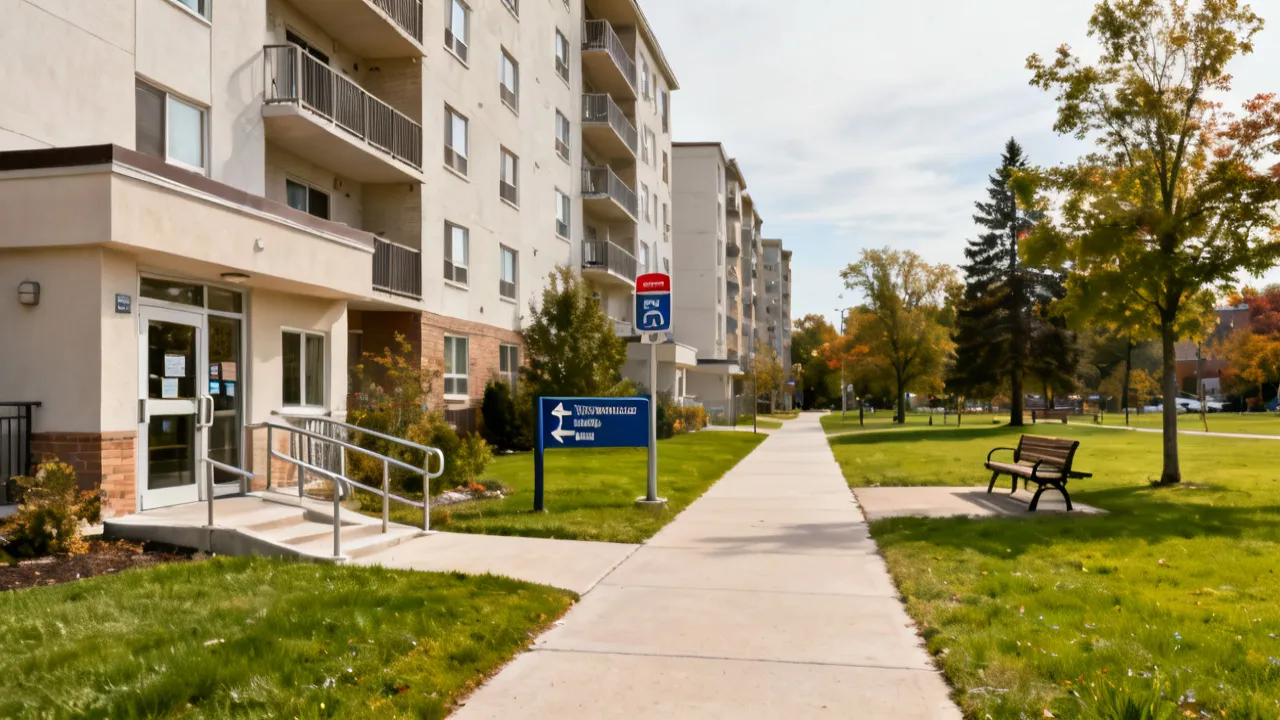

Finding Affordable Rentals Near Scarborough
This guide explains how to evaluate rentfaster Scarborough options and other low-cost senior living and rental pathways across English-speaking markets. It starts with practical screening steps—budget, lease terms, and location fit—then broadens into how families can compare verified resources, understand typical rental cost bands, and shortlist communities with confidence.

1) Why “rentfaster Scarborough” is worth evaluating for budget-minded renters
For many people searching for “rentfaster Scarborough,” the goal is usually straightforward: secure reliable housing that fits a realistic monthly budget, while avoiding avoidable friction such as unclear lease conditions, mismatched amenities, or good cost creep. Scarborough (Toronto) is a dense, service-rich area with a wide mix of housing types—so “affordable” often depends on how you define trade-offs, whether you prioritize transit convenience, walkability, quiet streets, or the availability of community support services.
In practice, a lot of renters discover that affordability is not just about the advertised base rent. It’s about understanding everything that drives your monthly “all-in” cost and your day-to-day costs afterward—utilities, parking, laundry, internet, transit time, and the practical cost of commuting or managing mobility constraints. For example, a unit that looks cheaper may be more expensive if you must pay for parking every month, buy extra household supplies because laundry is not included, or spend more on rideshares because the building is inconveniently located relative to transit lines you use daily.
From an industry perspective, the most effective approach is not to hunt blindly. Instead, you combine (1) structured budget planning, (2) verification of property and community details, and (3) a comparison method that makes apples-to-apples trade-offs clear. This is especially important when you are also considering senior living alternatives, where rental-like structures can overlap with service-based models (e.g., independent living with amenities, or assisted living with care plans). Even if you begin with a “rent” search mindset, the right strategy helps you compare across categories without losing control of your budget.
Another reason “rentfaster Scarborough” is worth evaluating is that it can function as a practical discovery layer. Search terms and lead aggregators sometimes surface listings, community names, or property management companies you might not find otherwise. However, discovery is not the same as decision. The value comes when you use those leads as starting points for rigorous verification—asking the right questions, collecting fee schedules, and confirming lease terms. When you treat the term as a tool rather than a promise, you gain speed without sacrificing accuracy.
2) Key concepts: rentals vs. senior living models (and how they affect your final monthly cost)
Even though your starting point may be rental-focused—searching “Rentfaster Scarborough” listings or exploring private apartments—the broader housing landscape can include:
- Private rentals: You typically pay base rent plus utilities, and any add-ons (parking, laundry, storage).
- Apartment-style senior housing: Often structured like leases, but with community services bundled (activities, dining plans, housekeeping options, emergency call systems, and sometimes transportation).
- Assisted living and care-linked housing: Costs can vary by care level; pricing structures may include base rent plus service fees or care tiers.
Because pricing structures vary, the top decision framework is to evaluate your scenario end-to-end: housing type, expected length of stay, care needs, and how frequently costs can change over time. This reduces the risk of “surprises” at renewal or when service levels shift. It also helps you avoid a common budgeting trap: comparing base rent alone when the senior living model charges both housing and services, which can make the “cheaper” looking option more expensive once bundled supports are accounted for.
To make the comparison tangible, imagine three hypothetical options:
- Option A: A condo-style rental at $2,000/month plus utilities (~$150), plus parking ($150), plus internet (~$60). Your monthly total becomes ~$2,360 before groceries and transit costs.
- Option B: A senior-oriented community apartment at $2,300/month that includes meals and a basic wellness program, but charges a separate fee if you need additional help. If utilities and parking are partially included and meals are bundled, your “all-in” cost might become comparable to Option A, even though the sticker price is higher.
- Option C: Assisted living at $3,100/month with bundled care tiers. The base number is higher, but the cost is easier to predict if your health needs require consistent support.
Without mapping these differences upfront, budget-minded renters can accidentally choose an option that doesn’t match their real needs or cost profile. With a structured comparison, you can instead decide intentionally: either you choose a lower base rent and accept extra responsibilities, or you choose higher base costs that reduce day-to-day friction.
It’s also worth recognizing that many “senior living” communities blur lines. Some are essentially standard apartments plus amenities, and others function like service-driven residences. Therefore, it’s not enough to rely on the category name in a listing. You need to identify what is included in the monthly amount and what becomes additional later.
3) Quick triage: what to confirm before you commit
If you are comparing rental or senior housing options near Scarborough, start with a short checklist that you can apply consistently to every shortlist. This is how professionals keep evaluations objective and comparable.
- Lease clarity: Review rent increase clauses, utility responsibilities, and what is included in the monthly figure.
- Move-in requirements: Ask about deposit size, eligibility rules, documentation needs, and waiting periods.
- Maintenance standards: Confirm response timelines, how repairs are requested, and whether there are on-site teams.
- Accessibility and safety: Door widths, bathroom configuration, elevator access, lighting, and emergency procedures.
- Noise and commute realities: Visit at different times of day, and verify transit routes relevant to your routine.
- Service bundling (if senior-oriented): Identify which supports are included versus priced separately (e.g., meals, wellness programs, or transportation).
When you use this triage approach, “rentfaster Scarborough” becomes a doorway into better comparisons rather than a single-source bet. Instead of assuming that one lead aggregator knows the best deals, you treat each listing as a candidate that must pass the same quality and affordability checkpoints.
One detail that budget-minded renters often overlook is the cost of “time.” A cheaper unit might be located slightly farther from transit, forcing more frequent rideshares or longer commutes. While commute time is difficult to convert into dollars directly, you can still evaluate it by asking: If my commute is 10 minutes longer each way, how does that affect my daily routine? How many days per week will I use transit vs. drive? What’s the approximate cost of additional transportation? When you quantify commuting time realistically, you create a more honest affordability picture.
Similarly, the cost of maintenance can be “hidden” when tenants must solve problems themselves. If a building is slow to repair heating, plumbing, or elevator issues, you may face discomfort costs, replacement costs, or even temporary relocation expenses. That’s why “maintenance standards” belong in triage—because reliability is a cost factor.
4) Compare official resources that help locate lower-cost senior living options
Below is a compact comparison of official or mission-driven platforms that families often use to explore senior living choices, understand market structures, and narrow options. The emphasis is on low-cost discovery through directories, education, and verified guidance rather than on speculative pricing.
| Resource Type | What It Helps You Do | Coverage Notes |
|---|---|---|
| U.S. senior living guidance | Explains senior housing categories and how to choose among them | Designed for decision-making across independent living, assisted living, and related models |
| Senior living directory | Helps locate communities and compare broad listing details | Includes information on types of care and general community features |
| Senior citizens’ legal advocacy + housing-related resources | Supports rights-focused guidance and related housing/care information | Useful for understanding safeguards, not just pricing |
| Certified move management network | Assists with transitions to senior living and reduces logistical burden | Relevant if downsizing or relocating near retirement destinations is part of the plan |
source: www.aarp.org
source: www.seniorliving.org
source: www.nsclc.org
source: www.nasmm.org
For many families, the biggest value of these resources is not that they “find the cheapest option instantly,” but that they help you reduce decision errors. When you reduce errors, you reduce cost. For example:
- Instead of signing a lease without understanding what happens if your needs change, you learn the right questions to ask.
- Instead of relying on a vague promise like “care is available,” you learn how care levels and fees are defined.
- Instead of underestimating transition costs—moving supplies, packing, time off work—you learn how move management can reduce logistical stress and avoid rushed decisions.
Even if these resources are U.S.-centric in some cases, the decision frameworks—how to compare contracts, how to distinguish housing costs from service costs, and how to plan transitions—translate well to other English-speaking contexts. Scarborough renters can still use the concepts to ask better questions and interpret what they’re being offered.
Note: These resources are included as decision-support references. They typically do not guarantee the lowest price in a given neighborhood, but they can help you identify the right categories, ask better questions, and reduce the risk of incomplete information.
5) Step-by-step: how to find lower-cost senior living or cost-conscious rentals in English-speaking countries
To keep your search methodical, use a process that mirrors how professionals triage housing options. Adapt it whether you begin with “rentfaster Scarborough” leads or broader directory listings. The key idea is consistency: use the same evaluation method for every property so you can compare outcomes rather than comparing impressions.
Step 1: Set your true monthly ceiling (and identify what’s “included”)
- Write down your monthly ceiling for housing (base rent) plus mandatory costs (utilities, parking, meal plans if required).
- If considering senior living models, separate housing charges from service charges so you can compare total cost.
When you set your ceiling, include not only the living costs but also the costs of “not getting it perfect.” For example, you might choose a unit that’s affordable but lacks a quiet environment, and you could end up spending additional money on noise-canceling solutions or moving sooner than expected. A more comprehensive ceiling helps you avoid those downstream expenses.
It can also help to create two budgets: a “comfortable” budget and a “maximum emergency” budget. That way, if a unit slightly exceeds your ceiling, you can quickly decide whether it’s still worth it based on value—like included parking, included laundry, or a location that reduces commuting time.
Step 2: Choose a housing model that matches your care needs
- If you only need independent living supports, prioritize independent living–type communities or apartment-style setups.
- If care assistance is expected, shortlist places that clearly explain how care levels affect pricing.
A frequent mistake is choosing a senior-oriented model when you actually need “ordinary rental convenience,” or choosing ordinary rental housing when you need consistent supports. Both can be expensive. Ordinary rentals can be cheaper monthly until maintenance, accessibility, or health support becomes a challenge. Meanwhile, senior housing might feel expensive initially, but the bundled services might reduce the need to pay for outside support (care aides, frequent housekeeping, or meal costs).
To avoid this, decide what supports you need today and what supports you might need within the next 1–3 years. If you can reasonably predict increasing needs, you can choose a model that scales without requiring an abrupt move.
Step 3: Build a shortlist using directories and education resources
- Use directory platforms to identify candidates and read their model-of-care descriptions.
- Use educational guides to understand what questions to ask (contracts, assessment processes, and support services).
Shortlisting is where budget discipline becomes visible. Too many searches turn into “open-ended browsing,” which increases decision fatigue and makes it easier to accept unfavorable deals. Instead, create a manageable list—maybe 5 to 10 options—and evaluate them using the same checklist.
If you start with “rentfaster Scarborough,” capture key details immediately: rent amount, deposit amount, utilities, lease length, location, parking, laundry setup, and any building rules. Then, transfer these details into a spreadsheet or scoring sheet so you can compare quickly.
Step 4: Validate details with direct contact
- Ask about unit availability dates, lease duration, deposit requirements, and the policy for renewals.
- If senior-oriented, ask how wellness services, meals, and transportation are priced or bundled.
Direct contact is essential because listing text can be incomplete. For example, a listing might say “utilities included,” but not clarify whether it’s hydro only or hydro + water + heat. Another listing might claim “parking available,” but you need to ask if parking is included or has an extra monthly fee, and whether it’s guaranteed.
For seniors or caregivers, direct contact should include questions about assessment processes and how quickly care can be added if needs increase. This matters for budgeting because some options may have long waiting lists for additional support or require reassessment at specific intervals.
Step 5: Compare “apples-to-apples” using a scoring sheet
- Create a simple scoring rubric: affordability, accessibility, safety, staff response, meal options (if applicable), and location fit.
- Use the same rubric for every site on your list, including “Rentfaster Scarborough” leads.
A scoring sheet is not about turning housing into a purely mathematical exercise. It’s about preventing bias and ensuring that important factors—like accessibility and safety—don’t get lost when a unit is visually appealing or when you feel pressure to move quickly. If you score consistently, you can justify decisions and reduce regret.
To keep the scoring sheet usable, consider a 1–5 scale per category. For affordability, include both monthly cost and the likelihood of cost increases. For safety, include lighting, entry security, elevator reliability, and staff response practices. For accessibility, include door widths, bathroom safety features, and whether mobility aids can be used comfortably.
Step 6: Request documentation before you decide
- Request sample contracts, fee schedules (where relevant), and any written policy for service changes.
- If you are evaluating rights or eligibility questions, consider using advocacy resources for guidance on safeguards and consumer protections.
Documentation reduces uncertainty. If a provider refuses to share sample contracts or fee schedules until after you sign something, that’s a red flag—because it increases the chance of misunderstandings. Instead, you should request written breakdowns and ask for clarification on any terms you don’t understand.
For budget-minded renters, documentation also helps identify which fees are mandatory. Some communities charge mandatory “community fees,” “maintenance fees,” or “program fees.” If these aren’t included in the base monthly amount shown in the advertisement, you need them in your calculation to know your true monthly ceiling.
Step 7: Plan for the transition logistics
- Relocation can affect timelines and stress. If moving from a larger home to a smaller unit, a move-management approach can help.
- Certified move managers can be especially useful for seniors or families coordinating downsizing and relocation tasks.
Transition logistics are part of affordability. Even if the monthly rent is low, moving costs can make the first year expensive: movers, packing services, storage, temporary accommodation (if there’s a gap), and time off work. If you can reduce those costs by planning ahead, your overall cost of housing decreases.
Move management can also reduce the likelihood of damaging belongings, losing documents, or making rushed decisions on which items to keep. For seniors and caregivers, it can reduce stress, which can improve adherence to health routines during transition periods.
6) Rental cost ranges (rental only) across multiple markets
Cost expectations vary widely based on neighborhood, transit access, building amenities, and unit size. The ranges below reflect rental-only bands (not care fees). Use them as a rough benchmark when estimating budgets for “nearby” searches, including areas associated with Scarborough travel patterns. They should guide your expectations for what to investigate, not what you should accept.
| Country | City Type | Price Range |
|---|---|---|
| United States | Large cities | Approximately $2,000–$4,000 per month |
| United States | Smaller cities | Approximately $1,000–$2,000 per month |
| United Kingdom | Large cities | Approximately £1,500–£3,000 per month |
| United Kingdom | Smaller cities | Approximately £800–£1,500 per month |
| Australia | Large cities | Approximately AUD 2,000–AUD 3,500 per month |
| Australia | Smaller cities | Approximately AUD 1,200–AUD 2,000 per month |
| Spain | Large cities | Approximately €800–€1,500 per month |
| Spain | Smaller towns | Approximately €400–€800 per month |
| Peru | Large cities | Approximately PEN 1,500–PEN 3,000 per month (about $400–$800) |
| Peru | Smaller towns | Approximately PEN 800–PEN 1,500 per month (about $200–$400) |
| Argentina | Large cities | Approximately ARS 30,000–ARS 60,000 per month (about $300–$600) |
| Argentina | Smaller towns | Approximately ARS 15,000–ARS 30,000 per month (about $150–$300) |
| Mexico | Large cities | Approximately MXN 10,000–MXN 20,000 per month (about $500–$1,000) |
| Mexico | Smaller towns | Approximately MXN 5,000–MXN 10,000 per month (about $250–$500) |
| France | Paris | Approximately €1,200–€2,500 per month |
| France | Other cities | Approximately €600–€1,200 per month |
| Germany | Large cities | Approximately €1,000–€2,000 per month |
Practical note for “Rentfaster Scarborough” seekers: if you are budgeting for Scarborough-area living, use local comparables (current listings and comparable unit sizes) rather than relying on national bands alone. The “band” helps you decide which options are realistic to investigate further, but it does not tell you what you should expect for your exact unit.
Also consider that rental-only bands don’t capture “amenity value.” For example, an apartment that charges a little more but includes underground parking, in-suite laundry, and hydro/water may be cheaper in total monthly cost than a unit with lower base rent but multiple add-on fees. To compare accurately, use your earlier “true monthly ceiling” approach.
If you want a practical way to compare rent offers, do the following for every listing: calculate base rent + utilities (estimate if not included) + parking (if relevant) + laundry costs (if not in-suite) + mandatory fees. Then compare that total against your ceiling. Even if you can’t get perfect data immediately, you can still estimate and refine later once you have written documentation.
7) Interpreting “Rentfaster Scarborough” in a broader housing decision
Scarborough’s rental environment typically reflects wider urban supply-demand patterns: neighborhoods differ by distance from major transit corridors, shopping centers, and job clusters. For professionals, the key is to translate website leads into measurable outcomes.
- Location fit: Choose routes that match daily errands and appointments. For many renters, the low price option becomes expensive if commuting time drives additional costs (time, parking, rideshare frequency).
- Unit practicality: A slightly higher monthly rent can reduce total spending if it includes utilities or reduces extra transport/maintenance needs.
- Amenity trade-offs: If a building offers helpful amenities (e.g., elevator access, laundry on-site, secure entry), those can be meaningful for older adults or anyone managing mobility constraints.
When you treat “rentfaster Scarborough” as one of several data inputs—not a final decision engine—you improve both affordability and reliability. The leads can help you identify which areas are currently offering options, but your final decision should rely on verified details, written documentation, and a consistent comparison framework.
To make “location fit” more concrete, compare each option against the places you must reach regularly. For many people, that includes grocery stores, clinics, pharmacies, transit stations, and workplaces. If an option is cheaper but forces you to use multiple transit transfers, your daily convenience decreases. Convenience is not a “luxury”—for some renters, it is directly linked to cost stability. Less convenience can lead to higher transportation spending, more missed appointments, and more effort required to maintain routines.
Another practical angle is neighborhood safety and comfort. Even if two units are similar in cost, you might choose one because it has better lighting, better building security, or a more comfortable walking experience at night. Those factors can affect your quality of life and can indirectly affect your long-term housing stability. Housing stability, in turn, has cost implications because frequent moves are expensive.
8) Conditions, requirements, and quality checks when comparing housing options
To keep comparisons fair and grounded, here are common conditions and requirements families should verify before committing.
| Category | What to Ask or Verify | Why It Matters |
|---|---|---|
| Affordability | Exact monthly charge breakdown; renewal and increase policy | Prevents budget drift over time |
| Eligibility | Age requirements (if senior-oriented), documentation, and assessment approach | Ensures the option is feasible for your situation |
| Services | Which services are included vs. separately priced (meals, wellness programs, transportation) | Clarifies true “all-in” cost |
| Unit standards | Accessibility features, repair standards, and safety procedures | Reduces risk for mobility or health needs |
| Contract terms | Lease duration, notice periods, and transfer/sublet policies | Protects flexibility if circumstances change |
It can help to expand these categories into a “quality checklist” you can carry to showings. For example, during a unit tour, look for:
- Heating and ventilation: Are vents functional? Does the unit feel drafty? Is there a clear plan for repairs if something breaks?
- Water pressure: Low water pressure can be a sign of building issues and can lead to replacement costs or discomfort.
- Safety hardware: Door locks, window locks, smoke detector placement, and emergency exit access (if visible).
- Sound insulation: If walls are thin, noise can become a recurring “quality cost” you pay every month in stress.
- Common area condition: Hallway lighting, stairwell cleanliness, elevator condition, and security systems show how well a property is maintained.
For senior-oriented communities, additional checks are helpful:
- Response systems: How do emergency calls work? What is the typical response time? Who receives the call?
- Dining quality and flexibility: Are meal times rigid? Are there dietary accommodations? What happens during health-related diet changes?
- Activity participation: Are activities optional or mandatory? Do residents have choices that match their preferences?
- Care escalation: How do they transition residents when needs increase? Are there predictable fee schedules?
Budget-minded renters benefit from these checks because “quality problems” often become extra costs. For example, poor maintenance may lead to repeated repairs, pest control costs (either paid by the renter or indirectly through rent increases), or the need for additional household solutions.
9) Cultural context: how English-speaking decision habits differ by country
Even when the terminology is similar, housing decision behaviors can differ. These differences matter because they shape what questions people ask and which details they treat as “must-verify.” Understanding the cultural decision context can help you interpret listings more accurately—especially when you’re comparing across platforms or following advice from international sources.
- United States: Many families focus strongly on contract review, and legal resources can help clarify consumer safeguards. Direct questions about fee schedules and escalation clauses are common.
- United Kingdom: Location and building condition often drive shortlisting, and tenants frequently weigh commute practicality against rent.
- Australia: Families often compare community features alongside rental price—especially for seniors—because day-to-day convenience can be a core part of affordability.
- Canada (Scarborough context): Transit access, neighborhood services, and practical move-in timelines are especially important in Toronto-area searches, where inventory can move quickly.
Using this context helps you interpret listings with more accuracy, including “rentfaster Scarborough” leads. It also helps you avoid misreading marketing language. For example, what counts as “included amenities” may differ based on local expectations. In one region, a listing that says “laundry on site” may still mean you pay per load. In another, it might be included. Your job is to ask for written clarification.
If you are using international resources (like U.S. senior living educational content) while searching in Canada, translate the concepts rather than copying the details. The structure of questions and decision logic often transfers, but local rules, contract requirements, and eligibility thresholds may not.
10) FAQs
Q1: Is “Rentfaster Scarborough” only for seniors?
No. The term is often used as a search label for rental-style housing. Depending on the specific listing or community, options may range from standard apartments to senior-oriented models with bundled supports. Always confirm the listing category and contract structure. If a listing is senior-oriented, verify whether it is strictly for seniors or whether it simply offers services that appeal to seniors.
Q2: How can I compare costs fairly between rental apartments and senior living options?
Separate base housing charges from service charges. If a senior-oriented option includes meals or wellness supports, request a fee breakdown and ask how costs adjust if your needs change. Also compare the probability of cost increase: some service tiers activate only after an assessment, while others charge separate fees from the start.
For renters transitioning into senior living, ask for a “typical resident cost” scenario—something providers may or may not offer. Even if they can’t share a resident-specific example, they can often explain how tiered pricing works in practical terms.
Q3: What should I prioritize if affordability is my top concern?
Start with an exact monthly ceiling, then verify what’s included (utilities, meals, parking, and any mandatory fees). Next, validate accessibility and safety features—because hidden costs can appear if repairs, mobility barriers, or inefficient routines force additional spending. Finally, account for transition costs (moving expenses, potential overlap periods between leases) so you don’t underestimate the “year-one” cost.
Q4: Are the rental price bands in this guide guaranteed for every location?
No. They are broad benchmarks for rental-only expectations across city types. Actual costs depend on neighborhood, unit size, building amenities, and timing. Always cross-check with current local listings near Scarborough. If you are searching during high-demand periods, prices might shift faster than you expect.
Q5: How do I avoid misleading information when shortlisting?
Use structured comparison criteria (the scoring sheet), request written policy and fee documentation, and confirm key terms directly with property or community staff. For senior-oriented decisions, educational and rights-focused resources can also help you ask better questions. Additionally, watch for marketing phrases that sound absolute (e.g., “all-inclusive”) but might hide exclusions in fine print. Always ask, “What exactly is included, and what is not?”
Q6: Should I use a move manager when relocating near retirement housing?
In many cases, professional move management can reduce logistical burden and improve pacing of the transition. If this is relevant to your situation, you can explore certified networks that connect seniors with qualified assistance. A move manager can help coordinate packing, downsizing, scheduling with movers, and sometimes document organization, which reduces stress costs and can prevent the kind of mistakes that lead to extra expenses.
Q7: What if I’m not sure whether I need independent living or assisted living?
If you’re unsure, start by assessing what you need daily: mobility assistance, medication reminders, meal support, housekeeping help, or help with bathing/dressing. Many communities can explain how they handle changing needs, but the decision should still be grounded in current needs and realistic progression.
Ask for the assessment process and the fee schedule that applies after assessment. This helps you avoid signing a lease that is “independent living only” when you later need more support.
Q8: How can I reduce costs without sacrificing too much comfort or safety?
Look for ways to lower cost through trade-offs that don’t compromise essential needs. Examples include:
- Choosing a unit with slightly fewer amenities but strong building security and accessibility.
- Selecting a location that reduces commuting costs even if base rent is a bit higher.
- Choosing in-suite laundry if it reduces recurring laundry fees and improves convenience.
- Paying attention to included utilities if seasonal heating/cooling costs are high.
Safety-related costs are rarely “worth cutting.” Instead, focus on reducing non-essential expenses while keeping key protections intact.
Q9: What documents should I request before signing?
Request sample contracts, written fee schedules, utility inclusion statements, and written policies for renewals, transfers, and service changes. For senior-oriented options, request documentation that explains how care levels are assessed and how costs change based on care tiering. If possible, ask for a checklist of resident rights or a consumer information package.
11) Conclusion: a reliable method beats luck
Searching for “rentfaster Scarborough” can be productive when you convert leads into an objective evaluation framework. The strongest outcomes come from disciplined budgeting, consistent comparisons, and verification of lease and service terms. Whether you are choosing a standard rental or evaluating senior living pathways, the goal is the same: reduce uncertainty and align the final decision with your real day-to-day needs.
Ultimately, the “best price” is not always the lowest sticker number. The best budget-minded outcome is the one where base rent and mandatory costs match your ceiling, where services (if any) are clearly defined and predictable, and where quality checks confirm that you won’t face recurring hidden costs. When you treat housing search as a structured process—triage, shortlist, verify, document, and compare—you replace luck with control.
Disclaimer: The above information comes from online resources, and the data is as of October 2023. For more information, please refer to the official website.