
Rentfaster Scarborough: Smart Low-Cost Rentals Guide
This guide explains how to evaluate low-cost rental options with Rentfaster Scarborough, with a focus on practical steps, realistic budgeting, and verification signals before signing. It provides objective background on senior-focused rental patterns in English-speaking markets, then compares reference sources, outlines a step-by-step search workflow, and presents country-by-city-type rent ranges for planning.

Top Takeaways for Rentfaster Scarborough Renters (nearby)
If you’re considering Rentfaster Scarborough (or related rentals nearby), the very important step is to treat “low-cost” as a process, not a promise. Start by clarifying what you actually need—lease flexibility, property type, accessibility, utilities, and distance to essential services—then verify the total monthly cost (rent plus recurring fees) using reputable directories and official housing resources.
To support planning, this article outlines: (1) how to compare low-cost senior-living or rental pathways across English-speaking and other major-language markets, (2) how to find practical affordability opportunities without relying on marketing claims, and (3) realistic rent ranges by city type across multiple countries.
Why “Low-Cost” Rentals Require Careful Verification
Rental affordability is often discussed as a single number, but the real cost is a combination of rent, utilities, service charges, and sometimes mandatory fees. In practice, two listings with the same headline price can differ significantly once you account for:
- Utilities and internet (included vs. billed separately)
- Parking and storage
- Council taxes / municipal charges (where applicable)
- Move-in costs such as deposits and first-month requirements
- Accessibility features (elevator access, step-affordable entry, etc.)
That’s why a professional approach to Rentfaster Scarborough starts with total-cost comparison and documentation-based decisions.
Context: What Rentfaster Scarborough Signals in the Rental Market
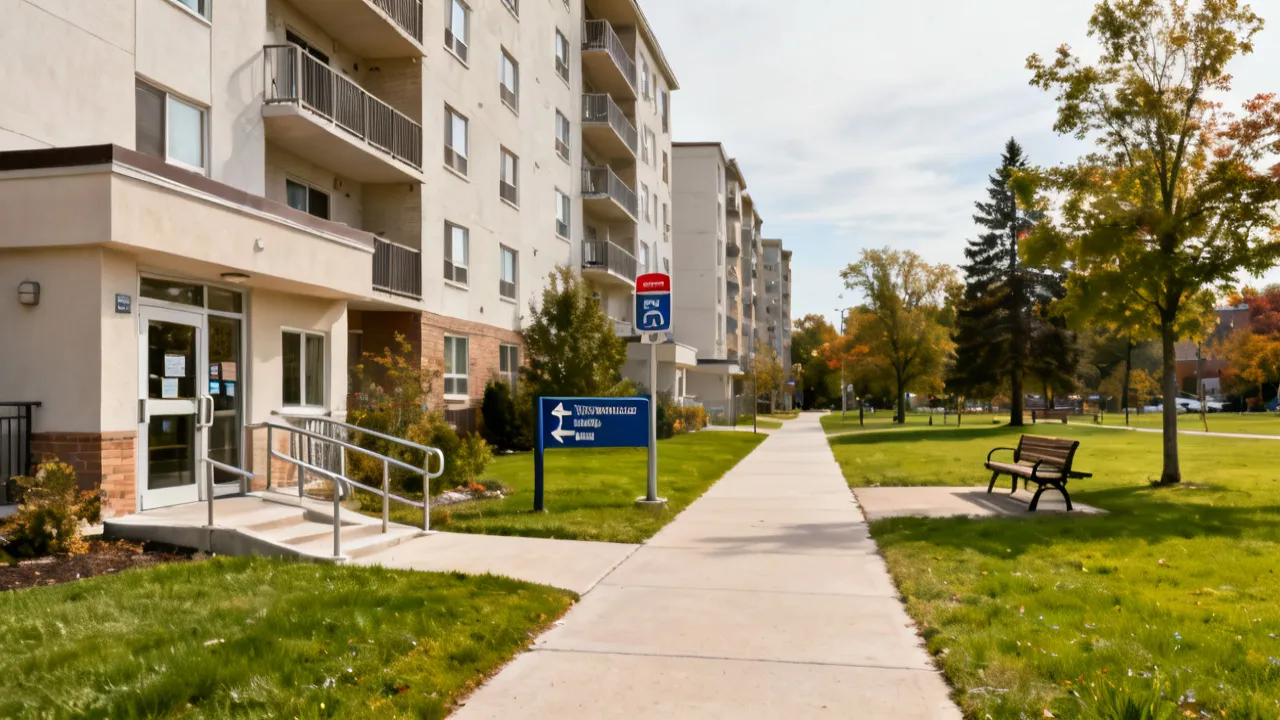
The phrase Rentfaster Scarborough typically reflects an intent to find rentals efficiently, often for people who value convenience and speed in the search process. Scarborough, being a recognizable area within the broader Greater Toronto context, also features a mixture of housing stock—from older apartments to newer developments—creating a wide spread of price points and leasing conditions.
For renters seeking lower monthly costs, the main strategic question becomes: Which trade-off is acceptable? Common trade-offs include smaller floor plans, longer commuting distances, fewer amenities, or less flexible lease terms.
It can also signal a preference for neighborhoods where you can access essential services relatively easily: transit stops, clinics, grocery options, pharmacies, libraries, and community centers. The “best” budget choice is often the one that reduces total friction and out-of-pocket spending—not merely the one with the lowest advertised rent.
How Low-Cost Searches Can Drift Into “Unverified Expectations”
Many renters start with a budget target. They then scan listings quickly and assume they can achieve it because the search results show prices within (or near) that range. The problem is that online information can be incomplete or time-sensitive. This can lead to unverified expectations such as:
- Assuming utilities are included when the listing does not say so clearly
- Assuming accessibility features are already built-in, rather than offered only upon request
- Assuming rent stabilizes for the full lease term when annual increases or variable adjustments apply
- Assuming “senior” categories mean the same level of support, even when care level definitions differ
- Assuming availability is stable when waiting lists and seasonal vacancies can change quickly
To avoid these traps, your approach should be evidence-driven: confirm pricing structure, confirm what’s included, and confirm any eligibility requirements. Even a small misunderstanding—like whether parking is included—can create a noticeable monthly gap that breaks affordability.
Comparing Official Sources for Low-Cost Senior Living Information
To avoid guesswork, it helps to compare low-cost senior living signals from established, official, or mission-driven directories and organizations. The goal here is not to assume prices will match your situation, but to create a structured shortlist and then confirm details with each provider.
| Resource Type | What It Helps You Verify | Why It Matters for Low-Cost Planning |
|---|---|---|
| Senior living directories | Availability, accommodation types, and stated pricing structures | Lets you compare “like for like” categories before contacting providers |
| Senior rights and advocacy organizations | Tenant protections, senior housing considerations, and complaint guidance | Helps you identify red flags and confirm you’re protected |
| Professional move-management networks | Transition planning and certified specialist contacts | Can reduce decision churn by supporting the move process |
Source of the information:
Rentfaster-style planning is supported by the following resource categories (links are provided in the “Reference links” section at the end of the article).
source: [www.aarp.org](https://www.aarp.org/caregiving/life-planning/senior-living/)
source: [www.seniorliving.org](https://www.seniorliving.org/)
source: [www.nsclc.org](https://www.nsclc.org/)
source: [www.nasmm.org](https://www.nasmm.org/)
What “Nearby” Should Mean in Your Personal Search
“Nearby” sounds straightforward, but for renters it actually includes multiple dimensions. For example, a location can be “near” geographically but far in practice if it requires long transfer times, limited mobility access, or infrequent service. When planning around Rentfaster Scarborough or similar searches, define nearby in at least two ways:
- Distance-based: how many minutes by transit or car to key services (clinics, grocery stores, pharmacies, family support)
- Ability-based: whether the route is usable with mobility devices, whether sidewalks are accessible, and whether the building has barrier-free entry
This matters because the true cost of living includes time, transportation, and effort. A slightly higher rent may still be “cheaper” overall if it reduces transportation costs and supports daily independence.
Step-by-Step: How to Find Low-Cost Senior-Focused Rentals (nearby)
Below is a detailed, practical workflow designed for renters and families evaluating options that may align with senior living needs. While your exact path may differ, these steps generally reduce cost risk and improve decision accuracy.
1) Define your “must-haves” and “nice-to-haves”
Write down your constraints in plain terms. Examples:
- Location radius: near family, near transit, near clinics, or near daily essentials
- Mobility needs: elevator access, step-affordable entry, proximity to parking
- Care expectations: if you anticipate future support, plan early
- Budget boundaries: total monthly spend target (not just rent)
- Household preferences: quiet environment, pet policies, laundry access, or visitor rules
A useful technique is to list your top 3 must-haves and your top 3 nice-to-haves. When you call a provider, you can quickly assess whether you should continue the conversation or move on.
2) Convert listings into comparable “total monthly cost”
When viewing properties associated with Rentfaster Scarborough-type searches, compare the full monthly outlay. For each option, estimate:
- Base rent
- Utilities and internet (monthly)
- Mandatory fees (if any)
- Parking and storage costs (monthly)
- Probable seasonal variations (heating/cooling)
- Estimated maintenance contributions where applicable (some agreements include it; others don’t)
To make this actionable, create a simple spreadsheet with one row per option and one column per cost category. This helps you prevent “apples to oranges” comparisons. It also gives you a concrete document for family members or financial decision-makers who want clarity.
3) Use reputable directories to build a shortlist
Start with directories and organizations that help you compare categories and understand care types. For many people, the very efficient route is to shortlist first, then contact providers for exact pricing. This approach is more reliable than relying on one-off listings.
When building your shortlist, focus on what each directory does well:
- Does it separate independent living from assisted living and memory care?
- Does it provide consistent contact pathways and documented requirements?
- Does it include updates that reduce stale information?
- Does it highlight rights, complaint pathways, or verification steps?
If a directory mixes categories without explanation, you may need to do more follow-up work. That’s okay, but it should be a conscious choice—your shortlist can only be as accurate as the category definitions behind it.
4) Call or message providers with a consistent question set
Instead of asking open-ended questions, use a consistent script so you can compare answers:
- What is the current monthly rate range for my unit category?
- Which fees are included (utilities, maintenance, amenities)?
- Are there move-in costs beyond the deposit and first month?
- What lease terms are typical?
- How do you handle annual rent adjustments?
- What support services are available if needs change?
- What is the process for assessment, if any, and how often is it reviewed?
- Is there a waiting list, and how is it prioritized?
To reduce confusion, ask for a written summary after the call. Even a simple email confirmation with the pricing structure and included items can become critical documentation later.
5) Verify policy details before you commit
Low-cost options can be worthwhile, but only if policies are clear. Confirm:
- Refundability or conditions of deposits
- When notice is required for move-out
- Rules for visitors and overnight stays (if relevant)
- Whether accessibility accommodations can be arranged
- Whether you can sublet, and under what circumstances
- How maintenance requests are handled and expected response times
Policy verification is one of the most overlooked budgeting steps. A “low rent” unit can become expensive if you cannot return deposits, have strict move-out penalties, or face large non-refundable fees.
6) Consider the “transition cost,” not just the rental cost
Some renters underestimate the costs and time involved in moving. If you anticipate moving again within a year or two, compare total transition costs. Move-management or coordinated transition support can reduce errors and inefficiencies, especially when family involvement is limited.
Transition costs can include:
- Moving truck or mover fees
- Temporary storage if the move dates don’t align
- Cleaning, minor repairs, and replacement items
- Change-of-address and administrative costs
- Potential overlap payments (paying old rent and new rent during transition)
- Accessibility-related modifications (ramps, grab bars, or device installation timeframes)
When you factor these in, “cheap rent” might not be cheap overall. Conversely, a slightly higher rent could be the financially wiser option if it reduces the chance of repeated relocation.
Availability Is Not Guaranteed: Learn How Vacancies Actually Work
Another reason affordability planning requires verification is that availability can be dynamic. Many senior-focused housing categories operate with:
- Waiting lists
- Periodic vacancy releases
- Priority queues based on eligibility criteria
- Seasonal patterns (families moving or downsizing at different times of year)
- Unit turnover timelines that depend on renovations
Ask providers about timing. “When can I move in?” should come with a clear expectation. If the unit may not be ready until weeks later, confirm whether you pay a holding fee, what temporary accommodations are offered, and whether utilities start immediately.
Availability and “Care Typing” Across Markets
In many regions, “senior living” and “rental” overlap, but definitions vary. Some services are top understood as housing with optional supports; others include higher levels of care. Your top strategy is to verify whether an option is:
- Independent living (often active-adult, self-directed)
- Assisted living (support with daily tasks)
- Memory care (specialized for cognitive needs)
Even if your immediate needs are basic, understanding the structure of future supports can help you avoid unexpected price increases later.
It’s useful to consider how the category affects costs in three ways:
- Included services: what is bundled into the base price vs. what is billed separately
- Staffing model: whether your category includes staffing for specific levels of assistance
- Assessment triggers: how and when a resident’s care level changes, and whether changes happen smoothly or abruptly
Some providers offer “step-up” support that can reduce disruptions. Others may require relocation when care needs change. That relocation can introduce new move-out and move-in costs, plus new waiting times.
How to Find Low-Cost Senior Living Options in French-Speaking Contexts
For readers considering French-speaking markets, the general method is the same—verify total costs, confirm service availability, and compare categories—but the sources and terms differ. Here is a practical approach using the structures reflected by major French-language platforms and networks.
- Start with directory-style platforms that list establishments and explain the type of housing or support offered.
- Look for guidance sections that describe how pricing is structured and what families should ask before selecting a facility.
- Check service coverage: whether the option supports temporary stays, specialized cognitive needs, or good care.
- Use quality-oriented networks to understand standard expectations and improvement frameworks within the sector.
- Prepare a question checklist in advance that includes: inclusion of services, assessment processes, and the conditions that trigger changes in monthly cost.
In French-speaking contexts, affordability planning often benefits from learning the local terminology used for pricing components. For example, “included” may not mean the same as in English listings, and some costs may be framed as care charges, accommodation charges, or separate service fees. Make sure you confirm which cost is which.
Also ask about language support. If the prospective resident or family is bilingual or primarily speaks a language other than the dominant one in that area, confirm whether staff can communicate effectively. Communication problems can affect service outcomes and increase friction during assessment or emergencies.
How to Find Low-Cost Senior Living Options in English-Speaking Contexts
In English-speaking countries, directories and senior-rights organizations are often useful for verifying the types of housing and understanding tenant protections. A professional workflow typically looks like this:
- Search established senior living directories to identify options by category (independent living, assisted living, memory care).
- Confirm whether listings include price ranges or pricing “starting at” information.
- Cross-check with senior advocacy resources for policy expectations and rights-oriented guidance.
- Consider certified professionals for transitions if you need logistical support (move coordination).
- Document all answers in writing and request pricing updates if availability changes.
In English-speaking markets, another affordability lever is understanding what is optional vs. mandatory. Some providers may present a low baseline price but rely on add-ons. Your checklist should therefore include questions about common add-ons:
- Meals and dining plans (especially if you’re budgeting for frequent dining-in)
- Transportation services (some are included; others require separate payment)
- Personal care hours (if and when they are charged)
- Laundry and housekeeping (included vs. pay-per-use)
- Technology support (internet plans, device installation, accessibility tools)
If you cannot get a clear breakdown, ask for the “typical monthly cost for someone in your situation.” That phrase is often more helpful than “what is the price?” because it forces an explanation of how costs behave in reality.
Cost Ranges: Rental Price Planning by Country and City Type
The following ranges are provided for rental-cost planning purposes. Actual costs can vary based on the property’s age, condition, amenities, lease terms, neighborhood characteristics, and demand. Use these as budgeting anchors, then confirm with current local listings.
| Country | City Type | Price Range |
|---|---|---|
| United States | Large cities | About $2,000–$4,000 per month |
| United States | Smaller cities | About $1,000–$2,000 per month |
| United Kingdom | Large cities | About £1,500–£3,000 per month |
| United Kingdom | Smaller cities | About £800–£1,500 per month |
| Australia | Large cities | Roughly AUD 2,000–AUD 3,500 per month |
| Australia | Smaller cities | Roughly AUD 1,200–AUD 2,000 per month |
| Spain | Large cities | Approximately €800–€1,500 per month |
| Spain | Smaller towns | Approximately €400–€800 per month |
| Peru | Large cities | About PEN 1,500–PEN 3,000 per month (roughly $400–$800) |
| Peru | Smaller towns | About PEN 800–PEN 1,500 per month (roughly $200–$400) |
| Argentina | Large cities | About ARS 30,000–ARS 60,000 per month (roughly $300–$600) |
| Argentina | Smaller towns | About ARS 15,000–ARS 30,000 per month (roughly $150–$300) |
| Mexico | Large cities | About MXN 10,000–MXN 20,000 per month (roughly $500–$1,000) |
| Mexico | Smaller towns | About MXN 5,000–MXN 10,000 per month (roughly $250–$500) |
| France | Paris | Roughly €1,200–€2,500 per month |
| France | Other cities | Roughly €600–€1,200 per month |
| Germany | Large cities | About €1,000–€2,000 per month |
These ranges are not a substitute for local verification, but they can help you avoid extreme mistakes. For example, if a “low-cost” offer is far below the typical range for your city type, that’s a signal to ask extra questions about what’s included, what the condition is like, and whether there are additional charges or limitations.
Another planning note: exchange rates and purchasing power can distort “roughly $X” comparisons. If you’re planning cross-country moves, budget conservatively and focus on local pricing and local cost components (utilities, transport, meal costs, care charges).
Hidden Cost Categories Many Renters Miss
Beyond utilities and parking, several categories often show up in real-world budgeting. When searching in or around Rentfaster Scarborough or similarly structured rental searches, look for these “hidden” or “semi-hidden” costs:
- Insurance requirements: some agreements require tenant insurance and may offer bundled insurance at higher cost
- Mandatory programming or service fees: events, cleaning, or concierge-style services billed monthly
- Internet and technology fees: you may need your own plan, or you may be charged for a building-provided connection
- Hydro/heat allocation: some older buildings allocate costs differently (for example, by square meter or meter type)
- Building maintenance or special assessments: rarely monthly but may appear as a one-time or periodic charge
- Late fees and penalties: confirm what counts as “on time” and how billing cycles work
- Renewal and rent increase terms: especially for fixed-term agreements and subsidized units with adjusted rates
It’s often easiest to ask for the “fee schedule” or “pricing sheet.” Even if a provider doesn’t use formal documents, a detailed written breakdown can exist internally and can be shared after a request.
Requirements Checklist When Comparing Low-Cost Options
To support objective evaluation, use the checklist below before you treat any listing as a candidate. This is especially relevant when you see faster turnaround promises associated with searches like Rentfaster Scarborough.
| Condition/Requirement | What to Ask or Verify | Why It Protects Your Budget |
|---|---|---|
| All-in monthly cost | Which utilities and fees are included? | Prevents “headline price” traps |
| Lease terms | How long is the typical agreement? | Reduces unexpected re-leasing costs |
| Move-in costs | What is due on signing and move-in? | Avoids cash-flow surprises |
| Accessibility needs | What accommodations are available? | Ensures the “low-cost” option remains practical |
| Policy clarity | Deposit rules, notice periods, and renewal changes | Limits penalties if circumstances shift |
To strengthen your checklist, consider adding a “proof” column: what document, screenshot, or written email confirms each detail. When something changes later, you can reference the proof you already collected.
Industry Perspective: How Professionals Reduce Rental Decision Risk
From an industry standpoint, renters looking for affordable arrangements often face two risks: (1) choosing based on a single low rent figure, and (2) failing to plan for future needs. Professionals typically address both by using a structured “two-pass” evaluation:
- First pass: confirm affordability and basic fit (location, accessibility, lease flexibility).
- Second pass: validate future cost stability and service availability (if applicable), and confirm rights/policies.
This is the approach that makes Rentfaster Scarborough-style searching more actionable—because it turns broad searching into controlled comparisons.
To make the “two-pass” method even more practical, many professionals also maintain a short “risk log” during decision-making. A risk log can include items like:
- Pricing risk: “Provider said utilities are included, but only for a limited period.”
- Availability risk: “Unit is available ‘soon’ but no exact date was provided.”
- Policy risk: “Deposit refund depends on cleaning requirements; requirements are unclear.”
- Care/service risk: “Assisted services are optional but cost per hour is not specified.”
When you reduce uncertainty systematically, your “low-cost” choices become more predictable—even if you are working with limited information or time pressure.
Additional Practical Strategies for Renters Seeking Lower Monthly Costs
Beyond the step-by-step workflow, there are several strategies that often improve affordability outcomes in real life. These strategies are compatible with the Rentfaster Scarborough approach because they focus on verification, comparison, and documentation.
1) Use “scenario budgeting” instead of one budget number
Instead of budgeting only one “target” cost, create 3 scenarios:
- Best-case: utilities are included and you qualify for included services
- Expected-case: you pay some utilities separately and use basic services
- Worst-case: you pay utilities, optional services become needed, and you must add accessibility features
This helps you assess whether the “low-cost” option is truly safe. If your worst-case scenario exceeds your budget, you can decide early to avoid signing—rather than discovering the issue after you move in.
2) Ask about annual increases and how they’re calculated
Some providers state the monthly price but do not explain how increases happen. Ask:
- What is the typical annual adjustment method?
- Is the increase based on a fixed percentage, an index, or a provider-set decision?
- Are there caps?
- Does any subsidy affect the increase rules?
Affordability should consider at least 12–24 months, especially for renters who may experience income changes or changing expenses.
3) Negotiate where negotiation is possible (and document it)
Renters often assume everything is fixed. Sometimes it is, but not always. Even when rent isn’t negotiable, you may be able to negotiate:
- Move-in dates or timing to align with your financial cycle
- Parking fees or waivers for a short period
- Deposit alternatives (where permitted)
- Inclusion of small accessories or initial maintenance arrangements
If you negotiate, document any agreements in writing. Verbal agreements are difficult to verify later.
4) Look for “low-cost” through category fit rather than only price
Sometimes “low-cost” is not about the lowest rent; it’s about matching the unit type to your needs so you don’t pay for unused services. Examples:
- If you don’t need frequent meal service, choose a category with fewer bundled dining requirements.
- If you have limited mobility, avoid units that require expensive personal modifications, or confirm whether the provider handles them.
- If you have your own medical services, clarify whether the housing category duplicates what you already have.
When you align category to needs, your budget stretches further because you’re not paying for features you don’t use.
5) Confirm accessibility in a “real-world” way
Accessibility questions should not only be technical. They should be practical. Ask:
- Is the entrance level or is there a threshold?
- Are doorways wide enough for mobility devices?
- Are elevators reliably available and tested routinely?
- Is the path from entrance to unit obstacle-free?
- Is there accessible visitor parking or a drop-off area?
- What happens if the elevator is out of service?
For many renters, accessibility affects both safety and independence. A “low-cost” unit that requires you to struggle with the environment can create additional costs: paid assistance, health risks, and lost time.
How to Evaluate Marketing Claims Without Overreacting
Because “fast” and “low-cost” are often marketing themes, you should treat them like hypotheses rather than facts. A strong provider will typically be able to answer clarifying questions quickly and clearly.
Some examples of marketing language you should verify:
- “Affordable” without specifying all-in costs
- “All-inclusive” without a breakdown of utilities and fees
- “Special discounts” without eligibility criteria and end dates
- “Guaranteed availability” without a timeline or unit category constraints
- “No extra costs” without defining what “extra” includes (parking, internet, meals, cleaning fees)
When you encounter marketing claims, ask for a breakdown and ask where it is documented. If a provider cannot provide details, treat it as a decision risk.
Practical Rentfaster Scarborough Planning Workflow (Condensed Into an Action Plan)
If you want an at-a-glance approach that fits the style of fast searches but still avoids low-cost traps, use this action plan:
- Pre-qualify your needs: write must-haves and budget ceiling as total monthly cost.
- Build a shortlist: use directories and reputable organizations to reduce category confusion.
- Ask for written details: monthly cost, fees included, move-in costs, lease terms, accessibility accommodations.
- Create a comparison table: base rent + utilities + mandatory fees + parking + estimated seasonal variance.
- Ask about future stability: annual increases and service assessment triggers.
- Confirm policies: deposit refund rules, notice period, and renewal changes.
- Plan transition costs: moving, overlap payments, cleaning, and accessibility setup time.
- Document everything: email confirmations, screenshots, and any fee schedules.
This workflow keeps the “fast search” advantage while ensuring you don’t sign up for an unrealistic affordability outcome.
FAQs
1) Is Rentfaster Scarborough only for seniors?
Typically, rental discovery platforms are used by different groups. Some listings may align with senior living needs, while others are standard rentals. The key is to verify the property category, included services, and eligibility requirements where they exist.
2) What does “low-cost” usually exclude?
Low-cost options commonly involve trade-offs such as smaller units, fewer amenities, longer commute distances, limited parking, or stricter lease terms. To evaluate properly, compare total monthly costs and contract terms, not only the starting rent.
3) Should I prioritize price or location first?
Professionals often advise aligning both with your daily practicality. If location affects transport costs, healthcare access, or family support, it can be a hidden driver of total expense. Consider using your non-negotiables (healthcare access, transit proximity) as the first filter.
A practical way to decide is to estimate the monthly cost of time and transport. For example, commuting costs can be measured as monthly transit passes, fuel, parking, and even paid assistance if you need support to travel. Sometimes the “cheaper” unit requires additional spending that erases the rent savings.
4) How do I avoid unrealistic affordability expectations?
Use a shortlist from reputable directories, then confirm in writing the current monthly rate and what’s included. If a listing is marketed as “low cost,” request the fee schedule and the latest pricing update.
Also set a “verification deadline.” For example, if you are considering signing within a week, confirm all-in cost and policies before you sign. The fastest moves should still be evidence-based.
5) Are the rent ranges in this article exact for every neighborhood?
No. They are planning anchors by country and city type. Local pricing varies based on the property’s age, condition, amenities, lease terms, neighborhood characteristics, and demand. Always verify with current local listings.
As a rule of thumb, if you see a price far below the anchor range, treat it as a sign to ask: “What’s different here?” Sometimes the difference is legitimate (older building, limited services). Other times it indicates incomplete information or temporary pricing that won’t last.
6) What if I need accessibility accommodations—can I still choose low-cost options?
Yes, but you must verify accessibility in advance. Low-cost units can still be practical if they offer barrier-free entry, elevator access, and appropriate unit layouts—or if reasonable accommodations can be arranged without major extra costs. Ask how accommodations work, whether there are timeframes, and whether any modifications are personal responsibilities vs. provider responsibilities.
7) How do I manage decision churn if I’m balancing multiple options?
Use the two-pass approach: first pass filters for affordability, location, and accessibility; second pass validates policies and future stability. Then narrow to 2–3 finalists and request written summaries. This reduces repeated calls and prevents “information fatigue,” especially when you’re comparing across multiple neighborhoods.
8) What documents should I collect before signing a rental agreement?
At minimum, collect: written monthly pricing including fees and utilities (if applicable), the lease term details, deposit rules and refund conditions, move-out notice requirements, and any written accessibility arrangements. If the provider is offering something “special” (discount, included services for a limited time), document that in writing.
Reference links
- https://www.aarp.org/caregiving/life-planning/senior-living/
- https://www.seniorliving.org/
- https://www.nsclc.org/
- https://www.nasmm.org/
- https://www.senioriales.com/
- https://www.retraiteplus.fr/
- https://www.fnaqpa.fr/fr
Disclaimer
The above information comes from online resources, and the data is as of October 2023. For more information, please refer to the official website of the relevant organizations and listings.