Acquired Pellicle and Affordable Dental Implants
This guide explains how the acquired pellicle influences oral health, plaque formation, periodontal care, and the maintenance of dental implants. It also compares selected dental information websites, outlines practical ways to manage implant costs in English-, Spanish-, and Portuguese-speaking markets, and presents reference price ranges for one implant. Prices and treatment conditions vary according to clinical complexity, location, materials, and professional fees.
What the Acquired Pellicle Means for Dental Health
The acquired pellicle, known in Korean as 획득 피막, is a thin organic layer that develops on tooth surfaces shortly after cleaning. It is formed mainly from proteins, glycoproteins, lipids, enzymes, and other molecules found in saliva. Although the pellicle is not visible under ordinary conditions, it has a major influence on how oral microorganisms attach to teeth, how acids interact with enamel, and how dental professionals approach prevention.
From an industry expert’s perspective, the acquired pellicle should not be described as simply harmful or beneficial. It is a dynamic biological interface between the tooth and the oral environment. On one hand, it can act as a partial barrier between enamel and dietary acids, helping reduce direct chemical damage. It may also lubricate the surface and contribute to the normal protective functions of saliva. On the other hand, it provides binding sites that allow bacteria to attach and organize into dental plaque.
The pellicle is therefore one of the earliest stages in the development of oral biofilm. It does not mean that disease is present, and its formation cannot be prevented permanently. Instead, it creates the surface on which later microbial activity may occur. Whether the result is a relatively stable oral environment or inflammation and tooth damage depends on saliva, diet, bacterial composition, oral hygiene, host response, and the condition of the teeth and restorations.
The pellicle begins forming within minutes after a tooth is exposed to saliva. Its composition changes over time as additional salivary molecules, dietary components, and bacterial products interact with the surface. Toothbrushing removes much of the visible plaque and disturbs the biofilm, but it does not permanently prevent pellicle formation. The layer naturally reforms because saliva continuously bathes the teeth.
This normal process explains why oral hygiene is a repeated activity rather than a one-time procedure. The objective is not to eliminate every component of the pellicle, which would be biologically unrealistic, but to prevent microorganisms from developing a mature, organized biofilm that contributes to caries, gingival inflammation, and periodontal disease.
How the Acquired Pellicle Protects and Challenges Teeth
Saliva has several important protective roles. It helps neutralize acids, provides calcium and phosphate for remineralization, lubricates oral tissues, and assists with swallowing and speech. Some salivary proteins incorporated into the pellicle may reduce direct contact between enamel and acids produced by bacteria or consumed in food and beverages. This protective effect is one reason the pellicle cannot be considered merely a harmful coating.
At the same time, the pellicle contains receptors that certain bacteria can recognize. Early colonizers may attach to these receptors and create conditions that allow other microorganisms to join the developing community. As the biofilm matures, bacteria may produce extracellular substances that make the plaque more cohesive and more resistant to removal.
The clinical importance of the pellicle is therefore determined by what happens after it forms. If a patient brushes effectively and cleans between the teeth, the developing biofilm is repeatedly disrupted. If plaque remains undisturbed for long periods, bacterial communities may become more complex. Acid-producing bacteria can contribute to demineralization, while organisms associated with inflammation may affect the gingiva and periodontal tissues.
Diet also changes the effect of the pellicle. Frequent consumption of fermentable carbohydrates gives acid-producing bacteria repeated opportunities to lower the pH at the tooth surface. Acidic drinks can contribute directly to erosion, particularly when consumed slowly or held in the mouth. A nutritious diet, adequate hydration, and reduced frequency of sugary snacks can support the preventive effects of saliva and daily cleaning.
Why the Acquired Pellicle Matters Around Dental Implants
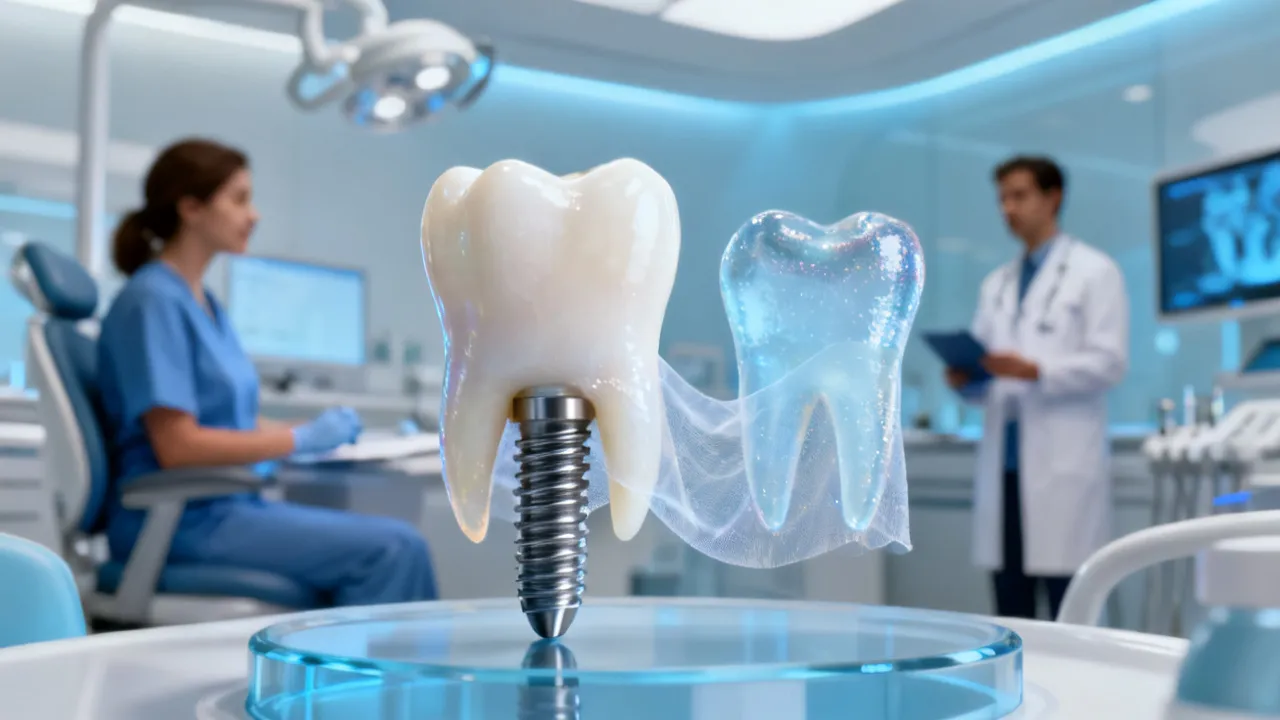
A dental implant is commonly composed of an implant body placed in bone, an abutment, and a crown or other restoration. The implant itself does not develop enamel pellicle in exactly the same way as a natural tooth, but salivary proteins and microorganisms can still accumulate on titanium, zirconia, ceramic, acrylic, and other restorative surfaces. This creates an implant-associated biological environment that requires regular professional assessment and daily home care.
Natural teeth are connected to the surrounding tissues by the periodontal ligament. An implant does not have this same ligament. The soft-tissue attachment around an implant is therefore structurally different from the attachment around a natural tooth. This difference does not mean that implant disease is inevitable; it means that inflammation may progress differently and that maintenance should be planned carefully.
Patients sometimes assume that an implant is permanently protected from decay because the implant is not a natural tooth. The implant body itself is not affected by dental caries in the same way as enamel. However, the surrounding gum and bone can become inflamed when plaque accumulates. Conditions such as peri-implant mucositis and peri-implantitis are associated with inflammation around implants, and advanced disease may involve supporting bone loss.
For this reason, the acquired pellicle is relevant to implant care even when the implant material is highly resistant to corrosion or decay. Salivary molecules can condition a surface, and microorganisms can attach to that conditioned surface. The clinically important issue is the patient’s overall biofilm burden, the design of the restoration, access for cleaning, smoking status, periodontal history, systemic health, and the quality of continuing care.
The crown margin is particularly important. If the restoration is over-contoured, positioned too deeply under the gum, or designed with inaccessible contact areas, the patient may not be able to remove plaque adequately. A well-designed implant restoration should support appearance and function while also allowing the patient and dental team to reach the surfaces that need cleaning.
How the Pellicle Develops
- Surface exposure: After tooth cleaning, enamel or a restorative material is exposed to saliva.
- Initial adsorption: Salivary proteins and glycoproteins attach to the surface through chemical and physical interactions.
- Pellicle maturation: The composition becomes more complex as additional molecules are incorporated.
- Microbial attachment: Certain oral bacteria recognize receptors within the pellicle and begin to adhere.
- Biofilm organization: If mechanical cleaning is inadequate, bacteria multiply and produce a structured plaque matrix.
- Inflammatory response: The host tissues may respond with gingival redness, bleeding, swelling, or tenderness.
This sequence is influenced by saliva flow, diet, oral hygiene, tooth anatomy, restoration contours, medication, tobacco exposure, and general health. A dry mouth, for example, may alter the protective and cleansing functions of saliva. Some medications reduce salivary flow, while mouth breathing and certain medical conditions can also affect oral comfort and plaque control.
Surface properties are relevant as well. Rough or damaged surfaces tend to retain more microorganisms than smooth, well-polished surfaces. This applies to natural tooth defects, calculus, fractured restorations, rough provisional crowns, and certain areas of implant prostheses. The material alone does not determine the risk; manufacturing quality, polishing, contour, placement, and maintenance also matter.
Acquired Pellicle, Plaque, and Dental Calculus
The acquired pellicle is not the same as plaque. The pellicle is primarily a salivary coating, whereas plaque is a microbial biofilm that develops on a conditioned surface. The pellicle can support bacterial attachment, but it does not automatically indicate disease.
Dental calculus, sometimes called tartar, forms when plaque becomes mineralized. Brushing and interdental cleaning can disrupt soft plaque, but hardened calculus generally requires removal with professional instruments. Calculus creates an irregular surface that can make further plaque retention more likely. It may also make it more difficult for patients to clean around implant crowns, fixed bridges, or crowded teeth.
An effective prevention plan therefore has several stages: disrupt plaque regularly, clean difficult areas with appropriate tools, attend dental examinations, and address risk factors such as smoking or uncontrolled diabetes in cooperation with qualified healthcare professionals.
Patients should also understand that a clean-looking mouth does not always mean that plaque is absent. Plaque may be concentrated along the gumline, between teeth, beneath fixed bridges, around orthodontic appliances, or on the tongue side of lower front teeth. Dental professionals may use plaque-disclosing products to identify areas that need better technique.
Practical Oral Hygiene for Natural Teeth and Implants
A clinician should tailor hygiene advice to the patient’s anatomy and restoration design. General recommendations may include brushing twice daily with a fluoride toothpaste, cleaning between teeth every day, and following the specific instructions provided after implant surgery or restorative treatment. The right brush head, interdental brush size, flossing method, and water-flosser settings can differ substantially between patients.
- Use a soft toothbrush: A soft brush can clean the gum margin while limiting unnecessary abrasion. Excessive force is not a substitute for effective technique.
- Angle the brush toward the gumline: The margin where the crown, tooth, or implant restoration meets the gum requires deliberate attention.
- Clean interproximal spaces: Implant crowns may have broader contact areas or special contours. Interdental brushes are often useful when the space permits safe access.
- Follow surgical instructions: Immediately after implant placement, brushing and rinsing may be modified to protect the surgical site.
- Use antimicrobial products only as advised: Some rinses may be recommended for limited periods, but a mouthwash does not replace mechanical plaque removal.
- Attend maintenance visits: Professional reviews help identify bleeding, looseness, cement remnants, access problems, or changes in bone support.
- Clean removable components separately: Implant-retained dentures and removable appliances may require removal, brushing, and overnight storage according to the dentist’s instructions.
Bleeding during cleaning should not automatically be interpreted as a reason to stop. Persistent bleeding can indicate inflammation and should be discussed with a dental professional. However, vigorous or painful cleaning should also be reviewed, particularly when the patient has recently undergone surgery or has exposed root surfaces.
Fluoride toothpaste remains important for natural teeth because the implant does not replace all of the patient’s teeth and because exposed roots and adjacent teeth can still develop decay. Patients with dry mouth or a high caries risk may receive additional fluoride recommendations from their dentist.
Water flossers can be useful for some patients, especially around bridges or implant-supported prostheses, but they should be used at an appropriate setting and with the correct technique. An oral irrigator should supplement, not necessarily replace, brushing and interdental cleaning unless a dental professional recommends a particular routine.
Before Seeking a Low-Cost Dental Implant
The lowest advertised price is not necessarily the lowest overall cost. A responsible comparison begins with a complete treatment plan. The patient should establish whether the quoted amount includes the consultation, three-dimensional imaging, extraction, bone grafting, implant fixture, abutment, temporary restoration, final crown, laboratory fees, medications, follow-up visits, and management of complications.
“One implant” can describe several different financial packages. Some quotations cover only the implant body. Others include the abutment and crown. A patient comparing those figures directly may believe one clinic is substantially less expensive when the difference actually reflects omitted components.
Patients should request a written estimate using plain language. Important questions include:
- Which implant manufacturer and model are being proposed?
- Is the price for one implant body, or for the complete tooth replacement?
- Are extraction and temporary teeth included?
- Could bone augmentation or sinus elevation be necessary?
- Who will place the implant and who will provide the final restoration?
- How many visits are expected?
- What happens if healing is delayed or the implant requires replacement?
- Are follow-up appointments available if the patient returns home?
- What documentation will be supplied to the patient and the continuing dentist?
These questions are particularly important for dental tourism. Travel may reduce the clinic fee in some markets, but flights, accommodation, time away from work, translation, local transportation, and treatment of complications can change the total financial calculation. A patient should also consider whether a local dentist is prepared to manage a restoration placed elsewhere.
A patient should be cautious about clinics that promise immediate treatment without a proper examination or that present implants as suitable for everyone. Good implant planning commonly involves assessment of bone volume, gum health, bite, neighboring teeth, medical conditions, and the patient’s ability to maintain the restoration.
Comparison of Dental Information Websites
The following table compares selected websites described in the supplied reference material. They serve different purposes: patient education, clinic information, dental tourism, insurance guidance, multilingual communication, implant services, and dental plan administration. The descriptions are informational rather than endorsements. Patients should independently verify credentials, treatment terms, licensing, and current prices.
| Website or organization | Main features and potential use |
|---|---|
| Dental Views | Information focused on lower-cost dental implants, treatment options, benefits, process explanations, common questions, and cost considerations. |
| Atlantic Dental Group | General dental clinic information, potentially including examinations, hygiene care, orthodontics, implants, emergency services, locations, and appointment access. |
| DentaVacation | Dental tourism information, international treatment comparisons, travel-related planning, and discussion of procedures available in different markets. |
| American Dental Health Plans | Dental insurance and plan information intended to help consumers review coverage options and reduce eligible out-of-pocket expenses. |
| Rockville Dental Arts | Spanish-language dental information and clinical services such as implants, whitening, cleanings, orthodontics, and emergency dental care. |
| Union City Mini Dental Implants | Information about mini dental implants and related treatment for selected tooth-replacement situations. |
| Cigna Spanish Guide | Spanish-language educational material explaining dental implants and common treatment considerations from an insurance-information provider. |
| Rubi Odonto | Brazilian clinic information covering services such as orthodontics, whitening, and dental implants, with an emphasis on clinical care. |
| Odontologia Velasco | Brazilian dental clinic information covering implants, prostheses, aesthetic dentistry, and the use of contemporary dental technology. |
| DentalVidas | Dental plan information for individuals, families, and companies, including network access and emergency-service details as described by the provider. |
source: www.dentalviews.com/low-cost-dental-implants/
source: www.atlanticdentalgrp.com
source: www.dentavacation.com
source: rockvilledentalarts.com/es/
source: unioncityminidentalimplants.com/es/
source: www.cigna.com/es-us/knowledge-center/guide-to-dental-implants
source: www.rubiodonto.com.br
source: odontologiavelasco.com.br
source: dentalvidas.com.br
How to Obtain Dental Implants at Lower Cost
Lowering the cost of implant treatment should involve careful planning rather than selecting a provider solely because of a headline price. The following process can help patients compare treatment responsibly in English-, Spanish-, and Portuguese-speaking markets.
1. Obtain a complete diagnosis
The first step is an examination by a licensed dentist or appropriately qualified implant professional. The evaluation may include medical and dental history, periodontal assessment, photographs, radiographs, and three-dimensional imaging when clinically justified. The clinician must determine whether the tooth should be extracted, whether infection is present, whether sufficient bone is available, and whether the neighboring teeth are suitable for support.
Skipping diagnosis can create later expenses. A patient may require treatment for gum disease, a failed root canal, an extraction, bone augmentation, or management of an underlying medical issue. The appropriate sequence depends on the individual case.
2. Compare complete treatment packages
Request at least two or three written plans when practical. Compare the same components rather than comparing an implant fixture from one clinic with a complete implant crown from another. The estimate should identify implant, abutment, crown, laboratory, imaging, surgical, and review fees separately.
Patients should also ask whether the quoted materials are standard products with traceable documentation. A lower fee may reflect a simpler case, a different restoration material, a promotional structure, or services excluded from the package. The clinical team should explain these differences clearly.
3. Review insurance and dental plan eligibility
In some English-speaking markets, dental insurance may contribute toward portions of implant treatment, although exclusions, waiting periods, annual limits, missing-tooth clauses, and preauthorization requirements may apply. Dental plans may provide negotiated fees rather than comprehensive insurance coverage. Patients should read the benefit document and confirm the policy directly with the insurer.
In Spanish- and Portuguese-speaking markets, private plans, employer benefits, public services, university clinics, and regional programs may operate under different rules. Coverage should be confirmed in writing before treatment begins. A plan that covers an examination or extraction may not cover the implant body or the final crown.
4. Consider accredited teaching clinics
Dental schools and supervised postgraduate clinics may provide treatment at structured educational rates. Care is generally delivered under the supervision of experienced faculty, but appointments can take longer and patient selection may be limited. The patient should confirm whether implant surgery and prosthetic restoration are both available within the same program.
This option may suit patients whose case is clinically appropriate and whose schedule allows additional visits. It should not be chosen solely for price if the clinic cannot provide the necessary level of surgical or restorative expertise.
5. Ask about staged treatment
Some patients benefit from dividing treatment into clinically appropriate stages. For example, periodontal therapy may be completed before extraction, and healing may be monitored before implant placement. Staging does not always lower the final cost, but it can help prevent avoidable complications and make payments easier to plan.
A clinician should never shorten a healing period merely to reduce the number of visits. Bone integration and soft-tissue healing are biological processes. The schedule should follow the patient’s condition and the professional’s clinical judgment.
6. Evaluate dental tourism cautiously
Dental tourism can involve treatment in a country where professional fees are lower than in the patient’s home market. It can be appropriate for some patients, but it carries logistical and clinical considerations. The patient should verify the provider’s license, training, implant system, sterilization standards, emergency arrangements, language support, and procedure-specific informed consent.
Travel after surgery may be uncomfortable and may complicate care if swelling, bleeding, infection, or restoration problems arise. The patient should plan sufficient time for examinations and follow-up rather than scheduling surgery immediately before a return flight. Travel insurance may not cover complications associated with elective dental treatment, so policy terms should be examined carefully.
7. Establish a follow-up plan before surgery
A low initial price has limited value if no clinician is available to review the implant afterward. Before treatment, obtain copies of the treatment plan, implant passport or product information, radiographs, operative notes, laboratory details, and restoration specifications. These records help another dentist understand the work if future care is required.
8. Maintain the result
Maintenance is an essential component of cost control. Regular hygiene visits, effective home cleaning, prompt treatment of gum inflammation, and protection against excessive biting forces may reduce the likelihood of serious complications. Patients with a history of periodontal disease may need a more structured maintenance schedule.
Cost Ranges for One Individual Dental Implant
The following figures are reference ranges for an individual dental implant in the listed markets. They should not be interpreted as a universal quote or as the cost of a complete treatment package. Depending on the source and clinic, the term “individual dental implant” may refer to the implant procedure alone or may be used more broadly. Patients must confirm whether the abutment, crown, imaging, extraction, bone grafting, sedation, and follow-up are included.
| Country or market | Currency | Reference price range for one implant |
|---|---|---|
| United States | USD | $3,000–$6,000 |
| United Kingdom | GBP | £2,000–£2,500 |
| Australia | AUD | AU$3,500–AU$6,500 |
| Canada | CAD | CA$3,000–CA$5,500 |
| Spain | EUR | €1,500–€2,500 |
| Chile | CLP | CLP$800,000–CLP$1,500,000 |
| Mexico | MXN | $15,000–$25,000 MXN |
| Colombia | COP | $2,000,000–$4,000,000 COP |
| Peru | PEN | S/ 3,000–S/ 6,000 |
| Argentina | ARS | $80,000–$150,000 ARS |
| Brazil | BRL | R$3,000–R$8,000 |
| Portugal | EUR | €1,000–€2,000 |
| Germany | EUR | €2,000–€3,500 |
| France | EUR | €1,500–€2,500 |
| Italy | EUR | €1,500–€3,000 |
| Japan | JPY | ¥300,000–¥700,000 |
Currency values and treatment fees can change over time. Exchange-rate movement can also make an overseas quotation appear more or less attractive. A patient should calculate the expected total in the currency used for household budgeting and include travel, accommodation, diagnostic, restoration, and follow-up expenses.
Patients should ask whether the estimate is valid for a specified period. Laboratory charges, implant components, imported materials, and currency fluctuations may affect the final price. A written quotation should also explain what happens if the clinical findings differ from the initial assumptions after imaging or extraction.
Country and Language Considerations
English-speaking markets
Patients in the United States, United Kingdom, Australia, and Canada may find a wide range of implant providers, from general dental practices to specialist surgical and prosthodontic clinics. Prices commonly differ between major metropolitan areas, regional communities, private clinics, university programs, and multidisciplinary centers. Insurance arrangements also vary considerably.
Patients should ask whether the implant surgeon and restorative dentist are part of the same team. Coordinated care can simplify communication about implant position, emergence profile, bite, and cleaning access. If multiple providers are involved, the written plan should specify who is responsible for each stage.
Spanish-speaking markets
Spain, Chile, Mexico, Colombia, Peru, and Argentina have different healthcare systems, professional regulations, currencies, and urban-rural price patterns. Spanish-language patient materials can improve informed consent, but translated information should not replace a direct discussion with the treating clinician.
In Mexico and parts of Latin America, international patients may be attracted to clinics located near airports, border areas, or major tourism centers. Convenience can be useful, but the patient should assess the provider using clinical criteria rather than location alone. A clinic near a well-known cultural destination or coastal resort is not automatically more qualified.
Portuguese-speaking markets
Brazil has a large and diverse dental market, including private clinics, dental plan networks, university services, and specialist centers. Treatment fees may vary between São Paulo and other regions, as well as between large multidisciplinary practices and smaller clinics. Patients should confirm the professional registration and the exact treatment components.
Portugal uses the euro and may be considered by patients seeking care within a European setting. As in every market, the patient should confirm whether the amount covers the surgical phase only or the entire tooth replacement. Portuguese-language consent documents should explain alternatives, expected healing, risks, and maintenance requirements.
Clinical Conditions That Affect Implant Cost
Several conditions can make treatment more complex or change the proposed sequence. A patient may need one or more of the following:
- Tooth extraction: An unsalvageable tooth may need removal before implant placement.
- Periodontal treatment: Active gum disease should generally be controlled before elective implant surgery.
- Bone augmentation: Insufficient bone volume may require grafting or another regenerative procedure.
- Sinus-related treatment: In the upper posterior jaw, available bone height may influence the surgical plan.
- Soft-tissue management: The gum profile may need improvement for hygiene, comfort, or appearance.
- Temporary replacement: A temporary tooth may be required during healing.
- Sedation or anesthesia: Additional professional and facility fees may apply.
- Complex restoration: Angled implants, narrow spaces, heavy bite forces, or limited access can affect laboratory and clinical work.
Medical history is also relevant. Diabetes, medications that influence bone metabolism, immune disorders, tobacco use, previous radiation treatment, and some cardiovascular conditions may require additional assessment. Patients should provide a complete medication list and should not stop prescribed medication without advice from the prescribing clinician.
Bruxism and other heavy biting habits can influence the choice of implant number, restoration material, occlusal design, and protective appliances. A night guard may be recommended for selected patients, but it must be designed and adjusted by a dental professional. A restoration that looks inexpensive initially may require more durable materials or additional protection when mechanical forces are high.
How Implant Design Influences Cleaning
The final restoration should be designed not only for appearance and chewing but also for maintenance. A crown with an over-contoured emergence profile may be difficult to clean. Contact points that are too tight may prevent interdental access, while spaces that are too open may trap food. The clinician should evaluate the patient’s ability to use an interdental brush, floss threader, oral irrigator, or other recommended device.
The acquired pellicle can accumulate on the restoration, and plaque may build up at the crown-gum interface. This is why the restorative design and the patient’s hygiene technique are connected. A technically successful implant may still experience biological complications if the patient cannot access the surrounding surfaces.
Professional instruments should be selected with attention to the implant and restoration materials. The dental team can determine which instruments and polishing methods are suitable. Patients should not attempt to scrape deposits from an implant with household tools or abrasive products.
For implant-supported bridges and full-arch restorations, cleaning may require specialized aids. Superfloss-style products, threaders, tufted brushes, interdental brushes, and water irrigation may be used in combination. The patient should request an in-person demonstration and should return for review if a particular device causes discomfort or cannot reach the intended area.
Warning Signs After Implant Treatment
Some discomfort and swelling can occur after surgery, but the patient should follow the treating clinician’s instructions regarding expected recovery. Contact the dental team promptly if there is persistent or increasing pain, uncontrolled bleeding, significant swelling, fever, pus, a bad taste that does not resolve, numbness, or a feeling that the implant or restoration is moving.
Bleeding during routine cleaning after the initial healing phase may indicate soft-tissue inflammation. A loose crown is not necessarily the same as a failed implant, but it requires assessment. Delaying evaluation can allow a manageable mechanical or biological problem to become more complicated.
Patients should not self-treat suspected implant infection with leftover antibiotics. Antibiotics may be inappropriate, may mask symptoms, or may delay necessary treatment. The dental professional must determine whether the problem involves the gum, crown, abutment, implant body, bite, or another tooth.
Questions to Ask a Dental Clinic
Is the quoted amount complete?
Ask for a component-by-component breakdown covering diagnosis, surgery, implant, abutment, crown, laboratory work, temporary replacement, and follow-up.
What implant system will be used?
Request the manufacturer, model, dimensions, and documentation for future maintenance.
Who performs each stage?
Confirm whether surgery, restoration, imaging, and maintenance are completed by one team or by separate providers.
What alternatives are available?
Depending on the condition, alternatives may include a conventional bridge, removable partial denture, treatment of the natural tooth, or delayed replacement.
What is the maintenance schedule?
The plan should explain home care, professional reviews, and the process for handling problems after the patient returns home.
What is the policy for complications?
Ask whether additional surgery, a replacement implant, or restoration repair creates a separate charge.
How will the result be evaluated?
Ask which symptoms are expected during healing and which findings require an urgent appointment.
Will the clinic provide records in a usable format?
Radiographs, implant identification, clinical notes, and laboratory information are valuable if another provider must continue the care.
Frequently Asked Questions
What is the acquired pellicle?
The acquired pellicle is a microscopic organic film that forms from saliva on exposed tooth and oral surfaces. It develops naturally after cleaning and can provide partial protection while also creating conditions that permit bacterial attachment. It is not identical to plaque or calculus.
Is the acquired pellicle harmful?
Not inherently. It is a normal component of the oral environment. Its effects depend on composition, surface characteristics, saliva, bacterial activity, diet, and cleaning. Problems arise when bacterial biofilm accumulates and remains undisturbed.
Can brushing permanently remove the pellicle?
Brushing can remove plaque and disturb the surface layer, but saliva causes the pellicle to reform. The practical goal is consistent biofilm control rather than permanent elimination of the pellicle.
Does the pellicle cause implant failure?
The pellicle alone does not establish that an implant will fail. However, salivary conditioning and plaque accumulation around an implant can contribute to inflammation. Implant outcomes depend on many factors, including diagnosis, surgical technique, bone integration, restoration design, systemic health, smoking, and maintenance.
Is a lower implant price always better?
No. A lower quotation may exclude the crown, abutment, imaging, grafting, temporary tooth, or follow-up care. The meaningful comparison is the complete cost of appropriate treatment, including management of foreseeable clinical needs.
Are the listed prices guaranteed?
No. They are reference ranges supplied for this guide. Actual prices may vary by region, clinic, clinician, implant system, laboratory, exchange rate, complexity, and included services.
Can dental tourism reduce total expenses?
It may reduce the clinic portion of the fee in some circumstances, but travel, accommodation, time away from work, language services, and follow-up care must be included. Patients should also assess the practical consequences of treating complications away from the original clinic.
Can a patient with gum disease receive an implant?
Many patients with a history of gum disease can be evaluated for implant treatment, but active inflammation generally requires attention first. The treating clinician should assess periodontal stability and establish a maintenance plan before and after implant placement.
How should an implant be cleaned?
Cleaning should follow the clinician’s instructions and may include a soft toothbrush, interdental brush, flossing aid, or oral irrigator. The appropriate method depends on the crown shape, available space, gum condition, and implant position.
What records should an international patient keep?
Keep the diagnosis, treatment plan, implant manufacturer and model, surgical notes, radiographs, crown and abutment information, medication instructions, invoices, and maintenance recommendations. These records help a future dentist provide informed care.
Professional Assessment: Balancing Biology, Cost, and Convenience
From a clinical perspective, implant treatment should be evaluated as a long-term care pathway rather than a single transaction. The acquired pellicle illustrates why biology remains important after the procedure is completed. A patient may receive a well-positioned implant, yet the surrounding tissues still interact with saliva, microorganisms, diet, mechanical forces, and daily hygiene.
Cost comparisons are useful when they make treatment more transparent. They become misleading when they encourage patients to ignore diagnosis, material traceability, professional qualifications, or follow-up. A responsible clinic should explain both the expected benefits and the limitations of treatment. It should also identify alternatives when an implant is not the most suitable option.
Patients can improve the value of treatment by preparing medical information, treating active oral disease, comparing complete written plans, checking coverage, selecting a restoration that can be cleaned, and following a maintenance schedule. These measures are more dependable than relying on a promotional headline or making a decision based only on a currency conversion.
The best value is usually found where clinical quality, transparent communication, appropriate materials, realistic scheduling, and long-term maintenance are considered together. A patient who understands the biological role of the pellicle is better prepared to recognize that implant success does not end when the crown is delivered. Continued care is part of the treatment itself.
Conclusion
The acquired pellicle, or 획득 피막, is a normal salivary film that influences plaque attachment and the biological conditions around teeth and dental restorations. Understanding its role helps patients appreciate why brushing, interdental cleaning, periodontal stability, and professional maintenance remain important after implant treatment.
For patients seeking lower-cost dental implants, the most reliable approach is to compare complete treatment plans, verify provider qualifications, account for additional procedures, investigate insurance or dental plans, and establish follow-up arrangements before surgery. The reference prices and websites in this guide can support initial research, but a personal examination and written clinical estimate are essential before making a treatment decision.
Disclaimer
1. The information above comes from online resources, and the data is as of October 2023.
2. Dental implant prices are for reference only and may vary by region, clinic, and doctor. The price ranges may not include diagnostic imaging, extraction, bone grafting, sinus-related procedures, temporary teeth, abutments, crowns, sedation, travel, accommodation, medication, or follow-up care. This article is educational and does not replace an examination, diagnosis, or treatment recommendation from a qualified dental professional.
Reference Links
- Dental Views: Low-Cost Dental Implants
- Atlantic Dental Group
- DentaVacation
- Rockville Dental Arts, Spanish-language website
- Union City Mini Dental Implants, Spanish-language website
- Cigna Spanish Guide to Dental Implants
- Rubi Odonto
- Odontologia Velasco
- DentalVidas