Acquired Pellicle and Affordable Dental Implants
This guide explains how the acquired pellicle influences plaque formation, oral hygiene, peri-implant health, and the long-term maintenance of dental implants. It also compares selected dental information websites, outlines practical ways to manage implant costs in English-, Spanish-, and Portuguese-speaking markets, and presents reference price ranges for individual implants. Prices are indicative only and depend on clinical findings, location, materials, and the treating professional.
Key Findings at a Glance
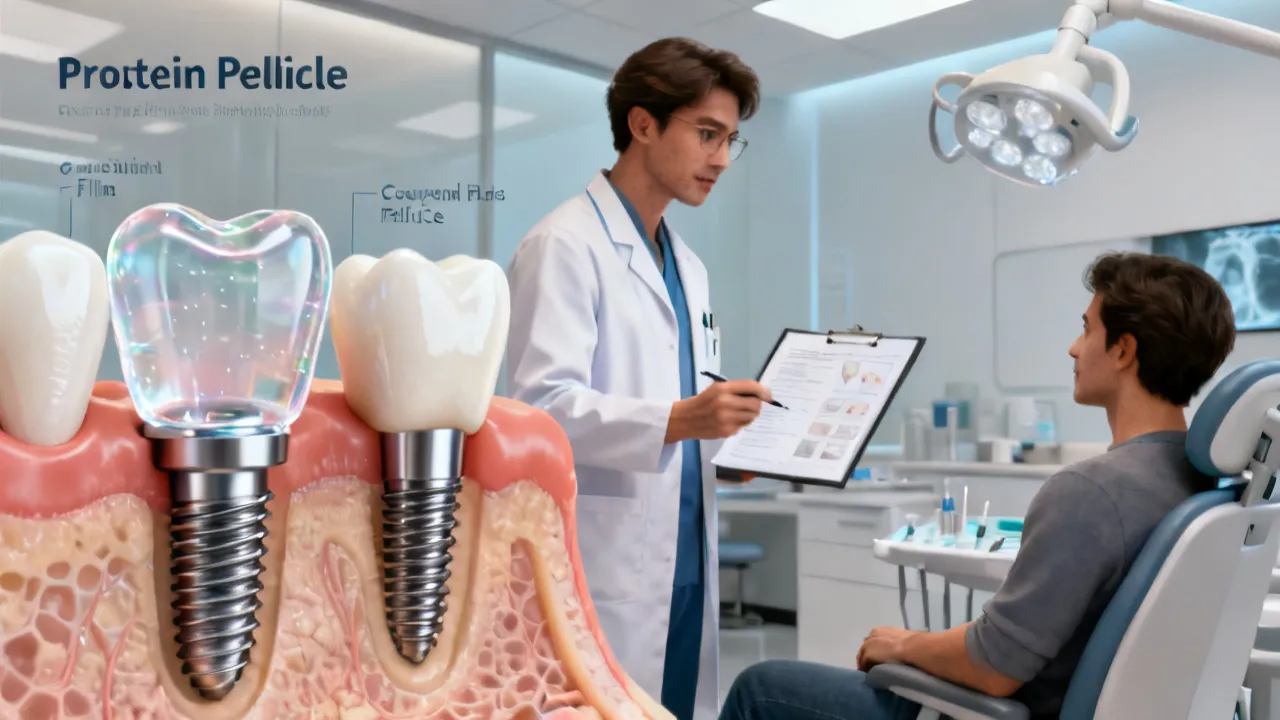
The acquired pellicle, known in Korean as 획득 피막, is a thin biological film that forms naturally on tooth enamel, dentin, oral mucosa, restorations, and exposed implant components after saliva contacts the surface. It is made primarily of salivary proteins, glycoproteins, lipids, enzymes, and other biological molecules. The film develops quickly after cleaning and is usually invisible to the patient.
The acquired pellicle is not automatically a sign of poor oral hygiene or disease. It can lubricate oral surfaces and reduce direct chemical and mechanical challenges to enamel. However, it also contains molecular binding sites that can allow early oral microorganisms to attach. If the resulting microbial deposits are not disrupted by brushing and interdental cleaning, a more mature bacterial biofilm, commonly called dental plaque, may develop.
This distinction is especially important for people with dental implants. The realistic clinical goal is not to remove the pellicle permanently. That would be impossible and would also eliminate some of its protective functions. The practical objective is to control the plaque and inflammation that may develop on the pellicle, particularly around the implant crown, abutment, restoration margins, and surrounding soft tissue.
Dental implant costs should likewise be understood as the cost of a complete treatment pathway rather than the price of an implant fixture alone. A quotation may include or exclude diagnostic imaging, tooth extraction, bone grafting, temporary teeth, the implant body, abutment, crown, laboratory work, sedation, postoperative reviews, and maintenance. The price ranges and website comparisons below are therefore orientation tools rather than personalized recommendations or definitive quotations.
What Is the Acquired Pellicle?
The acquired pellicle is a microscopic conditioning layer that forms when saliva reaches a clean oral surface. It may develop on natural enamel and dentin, composite fillings, crowns, dentures, orthodontic appliances, titanium implant components, and ceramic restorations. Salivary molecules selectively attach to the surface through chemical and physical interactions, creating a dynamic interface between the mouth and the underlying material.
The composition of the pellicle is not identical on every surface. Enamel, dentin, titanium, zirconia, resin, and glazed ceramic may attract different molecules or present different binding characteristics. The local environment also matters. Saliva flow, pH, diet, temperature, oral location, and the presence of other proteins can influence how the film develops.
On a natural tooth, the pellicle can act as a partial barrier against acids from food, beverages, and bacterial metabolism. It also assists lubrication, which helps reduce friction during chewing and speaking. Some salivary proteins within the film participate in mineral balance and may support the natural repair of early enamel changes.
At the same time, the pellicle is a biologically active surface rather than an inert coating. Certain bacteria can recognize and attach to proteins in the film. Once early colonizers are present, they can create an extracellular matrix that helps additional organisms attach. Over time, this organized microbial community becomes more resistant to simple rinsing and may contribute to caries, gingivitis, periodontal disease, peri-implant mucositis, or peri-implantitis.
From an industry and clinical perspective, the difference between pellicle and plaque is essential. The pellicle is a normal biological coating that reforms naturally. Plaque is a microbial biofilm that can produce acids, toxins, and inflammatory signals. Daily hygiene is directed primarily at disrupting plaque and reducing its maturation, not at permanently eliminating the pellicle.
Why the Pellicle Matters for Dental Implants
A dental implant is placed in the jawbone, but the final restoration is exposed to saliva and the oral environment. The visible implant-supported crown, the abutment joining the crown to the implant, and the surrounding soft tissue can all become coated with an acquired pellicle. The biological conditioning layer may influence the first stages of bacterial attachment and the way tissues interact with the restoration.
Most implant systems are made from commercially pure titanium or titanium alloys. Ceramic systems, often based on zirconia, are also available. Surface chemistry, microscopic roughness, wettability, prosthetic contours, component design, and implant position may affect the retention of deposits and the response of the surrounding tissues. These characteristics can influence maintenance, but no implant material is completely immune to bacterial accumulation.
The area around a natural tooth has a periodontal ligament and a complex attachment apparatus. An implant does not have exactly the same biological attachment. The soft-tissue seal around an implant is therefore organized differently from the attachment around a natural tooth. This difference does not mean that implant tissue is fragile in every circumstance, but it does emphasize the importance of controlling inflammation and ensuring that the restoration can be cleaned effectively.
Inflammation limited to the soft tissue around an implant is generally called peri-implant mucositis. If inflammation is accompanied by progressive loss of supporting bone, the condition may be classified as peri-implantitis. Diagnosis requires professional assessment, which may include visual examination, gentle probing, evaluation of bleeding or suppuration, comparison with previous measurements, and radiographic imaging when indicated.
Patients should not attempt to diagnose peri-implant disease based on pain alone. Early inflammation may cause few symptoms. Bleeding when brushing, persistent redness, swelling, tenderness, a bad taste, pus, persistent odor, a change in the bite, or increasing mobility should lead to a dental appointment. A loose implant-supported crown may reflect a loose prosthetic screw rather than failure of the implant body, but it still needs prompt examination.
How the Acquired Pellicle Develops
- Surface exposure: Saliva reaches enamel, dentin, mucosa, a restorative material, or an implant-related component.
- Protein adsorption: Salivary proteins, glycoproteins, lipids, and enzymes attach to the surface and form an initial conditioning film.
- Early microbial interaction: Some oral microorganisms recognize available molecular binding sites and attach to the pellicle.
- Biofilm maturation: If mechanical cleaning is insufficient, more organisms and extracellular substances accumulate and form a structured biofilm.
- Host response: The surrounding gingiva or peri-implant mucosa may become inflamed when bacterial deposits remain for a prolonged period.
- Possible tissue damage: In susceptible patients, persistent inflammation may contribute to breakdown of supporting tissues and bone.
The timing and speed of these stages vary. The first molecular layer may appear within minutes of cleaning, while a more complex microbial community develops over a longer period. The process is influenced by brushing quality, interdental access, saliva flow, diet, smoking, diabetes control, medication, existing periodontal disease, and the shape of the restoration.
This sequence is not a reason to use harsh abrasives, aggressive scraping, or unapproved chemicals. Excessive abrasion can damage some restorative surfaces, create scratches that retain deposits, increase sensitivity around natural teeth, or irritate delicate tissue. Cleaning products should be selected according to the restoration design and the treating dental team’s instructions.
Clinical Implications for Natural Teeth and Implants
On natural teeth, the acquired pellicle is part of the ordinary oral environment. Fluoride toothpaste, effective brushing, interdental cleaning, professional examinations, and treatment of active disease help control the bacterial biofilm that forms on it. On implants, the same basic principle applies, but the geometry of the restoration may be more demanding.
Implant crowns can have contact points, emergence profiles, grooves, pontic-like areas, or spaces beneath the prosthesis that are difficult to access with an ordinary toothbrush. Cement-retained restorations may also have excess cement beneath the gum if the restoration is not carefully designed or cleaned. Screw-retained restorations have different maintenance considerations, including access-hole restoration and the possibility of screw loosening.
Patients with implant-supported bridges or overdentures may need interdental brushes, floss designed for prostheses, a single-tuft brush, oral irrigation, or removable prosthesis cleaning protocols. Water irrigation devices can be useful for flushing loose particles from accessible areas, but they do not replace brushing or mechanical disruption of adherent plaque. The correct size of interdental brush is important: it should clean the space without being forced or causing injury.
The health of the natural dentition also matters. Periodontal disease affecting remaining teeth can complicate oral hygiene and increase the overall inflammatory burden. Someone who lost a tooth because of uncontrolled periodontal disease may require periodontal stabilization and a demonstrated home-care routine before implant placement. Replacing the missing tooth without addressing the original disease process may not provide a durable solution.
Evidence-Informed Home Care
- Brush twice daily with a soft-bristled toothbrush and fluoride toothpaste unless a clinician recommends another approach.
- Angle the brush so that the gumline around the implant crown and neighboring teeth is reached gently.
- Clean between teeth and beneath accessible bridge areas with an appropriately sized interdental brush or another recommended aid.
- Use a single-tuft brush for narrow, recessed, or difficult-to-reach areas.
- Follow the cleaning instructions for fixed or removable implant prostheses.
- Attend professional maintenance visits at the interval recommended for individual risk.
- Report bleeding, swelling, persistent odor, pain, pus, a change in the bite, or a loose component.
- Avoid smoking and seek professional support for cessation.
- Discuss diabetes control with the relevant healthcare professional if diabetes is present.
- Do not use abrasive powders, sharp instruments, or strong antiseptics as a replacement for mechanical cleaning.
Electric and manual toothbrushes can both be effective when used correctly. An electric brush may help some patients maintain consistent motion or control pressure, while a manual brush may be easier to use in particular areas. The device itself is less important than coverage, technique, frequency, and the ability to reach the restoration margins.
Chlorhexidine and other antimicrobial rinses may have a role in selected circumstances, such as short-term management after a procedure or an episode of inflammation. They are not universally suitable for long-term self-directed use. Possible unwanted effects include staining, taste disturbance, irritation, and changes in oral sensation. A rinse should be selected according to professional advice and should never be considered a substitute for brushing and interdental cleaning.
Factors That Can Increase Implant Risk
Implant outcomes are affected by both local and general health factors. A history of periodontitis is important because a patient who has demonstrated susceptibility to periodontal inflammation may also require a particularly careful peri-implant maintenance program. Poor plaque control, smoking, poorly controlled diabetes, and irregular attendance can make prevention more difficult.
Bone quantity and quality, soft-tissue thickness, occlusal forces, bruxism, and the position of adjacent teeth also influence planning. A patient who clenches or grinds may need discussion of a protective appliance or adjustments to the restorative design. This does not mean that every patient with bruxism is unsuitable for an implant, but the mechanical risk should be considered.
Medical history is equally relevant. Patients should disclose medications, allergies, previous reactions to anesthesia, osteoporosis treatment, anticoagulant use, immune conditions, and any history of radiation therapy. Prescribed medication should not be stopped without instructions from the prescribing clinician. The dentist may need to coordinate care with a physician before surgery.
Age alone does not determine whether an implant is appropriate. Overall health, healing capacity, bone development, oral hygiene, expectations, and the ability to attend follow-up are more meaningful considerations. Older adults may be suitable candidates, while younger patients may need to wait until facial and jaw growth is complete.
Planning an Implant: The Full Treatment Sequence
Obtaining an implant at a lower overall cost requires careful planning rather than simply selecting the lowest advertised figure. A typical sequence may include the following stages:
- Initial consultation: The dentist reviews medical history, oral hygiene, periodontal status, the location of the missing tooth, expectations, and functional requirements.
- Diagnostic records: Intraoral photographs, periapical radiographs, panoramic imaging, digital scans, or three-dimensional imaging may be requested according to clinical need.
- Risk assessment: The clinician evaluates bone volume, soft-tissue condition, occlusion, sinus anatomy where relevant, medication use, smoking, and systemic conditions.
- Pre-treatment: Active decay, periodontal inflammation, infection, an unsuitable restoration, or an impacted tooth may need treatment before implant placement.
- Written plan: The patient receives information about the implant system, abutment, crown, possible additional procedures, timing, alternatives, maintenance, and likely fees.
- Surgical placement: The implant is placed under local anesthesia. Sedation or other arrangements may be considered when clinically appropriate.
- Healing and review: The implant and surrounding tissues are monitored during healing. The duration varies according to the procedure, bone condition, and individual biology.
- Restoration: An abutment and crown, bridge, overdenture, or another prosthesis are fitted after the clinical team determines that the site is ready.
- Maintenance: The patient receives an individualized cleaning and review schedule to protect both the implant and natural teeth.
Immediate implant placement after extraction is possible in selected cases but is not suitable for every infection, bone defect, soft-tissue condition, or bite relationship. Similarly, immediate loading, in which a temporary or definitive restoration is attached soon after placement, requires careful case selection. Patients should not be pressured to choose a faster protocol merely because it is advertised as convenient.
Requirements Before Choosing a Lower-Cost Option
A lower-cost treatment can be appropriate when it is based on sound diagnosis, qualified clinical care, traceable materials, adequate infection control, and reliable follow-up. Patients should review the following issues before accepting a quotation:
- Licensing and credentials: Confirm that the dentist, surgeon, and facility are authorized by the relevant national or regional authority.
- Transparent scope: Ask whether the quoted price covers only the implant fixture or the complete restored tooth.
- Material documentation: Request the implant manufacturer, model, component compatibility, and warranty terms.
- Diagnostic justification: Imaging should be recommended for a clinical reason and explained in understandable language.
- Management of complications: Obtain written information about what happens if the implant becomes loose, the crown fractures, or infection develops.
- Continuity of care: Consider who will provide follow-up if treatment is performed far from home.
- Medical suitability: Provide a complete medication and health history and do not stop prescribed medicines without medical advice.
- Records: Confirm that radiographs, implant labels, treatment notes, and invoices will be supplied after care.
Patients should be cautious when a provider guarantees success, minimizes the importance of maintenance, recommends surgery without adequate examination, or presents one fixed amount without discussing findings. A responsible quotation identifies assumptions, possible additional procedures, and circumstances that could alter the fee.
What the Implant Quote Should Explain
| Quotation item | Questions to ask |
|---|---|
| Consultation and examination | Is the clinical assessment included, and will periodontal and occlusal risks be reviewed? |
| Imaging | Are radiographs, scans, photographs, and digital planning included? |
| Extraction | If a tooth remains, is removal included, and will an immediate temporary replacement be provided? |
| Implant fixture | Which manufacturer and model will be used, and is the component traceable? |
| Abutment | Is the abutment included, and will it be prefabricated or custom-made? |
| Final crown | What material will be used, and is the laboratory fee included? |
| Additional surgery | What are the possible costs of bone grafting, sinus procedures, or soft-tissue treatment? |
| Temporary restoration | Will a temporary tooth be supplied during healing, and for how long? |
| Aftercare | How many reviews are included, and who pays for management of complications? |
Patients should also ask about the expected number of appointments and the estimated overall timeline. A price that appears low may represent only the first surgical visit, with the restorative stage billed separately months later. Comparing an all-inclusive local estimate with a surgical-only overseas estimate can produce a misleading impression of savings.
Comparison of Dental Information Websites
The following websites represent different types of information providers. They may help patients gather questions, understand terminology, or explore service categories. They should not replace an examination or establish that a particular treatment is appropriate.
| Website and market | Relevant features |
|---|---|
| Dental Views — English-language resource | Discusses lower-cost dental implants, treatment benefits, procedure types, general cost considerations, and common patient questions. |
| Atlantic Dental Group — English-language clinic | Provides information on general dentistry, cleaning, orthodontics, implants, emergency services, appointments, and clinical team details. |
| DentaVacation — dental tourism resource | Describes treatment abroad, international dental procedures, cost comparisons, travel planning, and practical considerations for overseas care. |
| ADHP and related dental-plan information | Explains dental insurance and plan options that may help patients review coverage and manage treatment expenses. |
| Rockville Dental Arts — Spanish-language service page | Offers Spanish-language information about implants, whitening, cleaning, orthodontics, and emergency dental care. |
| Union City Mini Dental Implants — Spanish-language clinic | Focuses on mini dental implant services and explains options for selected patients with limited areas of tooth loss. |
| Cigna — Spanish-language educational guide | Provides general educational information about dental implants, treatment stages, and considerations for Spanish-speaking readers. |
| Rubi Odonto — Portuguese-language clinic | Describes orthodontics, whitening, implants, professional services, and patient-oriented care in Brazil. |
| Odontologia Velasco — Portuguese-language clinic | Provides information on implants, prostheses, aesthetic dentistry, and the use of contemporary dental technology. |
| DentalVidas — Portuguese-language dental-plan provider | Describes dental plans for individuals, families, and businesses, including network access and emergency service information. |
source: www.dentalviews.com/low-cost-dental-implants/
source: www.atlanticdentalgrp.com
source: www.dentavacation.com
source: www.rockvilledentalarts.com/es/
source: www.unioncityminidentalimplants.com/es/
source: www.cigna.com/es-us/knowledge-center/guide-to-dental-implants
source: www.rubiodonto.com.br
source: odontologiavelasco.com.br
source: dentalvidas.com.br
How to Reduce Implant Costs in English-Speaking Markets
English-speaking markets include a wide range of healthcare systems, insurance arrangements, and regional price structures. Patients may improve affordability by taking the following steps:
- Request itemized estimates: Ask for separate amounts for consultation, imaging, extraction, bone augmentation, implant placement, abutment, crown, temporary teeth, sedation, laboratory work, and maintenance.
- Check dental-plan eligibility: Some plans may contribute to parts of treatment, while others exclude implants or impose waiting periods. Review annual limits, exclusions, deductibles, and preauthorization requirements in writing.
- Compare restorative alternatives: A conventional bridge or removable partial denture may be clinically appropriate in some cases. The decision should consider health, function, longevity, maintenance, appearance, and total cost.
- Use accredited teaching settings carefully: Dental schools and supervised training clinics may offer lower fees, although treatment may take longer and eligibility may be limited.
- Ask about staged treatment: Where clinically safe, treatment may be divided into phases. Patients should understand how delays affect function, appearance, temporary teeth, and oral health.
- Compare local providers: Obtain more than one professional opinion, especially when bone grafting, sinus surgery, or complex rehabilitation has been proposed.
- Calculate travel expenses: For cross-border treatment, include transportation, accommodation, time away from work, translation, return visits, and emergency care.
- Ask about payment plans: Financing may spread payments, but patients should review interest, administrative fees, cancellation conditions, and the total amount repaid.
In the United States, insurance may classify implants as a major service, contribute only to the crown or extraction, impose annual limits, or exclude implants entirely. Patients should ask whether a missing tooth must first be replaced within a certain period and whether preexisting conditions affect benefits.
In the United Kingdom, patients may distinguish between National Health Service eligibility and private care. Access and charges depend on clinical and local arrangements. In Australia and Canada, private insurance terms and provincial or territorial systems differ. A patient should verify current coverage directly with the insurer or public provider rather than relying on a clinic advertisement.
How to Reduce Implant Costs in Spanish-Speaking Markets
Spanish-speaking markets are diverse. Spain, Mexico, Chile, Colombia, Peru, and Argentina have different professional regulations, currencies, clinic structures, laboratory expenses, and healthcare pathways. Patients can approach treatment methodically:
- Seek a Spanish-language consultation when needed: Clear communication about the acquired pellicle, gum health, implant design, and maintenance reduces misunderstandings.
- Verify professional registration: Patients should confirm the dentist’s credentials through the applicable national or regional authority.
- Request implant-system details: The manufacturer and component model should be documented for future maintenance.
- Ask whether the crown is included: Some advertisements describe the fixture only, leaving the abutment and final crown outside the initial amount.
- Review imaging requirements: The provider should explain why panoramic or three-dimensional imaging is clinically indicated.
- Compare laboratories and materials: Crown material, fabrication location, warranty, and repair policy can affect both the initial cost and later expenses.
- Plan follow-up: Patients traveling between cities or across borders should arrange postoperative reviews before treatment begins.
- Clarify currency and payment terms: Exchange-rate changes, taxes, deposits, and cancellation fees should be documented before scheduling.
Rockville Dental Arts and Union City Mini Dental Implants provide Spanish-language pages that may help patients understand services and prepare questions. Cigna’s Spanish educational material can also support general background reading. These resources do not establish that a particular procedure is suitable for every patient.
Patients considering dental tourism should avoid judging quality solely by a displayed price. They should ask how emergencies are handled, who performs each stage, whether the same professional manages surgery and restoration, and what documentation is supplied. A low initial figure may not remain lower after travel, additional procedures, and return visits are included.
How to Reduce Implant Costs in Portuguese-Speaking Markets
Portuguese-speaking patients may compare services in Brazil and Portugal while recognizing that prices, licensing, and healthcare pathways vary considerably. The following approach can improve decision-making:
- Obtain a written plan in Portuguese that separates surgical and prosthetic stages.
- Confirm whether the clinic has a dental laboratory relationship and whether laboratory fees are included.
- Ask about the maintenance schedule and the cost of future examinations.
- Clarify the difference between conventional implants, immediate loading, and mini implants.
- Discuss bone grafting, sinus-related procedures, temporary teeth, and sedation before accepting a quotation.
- Check professional registration and the clinic’s infection-control procedures.
- Retain implant passports, radiographs, invoices, and component information.
- Ask whether replacement parts will remain available if the clinic changes suppliers or closes.
Rubi Odonto and Odontologia Velasco present Portuguese-language information about implants and related dental services. DentalVidas focuses on dental plans, which may help patients compare subscription or network-based arrangements. Coverage terms should be reviewed carefully because a dental plan is not automatically equivalent to comprehensive implant insurance.
Indicative Price Ranges for One Individual Dental Implant
The ranges below refer to an individual dental implant treatment estimate as presented in the supplied reference information. They should not be interpreted as universal quotations or as confirmation that every listed amount includes the crown, abutment, imaging, extraction, grafting, or maintenance.
| Market | Indicative range and currency |
|---|---|
| United States (US) | US$3,000–US$6,000 USD |
| United Kingdom (GB) | £2,000–£2,500 GBP |
| Australia (AU) | AU$3,500–AU$6,500 AUD |
| Canada (CA) | CA$3,000–CA$5,500 CAD |
| Spain (ES) | €1,500–€2,500 EUR |
| Chile (CL) | CLP$800,000–CLP$1,500,000 CLP |
| Mexico (MX) | $15,000–$25,000 MXN |
| Colombia (CO) | $2,000,000–$4,000,000 COP |
| Peru (PE) | S/ 3,000–S/ 6,000 PEN |
| Argentina (AR) | $80,000–$150,000 ARS |
| Brazil (BR) | R$3,000–R$8,000 BRL |
| Portugal (PT) | €1,000–€2,000 EUR |
| Germany (DE) | €2,000–€3,500 EUR |
| France (FR) | €1,500–€2,500 EUR |
| Italy (IT) | €1,500–€3,000 EUR |
| Japan (JP) | ¥300,000–¥700,000 JPY |
Currency conversion can change the apparent difference between markets. Inflation, exchange rates, laboratory costs, import requirements, professional fees, facility standards, and the complexity of the patient’s condition can all influence the final amount. A patient should compare equivalent treatment packages rather than converting headline prices alone.
The number of missing teeth also changes the economic calculation. Replacing three adjacent teeth with three individual implants may not be the only option; an implant-supported bridge could be considered in selected cases. Likewise, an overdenture supported by two or more implants may be appropriate for some patients with extensive tooth loss. These are clinical decisions and should not be made solely from a price list.
Mini Implants, Conventional Implants, and Alternatives
Mini dental implants have a smaller diameter and may be used in selected treatment situations, including some removable prosthesis applications. They are not automatically interchangeable with conventional implants and may not be appropriate for every missing tooth, bone pattern, loading condition, or long-term restorative design.
Conventional implants generally provide a broader range of restorative options, but the best choice depends on anatomy, function, occlusion, hygiene access, and the professional’s treatment plan. A bridge may avoid surgery but requires consideration of the neighboring teeth. A removable partial denture may have a lower initial cost and can be suitable in certain circumstances, although it requires its own cleaning and adjustment routine.
The acquired pellicle forms on all of these restorations. Consequently, the maintenance burden does not disappear when a patient chooses a less invasive or lower-priced alternative. Every option should be assessed for cleaning access, durability, repairability, appearance, speech, comfort, and total expected costs.
Dental Tourism: Practical Risk Assessment
Dental tourism may appear attractive when treatment fees differ between markets. It can become more complicated when the patient needs several visits, develops postoperative symptoms, or requires a local dentist to repair an unfamiliar implant system. Before traveling, patients should obtain a written treatment plan, understand the credentials of each clinician, and confirm the availability of follow-up.
Important questions include:
- Will the same clinic provide surgery and the definitive crown?
- How long should the patient remain nearby after surgery?
- What happens if healing is delayed or the implant does not integrate?
- Are radiographs and implant records supplied in a portable format?
- Is there a local partner for urgent care after returning home?
- Does the warranty cover only the component, or also professional fees and travel?
- Are translation and consent documents clear enough for informed decision-making?
- What infection-control standards and emergency arrangements are in place?
Travel should not be scheduled immediately after surgery without professional guidance. Flying, changes in routine, limited access to familiar medication, and the difficulty of attending review appointments may create practical problems. The financial calculation should include transportation, accommodation, meals, time away from work, companion expenses, translation, and possible repeat travel.
Patients should also be cautious about staged treatment performed by different providers in different countries. A surgeon may place an implant that a later restorative dentist cannot easily identify or restore because component records are missing. Keeping an implant passport or equivalent documentation can make future maintenance safer and more predictable.
The Relationship Between Hygiene and Long-Term Value
Implant affordability is not limited to the initial procedure. A well-maintained restoration may be easier to preserve than one surrounded by persistent inflammation, inaccessible contours, or an untreated periodontal condition. Patients should therefore consider maintenance as part of the investment.
The acquired pellicle reforms after brushing, but the speed and composition of biofilm accumulation are influenced by saliva, diet, oral anatomy, hygiene technique, smoking, restoration design, and systemic health. A professional can identify areas where the crown contour traps deposits. Sometimes adjusting or replacing a poorly shaped prosthesis improves access and reduces irritation, although such decisions require clinical evaluation.
Regular reviews also allow the clinician to identify a loose screw, worn occlusal surface, fractured ceramic, damaged denture attachment, or early soft-tissue change. Prompt management may prevent a minor mechanical issue from becoming a more complex and expensive problem. Maintenance visits may include reinforcement of home-care technique, professional removal of deposits, evaluation of the bite, and comparison of current findings with earlier records.
Patients should ask which instruments and polishing materials are appropriate for their particular implant and restoration. Instruments that are suitable for natural teeth may not be ideal for every implant surface. The treating team can explain how professional cleaning will be performed and whether any areas require special access.
Questions Patients Should Ask at Consultation
- What caused the tooth loss, and has that cause been controlled?
- Is the gum condition stable before surgery?
- Will the treatment restore one tooth or form part of a wider rehabilitation?
- Does the estimate include the final crown and abutment?
- What alternatives are clinically reasonable?
- What implant system and crown material are being proposed?
- How will I clean around the restoration and the acquired-pellicle-associated biofilm?
- How often will professional maintenance be required?
- What symptoms require urgent contact?
- What costs might arise if bone augmentation or additional treatment is needed?
- Who will manage the case if the original dentist is unavailable?
- Will I receive copies of imaging, implant labels, and treatment notes?
FAQs
Is the acquired pellicle harmful?
No. The acquired pellicle is a normal biological film and can help lubricate and protect oral surfaces. The concern is the microbial biofilm that may accumulate on it when cleaning is inadequate. Patients should focus on controlling plaque and inflammation rather than trying to eliminate the pellicle completely.
Does the acquired pellicle form on dental implants?
Yes. Salivary components can coat exposed implant-supported components and prosthetic materials. This does not mean the implant is failing. It means that the restoration requires regular, appropriate cleaning and professional review.
Can brushing remove the acquired pellicle permanently?
No. The film reforms naturally after cleaning. Brushing and interdental cleaning remove plaque and disrupt microbial accumulation; they do not permanently prevent biological film formation.
Does a lower implant price mean lower quality?
Not necessarily, but price alone cannot establish quality. A lower amount may reflect regional fees, clinic structure, treatment scope, or a limited quotation. Patients should examine credentials, materials, diagnosis, infection control, warranty terms, and follow-up arrangements.
What is usually excluded from an advertised implant price?
Depending on the provider, the displayed amount may exclude the consultation, imaging, extraction, bone graft, temporary restoration, abutment, final crown, sedation, laboratory work, or maintenance. The patient should request an itemized estimate before making a decision.
Are mini implants suitable for everyone?
No. Mini implants can be useful in selected cases, but suitability depends on the missing-tooth location, bone characteristics, prosthetic design, bite forces, and the clinician’s assessment. They should not be selected solely because their initial price appears lower.
How does periodontal disease affect implant planning?
Untreated periodontal inflammation can make oral hygiene more difficult and may compromise the health of tissues around both natural teeth and implants. Stabilizing periodontal health before or during implant treatment is often an important part of risk management.
Can dental insurance cover an implant?
Coverage varies. Some plans contribute to certain stages, while others exclude implants, limit benefits, or impose waiting periods and annual maximums. Patients should obtain a written benefits explanation directly from the insurer.
Is dental tourism suitable for an individual implant?
It may be considered by some patients, but the decision requires careful comparison of the complete cost, travel requirements, professional credentials, component documentation, and follow-up arrangements. A local option may be more practical when repeated reviews or complex treatment are anticipated.
When should a patient contact a dentist after implant treatment?
Contact the treating team for persistent or worsening pain, swelling, bleeding, pus, fever, a bad taste, altered bite, loose prosthetic components, or mobility. Urgent symptoms should not be managed solely with online advice.
Professional Perspective
From a preventive and restorative dentistry perspective, successful implant care depends on the interaction of biology, mechanics, and patient behavior. The acquired pellicle is a normal interface, not an enemy to be eradicated. The clinically meaningful targets are retained plaque, inflammation, inaccessible prosthetic contours, excessive loading, untreated periodontal disease, and modifiable health risks.
Patients seeking affordability should place diagnosis and continuity of care ahead of promotional language. The most responsible comparison is between complete treatment plans delivered by appropriately qualified professionals. A modest initial saving may not be beneficial if it leads to repeated travel, missing records, unsuitable components, poor cleaning access, or delayed management of complications.
Conclusion
The acquired pellicle, or 획득 피막, is a natural salivary film that develops on teeth, restorations, and exposed implant components. It can provide protective functions while also serving as a foundation for bacterial attachment. Understanding this distinction helps patients maintain realistic hygiene goals: control plaque and inflammation, preserve access for cleaning, and attend professional reviews.
Affordable dental implants are possible in many markets, but the safest path involves a complete quotation, verified credentials, clear implant documentation, appropriate diagnosis, and a reliable maintenance plan. Patients should compare like-for-like treatment packages, consider alternatives, and include travel and follow-up costs when reviewing overseas options.
Disclaimer
1. The information above comes from online resources, and the data is as of October 2023.
2. Dental implant prices are for reference only and may vary by region, clinic, doctor, treatment complexity, materials, insurance arrangements, exchange rates, and the procedures included in the quotation. This article is educational and does not replace an examination, diagnosis, or treatment plan from a qualified dental professional.
Reference Links
Dental Views — Low-Cost Dental Implants
Rockville Dental Arts, Spanish-language page
Union City Mini Dental Implants, Spanish-language page