Alginate Pros and Cons in Modern Dentistry
This guide explains the main alginate pros and cons, including accuracy, comfort, setting behavior, storage, disinfection, and clinical limitations. Alginate is an economical, elastic irreversible hydrocolloid commonly used for preliminary dental impressions, study models, orthodontic records, and some implant-related planning steps. The article also discusses how patients can evaluate lower-cost implant care, compares selected dental-information websites, and presents reference price ranges by country.
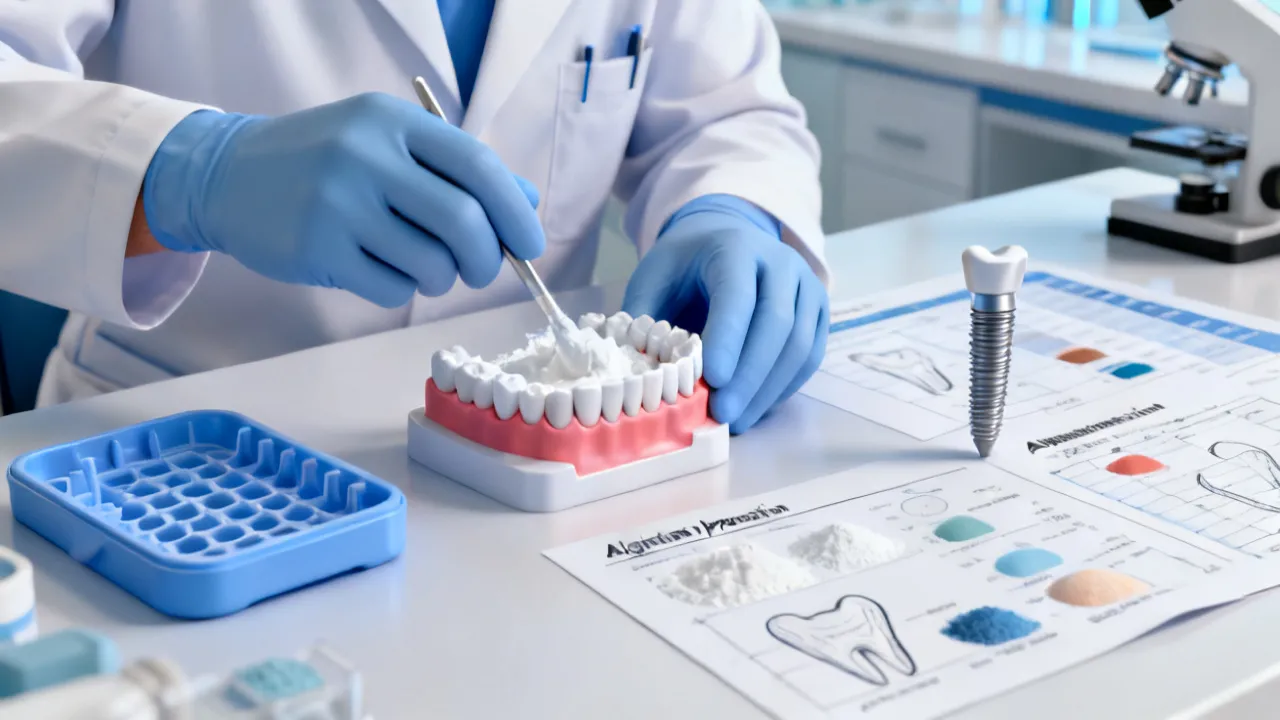
Key Findings at a Glance
알지네이트 장단점, or the pros and cons of alginate, are best understood in relation to the purpose of the impression. Alginate is widely valued because it is economical, quick to mix, relatively comfortable, and suitable for many preliminary impressions. Its principal weaknesses are limited dimensional stability, lower fine-detail reproduction than elastomeric materials, sensitivity to water balance, and the need for prompt handling after removal from the mouth.
- Best suited to: preliminary impressions, diagnostic casts, orthodontic records, removable-appliance planning, opposing-arch impressions, study models, mouthguard planning, and some provisional procedures.
- Less suitable to: highly precise final impressions, deep subgingival margins, extensive fixed prosthodontics, complex implant restorations, and situations requiring prolonged storage before pouring.
- Important implant distinction: alginate may assist in preliminary diagnosis or the fabrication of study models, but implant placement and definitive implant restorations generally require more precise clinical records and, where indicated, digital scans or elastomeric impressions.
- Patient priority: the lowest quoted treatment price is not necessarily the lowest overall cost. Patients should compare the complete treatment plan, implant system, restoration, imaging, bone procedures, follow-up, maintenance, and complication policy.
- Clinical priority: the material should be selected according to the accuracy required by the procedure, not simply according to its purchase price or popularity.
From an industry perspective, material selection should follow the accuracy required by the procedure rather than the material’s purchase price alone. A well-made alginate impression can be clinically useful, while an inappropriate use of alginate can create avoidable remakes, inaccurate models, additional appointments, and unnecessary laboratory expense.
What Is Alginate?
Alginate is an irreversible elastic hydrocolloid impression material used in dentistry. It is typically supplied as a powder that is mixed with water. The powder contains alginate salts, calcium-reactive components, fillers, and additives that influence setting time, color change, flavor, dust control, flexibility, and handling characteristics. Once the chemical reaction occurs, the material changes from a fluid or plastic mixture into an elastic gel.
The term “irreversible” refers to the setting reaction. Unlike some reversible hydrocolloid systems, set alginate does not return to its original sol state simply through heating. The impression can be removed from the mouth because the material has elastic behavior, but it cannot be restored to its initial mix by reheating.
Alginate is commonly placed in a perforated or adhesive dental tray. The clinician mixes the powder and water according to the manufacturer’s instructions, loads the tray, positions it in the mouth, allows the material to set, and removes it with a controlled movement. Dental stone or another model material is then poured into the impression to produce a cast.
Although alginate has a long history in clinical dentistry, it remains relevant because not every impression requires the same level of precision. For a diagnostic model, an opposing-arch record, or an orthodontic study cast, the material may provide an appropriate balance of cost, speed, and patient tolerance.
How Alginate Sets and Why Its Chemistry Matters
Alginate begins as a viscous mixture and sets through a chemical reaction involving alginate salts and calcium ions. The calcium ions link the alginate chains together, creating a cross-linked gel. Manufacturers add retarders and other ingredients to regulate the speed of this reaction. Some products are designed to change color during mixing, loading, and setting, allowing the clinician to recognize the approximate stage of the material.
Water temperature can influence working and setting time. Cooler water generally extends the working time, while warmer water can accelerate setting. The exact effect depends on the product, the room temperature, the mixing method, and the manufacturer’s formulation. Clinicians should not adjust water temperature casually, because excessive changes may reduce working time to the point that proper tray seating becomes difficult.
The water-to-powder ratio also affects viscosity, strength, elasticity, and surface quality. A mixture containing too much water may become weak and runny. A mixture containing too little water may become stiff, difficult to spread, and more likely to trap air. Consistent measuring is therefore an essential part of quality control.
Once set, alginate contains a considerable amount of water. This explains why the impression can change dimensionally if it is allowed to dry, exposed to excessive humidity, or immersed in water. The material’s clinical performance is closely connected to how quickly and carefully it is disinfected, packaged, transported, and poured.
Why Alginate Remains Commonly Used
Several practical characteristics explain alginate’s continuing role in dental clinics. First, it is generally less expensive and less technique-sensitive than many elastomeric impression materials. Second, it usually requires a relatively short intraoral setting period. Third, the material can record broad anatomical structures, including teeth and areas of the edentulous ridge, when the tray and mixing technique are appropriate.
Alginate is also useful in workflows that require a study cast rather than a definitive working cast. Orthodontic consultations, diagnostic wax-ups, mouthguard planning, removable appliance design, preliminary denture assessment, and examination of tooth relationships may all begin with an alginate impression. The clinician must still judge whether its accuracy is sufficient for the specific task.
Patient comfort is another practical consideration. Many modern products are formulated with improved flavor and reduced dust. Even so, an impression procedure can trigger gagging, particularly when the tray extends toward the soft palate or when the material is placed too far posteriorly. Tray selection, patient positioning, breathing instructions, and efficient placement can reduce discomfort.
Alginate is also familiar to dental assistants, hygienists, laboratories, and clinicians. This familiarity can make routine workflows easier to organize. Clinics may already have equipment for hand mixing, tray storage, disinfection, and model pouring. However, familiarity should not result in automatic use. Every impression should be matched to the clinical indication.
Alginate Pros and Cons: Detailed Analysis
Advantages of Alginate
1. Cost Efficiency
One of the most recognized advantages is the relatively modest material cost. This can be important for routine diagnostic records, especially when a clinic takes multiple impressions during orthodontic assessment, appliance fabrication, or removable prosthodontic planning. Lower material expense does not automatically mean lower clinical quality, but it can make alginate practical for tasks that do not demand definitive precision.
Cost efficiency also includes the simplicity of the equipment involved. Conventional alginate generally does not require an expensive dispensing gun, proprietary automix cartridge, or specialized heating unit. A bowl, spatula, measuring equipment, and suitable tray may be sufficient for many routine cases.
2. Simple Clinical Handling
Alginate generally requires a powder-and-water mixing process rather than a more complex cartridge, automix, or multiple-component dispensing system. Staff can learn the basic procedure efficiently, provided that they follow the manufacturer’s recommended water-to-powder ratio, mixing time, working time, and setting time.
However, “simple” does not mean that technique is irrelevant. A mixture that is too thin may lack strength and detail, while a mixture that is too thick can be difficult to seat and may produce voids. Consistent measuring and spatulation are essential.
3. Short Working and Setting Times
Alginate products are available in different setting categories. Some are designed for rapid setting, while others provide additional working time. A shorter setting interval can improve efficiency and reduce the time a patient must tolerate the tray. The clinician must balance speed with the time needed for proper tray placement and border adaptation.
A rapid-setting material can be useful for a patient with a strong gag reflex or limited tolerance, but it leaves less room for hesitation. A normal-setting product may be preferable when the anatomy is challenging, the tray is large, or the clinician needs additional time to achieve correct positioning.
4. Elastic Recovery
After setting, alginate can flex during removal from the mouth. This characteristic helps the impression pass over moderate undercuts without fracturing as readily as a rigid material. The material should still be removed with a firm, controlled movement. Excessive rocking or repeated removal attempts can distort the impression.
Elastic recovery is especially valuable when the impression involves several teeth or mild undercuts. Nevertheless, flexibility does not mean that alginate can tolerate unlimited deformation. The tray should be supported during removal, and the clinician should avoid bending the impression unnecessarily after it has been removed.
5. Acceptable Patient Experience in Many Cases
Alginate is often available in products with improved flavor, color-change indicators, and dust-reduction features. These refinements can make the procedure more predictable. A clinician can also improve the experience by explaining the steps, choosing an appropriately sized tray, avoiding unnecessary posterior bulk, and encouraging nasal breathing where appropriate.
Patient preparation matters. A brief explanation that the material may feel full but should not obstruct breathing can reduce anxiety. A clinician may also take the mandibular impression before the maxillary impression if the patient is especially concerned about gagging, although the sequence should be adapted to the individual.
6. Broad Diagnostic Applications
Alginate can be suitable for preliminary impressions used to create study models. These models can support assessments of arch form, tooth position, occlusal relationships, edentulous spaces, and appliance requirements. It may also be used for opposing-arch impressions when the clinical situation does not demand the precision associated with a definitive prosthodontic impression.
Additional uses may include fabrication of bleaching trays, orthodontic retainers in selected workflows, sports mouthguards, provisional removable appliances, diagnostic casts, and preliminary prosthetic planning. The exact indication depends on the appliance, laboratory process, and required fit.
7. Availability and Familiarity
Because alginate is widely used, many dental teams are familiar with its storage, mixing, tray selection, disinfection, and pouring procedures. Familiarity can support workflow consistency, particularly in clinics that maintain written protocols and train staff regularly.
Many dental laboratories are also accustomed to receiving alginate impressions. This can simplify communication for routine models. However, the laboratory should know the intended use of the cast and the time elapsed since the impression was taken, especially when the impression has been transported from another location.
Disadvantages of Alginate
1. Limited Dimensional Stability
The most important limitation is dimensional change after setting. Alginate can lose or gain water through processes commonly described as syneresis and imbibition. Syneresis involves the release of liquid from the gel, whereas imbibition involves the uptake of water from the surrounding environment. Either process can alter the impression and compromise the accuracy of the cast.
For this reason, the impression should generally be poured as soon as reasonably possible after disinfection. If a delay is unavoidable, the impression should be managed according to the product instructions. Wrapping it in a wet paper towel or immersing it in water without guidance can create distortion rather than prevent it.
2. Lower Fine-Detail Reproduction
Alginate generally does not reproduce fine margins as reliably as high-precision elastomeric materials. It may not capture deep subgingival finish lines or very narrow preparation details with the accuracy required for a definitive crown, bridge, or implant-supported restoration. Surface moisture, saliva, blood, tray movement, and mixing inconsistencies can further affect detail.
A diagnostic cast may not need to display the same degree of detail as a definitive working cast. Confusing these two purposes is a common source of inappropriate material selection. The fact that an alginate impression appears visually complete does not necessarily mean it has recorded every detail needed for a precision restoration.
3. Tear Resistance Can Be Limited
Thin areas of alginate may tear when the impression is removed, particularly around interproximal spaces, undercuts, or sharp anatomical features. Adequate material thickness is therefore important. A tray that is too small may create thin regions and increase the risk of tearing or distortion.
If a tear affects an area that is not clinically important for the intended cast, the impression may still be usable. If it affects a preparation, implant-related structure, occlusal landmark, or margin needed for treatment, a new impression may be necessary. Reusing a visibly compromised impression may be more expensive than repeating the procedure.
4. Sensitivity to Water-to-Powder Ratio
Changing the water-to-powder ratio changes the material’s consistency and performance. Too much water can produce a weak, runny mix with reduced tear resistance. Too little water can make the mix stiff and difficult to seat, potentially trapping air or preventing complete adaptation. Measuring devices should be used consistently rather than relying on visual estimation.
Mixing time is also important. Inadequate spatulation can leave unmixed powder and produce weak areas. Excessive mixing may shorten the available working time. The operator should prepare the tray and patient before beginning the mix so that no time is lost after the material reaches the desired consistency.
5. Limited Storage Tolerance
Alginate is not an ideal material when a laboratory must receive an impression after a long transport period. Temperature, humidity, packaging, and elapsed time may influence dimensional accuracy. Clinics that routinely ship impressions should consider whether a more stable material or a digital workflow is more appropriate.
When transport is necessary, the impression should be rinsed, disinfected with a compatible method, shaken to remove excess surface water, and packaged according to the manufacturer’s instructions. The laboratory should be informed of any unusual delay or storage condition.
6. Risk of Air Voids and Surface Defects
Hand mixing can introduce air. Inadequate tray loading, poor spatulation, insufficient material around critical areas, or movement during setting may create voids and surface irregularities. The resulting cast may appear acceptable at a glance while still lacking important anatomical information.
Some clinicians use a small amount of mixed alginate to paint critical tooth surfaces before seating the loaded tray. This can improve adaptation in selected situations, although the procedure must be completed within the working time. A smooth, controlled loading technique and stable tray placement remain more important than any single supplementary step.
7. Not a Universal Implant Impression Material
Implant dentistry often requires accurate transfer of implant position, soft-tissue contours, occlusal relationships, and restorative components. The required record may involve an elastomeric impression, an intraoral scan, verification procedures, or a combination of methods. Alginate can have a role in preliminary records, but it should not be selected as a definitive implant impression material solely because it is economical.
Alginate Compared With Other Impression Options
Material comparison should focus on the clinical objective. Alginate is generally preferred for preliminary and diagnostic applications. Elastomeric materials, such as addition silicone or polyether, are commonly selected when greater detail and dimensional stability are needed. Digital intraoral scanning can reduce some conventional impression challenges, although it has its own limitations involving scan strategy, moisture control, reflective surfaces, subgingival margins, software, and operator experience.
| Material or workflow | Typical strengths and limitations |
|---|---|
| Alginate | Economical, quick, and useful for preliminary models; limited dimensional stability and fine-detail accuracy. |
| Addition silicone | High detail and good dimensional stability; usually more expensive and more technique-dependent. |
| Polyether | Good detail and wettability; may be relatively rigid and can be less comfortable in pronounced undercuts. |
| Condensation silicone | Useful handling properties but may undergo greater dimensional change because of by-products released during setting. |
| Digital intraoral scan | Immediate digital file and no physical impression material; requires suitable equipment, software, training, and moisture control. |
The choice is not a competition in which one material replaces all others. A professional evaluation considers the preparation margin, implant position, soft-tissue anatomy, patient tolerance, laboratory requirements, available equipment, and the consequences of an inaccurate record.
Digital scanning also does not eliminate every source of error. An incomplete scan, stitching error, movement of the scanner, contamination by saliva, or failure to capture the distal or subgingival region can produce an inaccurate digital record. A conventional impression may be preferable in particular circumstances, while a digital workflow may be more efficient in others.
Clinical Technique: How to Improve an Alginate Impression
- Review the case. Identify whether the impression is preliminary, diagnostic, orthodontic, opposing-arch, or intended for a more exacting procedure.
- Select the tray carefully. The tray should cover the relevant teeth and tissues while allowing an even layer of material. A tray that is too small can cause thin spots; one that is too large can increase discomfort and gagging.
- Check tray retention. Perforated trays may provide mechanical retention, while nonperforated trays may require a compatible adhesive. Adhesive should be applied and allowed to dry according to the product instructions.
- Prepare the patient. Explain the procedure and establish a signal for when the patient needs assistance. The patient should be positioned to reduce posterior flow toward the throat.
- Measure accurately. Follow the product’s specified water and powder measurements. Water temperature can influence working and setting time, so the manufacturer’s guidance should be followed.
- Mix consistently. Use vigorous, controlled spatulation against the bowl to create a smooth mixture and reduce air incorporation.
- Load efficiently. Fill the tray evenly, supporting areas that require anatomical recording without overloading the posterior section.
- Seat decisively. Place the tray with a controlled movement and maintain stable pressure while the material sets. Avoid rocking or repeated repositioning.
- Remove correctly. Break the seal where appropriate and remove the tray with a firm movement along the path of withdrawal.
- Inspect immediately. Check for missing anatomy, tray exposure, tearing, large voids, excessive drag, and distortion.
- Disinfect and pour promptly. Use a compatible disinfectant and follow the material instructions. Coordinate with the laboratory so that the cast is poured within the recommended interval.
Tray positioning deserves particular attention. For a maxillary impression, the clinician should avoid pushing the tray too far posteriorly and should maintain sufficient material over the palate and tooth surfaces. For a mandibular impression, the patient may be asked to lift the tongue briefly during seating, depending on the technique and the anatomy being recorded.
After removal, the impression should be inspected under good lighting. A clinician should look for a continuous peripheral outline, complete tooth coverage, visible vestibular anatomy where required, absence of tray exposure, and adequate material thickness. If the impression is intended only for an initial study model, minor imperfections may be acceptable. If it will guide a laboratory procedure, the acceptance criteria should be stricter.
Infection Control and Alginate Impressions
Impressions contact saliva, blood, plaque, and oral tissues, so they must be treated as contaminated clinical items. Rinsing removes loose debris but does not replace disinfection. The disinfectant must be compatible with the alginate and used for the correct contact time. Overexposure to some solutions may alter the surface or dimensions of the material.
After disinfection, the impression should generally be shaken or gently drained to remove excess liquid. It should not be left submerged unless the manufacturer specifically permits that method. Packaging should prevent contamination while avoiding conditions that promote excessive drying or water absorption.
Dental laboratories should receive information about the disinfectant used, the time of impression taking, and any delay before shipment. Clear communication reduces the risk that the laboratory will use a method incompatible with the material or misinterpret a defect caused by handling.
Alginate and Implant Dentistry
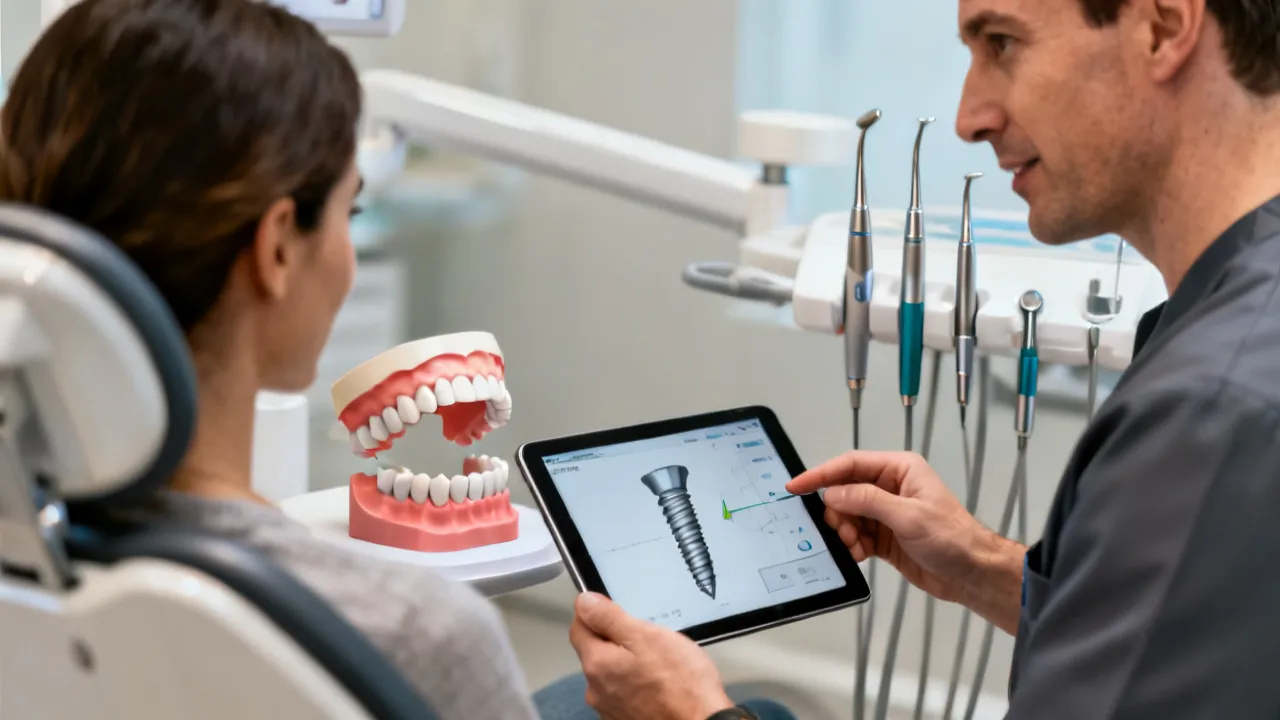
Alginate may appear in the early stages of an implant consultation. A preliminary impression can help produce a study cast, evaluate available space, plan a diagnostic setup, or fabricate a temporary guide in selected cases. It may also record the opposing arch for an initial examination.
Nevertheless, implant treatment requires more than a simple model. The clinician may need a clinical examination, radiographic imaging, periodontal assessment, evaluation of bone volume, occlusal analysis, medical history, and a discussion of restorative design. Depending on the case, three-dimensional imaging and digital planning may be appropriate.
For a definitive implant restoration, the impression or scan must accurately communicate the position of the implant or implants to the laboratory. Rotational stability, scan-body seating, tissue management, verification, and occlusal records can all affect the result. The appropriate workflow differs between a single implant crown, multiple implants, an overdenture, and a full-arch restoration.
Patients should therefore ask whether alginate is being used only for preliminary records or whether the clinic intends to rely on it for a final implant-related record. A transparent explanation is a sign of sound treatment planning. The material itself is not a substitute for diagnosis, implant planning, or professional judgment.
In a single-tooth implant case, the clinician may use an alginate cast to evaluate spacing and the opposing dentition before surgery. However, the final crown requires a record that accurately transfers the implant connection and surrounding restorative anatomy. In multiple-implant cases, small positional errors can accumulate, making verification especially important. Full-arch restorations may require an even more controlled digital or conventional protocol.
How to Obtain Dental Implants at Lower Cost
Patients seeking affordable implant treatment should compare complete care pathways rather than choosing a clinic based on one promotional figure. The following process can help identify reasonable options while protecting clinical quality.
Step 1: Clarify What the Quoted Price Includes
“One implant” may refer only to the implant fixture, or it may include the abutment and crown. Some quotations exclude consultation, three-dimensional imaging, extraction, bone grafting, temporary teeth, sedation, laboratory work, or follow-up visits. Ask for an itemized written estimate that separates surgical and restorative components.
Step 2: Obtain a Diagnosis Before Comparing Prices
A meaningful comparison requires information about bone volume, gum health, remaining teeth, bite, systemic health, smoking status, and medication use. An apparently simple missing-tooth case may require periodontal treatment or an extraction before implant placement. A diagnosis also helps determine whether an implant is appropriate at all.
Step 3: Compare the Implant System and Warranty Terms
Ask for the manufacturer and model of the implant, the restorative components used, and the clinic’s policy if a component fails. A warranty should be read carefully because it may depend on maintenance visits, use of specified components, or exclusions related to trauma and medical conditions.
Step 4: Request the Complete Treatment Timeline
Implant care may involve several stages: examination, extraction if necessary, healing, implant placement, osseointegration, restoration, and maintenance. A lower initial quote may become less attractive if it requires repeated travel, long waiting periods, or separate charges at multiple facilities.
Step 5: Verify Professional Credentials and Facility Standards
Patients should confirm the dentist’s registration with the relevant national or regional authority, experience with the proposed procedure, infection-control protocols, emergency arrangements, and access to appropriate imaging. Online reviews can provide context, but they should not replace credential verification or an independent clinical opinion.
Step 6: Consider Dental Schools and Teaching Clinics
University dental hospitals and teaching clinics may offer structured care at reduced fees because treatment is delivered within an educational setting. Appointments can take longer, and treatment availability may be limited. Patients should ask who performs each stage, how supervision is organized, and whether the case is suitable for the clinic.
Step 7: Compare Nearby Clinics With Travel-Based Options
Dental tourism can appear economical in countries where operating expenses and laboratory fees differ from those in the patient’s home market. However, travel, accommodation, time away from work, local transport, language support, and treatment of complications must be included in the calculation. Follow-up becomes more difficult when the treating clinic is far away.
Step 8: Ask About Maintenance
Implants require professional maintenance and careful home care. Patients should ask about hygiene appointments, examination frequency, radiographic monitoring, night guards where relevant, and the cost of replacement crowns or other components. Long-term maintenance is part of the financial decision.
Step 9: Avoid Decisions Based on Pressure
Urgency, limited-time offers, and claims of guaranteed outcomes should be treated cautiously. A responsible provider should explain alternatives, risks, expected healing, possible complications, and the option of postponing treatment to address gum disease or other health concerns.
Step 10: Obtain a Second Opinion for Complex Cases
A second opinion is particularly useful when bone grafting, sinus augmentation, full-arch treatment, multiple extractions, or immediate loading is proposed. Comparing two clinical explanations may reveal differences in treatment sequence and long-term planning that a price comparison alone cannot show.
Step 11: Separate Necessary Treatment From Optional Upgrades
Some clinics present several choices involving crown materials, sedation, digital planning, premium implant brands, or cosmetic enhancements. These options may be useful, but patients should ask which features are clinically necessary and which are optional. Understanding the difference allows a patient to reduce expenses without removing essential diagnostic or safety measures.
Conditions and Requirements for Lower-Cost Implant Care
Lower-cost care is safest when the patient and clinic meet several practical conditions. The patient should have a clear diagnosis, realistic expectations, adequate time for healing, and an understanding of maintenance responsibilities. The clinic should provide itemized pricing, informed consent, qualified clinicians, documented implant components, appropriate imaging, sterilization procedures, and a plan for managing complications.
Some patients may not be immediate candidates for implant placement. Active periodontal disease, uncontrolled diabetes, heavy smoking, inadequate bone, untreated tooth decay, certain medications, or poor oral hygiene can affect risk and timing. These factors do not automatically rule out implants, but they may require stabilization or specialist assessment first.
When comparing treatment in another country, patients should also confirm whether records will be supplied in a usable format, whether the implant brand is supported by local dentists, and who will manage an urgent problem after returning home. A component that is difficult to identify or obtain locally may increase future expense.
Patients should ask how complications are handled financially. For example, if an implant fails to integrate, the replacement surgery, additional grafting, medications, and temporary restoration may or may not be included. A written policy is more useful than a general verbal assurance.
Websites Providing Dental Implant Information
The following websites represent different types of dental-information resources. Some focus on low-cost implants, some are clinic websites, some support dental tourism, and others provide insurance or educational material. They should be used as starting points for questions, not as substitutes for an individualized examination.
| Website type | Relevant features for patients comparing implant care |
|---|---|
| Dental Views | Information focused on lower-cost dental implants, treatment benefits, implant types, process explanations, pricing considerations, and common questions. |
| Atlantic Dental Group | Clinic-based information covering general dentistry and services that may include implants, orthodontics, cleaning, emergency care, appointments, locations, and dental staff. |
| DentaVacation | Dental-tourism information involving treatment abroad, country comparisons, procedure availability, travel planning, and potential cost considerations. |
| ADHP / American Dental Health Plans | Dental insurance information, coverage options, plan comparisons, application guidance, and ways insurance may help manage treatment expenses. |
| Rockville Dental Arts | Spanish-language clinic information covering services such as implants, whitening, cleaning, orthodontics, and emergency dental care. |
| Union City Mini Dental Implants | Spanish-language information focused on mini dental implants and treatment for selected smaller areas of tooth loss. |
| Cigna Dental Implant Guide | Spanish-language educational material explaining general implant concepts and treatment considerations from an insurance-provider perspective. |
| Rubi Odonto | Portuguese-language clinic information from Santo André, São Paulo, covering orthodontics, whitening, implants, and other dental services. |
| Odontologia Velasco | Portuguese-language clinic information from São Paulo covering implants, prostheses, aesthetic dentistry, and technology-supported services. |
| DentalVidas | Portuguese-language dental-plan information for individuals, families, and companies, including network access and emergency service information. |
source: www.dentalviews.com/low-cost-dental-implants/
source: www.atlanticdentalgrp.com/
source: www.dentavacation.com/
source: rockvilledentalarts.com/es/
source: unioncityminidentalimplants.com/es/
source: www.cigna.com/es-us/knowledge-center/guide-to-dental-implants
source: www.rubiodonto.com.br/
source: odontologiavelasco.com.br/
source: dentalvidas.com.br/
Reference Price Ranges for an Individual Dental Implant
The ranges below are presented for an individual dental implant in the specified country and currency. They are reference figures rather than quotations. The meaning of “individual implant” can differ between sources, so patients must confirm whether the figure includes only the implant fixture or also the abutment, crown, imaging, surgery, and follow-up.
| Country | Currency | Reference price range |
|---|---|---|
| United States | USD | $3,000–$6,000 |
| United Kingdom | GBP | £2,000–£2,500 |
| Australia | AUD | AU$3,500–AU$6,500 |
| Canada | CAD | CA$3,000–CA$5,500 |
| Spain | EUR | €1,500–€2,500 |
| Chile | CLP | CLP$800,000–CLP$1,500,000 |
| Mexico | MXN | $15,000–$25,000 |
| Colombia | COP | $2,000,000–$4,000,000 |
| Peru | PEN | S/ 3,000–S/ 6,000 |
| Argentina | ARS | $80,000–$150,000 |
| Brazil | BRL | R$3,000–R$8,000 |
| Portugal | EUR | €1,000–€2,000 |
| Germany | EUR | €2,000–€3,500 |
| France | EUR | €1,500–€2,500 |
| Italy | EUR | €1,500–€3,000 |
| Japan | JPY | ¥300,000–¥700,000 |
Price differences may reflect local labor costs, laboratory fees, taxes, implant brands, anesthesia, imaging, bone procedures, restorative materials, clinician experience, clinic facilities, and exchange-rate changes. A lower range does not by itself demonstrate inferior treatment, just as a higher range does not guarantee a superior outcome.
Currency values can also change substantially over time. Patients comparing prices internationally should confirm the date of the estimate, the exchange rate used, payment-processing fees, and whether taxes are included. A quotation in a local currency may be more reliable than an online conversion from an older article.
Dental Care in English-, Spanish-, and Portuguese-Speaking Markets
Patients researching care in English-speaking markets may find a mixture of private clinic pages, insurance information, educational articles, and dental-tourism services. In the United States, Canada, the United Kingdom, and Australia, treatment estimates are often influenced by private-practice overhead, laboratory charges, insurance rules, and regional differences. Insurance may cover selected portions of treatment, but implant coverage varies by plan and by the reason for tooth loss.
Spanish-language resources can be useful for patients who prefer to review clinical explanations in Spanish. Spain, Mexico, Chile, Colombia, Peru, and Argentina have different regulatory systems, currencies, professional requirements, and patterns of public and private dental care. Patients should verify local credentials and request written information in a language they understand before agreeing to treatment.
Portuguese-language resources from Brazil and Portugal may describe different service structures, pricing practices, and payment arrangements. In Brazil, patients may compare private clinics with dental-plan networks, while in Portugal they may evaluate private care alongside available public or insurance-related pathways. In both settings, the patient should confirm the full restorative plan rather than focusing only on the surgical stage.
Language accessibility is more than a convenience. Clear communication is necessary for informed consent, medication instructions, postoperative warnings, hygiene guidance, and discussion of alternatives. If treatment takes place abroad, patients should establish how communication will occur during the healing period and after returning home.
How Alginate Affects Overall Dental Workflow Costs
Alginate can reduce material expenditure in appropriate preliminary procedures, but cost management should include the possibility of remakes. An impression that is inaccurate, torn, or distorted may require another appointment, additional laboratory work, and extra staff time. In a busy clinic, the indirect cost of an unreliable record can exceed the initial material saving.
Quality control is therefore central. Clinics should monitor impression rejection rates, establish pouring protocols, check storage conditions, and train staff in product-specific instructions. A low-cost material becomes economically sensible when it is used for the correct indication and handled consistently.
Digital workflows also change the cost calculation. A digital scanner requires capital investment, software support, maintenance, and training. It may reduce physical storage and shipping, but it is not automatically the least expensive solution for every clinic or every patient. The appropriate choice depends on the procedure, equipment availability, laboratory integration, and clinician competence.
Laboratory communication is another cost factor. If the technician receives an impression without knowing whether it is intended for a preliminary cast, a diagnostic wax-up, or a definitive appliance, the wrong model material or processing method may be used. Clear prescription forms and prompt communication can prevent avoidable rework.
Patient Questions to Ask Before Implant Treatment
- Is the quoted amount for the fixture alone, or does it include the abutment and crown?
- Will extraction, bone grafting, sinus augmentation, imaging, sedation, and temporary teeth be billed separately?
- Which implant manufacturer and model will be used?
- Who will perform the surgery and the restorative stage?
- What happens if the implant does not integrate with the bone?
- How many follow-up visits are included?
- What records will I receive if I continue care at another clinic?
- How will urgent problems be managed if I travel home?
- Would a bridge, removable partial denture, or delayed treatment be clinically reasonable alternatives?
- What oral hygiene and maintenance schedule will be required?
- Is the proposed impression or scan intended for preliminary planning or definitive restoration?
- What is the expected total cost if additional bone treatment becomes necessary?
FAQs About Alginate and Dental Implants
Is alginate suitable for every dental impression?
No. Alginate is useful for many preliminary and diagnostic impressions, but it is not designed to replace high-precision materials in every fixed, periodontal, or implant-restorative case. The dentist should select the material according to the required accuracy and the laboratory’s needs.
What is the main advantage of alginate?
Its principal advantages are economical use, relatively straightforward handling, fast setting, elastic removal, and broad usefulness for preliminary records. These benefits are strongest when the impression will be poured promptly and does not require the fine detail of a definitive restoration.
What is the main disadvantage of alginate?
Limited dimensional stability is the central disadvantage. The impression can change if it dries out, absorbs water, is stored for too long, or is exposed to unsuitable conditions. It must be disinfected and handled according to the product instructions.
Can alginate be used for an implant crown?
It may be used for preliminary study models or an opposing-arch record, but a definitive implant crown generally requires a more precise method. The treating dentist and laboratory should determine whether an elastomeric impression, digital scan, verification procedure, or another technique is necessary.
How long can an alginate impression be stored?
There is no universal storage period for every product. The manufacturer’s instructions should be followed, and the impression should usually be poured as soon as practical. Temperature, humidity, disinfection method, and packaging can affect dimensional accuracy.
Why does an alginate impression tear?
Tearing may result from thin material, deep undercuts, inadequate setting, an unsuitable tray, excessive removal force, or an incorrect powder-to-water ratio. If a critical area is torn or missing, a new impression may be necessary.
Is a low-cost implant always a good financial choice?
No. The relevant comparison is the total cost of diagnosis, surgery, restoration, maintenance, travel, time, and possible complications. A complete and transparent treatment plan is more informative than a low introductory figure.
Can dental insurance reduce implant expenses?
Some plans may contribute to selected implant-related services, while others exclude implants or impose waiting periods, annual limits, missing-tooth clauses, or restrictions on specific components. Patients should review the policy and obtain written confirmation before treatment.
Is treatment abroad appropriate for every patient?
No. Travel-based treatment may be unsuitable for patients who need complex bone procedures, have significant medical risk, cannot attend follow-up visits, or lack reliable postoperative communication. A local consultation and an independent second opinion can help assess whether travel is reasonable.
What should I do if a clinic uses alginate during an implant consultation?
Ask what the impression is intended to accomplish. If it is for a preliminary model, its use may be entirely appropriate. If it is proposed as the only record for a definitive implant restoration, ask the dentist to explain the accuracy requirements and why that method is suitable for the case.
Can alginate be kept in a refrigerator?
Storage recommendations apply both to the powder and to the completed impression. Patients should not place an impression in a refrigerator or freezer unless specifically instructed by the dental office or manufacturer. Incorrect temperature and humidity can alter the material and create condensation.
Does a good-looking alginate impression guarantee an accurate cast?
No. Visual inspection is important but cannot identify every dimensional change. The impression may look complete while having been distorted during removal, storage, disinfection, transportation, or pouring. Clinical judgment and proper handling are necessary at every stage.
Professional Perspective
From a dental-materials and implant-planning perspective, alginate should be viewed as a purpose-specific tool rather than a universally superior or inferior material. Its advantages are meaningful in routine diagnostic workflows, while its limitations become important when margins, implant components, soft-tissue contours, or long-distance laboratory transport demand greater stability.
The same principle applies to implant pricing. Responsible cost reduction comes from accurate diagnosis, appropriate material selection, efficient scheduling, transparent quotations, preventive maintenance, and careful comparison of alternatives. Cutting essential diagnostic or restorative steps can increase the likelihood of additional treatment later.
Patients can make stronger decisions by separating three questions: whether an implant is clinically appropriate, which impression or scanning workflow is accurate enough, and what the complete treatment will cost over time. This approach keeps the discussion objective and prevents a single material or headline price from determining a complex healthcare decision.
Conclusion
The key 알지네이트 장단점 are clear. Alginate is accessible, economical, quick, and versatile for preliminary dental impressions. Its weaknesses include moisture-related dimensional change, limited fine-detail reproduction, tearing risk, and restricted storage stability. It can support the early stages of implant planning, but definitive implant procedures require a method selected for the required precision.
For patients seeking lower-cost dental implants, the safest approach is to compare complete, itemized treatment plans; verify credentials; understand implant and restoration components; account for travel and follow-up; and obtain a second opinion when the case is complex. Online resources can help with initial research, but individualized advice must come from a qualified dental professional who has examined the patient.
For clinics, the practical lesson is to standardize the entire impression workflow. A suitable tray, accurate measurement, controlled mixing, stable seating, proper disinfection, rapid pouring, and documented quality checks all contribute to a dependable cast. Material selection and clinical technique should work together rather than being treated as separate decisions.
Disclaimer
1. The information above comes from online resources, and the data is as of October 2023.
2. Dental implant prices are for reference only and may vary by region, clinic, and doctor. The stated ranges may also differ according to the implant system, restoration, imaging, surgery, laboratory work, taxes, anesthesia, bone procedures, maintenance, and exchange-rate conditions. This article is educational and does not replace a dental examination, diagnosis, treatment plan, or professional medical advice.