
Understanding 치근단 절제술 비용 and Implant Costs
This guide explains 치근단 절제술 비용, a Korean term commonly associated with the cost of apical surgery, and places it alongside the broader financial considerations of dental implants. It reviews treatment indications, cost components, insurance questions, regional price ranges, and practical ways to compare clinics in English-, Spanish-, Portuguese-, German-, French-, Italian-, and Japanese-speaking markets. Prices are reference figures only and require confirmation from a qualified dental professional.
Key Takeaways About 치근단 절제술 비용
치근단 절제술 비용 translates broadly as the cost of an apicoectomy, also called root-end surgery or apical surgery. It is an endodontic procedure used to treat persistent infection or inflammation around the tip of a tooth root when conventional root canal treatment has not resolved the problem or cannot be performed effectively. It is not the same procedure as a dental implant.
The most important financial distinction is this: an apicoectomy is intended to preserve a natural tooth, whereas a dental implant replaces a missing tooth. The final price for either procedure depends on the diagnosis, complexity, location, clinician’s training, imaging, materials, anesthesia, restoration, and follow-up care. A quoted amount should therefore be interpreted as a treatment estimate rather than a universal price.
Patients comparing dental treatment costs should request an itemized plan. The document should identify the examination, radiographs or three-dimensional imaging, surgery, medication, temporary restoration, permanent restoration, laboratory work, and follow-up appointments. For implants, the estimate should also clarify whether it includes the implant fixture, abutment, crown, bone grafting, sinus augmentation, and maintenance.
From an endodontic and implant-treatment perspective, the lowest initial quotation is not necessarily the lowest total cost. Preserving a restorable natural tooth may involve one type of expense, while extracting a tooth and later replacing it with an implant creates a sequence of separate procedures. A responsible comparison considers clinical suitability, the number of appointments, travel requirements, warranty terms, and the cost of correcting complications.
Cost should also be considered alongside time and biological preservation. An apicoectomy may involve a relatively limited surgical visit followed by a healing period, while implant therapy can require extraction, bone healing, grafting, implant placement, integration, and fabrication of the final crown. The treatment with the lower starting price may not always be the treatment with the lower total expense over several years.
What Is an Apicoectomy?
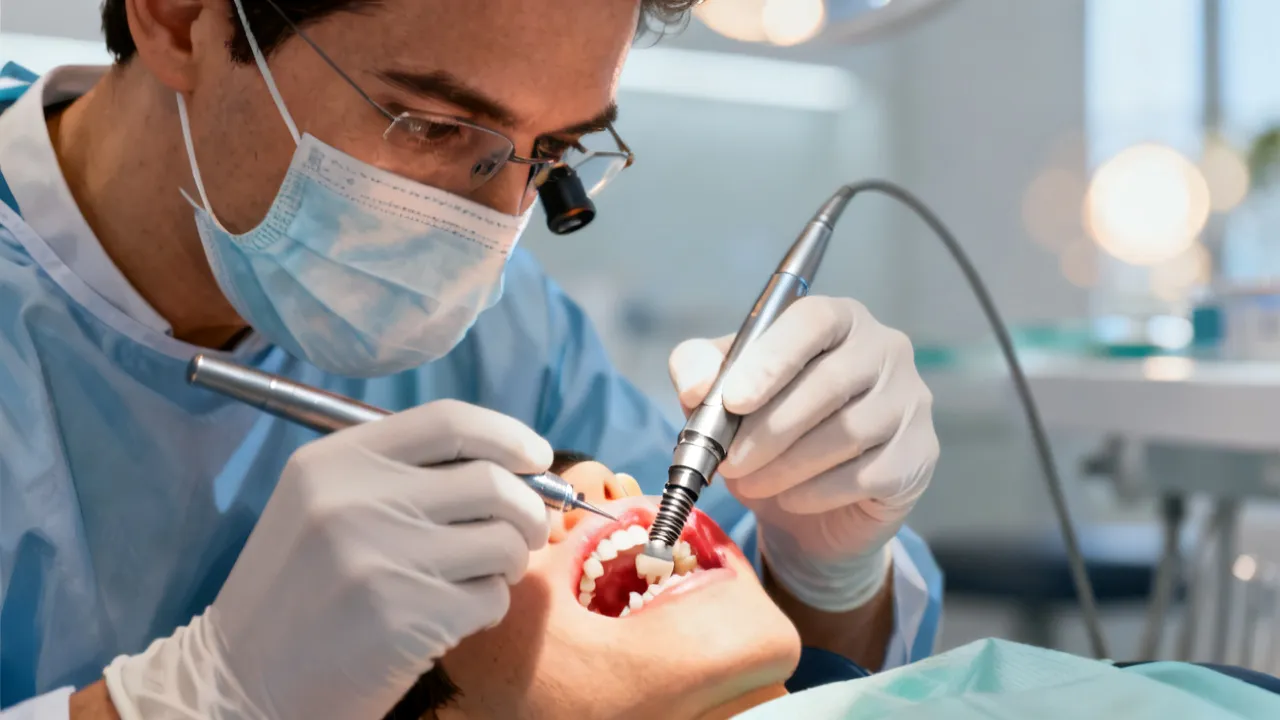
An apicoectomy is a minor surgical procedure performed near the apex, or tip, of a tooth root. During treatment, the dentist or endodontist accesses the affected area through the gum, removes inflamed tissue and a small portion of the root tip, and seals the end of the root canal. The purpose is to eliminate a persistent source of infection while retaining the natural tooth.
The procedure may be considered when a previous root canal has not healed, when a root canal cannot be safely repeated, or when a fracture, calcification, separated instrument, or anatomical obstacle prevents conventional retreatment. A clinical examination and appropriate imaging are necessary before the procedure is recommended.
Apical surgery is not automatically appropriate for every painful tooth. Pain may arise from a crack, periodontal disease, an occlusal problem, referred pain, or another dental condition. An endodontist may use periapical radiographs and, when justified, cone-beam computed tomography to assess the root, surrounding bone, and adjacent structures.
During the procedure, local anesthesia is normally used to numb the treatment area. The clinician makes a small incision in the gum and gently moves the tissue aside to reach the bone over the root tip. A small opening may be created in the bone, allowing the infected tissue and root end to be removed. The clinician then places a biocompatible filling material at the end of the root canal and closes the surgical site with sutures.
The exact sequence varies according to the tooth, the existing restoration, the location of the lesion, and the clinician’s technique. Front teeth are often more accessible than posterior teeth, while molars can be more complicated because of their position, number of roots, proximity to nerves or sinuses, and limited visibility.
When Is Apicoectomy Considered?
An apicoectomy may be discussed after a root canal when inflammation or infection remains around the root tip. It may also be considered when a previous root canal appears technically adequate but the surrounding lesion does not heal. In other situations, the root canal filling may need to be retained because removing a post, crown, or separated instrument could damage the tooth.
Common situations include:
- Persistent infection or a cyst-like lesion near the root apex.
- Continued drainage, tenderness, or swelling after root canal treatment.
- Blocked or calcified canals that cannot be reached through the crown.
- A separated instrument or post that cannot be removed predictably.
- An anatomical variation that makes conventional retreatment unsuitable.
- A root perforation or localized defect that can be managed surgically.
- A need to obtain tissue for laboratory examination when the diagnosis is uncertain.
Before recommending surgery, the clinician usually considers whether the tooth is restorable, whether it has adequate periodontal support, and whether there is evidence of a vertical root fracture. A tooth that cannot support a durable crown or filling may have a poor prognosis even if the infection at the root tip is removed.
In some cases, nonsurgical retreatment is preferred because it allows the clinician to disinfect the entire root canal system from the crown. In other cases, apical surgery is more conservative because it avoids removing a well-functioning crown or a difficult post. The choice should be based on the cause of treatment failure rather than on price alone.
What Determines 치근단 절제술 비용?
Because prices vary substantially by region and clinical circumstance, a single number would be misleading. The following factors commonly influence an apicoectomy estimate:
- Diagnostic complexity: A straightforward front-tooth case may require less time than treatment near a molar or an anatomically difficult root.
- Imaging: Two-dimensional radiographs may be sufficient in some cases, while three-dimensional imaging may be recommended for complex anatomy.
- Number of roots: Molars can have multiple roots and canals, increasing the technical demands of treatment.
- Previous treatment: A previously treated tooth may contain posts, crowns, calcified canals, or other factors that affect planning.
- Clinician qualification: Fees can differ between a general dentist, an endodontist, and a specialist working in a surgical referral setting.
- Anesthesia and facility charges: Local anesthesia is commonly used, but additional sedation or facility services may change the estimate.
- Restoration: The tooth may require a filling, new crown, or other restorative work after healing.
- Follow-up care: Postoperative review, suture removal, medication, and additional imaging may be billed separately.
- Geographic market: Urban clinics, regional hospitals, and dental practices in different countries use different fee structures.
- Coverage rules: Dental insurance may classify surgical endodontic treatment differently from restorative or implant treatment.
Patients should ask whether the estimate is for the surgical portion only or for the complete episode of care. A root-end procedure may preserve the tooth, but the tooth still needs an adequate coronal seal and sufficient structural support. If the existing crown or filling is defective, restorative treatment may be necessary after the surgical phase.
The tooth’s position can affect both surgical access and the amount of clinical time required. An anterior tooth may be relatively easy to access through the front of the jaw, whereas a posterior tooth may require more careful retraction of the cheek, specialized instruments, or a more complex surgical approach. A lesion close to a major nerve, sinus, or neighboring root may require additional imaging and planning.
The size of the lesion can also influence the estimate. A small localized lesion may be handled during a routine surgical appointment, while a larger lesion may require more extensive removal, tissue submission for analysis, or a longer follow-up schedule. The clinician should explain whether laboratory pathology is included and whether it is medically or diagnostically necessary.
Apicoectomy Versus Root Canal Retreatment
Patients sometimes receive estimates for both root canal retreatment and apicoectomy. These are not interchangeable procedures. Root canal retreatment involves reopening the tooth from the crown, removing existing filling material, disinfecting the canals, and placing a new root canal filling. An apicoectomy approaches the root tip surgically and seals the end of the canal.
Retreatment may be preferred when the original root canal has missed a canal, contains inadequate filling material, or has been reinfected because of leakage from a defective crown or filling. Apical surgery may be preferable when the canal cannot be reached without damaging the tooth or when the existing restoration is difficult to remove.
The total cost of retreatment may include removal and replacement of a crown, a temporary restoration, and later placement of a new crown. The total cost of apicoectomy may include imaging, surgery, medication, sutures, pathology, and restoration. Comparing only the endodontic procedure fee can therefore produce an inaccurate financial conclusion.
A specialist can explain the expected success rate, risks, and alternatives for the individual tooth. Patients should ask what would happen if the selected procedure does not resolve the infection and whether extraction and replacement would still be possible later.
Apicoectomy Versus Dental Implant Treatment
| Aspect | Apicoectomy | Dental implant |
|---|---|---|
| Primary purpose | Treat persistent disease at the root tip while retaining a natural tooth. | Replace a missing tooth with an implant-supported restoration. |
| Typical treatment setting | Endodontic or oral surgical care. | Implant surgery followed by restorative dentistry. |
| Main cost components | Diagnosis, imaging, surgery, medication, restoration, and follow-up. | Planning, implant fixture, surgery, abutment, crown, imaging, grafting if needed, and maintenance. |
| Clinical objective | Preserve a natural tooth when it remains restorable and prognosis is acceptable. | Replace a tooth that is absent or cannot be predictably retained. |
| Typical treatment sequence | Surgical access, removal of diseased tissue, root-end sealing, healing, and restoration review. | Extraction if required, healing or grafting, implant placement, integration, abutment, crown, and maintenance. |
These procedures should not be selected solely by comparing advertised prices. The correct option depends on periodontal support, remaining tooth structure, root anatomy, infection status, bite forces, general health, and the long-term prognosis. A second opinion from an appropriately trained clinician can be useful when extraction and implant placement are being considered after failed root canal treatment.
A natural tooth has a periodontal ligament that provides sensory feedback when biting. An implant does not have the same ligament, although it can provide strong and functional support. This biological difference is one reason clinicians often consider preserving a restorable natural tooth when the prognosis is reasonable. At the same time, an implant may be the more predictable option when the tooth has a vertical fracture, severe structural damage, or inadequate supporting bone.
How Dental Implant Pricing Is Usually Structured
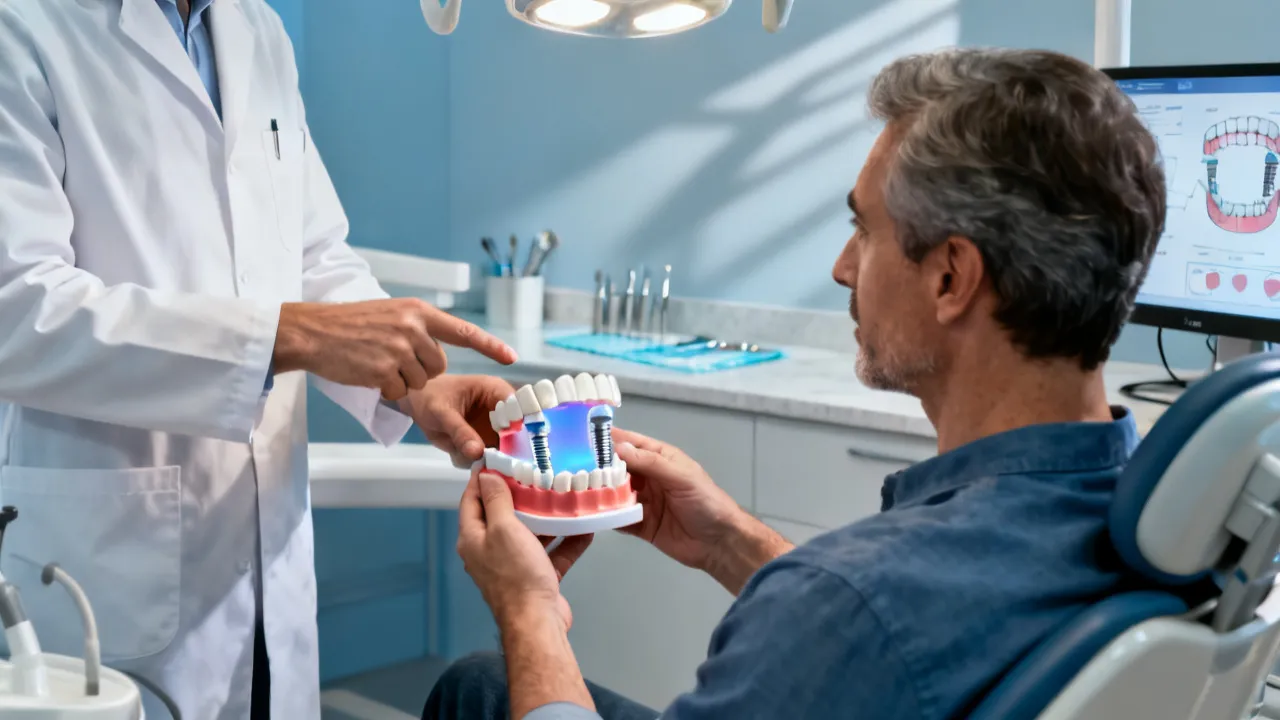
Dental implant advertising sometimes presents one figure that covers only the implant fixture or surgical placement. Patients should distinguish between the implant body, the abutment that connects the implant to the restoration, and the visible crown. A complete single-tooth implant treatment often involves several stages:
- Consultation and diagnosis: The clinician evaluates oral health, medical history, bite, gum condition, bone volume, and the tooth being replaced.
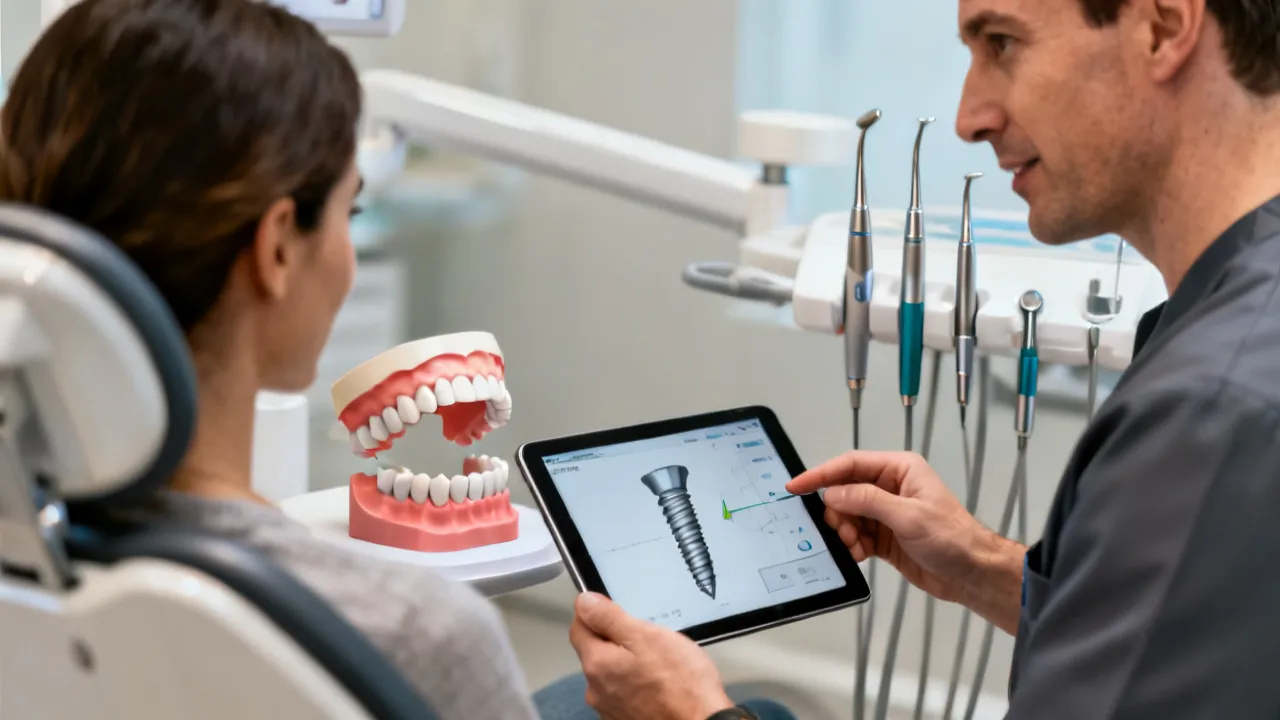
- Imaging and digital planning: Radiographs or three-dimensional scans may be used to assess anatomy and plan implant position.
- Extraction, if required: A damaged tooth may need removal before or during implant planning.
- Bone preservation or grafting: Additional procedures may be recommended when the available bone is insufficient or has resorbed.
- Implant placement: The titanium or other approved implant fixture is placed in the jawbone.
- Healing and review: The implant is monitored while the surrounding bone heals and stabilizes.
- Abutment placement: The connector is attached when the implant is ready to support a restoration.
- Crown fabrication and fitting: A dental laboratory creates the visible tooth, which is then adjusted for appearance and function.
- Maintenance: Periodic examinations and professional hygiene support long-term oral health.
A lower quotation may exclude one or more of these stages. Before booking treatment, ask for a written statement showing which services are included, which are optional, and which could be added if the clinical findings differ from the initial examination.
Implant treatment may be completed in one surgical phase or divided into several appointments. Immediate placement after extraction is possible in selected cases, but it is not appropriate for every patient. Infection, bone defects, gum thickness, primary stability, and cosmetic demands all affect whether immediate or delayed placement is advisable.
The final crown can also influence cost. Options may include different ceramic systems, porcelain fused to metal, zirconia, or other materials. The dentist should explain the functional and cosmetic differences, how the crown will be retained, and what type of repair is possible if the crown chips or loosens.
Reference Price Ranges for One Dental Implant
The figures below are the supplied reference ranges for an individual dental implant. They should not be confused with the cost of an apicoectomy, and they may refer to different treatment components depending on local quoting practices. Currency values are shown in the local currency provided.
| Country | Currency | Reference price range for one dental implant |
|---|---|---|
| United States | USD | $3,000–$6,000 |
| United Kingdom | GBP | £2,000–£2,500 |
| Australia | AUD | AU$3,500–AU$6,500 |
| Canada | CAD | CA$3,000–CA$5,500 |
| Spain | EUR | €1,500–€2,500 |
| Chile | CLP | CLP$800,000–CLP$1,500,000 |
| Mexico | MXN | $15,000–$25,000 |
| Colombia | COP | $2,000,000–$4,000,000 |
| Peru | PEN | S/ 3,000–S/ 6,000 |
| Argentina | ARS | $80,000–$150,000 |
| Brazil | BRL | R$3,000–R$8,000 |
| Portugal | EUR | €1,000–€2,000 |
| Germany | EUR | €2,000–€3,500 |
| France | EUR | €1,500–€2,500 |
| Italy | EUR | €1,500–€3,000 |
| Japan | JPY | ¥300,000–¥700,000 |
These ranges do not establish a recommended fee, and direct currency conversion can create a misleading comparison because wages, laboratory costs, regulation, rent, materials, taxes, and insurance systems differ between markets. A patient should compare equivalent treatment packages in the same currency and confirm the exchange rate used by the clinic.
Price ranges can also become outdated as exchange rates and material costs change. Before using an online figure for budgeting, ask when the information was published and whether the clinic has confirmed the current fee. An estimate based on an old price page may not include newer imaging, laboratory, or regulatory requirements.
How to Obtain Dental Implants at Lower Cost in English-Speaking Countries
Lowering the total cost should begin with treatment planning rather than selecting a clinic based on a headline price. The following process can help patients in the United States, the United Kingdom, Australia, and Canada make a more controlled comparison.
- Obtain a complete diagnosis first. Ask for an examination, periodontal assessment, and appropriate imaging. Treating active gum disease or other oral infections may improve the predictability of later implant care.
- Request two or three itemized estimates. Compare the same components: consultation, imaging, extraction, grafting, implant placement, abutment, crown, laboratory work, and follow-up.
- Check dental insurance and benefit limits. Some plans contribute toward the crown or extraction but exclude the implant surgery. Confirm waiting periods, annual limits, exclusions, and preauthorization requirements.
- Ask about accredited training and case experience. A clinician’s professional registration, continuing education, and experience with the relevant anatomy are more meaningful than promotional language.
- Consider a dental school or teaching clinic. Supervised teaching environments may use different fee schedules, although appointments can take longer and eligibility may be limited.
- Review financing carefully. Monthly payment plans can spread expenses, but interest, administration charges, cancellation terms, and deferred-payment conditions should be read in full.
- Ask whether a natural tooth can be retained. When clinically appropriate, an endodontic assessment may determine whether root canal retreatment or apical surgery could preserve the tooth instead of initiating extraction and implant treatment.
- Protect the result after treatment. Smoking, inadequate plaque control, untreated periodontal disease, and irregular maintenance can increase the risk of complications and additional expenditure.
In the United States, patients may compare private practices, specialist endodontic offices, dental schools, and insurance network participation. In the United Kingdom, they may need to distinguish between NHS eligibility and private implant services, since implant access and clinical indications are not identical. In Australia and Canada, provincial or state systems and private insurance policies may affect the contribution available for specific components. Local regulations and benefit documents should be checked directly.
Patients should also ask whether a consultation fee is credited toward treatment. Some clinics apply the examination or scan fee to the final procedure, while others charge it separately. This distinction does not necessarily indicate quality, but it should be included when calculating the total cost of obtaining multiple opinions.
How to Obtain Dental Implants at Lower Cost in Spanish-Speaking Countries
Spain, Mexico, Chile, Colombia, Peru, and Argentina have different health systems, currencies, professional regulations, and clinic structures. Patients seeking lower-cost treatment should not assume that a lower local price means an identical treatment package. The following steps support a more reliable comparison:
- Verify the provider’s credentials. Confirm the dentist’s registration with the relevant national or regional authority and identify whether the clinician has training in implant dentistry, oral surgery, prosthodontics, or periodontics.
- Request written treatment information in a language you understand. The plan should explain diagnosis, materials, estimated timing, risks, alternatives, and the services included in the quoted price.
- Separate the implant from the prosthetic tooth. Ask whether the price covers the implant fixture, abutment, crown, temporary tooth, laboratory fees, and adjustments.
- Compare local follow-up access. If the patient lives elsewhere, the cost of return visits, communication, and management of complications may outweigh an initially lower quotation.
- Check material and manufacturer information. Ask for the implant system, model, and documentation. Replacement components can be difficult to obtain if the manufacturer or model is not clearly recorded.
- Evaluate treatment tourism cautiously. Include flights, accommodation, time away from work, travel insurance, and the possibility of an additional visit in the total calculation.
- Confirm payment and complaint procedures. Patients should know who is responsible if the restoration fractures, the implant does not integrate, or follow-up is required after returning home.
- Use independent reviews carefully. Patient testimonials can provide context, but they do not replace clinical records, professional registration, or a second opinion.
In Spain, patients may compare private clinics with the services available through their local dental arrangements. In Mexico and parts of Latin America, dental tourism is promoted in several urban and border regions, but travel distance alone should not determine treatment selection. In Chile, Colombia, Peru, and Argentina, currency fluctuations can alter the practical cost of care, so the quotation date and payment currency should be recorded.
Language is an additional consideration. Patients should be able to understand the consent form, medication instructions, warranty conditions, and emergency procedures. If interpretation is needed, it is preferable to arrange a qualified interpreter rather than relying entirely on informal translation by a travel companion.
How to Obtain Dental Implants at Lower Cost in Portuguese-Speaking Countries
Brazil and Portugal are the principal Portuguese-speaking markets listed in the supplied price information. Patients can begin by checking the dentist’s registration with the appropriate professional body, then comparing treatment plans from clinics with established diagnostic and restorative capabilities.
- Ask whether the implant is placed by the same professional who will deliver the crown or whether coordination between a surgeon and prosthodontist is required.
- Confirm whether the quotation includes a temporary restoration during the healing period.
- Request the name of the implant manufacturer and retain the product documentation.
- Compare laboratory materials and warranty conditions rather than comparing only the surgical fee.
- Clarify whether imaging, extraction, grafting, medication, and postoperative reviews are included.
- For cross-border treatment, arrange a follow-up provider near the patient’s home before surgery.
Brazilian clinics may present treatment information in Portuguese and may offer several restorative options. Portugal’s use of the euro can simplify price comparison for some European patients, but travel and aftercare remain important considerations. In both markets, patients should receive a formal treatment plan and consent information before proceeding.
Patients should ask whether a treatment package uses a standard implant or a mini implant. Mini implants can have specific indications and may not be interchangeable with conventional implants for every missing tooth. The clinical rationale, expected loading, maintenance, and possibility of future replacement should be explained before accepting a lower-priced option.
How to Compare Dental Implant Information Websites
The following resources illustrate different types of information sources. They are not equivalent: some are clinic websites, some are dental tourism or treatment-information services, and one is associated with dental plan information. Readers should confirm current content, provider credentials, local regulations, and the scope of any advertised service.
| Website or resource | Primary focus and useful comparison feature |
|---|---|
| Dental Views | Discusses lower-cost dental implants, treatment types, benefits, pricing considerations, and common questions. |
| Atlantic Dental Group | Clinic-based information covering general dentistry, implants, orthodontics, cleaning, and emergency services. |
| DentaVacation | Dental tourism information, international treatment comparisons, travel planning, and potential cost considerations. |
| ADHP / Rockville Dental Arts | Information associated with dental plans and a clinic resource, useful for reviewing coverage and treatment questions. |
| Rockville Dental Arts Español | Spanish-language clinic information covering implants, whitening, cleaning, orthodontics, and emergency dentistry. |
| Union City Mini Dental Implants Español | Spanish-language information focused on mini dental implant services and related treatment options. |
| Cigna Dental Implant Guide | Spanish-language educational material explaining implant treatment and insurance-related considerations. |
| Rubi Odonto | Brazilian clinic information covering orthodontics, whitening, implants, and general dental care. |
| Odontologia Velasco | Brazilian clinic information covering implants, prostheses, aesthetic dentistry, and technology-supported care. |
| DentalVidas | Portuguese-language dental plan information, including plan options, provider networks, and emergency-service information. |
source: [www.dentalviews.com/low-cost-dental-implants/](https://dentalviews.com/low-cost-dental-implants/)
source: [www.atlanticdentalgrp.com/](https://www.atlanticdentalgrp.com/)
source: [www.dentavacation.com/](https://www.dentavacation.com/)
source: [rockvilledentalarts.com/es/](https://rockvilledentalarts.com/es/)
source: [unioncityminidentalimplants.com/es/](https://unioncityminidentalimplants.com/es/)
source: [www.cigna.com/es-us/knowledge-center/guide-to-dental-implants](https://www.cigna.com/es-us/knowledge-center/guide-to-dental-implants)
source: [www.rubiodonto.com.br/](https://www.rubiodonto.com.br/)
source: [odontologiavelasco.com.br/](https://odontologiavelasco.com.br/)
source: [dentalvidas.com.br/](https://dentalvidas.com.br/)
When reviewing a website, distinguish educational information from a direct treatment offer. Educational pages may describe typical procedures but cannot determine whether an individual tooth is suitable for apicoectomy, retreatment, extraction, or implantation. Promotional pages may also feature starting prices that apply only to uncomplicated cases.
Questions to Ask Before Accepting a Quote
A useful consultation is a two-way assessment. Patients should ask clear questions and record the answers in writing:
- Is the recommended treatment an apicoectomy, root canal retreatment, extraction, implant placement, or a combination of procedures?
- What evidence supports the diagnosis?
- Can the natural tooth be predictably retained?
- What does the quoted price include and exclude?
- Will another clinician perform the surgery or the crown?
- Which imaging method is required, and why?
- What implant system and restorative materials will be used?
- How many appointments are expected?
- What are the common risks, alternatives, and likely recovery requirements?
- What happens if healing is delayed or the implant fails to integrate?
- Who provides follow-up care if treatment is performed abroad?
- Are taxes, laboratory charges, medication, sedation, and emergency visits included?
An estimate that answers these questions is more useful than a short promotional statement. Written documentation also helps patients compare like with like and identify missing services before making a decision.
It is also useful to ask about the expected lifespan of the restoration and the circumstances that could require replacement. No dental treatment should be described as permanent without qualification. Crowns can wear or fracture, gums can recede, and oral disease can affect both natural teeth and implants. Understanding these possibilities helps patients plan for future maintenance expenses.
Insurance, Payment Plans, and Financial Screening
Insurance treatment varies by policy and jurisdiction. Some plans classify implants as major restorative care, while others exclude the implant fixture but contribute toward related services. Apicoectomy coverage may also depend on whether the policy includes surgical endodontics, specialist care, imaging, and restorative treatment.
Patients should request a benefits statement or predetermination when available. This document may indicate the insurer’s estimated contribution, but it is not always a guarantee of payment. Confirm deductibles, coinsurance, annual maximums, waiting periods, missing-tooth clauses, exclusions for pre-existing conditions, and the use of network providers.
Payment plans require similar scrutiny. A clinic may offer staged payments that correspond to diagnosis, surgery, healing, and restoration. This can make budgeting easier, but patients should review interest, credit checks, refunds, cancellation rules, and what happens if treatment changes after imaging.
For people with limited budgets, the safer approach is usually to prioritize diagnosis, infection control, periodontal health, and a durable treatment plan. Delaying necessary care can allow infection, bone loss, or structural damage to progress. However, urgency should not be used to pressure a patient into accepting an unclear estimate.
Some patients use health savings accounts, flexible spending accounts, employer benefits, or local assistance programs where available. Eligibility and tax treatment differ, so patients should confirm the rules with the relevant administrator. Financing should support an appropriate treatment plan rather than encourage unnecessary procedures or a treatment level that cannot be maintained.
Clinical Conditions That Affect Eligibility and Cost
Implant treatment may require additional planning when a patient has uncontrolled diabetes, active periodontal disease, heavy smoking, inadequate bone volume, limited mouth opening, bruxism, certain medications, or medical conditions affecting healing. These factors do not automatically prevent treatment, but they may alter timing, risk assessment, and cost.
For apical surgery, the condition of the natural tooth is central. A tooth with a vertical root fracture, extensive structural loss, severe periodontal support loss, or an unfavorable restorative outlook may not be a suitable candidate for apicoectomy. Conversely, a tooth with a persistent lesion and a restorable crown may be considered for root-end surgery after specialist assessment.
Medical history should be disclosed accurately. Patients should tell the dentist about anticoagulants, bone-modifying medications, allergies, immune conditions, pregnancy, prior radiation therapy, and other relevant issues. Medication changes should never be made without the prescribing clinician’s guidance.
Smoking deserves particular attention because it can affect wound healing and periodontal stability. Patients should ask how smoking may change the expected prognosis and whether the clinician recommends stopping before or after treatment. Similarly, clenching or grinding may increase stress on crowns, bridges, natural teeth, and implants, making a night guard or bite assessment relevant to the overall plan.
Dental Tourism: Potential Savings and Practical Risks
International treatment can appear less expensive because professional fees and operating costs differ between countries. However, a responsible calculation includes transportation, lodging, food, time away from work, translation, travel insurance, currency conversion, and follow-up visits. If an implant requires a second trip, the initial price comparison may change substantially.
Patients should also consider continuity of care. Implant treatment frequently involves staged appointments and healing reviews. A clinic that is several hours away by air may be difficult to access when swelling, pain, crown loosening, or bite problems occur. Before traveling, ask a local dentist whether they are willing to provide follow-up care and what records they would require.
Good preparation includes obtaining copies of radiographs, the treatment plan, implant identification labels, operative notes, crown information, prescriptions, and invoices. Patients should understand how the clinic manages complications and whether any warranty is limited by the requirement to return to the original provider.
Travel should not replace clinical due diligence. A modern facility, attractive website, or large number of testimonials does not establish that a particular treatment is appropriate for an individual patient.
Patients should be cautious of treatment schedules that promise completion in an unusually short period without explaining healing requirements. Some cases can use immediate provisionalization, but biological integration and soft-tissue healing still require appropriate monitoring. A travel itinerary should allow enough time for unexpected changes, swelling, additional imaging, or a revised treatment plan.
How to Interpret Online Dental Prices
Online prices are often presented as a range because the final fee cannot be determined without an examination. A promotional figure may represent a surgical implant only, while another clinic may quote a complete implant-supported crown. These figures are not directly comparable.
When reading a price page, look for the following details:
- Whether the amount is per implant, per arch, or for a complete mouth.
- Whether the visible crown is included.
- Whether the quotation includes an abutment and temporary restoration.
- Whether bone grafting, sinus augmentation, or extraction is excluded.
- Whether the price applies only to selected implant brands or appointment dates.
- Whether taxes, laboratory fees, medication, and imaging are separate.
- Whether the content is educational, promotional, insurance-related, or a direct clinical offer.
- When the information was published or last updated.
The same principle applies to 치근단 절제술 비용. A page may describe a typical surgical fee without including diagnostic imaging, specialist consultation, restoration, or postoperative review. Patients should ask the clinic to define the complete treatment episode before comparing estimates.
Online reviews can be useful for evaluating communication, scheduling, and general patient experience, but they should not be treated as proof of clinical success. A patient’s anatomy, health, diagnosis, and treatment plan may be very different from those described in a review. Professional credentials, informed consent, diagnostic evidence, and transparent pricing are more important indicators.
Aftercare and Long-Term Value
Cost management does not end when surgery is completed. For an apicoectomy, patients generally receive postoperative instructions about oral hygiene, swelling, diet, medication, and review appointments. Persistent pain, increasing swelling, fever, drainage, difficulty swallowing, or other concerning symptoms require prompt professional attention.
For an implant, long-term maintenance commonly includes daily plaque control, professional examinations, and periodic assessment of the restoration and surrounding tissues. The implant itself is not susceptible to tooth decay in the same way as a natural tooth, but the surrounding gum and bone can develop disease. The crown may also wear, loosen, chip, or require adjustment.
A durable outcome depends on appropriate case selection, precise planning, good surgical and restorative execution, and patient maintenance. Choosing a clinic solely because it quotes the lowest initial fee may create avoidable financial and clinical risks if essential stages are omitted.
Patients should follow instructions regarding brushing, flossing or interdental cleaning, diet, and temporary restrictions. They should attend recommended reviews even when symptoms improve. Early detection of a loose restoration, inflammation, or bite imbalance may allow a smaller and less expensive correction.
Patients should also retain dental records. Keeping the implant brand, model, size, crown material, radiographs, operative notes, and invoices can make future maintenance easier, particularly if the patient changes dentists or moves to another country. The same principle applies to apicoectomy records, including the treated tooth, surgical findings, root-end filling material, and pathology report if tissue was submitted.
Warning Signs of an Unclear or Incomplete Estimate
A patient may wish to seek clarification when a clinic provides only a single price without identifying the procedure or the included components. Other warning signs include pressure to pay the full amount immediately, refusal to provide diagnostic records, unwillingness to explain alternatives, or a guarantee that ignores individual risk factors.
An estimate may need additional review when it:
- Uses the word “implant” without stating whether the crown and abutment are included.
- Does not identify who will perform surgery and restorative treatment.
- Offers a fixed price before any examination or imaging.
- Does not describe possible grafting, extraction, or temporary restoration costs.
- Provides no information about follow-up or management of complications.
- Does not state the currency, tax status, validity period, or payment schedule.
- Suggests extraction is the only option without discussing whether the tooth is restorable.
These signs do not automatically prove that a clinic is unsuitable, but they indicate that the patient should ask more questions before consenting. A transparent provider should be willing to explain the diagnosis, alternatives, uncertainties, and financial structure.
Frequently Asked Questions
Is 치근단 절제술 비용 the same as dental implant cost?
No. 치근단 절제술 비용 refers to the cost of apicoectomy or root-end surgery, which aims to preserve a natural tooth. Dental implant cost relates to replacing a missing tooth. The procedures have different indications, stages, materials, and fee structures.
Can apicoectomy prevent the need for an implant?
It may do so when the tooth is restorable and the infection can be treated predictably. It cannot resolve every type of dental problem. A specialist must evaluate fractures, periodontal support, remaining tooth structure, and the quality of the existing root canal treatment.
Why do implant prices differ so much between countries?
Differences reflect local labor and facility costs, professional regulation, laboratory fees, taxes, material choices, currency conditions, insurance systems, and the services included in each quotation. Price ranges should be compared only after confirming that the treatment components are equivalent.
Does a low implant quote include the crown?
Not always. Some advertisements refer only to implant placement. Ask specifically whether the implant fixture, abutment, temporary restoration, final crown, laboratory work, imaging, extraction, grafting, and follow-up are included.
Are dental implants covered by insurance?
Coverage depends on the policy and jurisdiction. Some plans contribute toward portions of the treatment, while others exclude implants or apply waiting periods and annual limits. Obtain written benefit information before relying on an insurance estimate.
Is treatment abroad always less expensive overall?
No. Travel, lodging, time away from work, exchange rates, additional appointments, and follow-up care can increase the total. The clinical and financial risks of managing complications from a distance should be included in the decision.
How can a patient compare two dental clinics fairly?
Ask both clinics for itemized plans based on the same diagnosis and treatment objective. Compare clinician credentials, implant system, restoration materials, imaging, included appointments, aftercare, complication policies, and total expected cost—not only the advertised starting price.
What should a patient do if an online price seems unusually low?
Ask which components are excluded and whether the quotation is conditional on an examination, a particular implant brand, or a limited appointment period. A low starting figure may not represent the complete treatment plan.
How long does an apicoectomy appointment take?
The duration depends on the tooth, number of roots, lesion, and surgical complexity. A simple case may be completed relatively quickly, while a molar or anatomically difficult case may require more time. The clinic should provide an estimated appointment length and explain whether further restorative treatment will be needed.
Will an apicoectomy hurt?
Local anesthesia is used during the procedure, so patients generally should not feel sharp surgical pain. Tenderness, swelling, or bruising can occur afterward. The clinician will provide instructions about pain control and when to report symptoms that are more severe or persistent than expected.
Can an implant be placed immediately after extraction?
Immediate placement is possible in selected situations, but it depends on infection control, bone shape, primary stability, gum condition, and the location of the tooth. It is not automatically safer, faster, or less expensive than delayed placement.
Conclusion
Understanding 치근단 절제술 비용 requires more than locating a single advertised figure. The central question is whether the recommended treatment is apical surgery to preserve a natural tooth or implant therapy to replace a missing one. Once the diagnosis is established, patients can compare itemized estimates, insurance terms, clinician qualifications, materials, travel requirements, and aftercare.
The supplied implant ranges offer a starting framework across multiple language markets, but they are not personal quotations. A qualified dentist or endodontist should confirm the diagnosis, explain alternatives, and provide a written plan before treatment begins. Careful comparison can reduce unexpected expenses while keeping clinical suitability at the center of the decision.
The best financial decision is usually the one that balances immediate affordability with predictable treatment, accessible follow-up, and long-term oral function. Patients should be cautious about comparing an apicoectomy fee with only the surgical portion of an implant, or comparing a complete implant package with an endodontic fee that excludes restoration. Like-for-like comparison, independent clinical advice, and a clear written plan provide the strongest basis for deciding.
Disclaimer
1. The information above comes from online resources, and the data is as of October 2023.
2. Dental implant prices are for reference only and may vary by region, clinic, and doctor. Apicoectomy and implant treatment decisions should be based on an examination and individualized advice from a qualified dental professional.
3. Price ranges are not guarantees of treatment quality, clinical outcome, or insurance reimbursement. Patients should confirm current fees, credentials, materials, consent information, and follow-up arrangements directly with the treating provider.