Dental Insurance and Implant Compensation Guide
This guide explains how dental insurance may contribute to implant treatment costs and how patients can evaluate dental implant options in different language markets. The Korean term “치아보험 금전적 보상” refers to the financial compensation or reimbursement available through dental insurance after eligible treatment. Coverage depends on policy wording, waiting periods, exclusions, annual limits, clinical documentation, and local pricing.
What “치아보험 금전적 보상” Means in Practice
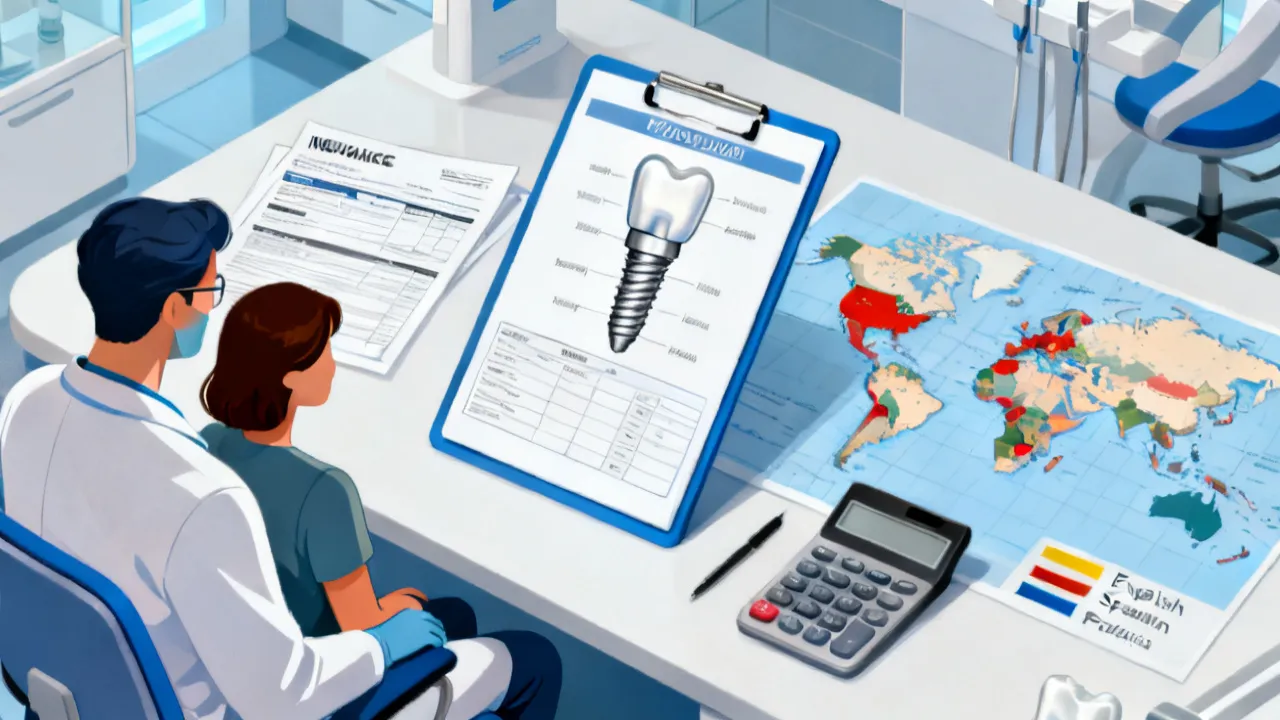
The Korean expression 치아보험 금전적 보상 can be translated as “financial compensation from dental insurance” or “dental insurance reimbursement.” In the context of dental implants, it usually refers to the amount an insurer pays toward an eligible procedure after the policyholder meets the requirements of the plan. It does not automatically mean that the entire implant bill will be paid. The amount may be calculated as a percentage of an allowed fee, a fixed benefit, or a limited contribution toward a covered alternative.
Dental implant treatment often involves several separate services: examination, diagnostic imaging, extraction, bone grafting, implant placement, abutment placement, and crown fabrication. An insurance policy may classify each service differently. For example, a policy might cover part of an extraction while limiting or excluding the implant fixture, abutment, or crown. Another policy may cover the crown under major restorative benefits but not the surgical placement of the implant. Patients therefore need to assess the complete treatment sequence rather than asking only whether “implants are covered.”
From a dental benefits analyst’s perspective, the most important question is not simply whether a plan includes implants. The practical question is: How much will the insurer pay for each covered component, under what conditions, and when? A written pre-treatment estimate is usually more useful than a general statement from a clinic or an insurance advertisement. The estimate should be read together with the policy booklet, schedule of benefits, exclusions, and claim instructions.
The phrase “financial compensation” can also create confusion because it may refer to different types of payment. An insurer may pay the dental office directly, reimburse the patient after payment, or apply an approved benefit as a credit against the clinic invoice. Some plans use fixed amounts, while others use percentages. A patient who hears that a plan provides “80 percent coverage” should ask whether that percentage applies to the clinic’s actual charge or only to the insurer’s recognized and usually lower allowed fee.
Key Findings Before Choosing Treatment
- Check the policy definition: Implant coverage may be listed under major restorative services, prosthodontics, oral surgery, or an exclusion section.
- Separate the treatment stages: Implant surgery, the abutment, and the final crown may have different benefits.
- Review annual and lifetime limits: A plan may provide a percentage of eligible costs while restricting the total amount payable.
- Confirm waiting periods: Newly purchased policies may delay benefits for major dental services.
- Ask about missing-tooth clauses: Some policies exclude teeth lost before enrollment or impose special conditions.
- Obtain a written estimate: A treatment plan, procedure codes, itemized fees, and insurer response can reduce uncertainty.
- Compare total cost, not headline price: A lower clinic quote may exclude imaging, grafting, laboratory work, follow-up visits, or restoration.
- Confirm whether the plan is insurance or a discount program: A reduced provider fee is not the same as reimbursement or claim protection.
- Review the timing of treatment: The policy’s enrollment date, service date, benefit year, and claim submission deadline may all affect payment.
- Plan for non-covered complications: Replacement treatment, infection management, and additional surgery may be treated separately from the original implant.
Insurance reimbursement should be viewed as one part of a broader financial plan. Patients may also compare clinic payment schedules, public dental programs where available, employer benefits, specialist referrals, and treatment timing. Decisions should remain clinically appropriate and should not be based only on the lowest advertised price. An implant that appears inexpensive at the beginning may become more costly if essential components or follow-up care have been omitted.
How Dental Implant Insurance Reimbursement Usually Works
1. Policy eligibility
The first step is confirming that the patient is insured on the date the service is performed. Some policies require continuous enrollment, while others restrict benefits during an initial waiting period. A policyholder should request the current benefit booklet and the schedule of benefits, rather than relying on a summary page alone. It is also important to determine whether the policy was active when the tooth was diagnosed as needing treatment, because some contracts distinguish between the date of diagnosis and the date of service.
Patients should verify the name of the insured person, the covered tooth or area, the policy effective date, and whether a change in employment or family status has affected eligibility. If coverage is provided through an employer, benefits may end on the last day of employment or after a stated grace period. A treatment plan extending over several months should be reviewed against the possibility of a change in employment, insurer, or policy level.
2. Clinical diagnosis and treatment planning
An implant should be recommended after an examination, review of medical history, and appropriate imaging. The dentist may assess bone volume, gum health, occlusion, smoking status, diabetes management, medication use, and the condition of adjacent teeth. These factors can affect both clinical suitability and insurance documentation.
The diagnosis should explain why the tooth cannot reasonably be restored or why extraction has been recommended. A complete plan may include a temporary restoration, a healing period, and a later prosthetic stage. If bone grafting or sinus augmentation is proposed, the dentist should explain whether the procedure is essential for implant placement, recommended as a precaution, or related to a particular implant design. This distinction is useful for clinical understanding and for insurance review.
3. Preauthorization or pre-treatment review
Some insurers allow or require a pre-treatment estimate. The dental office submits the proposed diagnosis, procedure codes, radiographs, and treatment fee. The insurer then explains how the policy would normally process the claim. This response is not always a final guarantee because benefits can change if the policy ends, the treatment differs, the annual maximum is used for another service, or the claim is later reviewed.
A pre-treatment estimate should identify the estimated insurer payment, estimated patient responsibility, deductible, coinsurance, and any amount that may be subject to an alternative benefit. Patients should ask how long the estimate remains valid and whether a new review is needed if treatment begins after a specified number of months. They should also ask whether the estimate covers only the planned procedure code or the entire series of related procedures.
4. Treatment and documentation
After the patient accepts the treatment plan, the clinic records the services performed. Clear invoices should identify the date, procedure, tooth number, provider, laboratory charges, and amount paid. For cross-border care, patients should also retain operative notes, implant system details, material descriptions, radiographs, translated records, and medication instructions when needed.
Patients should keep copies of consent forms, post-operative instructions, photographs when relevant, and receipts for deposits or installment payments. These documents may be needed if a claim is questioned, if a different dentist later provides maintenance, or if a complication occurs. Records should be stored securely because implant treatment may involve several clinicians over many years.
5. Claim submission
The patient or dental office submits the claim according to the insurer’s procedure. Some plans permit electronic submission, while others require forms and supporting records. The explanation of benefits should state the submitted charge, allowed amount, insurer payment, deductible, coinsurance, exclusions, and patient responsibility.
The claim should accurately describe the service that was performed. A clinic should not submit a code for a different procedure simply because it appears more likely to receive payment. Patients can request a copy of the claim form and should compare it with the invoice. If the claim contains an error, the office may be able to correct and resubmit it within the insurer’s deadline.
6. Appeal or review
If the claim is rejected or paid differently from the pre-treatment estimate, the patient can request the reason in writing. An appeal may require the dentist to provide additional radiographs, clinical notes, or evidence that the treatment met the policy definition. Appeal deadlines vary, so the patient should act promptly.
An effective appeal should identify the disputed service, explain why the patient believes it is eligible, refer to the relevant policy wording, and include supporting records. If the denial is based on missing information rather than a clear exclusion, the dental office may be able to provide the required documentation. If the policy explicitly excludes the service, an appeal may still clarify the calculation, but it may not change the contractual outcome.
Coverage Elements Patients Should Examine
| Policy element | Why it matters for implants |
|---|---|
| Deductible | The amount the policyholder pays before the insurer begins contributing to eligible services. |
| Coinsurance | The percentage of the insurer’s allowed amount paid by the plan and the remaining percentage paid by the patient. |
| Annual maximum | The maximum amount the insurer will pay during a benefit year; implant treatment can reach this limit quickly. |
| Lifetime maximum | A cumulative limit that may apply to certain major services or orthodontic benefits. |
| Waiting period | A period during which some major procedures are not eligible, even though premiums are being paid. |
| Missing-tooth rule | A clause that may restrict payment for a tooth lost before the policy began. |
| Replacement limitation | A rule that may require a bridge, denture, or existing restoration to remain in place for a stated period. |
| Network status | In-network providers may have contracted fees, while out-of-network treatment can produce a larger balance. |
| Alternative-benefit clause | The insurer may calculate payment using the cost of a less expensive covered alternative, such as a bridge or denture. |
| Frequency limitation | The plan may restrict how often a crown, denture, or replacement restoration is covered. |
| Pre-existing condition language | Some policies may restrict treatment related to a condition or missing tooth that existed before enrollment. |
| Coordination of benefits | Patients with more than one plan may need to follow rules that determine which insurer pays first. |
| Geographic limitation | Care outside a designated country, region, or provider network may be excluded or reimbursed at a different level. |
It is useful to distinguish between a policy limit and a clinic limit. The annual maximum is imposed by the insurer, while a clinic may have its own payment ceiling, installment rules, or warranty conditions. Neither one necessarily reflects the clinical lifetime of the implant. Patients should also remember that an implant is not immune to gum disease, mechanical wear, fracture, or changes in the surrounding teeth.
Why Implant Bills Are Difficult to Compare
“One implant” is not a universal billing unit. A clinic may advertise the implant fixture alone, while another clinic may quote a package that includes the abutment and crown. One patient may need a simple placement, whereas another may require extraction, periodontal treatment, or bone augmentation. The surgical appointment may also be performed by one provider and the restorative stage by another, producing separate invoices.
A professional comparison should identify at least the following items:
- Initial consultation and clinical examination
- Periapical radiographs or three-dimensional imaging
- Tooth extraction, if necessary
- Temporary tooth replacement
- Implant fixture and surgical placement
- Healing components and follow-up visits
- Bone grafting or sinus augmentation, if clinically required
- Abutment and connection components
- Final crown and laboratory work
- Occlusal adjustment and maintenance appointments
- Management of complications or replacement under the clinic’s policy
- Additional sedation or anesthesia, if selected or required
- Medication, transportation, and other practical expenses
Insurance may calculate reimbursement from an allowed fee rather than the clinic’s published price. If a clinic charges more than the insurer’s recognized fee, the difference may remain the patient’s responsibility. This is particularly important when using an out-of-network dentist or a clinic in another country.
Laboratory work is another source of variation. Two crowns may look similar in a basic advertisement but differ in ceramic type, framework, manufacturing method, warranty, and customization. The patient should ask whether the quoted restoration is provisional or final, whether the laboratory is located locally, and whether remake fees are included if the restoration does not fit properly.
Ways to Reduce Implant Costs Responsibly
Lowering the financial burden does not require choosing an unsuitable implant or postponing necessary care. A more reliable approach is to reduce avoidable administrative and treatment costs while preserving clinical quality. Cost reduction should not involve skipping diagnosis, using untraceable components, or accepting a treatment plan that the patient does not understand.
- Request two written treatment plans. Ask the dentist to distinguish medically necessary stages from optional cosmetic upgrades. Compare the same components across providers.
- Use a pre-treatment insurance estimate. Submit the proposed codes and itemized fees before surgery. This helps identify exclusions and benefit limits.
- Ask whether the provider is in network. Contracted fees may reduce the balance, although network rules differ by insurer and region.
- Address gum disease early. Periodontal inflammation can compromise implant outcomes and add treatment expense.
- Compare restoration materials carefully. The most expensive crown material is not automatically appropriate for every tooth or bite pattern.
- Consider staged treatment when clinically acceptable. Timing procedures across benefit years may help some patients use separate annual limits, but this must not delay urgent care or be used to manipulate claims.
- Ask about clinic payment arrangements. Structured installments may make the bill easier to manage, but patients should review interest, cancellation, and refund terms.
- Seek a specialist opinion for complex cases. A second opinion can prevent an inappropriate procedure, especially when bone grafting or full-mouth rehabilitation is proposed.
- Evaluate dental schools and teaching clinics. In some markets, supervised training clinics may offer lower professional fees. Patients should ask about waiting times, supervision, laboratory standards, and emergency arrangements.
- Compare local and cross-border treatment cautiously. Travel, accommodation, repeat visits, language support, and treatment of complications must be included in the total calculation.
- Maintain the implant after placement. Regular hygiene care, home cleaning, and professional reviews can help protect the investment, although no outcome is guaranteed.
- Ask about staged alternatives. In selected cases, a temporary removable restoration may provide function while the patient saves for a definitive restoration, but the dentist must determine whether this is clinically safe.
- Review existing benefits before buying new insurance. Employer plans, spouse coverage, union plans, or public assistance may already provide some applicable benefit.
Patients should be cautious about offers that omit the implant crown, use unclear product descriptions, pressure them to pay immediately, or promise a clinical result without examination. A transparent quote is generally more valuable than an unusually low headline figure. A legitimate provider should be willing to explain the treatment sequence, identify the clinician responsible for each stage, and provide written terms before accepting a substantial deposit.
Low-Cost Dental Implant Options in English-Speaking Markets
English-speaking markets include major differences in insurance design, public dental access, provider fees, and geographic travel distances. In the United States, employer-sponsored dental plans and individual plans may contain deductibles, annual maximums, waiting periods, and network rules. Patients often need to confirm whether implants are covered as a major service or whether the policy pays only toward an alternative restoration.
In the United Kingdom, patients may investigate private dental insurance, employer benefits, or National Health Service eligibility. NHS dental treatment is organized differently from private implant care, and access to implant treatment can depend on clinical indications and local commissioning arrangements. A patient should not assume that an NHS dental registration automatically means that a privately quoted implant will be reimbursed.
Australia and Canada also have regional and plan-specific differences. Private extras cover may include selected major dental services, but waiting periods and annual limits are common. Public programs may focus on groups with specific eligibility criteria rather than covering routine adult implant treatment. Patients should consult the relevant public health authority and insurer before planning surgery.
In these markets, patients should also distinguish between a dentist’s fee and the total amount that the patient must pay. A consultation with a general dentist may lead to referral to an oral surgeon, periodontist, prosthodontist, or dental laboratory. Each referral can add costs, but coordinated specialist care may be valuable in complex cases. The most affordable option is not necessarily the one with the fewest providers; it is often the option that minimizes avoidable revisions and travel.
Step-by-step approach in English-speaking countries
- Obtain a diagnosis from a registered dentist or oral health professional.
- Request an itemized estimate that separates surgery, abutment, crown, imaging, and grafting.
- Check the insurer’s policy booklet for implant, prosthodontic, missing-tooth, and alternative-benefit clauses.
- Ask whether a preauthorization or pre-treatment review is available.
- Confirm network status and the provider’s contracted fee, where applicable.
- Compare at least two clinically equivalent plans rather than comparing package names.
- Verify who will provide follow-up care if treatment is undertaken in a different city or country.
- Ask whether the quoted fee includes taxes, laboratory charges, sedation, and temporary replacement.
- Keep copies of all correspondence with the insurer and clinic.
Low-Cost Dental Implant Options in Spanish-Speaking Markets
Spanish-speaking markets include Spain and much of Latin America, but prices, currencies, public programs, and professional regulation vary considerably. In Spain, patients may compare private dental plans, clinic financing, and treatment through regional healthcare arrangements where applicable. Implant care is often provided in private practice, so the exact contract and clinical indication should be confirmed in writing.
In Mexico, Colombia, Chile, Peru, and Argentina, local clinics may publish implant package prices or offer staged payment arrangements. Patients should verify whether the quote includes the crown, laboratory fees, imaging, and follow-up. Currency fluctuations can also change the effective cost for international patients. A quote should state the currency, validity period, taxes, and any charges triggered by additional procedures.
Language accessibility can improve the quality of decision-making. Patients may ask for consent forms, instructions, and insurance correspondence in Spanish. However, translated material should not replace a direct clinical explanation. A patient must understand the expected healing period, possible complications, maintenance requirements, and the plan for handling problems after returning home.
Patients should also investigate professional licensing and complaint procedures. The name of a clinic, online reviews, or a package advertisement does not by itself establish the qualifications of the treating clinician. A patient can ask who will perform the surgery, who will design the restoration, and whether both professionals are registered to practice in the jurisdiction.
Step-by-step approach in Spanish-speaking countries
- Ask for a written diagnosis and imaging-based treatment proposal.
- Confirm the dentist’s professional registration and the clinic’s infection-control procedures.
- Request the total price in the local currency, with every included and excluded service identified.
- Review private insurance rules, waiting periods, annual limits, and reimbursement documents.
- Ask whether the clinic uses a recognized implant manufacturer and whether the patient receives a product record.
- Clarify the number of required appointments and the recommended healing interval.
- Obtain a written aftercare and complication policy before paying a deposit.
- Confirm whether consultation, radiographs, grafting, and the final crown are billed separately.
Low-Cost Dental Implant Options in Portuguese-Speaking Markets
Brazil and Portugal are important Portuguese-speaking dental markets, but their healthcare structures are not interchangeable. In Brazil, patients may compare private dental plans, clinic networks, university dental services, and direct clinic financing. Some plans emphasize preventive services and may offer limited coverage for major restorative treatment. Patients should inspect the contractual definition of implant surgery and prosthetic restoration.
In Portugal, patients may compare private dental insurance, clinic membership arrangements, and public-sector pathways where relevant. A membership plan is not necessarily insurance and may operate through negotiated prices rather than reimbursement. The distinction should be clear before treatment begins. A membership card may provide access to a lower fee but may not pay a claim if the patient chooses an outside clinic.
Dental clinics such as Rubi Odonto and Odontologia Velasco present examples of Portuguese-language providers offering services that may include implants, prostheses, orthodontics, and aesthetic dentistry. DentalVidas represents a Portuguese-language dental-plan source with plans for individuals, families, and companies. These websites can help patients understand how services are presented, but they should not be treated as independent clinical endorsements. Patients still need to verify credentials, treatment scope, and written pricing.
Brazilian and Portuguese patients should ask whether a plan uses a waiting period, a network restriction, a negotiated tariff, or a reimbursement model. These terms can sound similar in advertising but create different financial results. Patients should also clarify whether a “complete implant” refers to the surgical fixture only or to the fixture, abutment, and crown together.
Step-by-step approach in Portuguese-speaking countries
- Compare the clinic’s implant quote with at least one other provider offering the same treatment scope.
- Determine whether the plan is insurance, a discount arrangement, or a clinic payment program.
- Check whether the crown and laboratory work are included in the advertised implant price.
- Ask for invoices and clinical records that can be used in an insurance claim.
- Confirm emergency access during the healing phase.
- Review warranty language carefully; a clinic warranty may have conditions concerning hygiene, smoking, attendance, or maintenance.
- Ask how the clinic handles a failed implant, a loose abutment, or a fractured crown.
Websites Providing Dental Implant and Insurance Information
The following comparison is intended as a starting point for research. The websites differ in purpose: some describe clinical services, some discuss insurance, and others focus on treatment affordability or dental travel. Website content can change, so patients should verify current details directly with the organization.
| Website | Relevant features |
|---|---|
| Dental Views | Information about lower-cost dental implants, treatment types, implant processes, likely cost factors, and common questions. |
| Atlantic Dental Group | Clinic-based information covering general dentistry, implants, orthodontics, cleaning, and emergency dental services. |
| DentaVacation | Dental tourism information, international treatment comparisons, travel considerations, and affordability-focused planning. |
| American Dental Health Plans | Dental-plan information concerning coverage choices, enrollment, and ways insurance may help manage dental expenses. |
| Rockville Dental Arts | Spanish-language information about comprehensive dental services, including implants, whitening, orthodontics, cleaning, and emergency care. |
| Union City Mini Dental Implants | Spanish-language information focused on mini dental implants and related treatment considerations. |
| Cigna Dental Implant Guide | Spanish-language educational material explaining dental implants and factors patients may consider before treatment. |
| Rubi Odonto | Portuguese-language clinic information covering orthodontics, whitening, implants, and general dental care in Brazil. |
| Odontologia Velasco | Portuguese-language information about implants, prostheses, aesthetic dentistry, and technology used by the clinic. |
| DentalVidas | Portuguese-language dental-plan information for individuals, families, and businesses, including network and emergency-service descriptions. |
Source: The information in the comparison above was rephrased from the following websites.
source: www.dentalviews.com/low-cost-dental-implants/
source: www.atlanticdentalgrp.com
source: www.dentavacation.com
source: rockvilledentalarts.com/es
source: unioncityminidentalimplants.com/es
source: www.cigna.com/es-us/knowledge-center/guide-to-dental-implants
source: www.rubiodonto.com.br
source: odontologiavelasco.com.br
source: dentalvidas.com.br
Reference Implant Price Ranges by Market
The following ranges concern an individual dental implant and are presented in the currency supplied for each market. They are reference figures, not quotes for a complete treatment package. The meaning of “individual implant” may differ between sources: in some cases it may refer primarily to the implant placement, while in others it may be discussed as part of a broader implant-and-restoration process. Patients must ask the clinic to identify exactly what is included.
| Country or market | Currency and reference price range |
|---|---|
| United States | USD: $3,000–$6,000 |
| United Kingdom | GBP: £2,000–£2,500 |
| Australia | AUD: AU$3,500–AU$6,500 |
| Canada | CAD: CA$3,000–CA$5,500 |
| Spain | EUR: €1,500–€2,500 |
| Chile | CLP: CLP$800,000–CLP$1,500,000 |
| Mexico | MXN: $15,000–$25,000 |
| Colombia | COP: $2,000,000–$4,000,000 |
| Peru | PEN: S/ 3,000–S/ 6,000 |
| Argentina | ARS: $80,000–$150,000 |
| Brazil | BRL: R$3,000–R$8,000 |
| Portugal | EUR: €1,000–€2,000 |
| Germany | EUR: €2,000–€3,500 |
| France | EUR: €1,500–€2,500 |
| Italy | EUR: €1,500–€3,000 |
| Japan | JPY: ¥300,000–¥700,000 |
Prices can vary by metropolitan area, clinic type, dentist experience, implant manufacturer, laboratory, diagnostic requirements, local taxes, and the patient’s oral health. Exchange-rate movements also affect international comparisons. A lower local-currency figure does not necessarily represent a lower total cost after transportation, accommodation, translation, additional appointments, and possible corrective treatment are included.
Price comparisons should also account for the difference between a single-tooth restoration and multiple-implant treatment. A person replacing one missing tooth may need one fixture and one crown. A person replacing several teeth may receive an implant-supported bridge, which does not necessarily require one implant per missing tooth. Full-arch treatment may be quoted as a package and may include provisional teeth, surgical guides, sedation, and a final prosthesis. The words “implant treatment” therefore do not identify a single standardized service.
Dental Tourism: Financial Benefits and Clinical Conditions
Dental tourism may appear attractive when treatment fees differ substantially between countries. Websites that discuss dental travel can help patients explore destinations, clinic packages, and logistical considerations. However, dental tourism should be treated as a complex healthcare decision rather than a simple shopping comparison.
Before traveling, the patient should consider the following conditions:
- Continuity of care: Implant treatment may require several visits over weeks or months. A short trip may not cover the complete process.
- Complication management: A local dentist may be reluctant to manage an implant system placed elsewhere, particularly when records or product details are missing.
- Insurance acceptance: Some insurers do not reimburse treatment performed outside the policy’s licensed region or may require extensive supporting documents.
- Travel timing: Flying soon after surgery may be uncomfortable and can complicate access to urgent assessment.
- Language and consent: Patients must understand risks, alternatives, medication instructions, and follow-up obligations.
- Product traceability: The clinic should provide the implant brand, model, dimensions, batch information where appropriate, and prosthetic records.
- Regulatory standards: Verify that the clinic and clinicians are authorized under the destination country’s rules.
- Refund and warranty terms: Written policies should explain what happens if an implant fails, a crown fractures, or the patient cannot return promptly.
- Travel insurance: Ordinary travel insurance may exclude planned medical treatment or complications from elective procedures.
- Time away from work: Multiple appointments and healing periods may create indirect costs that do not appear on the dental invoice.
A responsible international comparison calculates the full treatment pathway. The relevant figure is not the advertised surgery fee but the expected total, including treatment, travel, accommodation, insurance exclusions, time away from work, and contingency costs. In many cases, a nearby provider with a higher initial quote may produce a lower overall financial risk because follow-up is easier.
Patients should avoid making a decision during a high-pressure consultation. A trustworthy clinic should provide enough time to review the diagnosis, explain alternatives, identify the treating professionals, and answer questions about aftercare. A deposit should not be paid until the cancellation policy, refund terms, and treatment schedule are understood.
How to Read an Insurance Denial
A denial does not always mean that the dental procedure is clinically unnecessary. Insurers may deny payment because the service is excluded, the policy waiting period has not ended, the annual maximum has been reached, required documents are missing, or the procedure does not match the policy’s coding rules.
The explanation of benefits should be examined line by line. Important questions include:
- Was the claim denied entirely or partially?
- Was the denial based on policy exclusion, frequency limitation, missing documentation, or coding?
- Did the insurer apply an alternative-benefit calculation?
- Was the provider considered in network on the service date?
- Is an appeal available, and what is the deadline?
- Does the insurer require a dentist’s narrative, radiographs, or periodontal chart?
- Was the remaining balance caused by an annual maximum or deductible?
- Did the insurer process the crown and implant placement as separate procedures?
The patient should request clarification from the insurer and ask the dental office to review the submitted codes. A coding correction is appropriate only when it accurately reflects the service performed. Altering clinical information merely to obtain payment can create legal and ethical problems. If the claim was denied because the benefit was exhausted, the patient should ask whether another policy year, secondary plan, or approved payment arrangement can be used.
Questions to Ask the Dentist
Is an implant the only reasonable option?
Ask about a bridge, removable partial denture, or other clinically suitable alternatives. Each option has different longevity, maintenance, and financial implications.
What does the quoted price include?
Confirm whether the quote includes imaging, extraction, grafting, temporary restoration, implant surgery, abutment, crown, laboratory work, and follow-up.
Which implant system will be used?
Ask for the manufacturer and model so that future clinicians can identify compatible components.
How many visits are expected?
Healing and restoration schedules vary. A realistic timetable helps patients calculate travel, work, and accommodation costs.
What happens if a complication occurs?
The clinic should explain its clinical follow-up policy, emergency contact method, and financial responsibility rules.
What maintenance is required?
Implant-supported restorations require daily hygiene and professional review. The patient should understand the long-term care schedule.
What factors could change the estimate?
Ask whether the price could increase because of unexpected bone loss, infection, sedation, replacement of an old restoration, or additional laboratory procedures.
Who is responsible for the final restoration?
In a multi-provider arrangement, clarify whether the surgeon, restorative dentist, or laboratory will handle adjustments and remake requests.
Questions to Ask the Insurer
- Does the plan cover implant placement, the abutment, the crown, or only selected components?
- Does the missing-tooth clause apply?
- Is there a waiting period for major restorative services?
- What deductible and coinsurance apply?
- What annual or lifetime maximum applies?
- Is there an alternative-benefit provision?
- Does the policy recognize treatment performed abroad?
- Must the claim be submitted before a stated deadline?
- What records are needed for a pre-treatment estimate and final claim?
- How are claims handled if the provider is outside the insurer’s network?
- Will the insurer pay the clinic directly or reimburse the patient?
- Does a change of insurer between surgery and crown placement affect the claim?
- Are bone grafting, sedation, imaging, and temporary restorations considered separate benefits?
- What is the procedure for appealing an unexpected payment or denial?
Expert Assessment of Dental Insurance Financial Compensation
Dental insurance is often designed to share risk across preventive, basic, and major services, but it is not necessarily structured to finance an entire implant reconstruction. A plan can provide meaningful assistance while still leaving a substantial patient balance. The patient’s actual benefit depends on the allowed fee, policy category, annual limit, deductible, coinsurance, exclusions, and the sequence of treatment.
The strongest financial planning method combines three documents:
- The clinical treatment plan: It describes what the dentist recommends and why.
- The itemized clinic estimate: It identifies the price of each service and material.
- The insurer’s written benefit estimate: It explains how the policy is expected to process those services.
When these documents use different descriptions, the patient should ask for reconciliation before authorizing treatment. This is especially important when a clinic markets an implant package but the insurer processes each component separately. Clear documentation supports informed consent, accurate budgeting, and a more orderly appeal if necessary.
A patient can create a simple financial worksheet with four columns: the clinic’s full charge, the insurer’s allowed amount, the estimated insurance payment, and the expected patient balance. Separate rows should be created for examination, imaging, extraction, grafting, surgery, abutment, crown, temporary restoration, and maintenance. This method makes it easier to see which parts of the treatment are truly covered and which are being paid entirely out of pocket.
FAQs
Does dental insurance usually pay for the entire implant?
Usually, patients should not assume complete payment. Some plans cover a percentage of eligible implant-related services, while others exclude implants or calculate benefits using a less expensive alternative. The exact policy wording and treatment components determine the result.
What is the difference between reimbursement and a clinic discount?
Reimbursement is a payment made by an insurer after an eligible claim is processed. A clinic discount reduces the provider’s charge under stated terms. A discount plan may not provide insurance protection, and insurance may not apply to every discounted service.
Can a policy cover the crown but not the implant fixture?
Yes. Implant placement, abutment placement, and the final crown may be classified under different benefit categories. Patients should ask the insurer for a component-by-component explanation.
Should I choose a clinic solely because it advertises a lower implant price?
No. Compare the complete treatment scope, clinical credentials, implant system, laboratory work, follow-up arrangements, and complication policy. A low initial price may omit essential stages.
Can I use dental insurance for treatment in another country?
It depends on the policy. Some plans restrict reimbursement to a particular country or network, while others may process international claims under specific conditions. Obtain written confirmation before traveling and retain detailed records.
What documents support an implant claim?
Common documents include the treatment plan, diagnosis, radiographs, procedure codes, itemized invoice, proof of payment, operative notes, and restoration details. Requirements vary, so the insurer should provide a specific checklist.
Does a missing-tooth clause affect implant compensation?
It may. Some policies limit benefits for teeth that were already missing before the policy began. The clause should be reviewed before enrollment or treatment.
Can delaying treatment help me use two annual insurance limits?
It may be possible to schedule separate stages across benefit years when clinically appropriate and permitted by the policy. Treatment should not be delayed when postponement could worsen oral health. The insurer and dentist should both be consulted.
Are mini dental implants the same as conventional implants?
They are not identical systems. Mini implants have different dimensions and may be recommended for selected clinical situations. Suitability depends on anatomy, loading demands, restoration design, and the dentist’s assessment. The term should not be used as a guarantee of lower total cost or equal suitability.
What should I do if the insurer pays less than expected?
Review the explanation of benefits, request the denial reason, compare it with the policy wording, and ask the dental office to verify the submitted information. If appropriate, file an appeal within the stated deadline with supporting clinical records.
How can I compare implant prices across currencies?
Record the original currency, date of the quote, validity period, included services, taxes, travel costs, and potential follow-up expenses. Exchange rates change, and a currency conversion alone does not show the true financial burden.
Does insurance cover failed implants or replacement crowns?
Not necessarily. A replacement may be restricted by frequency limits, exclusions, waiting periods, or a clause concerning the original restoration. The clinic may offer a limited warranty, but a warranty is separate from insurance. Patients should ask both the insurer and clinic how failure, fracture, infection, or replacement would be handled.
Can health insurance pay for dental implant treatment?
In many systems, ordinary health insurance and dental insurance cover different categories of care. Health insurance may cover treatment for an accident, injury, congenital condition, or medically significant disease in limited circumstances, while routine tooth replacement may fall under dental benefits or private payment. The patient should confirm the applicable rules rather than assuming that either type of insurance will respond.
Practical Checklist Before Signing a Treatment Agreement
- Have I received a diagnosis and discussed reasonable alternatives?
- Does the estimate identify every stage of treatment?
- Have I confirmed whether grafting or extraction is likely?
- Have I checked annual limits, waiting periods, exclusions, and missing-tooth rules?
- Have I obtained a written pre-treatment estimate from the insurer?
- Do I know the clinic’s credentials and follow-up process?
- Do I have the implant manufacturer and model recorded?
- Are payment, cancellation, refund, and warranty conditions written clearly?
- Can I access care conveniently if a problem develops?
- Have I calculated the complete cost rather than the advertised procedure price?
- Have I asked what happens if the treatment plan changes?
- Do I understand the expected healing and restoration timeline?
- Have I obtained copies of the consent form and itemized invoice?
- Have I confirmed the deadline for submitting an insurance claim?
- Have I considered the cost of maintenance over the expected life of the restoration?
Conclusion
치아보험 금전적 보상 is best understood as a conditional contribution toward eligible dental treatment, not as an automatic promise to cover an implant. Patients can improve their financial position by reviewing policy language, requesting pre-treatment estimates, comparing complete itemized plans, and confirming clinical and follow-up standards. Prices differ widely among English-, Spanish-, Portuguese-, German-, French-, Italian-, and Japanese-speaking markets, but a lower quoted figure should always be evaluated alongside treatment scope and long-term care.
The most reliable decision balances four considerations: clinical suitability, total cost, insurance rules, and continuity of care. A carefully documented plan gives patients a clearer basis for comparing providers and pursuing legitimate reimbursement. Before committing to treatment, the patient should know what will be done, who will perform it, what it will cost, what the insurer is likely to pay, and how future problems will be managed.
References and Links
Dental implant and clinic information:
- Dental Views – Low Cost Dental Implants
- Atlantic Dental Group
- DentaVacation
- Rockville Dental Arts, Spanish-language site
- Union City Mini Dental Implants, Spanish-language site
- Cigna Spanish-language Dental Implant Guide
- Rubi Odonto
- Odontologia Velasco
Dental plan information:
Disclaimer
1. The information above comes from online resources, and the data is as of October 2023.
2. Dental implant prices are for reference only and may vary by region, clinic, and doctor. Insurance benefits, reimbursement amounts, exclusions, and claim procedures depend on the applicable policy and should be confirmed directly with the insurer and treating dental professional.
3. Online clinic pages and price ranges are not a substitute for an examination, diagnosis, informed consent, or individualized treatment planning. A dentist must determine whether an implant, bridge, removable restoration, or another option is appropriate for the patient’s oral and general health.