Understanding Full-Mouth Dental Implant Prices
This guide explains how to evaluate full-mouth dental implant prices, what treatment stages and clinical factors influence the total bill, and how patients can compare care across English-, Spanish-, and Portuguese-speaking markets. It also reviews individual implant price ranges, financing and insurance considerations, questions to ask clinics, and practical ways to reduce unnecessary costs without compromising diagnosis, safety, or long-term maintenance.
What “전체임플란트 가격” Means in Practice
The Korean phrase 전체임플란트 가격 generally refers to the price of full-mouth dental implant treatment. In English, this expression may describe several different treatment concepts: replacing every missing tooth with individual implants, placing a fixed full-arch bridge supported by several implants, stabilizing a removable denture with implants, or rebuilding both arches with separate surgical and prosthetic solutions. These options are clinically different and should not be treated as interchangeable price categories.
A patient who searches for 전체임플란트 가격 may be looking for a single estimate, but there is rarely one universal amount. Full-mouth treatment is a customized rehabilitation rather than a standardized product. The final cost depends on the patient’s existing teeth, bone anatomy, gum health, bite, medical history, desired appearance, type of restoration, number and position of implants, and the laboratory and materials selected.
The most important conclusion is straightforward: a full-mouth implant quotation cannot be judged by the number of implants alone. The final amount may include diagnostic imaging, examinations, extractions, periodontal treatment, bone grafting, sinus procedures, implant fixtures, healing abutments, definitive abutments, temporary teeth, permanent bridges or crowns, sedation, medication, laboratory work, follow-up appointments, and maintenance. A low initial figure may exclude one or more of these components.
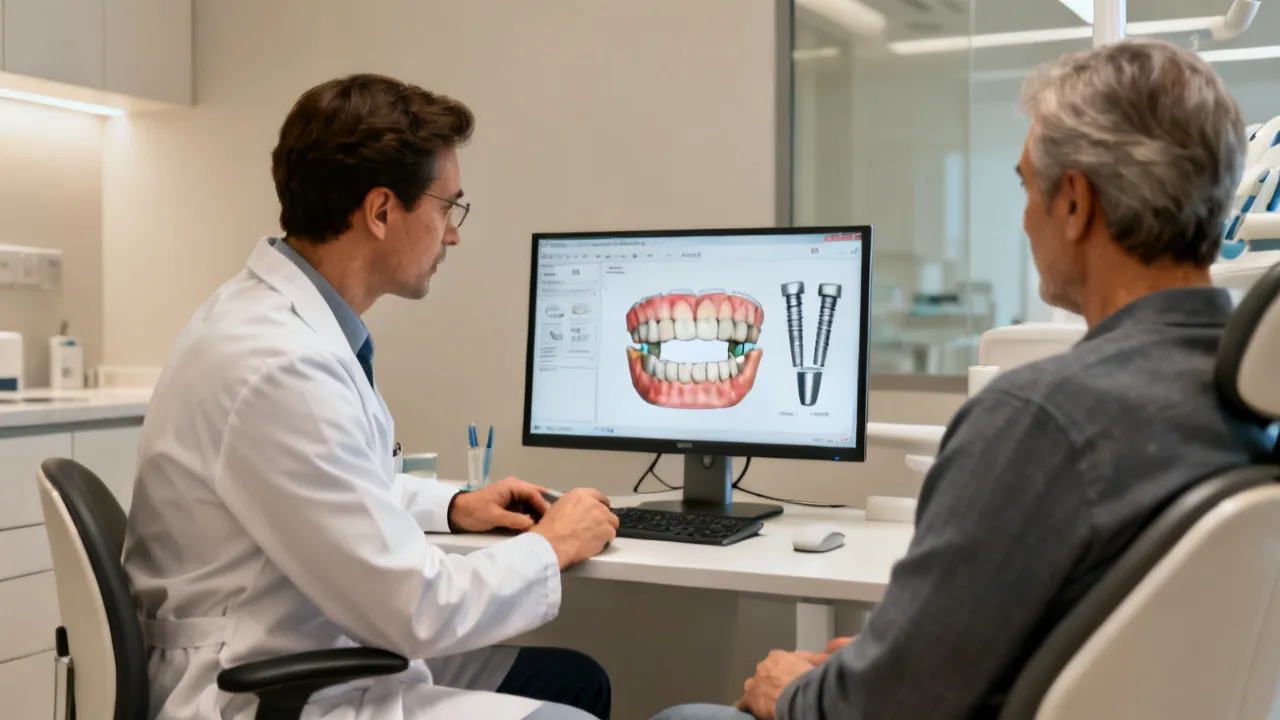
From an industry expert’s perspective, the safest comparison is an itemized, written treatment plan prepared after an examination and appropriate imaging. Patients should ask whether the quoted price applies to one arch or both arches, whether temporary and final teeth are included, which implant system is proposed, whether the restoration is fixed or removable, and what happens if additional surgery becomes necessary.
- Confirm whether the plan covers one jaw, both jaws, or a specific number of teeth.
- Separate the cost of surgery from the cost of the final prosthesis.
- Ask whether extractions, bone grafting, sinus procedures, imaging, medications, and sedation are included.
- Check the number of planned implants and the clinical reason for that number.
- Request the implant manufacturer, restorative materials, and laboratory details.
- Determine whether the temporary teeth are fixed, removable, or provided only after a separate payment.
- Review the warranty, repair policy, follow-up schedule, and maintenance requirements.
- Compare the complete expected cost rather than a promotional starting figure.
- Ask what costs may arise if bone quality, infection, or the condition of remaining teeth changes the plan.
Why Full-Mouth Implant Prices Vary So Widely
Full-mouth rehabilitation is not a single standardized procedure. A patient with adequate bone, stable general health, and a limited number of remaining teeth may need a different sequence from a patient with advanced periodontal disease, severe bone loss, or a history of long-term denture use. Even when two patients receive the same broad treatment label, their clinical requirements may be substantially different.
1. One arch or two arches
A treatment involving the upper jaw only is usually less extensive than treatment involving both the upper and lower jaws. However, the relationship between the arches matters. The dentist must assess bite position, facial support, chewing function, speech, and the appearance of the smile. A two-arch rehabilitation may require more laboratory planning, more appointments, and more complex adjustments.
The upper and lower arches also present different anatomical and functional challenges. The upper jaw may have less dense bone in certain areas and can be affected by the position of the maxillary sinuses. The lower jaw may offer denser bone, but the dentist must consider the location of the inferior alveolar nerve and other structures. These differences can affect the surgical plan and the need for additional imaging or procedures.
2. Number and position of implants
Some full-arch fixed restorations use a limited number of strategically placed implants, while other plans use more fixtures to support separate crowns or a segmented bridge. The suitable design depends on bone anatomy, bite forces, the proposed prosthesis, cleaning access, the patient’s ability to attend maintenance appointments, and the dentist’s restorative plan.
More implants do not automatically mean a better result, and fewer implants do not automatically mean lower long-term risk. The number must be considered together with implant position, angulation, distribution of chewing forces, prosthetic design, and the ability to clean around the restoration. A quote should explain not only how many implants are planned but also why that number is considered appropriate for the proposed restoration.
3. Bone quality and available volume
Implants require sufficient bone for initial stability and long-term support. If bone has resorbed after tooth loss, the treatment may involve grafting, ridge augmentation, or a sinus-related procedure in the upper jaw. These procedures add surgical time, materials, healing time, and follow-up appointments. A clinical examination and three-dimensional imaging are often needed before this issue can be assessed responsibly.
Bone grafting is not a single procedure. Minor contour augmentation may be relatively limited, while a larger ridge reconstruction may require a separate healing period before implants can be placed. In some cases, an implant may be placed at the same appointment as a graft, but this is determined by the amount and quality of available bone, the presence of infection, and the expected stability of the implant.
4. Remaining teeth and infection control
Some patients need extractions before implant placement. Teeth with infection, advanced periodontal disease, severe mobility, or poor structural prognosis may affect the timing of surgery. Treatment can include periodontal therapy, infection control, temporary dentures, or a staged approach. A quotation should clearly state whether extractions and disease management are included.
It is also important to distinguish between removing all remaining teeth and preserving teeth that have a reasonable long-term prognosis. Extracting teeth that could be predictably maintained may create additional surgical, financial, and emotional burdens. Patients should ask which teeth are considered hopeless, which may be treated, and how the prognosis was determined.
5. Temporary and permanent teeth
Temporary teeth may be provided during healing, especially when the patient needs an immediate appearance or functional replacement. Depending on the treatment design, a temporary restoration may be delivered on the day of surgery, after an initial healing period, or after implants have been confirmed to be stable.
The final restoration may be made from acrylic, composite, zirconia, metal-acrylic, or another material. Each material has different characteristics in relation to weight, repairability, aesthetics, wear, strength, and laboratory cost. Patients should identify which restoration is included in the quotation and whether a later upgrade would incur an additional charge.
Temporary and permanent restorations should not be confused. A temporary bridge is designed to serve during a particular phase of treatment and may require more frequent repair or replacement. The final restoration is usually produced after the implants have healed and the dentist has verified the bite, appearance, speech, and hygiene access. A quote that advertises “new teeth” may refer only to the temporary phase, so this distinction deserves careful attention.
6. Diagnostic and laboratory services
Full-mouth implant treatment requires coordination between the surgical and restorative sides of dentistry. Diagnostic records may include photographs, digital scans, panoramic imaging, cone-beam computed tomography, bite records, facial measurements, and a wax-up or digital design. Laboratory services may include framework fabrication, teeth arrangement, try-in appointments, milling, finishing, staining, polishing, and repairs.
These services are central to the final result rather than optional administrative details. A full-arch restoration must be designed so that it supports the lips appropriately, provides a functional bite, permits speech, and allows reasonable access for cleaning. Poor planning can lead to an uncomfortable or difficult-to-maintain prosthesis even when the implants themselves are successfully placed.
7. Sedation and medical requirements
Local anesthetic is commonly used for implant procedures, but some patients may request oral sedation, intravenous sedation, or another form of anxiety management. Additional medical evaluation may be required when a patient has diabetes, cardiovascular disease, bleeding-risk medication, osteoporosis treatment, sleep-related breathing problems, or other relevant conditions. Such services may be billed separately.
Patients should ask whether sedation is administered by the treating dentist or another qualified professional and whether monitoring and recovery arrangements are included. They should also understand transportation requirements and restrictions after sedation. A low surgery price that excludes required sedation or medical monitoring may not represent the actual cost of care.
8. Location, professional experience, and facility standards
Prices reflect local wages, laboratory expenses, rent, regulation, taxation, equipment, sterilization systems, and professional fees. A higher fee does not prove superior care, just as a lower fee does not prove poor care. Patients should evaluate the clinic’s clinical process, credentials, communication, emergency arrangements, and documentation rather than relying on price as the only quality signal.
Specialist involvement can also affect the fee. A case may involve a periodontist, oral and maxillofacial surgeon, prosthodontist, general dentist, dental technician, or a coordinated team. Team-based care may increase the quoted amount, but it can also be appropriate for complex cases. Patients should ask who will be responsible for each phase and who will manage complications if they arise.
Typical Treatment Models Behind a Full-Mouth Quotation
| Treatment model | General characteristics |
|---|---|
| Implant-supported individual crowns | Several implants support separate crowns or shorter connected restorations. This can offer individualized replacement but may involve more implants, components, hygiene demands, and laboratory work. |
| Fixed full-arch bridge | A complete arch of teeth is attached to a planned number of implants. The prosthesis is removed by the dental professional for service, while the patient generally cleans it in place. |
| Removable implant overdenture | A removable denture is retained by implants or attachments. It may improve stability compared with a conventional denture, but it has different cleaning, adjustment, and replacement requirements. |
| Staged reconstruction | Treatment is divided into phases, such as disease control, extractions, bone procedures, implant placement, temporary teeth, and final restoration. This approach may be appropriate when the patient’s condition requires healing between stages. |
These descriptions are educational rather than treatment recommendations. A dentist must determine whether a particular approach is appropriate after reviewing the patient’s health, bone anatomy, periodontal condition, bite, expectations, and ability to maintain the restoration.
Individual crowns compared with a full-arch bridge
Individual implant crowns can resemble separate natural teeth in the way they are restored, but replacing an entire arch in this manner may require a greater number of implants and components. It may also create more spaces and contours that must be cleaned. A full-arch bridge joins multiple teeth into one restoration and may be more efficient for certain patients, but its design must provide access for hygiene and allow professional removal when needed.
Neither approach is universally superior. The correct option depends on the patient’s anatomy, remaining bone, smile requirements, bite, dexterity, budget, and expectations. Patients should ask the dentist to explain the advantages and limitations of each clinically feasible option rather than focusing only on the lowest initial quote.
Fixed restorations compared with overdentures
A fixed full-arch restoration is generally not removed by the patient. It may offer a feeling that is closer to having fixed teeth, but it requires careful daily cleaning underneath and around the bridge. A removable overdenture can be taken out for cleaning and may be easier to repair or replace, although it may move slightly and require periodic adjustment of its attachments.
The cost difference between these options may be influenced by the number of implants, attachment systems, framework design, materials, and laboratory work. The long-term financial picture should include replacement of worn denture teeth, attachment inserts, relining, and professional servicing where applicable.
Individual Dental Implant Price Ranges by Country
The following figures concern an individual dental implant, not a full-mouth reconstruction. The definition of “individual implant” varies among clinics. In some quotations, the term refers only to the implant fixture; in others, it may include the abutment and crown. Patients should ask precisely what the listed amount covers.
| Country | Currency | Indicative price range for one implant |
|---|---|---|
| United States (US) | USD | $3,000–$6,000 |
| United Kingdom (GB) | GBP | £2,000–£2,500 |
| Australia (AU) | AUD | AU$3,500–AU$6,500 |
| Canada (CA) | CAD | CA$3,000–CA$5,500 |
| Spain (ES) | EUR | €1,500–€2,500 |
| Chile (CL) | CLP | CLP$800,000–CLP$1,500,000 |
| Mexico (MX) | MXN | $15,000–$25,000 MXN |
| Colombia (CO) | COP | $2,000,000–$4,000,000 COP |
| Peru (PE) | PEN | S/ 3,000–S/ 6,000 |
| Argentina (AR) | ARS | $80,000–$150,000 ARS |
| Brazil (BR) | BRL | R$3,000–R$8,000 |
| Portugal (PT) | EUR | €1,000–€2,000 |
| Germany (DE) | EUR | €2,000–€3,500 |
| France (FR) | EUR | €1,500–€2,500 |
| Italy (IT) | EUR | €1,500–€3,000 |
| Japan (JP) | JPY | ¥300,000–¥700,000 |
These ranges are useful for orientation but should not be multiplied mechanically to estimate the cost of a full-mouth case. Full-arch treatment may use a different prosthetic design, and a quotation may bundle surgery, temporary teeth, laboratory work, and follow-up care. Currency exchange rates, local fees, tax treatment, and clinical complexity can also alter the final amount.
Price tables can also become outdated. Inflation, exchange-rate fluctuations, laboratory costs, regulatory requirements, and changes in implant systems may affect a clinic’s current fees. Patients should treat online numbers as preliminary reference information and obtain a current written quotation directly from the provider.
How to Obtain Dental Implants at a Lower Overall Cost
Reducing the total financial burden does not mean selecting the lowest advertised number. A safer approach is to remove avoidable expenses, compare complete plans, use applicable coverage, and prevent complications through appropriate diagnosis and maintenance.
Step 1: Clarify the actual treatment objective
Before requesting prices, determine whether the goal is to replace one tooth, stabilize a removable denture, restore one arch, or reconstruct both arches. A patient who asks for “full-mouth implants” without defining the desired result may receive quotations for entirely different procedures. Ask the clinic to describe the proposed final teeth in plain language and to show whether the restoration will be fixed or removable.
Step 2: Obtain an examination and diagnostic records
A responsible plan requires a review of oral and general health. The dentist may assess periodontal pockets, tooth mobility, infection, bone volume, bite relationships, oral hygiene, smoking status, and medical history. Imaging should be selected for a clinical reason. Patients should be cautious of a clinic that provides a definitive full-mouth price without adequately examining the mouth.
Patients should request copies of relevant records, including radiographs and digital scans. These records make it easier to obtain a second opinion and may prevent unnecessary repeat imaging. They also help the patient understand the proposed sequence and identify whether a quoted procedure is based on actual anatomy or on a generic package.
Step 3: Request at least two or three itemized plans
Comparing several written plans can reveal whether one quote excludes important stages. Each plan should identify the number of implants, provisional restorations, final materials, extractions, grafting, sedation, imaging, laboratory fees, and follow-up care. Patients should compare equivalent treatment scopes rather than comparing a surgery-only figure with an all-inclusive rehabilitation plan.
When comparing plans, place the information in a simple table. List the number of implants, the type of temporary restoration, the final prosthetic material, the number of included adjustments, and the estimated maintenance fees. This approach makes it easier to distinguish a genuinely lower cost from a quote that merely postpones or excludes essential services.
Step 4: Ask whether a tooth-preserving option is clinically possible
Removing teeth that could be predictably maintained may create additional surgical and prosthetic costs. The dentist should explain which teeth have a reasonable prognosis and which do not. A second clinical opinion can be particularly valuable when a full-mouth extraction has been proposed.
Preserving a natural tooth is not always the best choice, especially when infection or severe bone loss is present, but the decision should be based on a documented clinical assessment. Patients should ask about periodontal treatment, root-canal treatment, crowns, or other restorative options when those alternatives may be appropriate.
Step 5: Treat active disease before implant placement
Periodontal inflammation, untreated decay, and poor oral hygiene can complicate implant treatment. Managing these issues before surgery may reduce the likelihood of preventable complications. A lower initial price is not financially advantageous if it leads to repeated interventions, prosthetic repairs, or premature implant failure.
Patients should understand that implants do not cure the causes of tooth loss. If plaque control, smoking, clenching, or uncontrolled medical conditions contributed to previous tooth loss, those factors must be addressed. Otherwise, the same destructive processes may affect the tissues around implants.
Step 6: Compare restoration materials by function, not marketing
Patients should ask why a particular material is recommended. Zirconia, metal-acrylic, composite, and other options may differ in appearance, weight, repair process, wear behavior, and laboratory cost. The most expensive material is not automatically the most suitable for every bite, hygiene routine, or budget.
Ask whether the prosthesis can be repaired locally, whether replacement teeth are available, and whether the framework is custom-made or produced from a standard design. A restoration that is easy to repair may offer practical value, particularly for patients who live far from the treating clinic.
Step 7: Review insurance, employer benefits, and payment plans
Dental insurance often has limitations for implants, prosthetic components, waiting periods, annual maximums, exclusions for missing teeth, or different reimbursement rules for surgery and restorations. Patients should request a written benefit estimate from the insurer rather than assuming that a treatment category is covered.
Clinic payment plans should also be reviewed for deposits, interest, cancellation rules, refund conditions, and the timing of payments. A plan that requires full payment before the final restoration is delivered should clearly explain what happens if treatment is delayed or the treatment design changes.
Step 8: Consider accredited teaching or referral settings
In some regions, university dental centers, public hospitals, and teaching clinics may offer structured care at different fee levels. Availability and eligibility vary, and treatment may take longer because of supervision, training requirements, or limited appointment schedules. Patients should confirm who performs each stage and who is responsible for follow-up.
Step 9: Evaluate dental tourism carefully
Traveling to another country may appear less expensive because professional and laboratory costs differ. However, the complete calculation should include flights, accommodation, transportation, time away from work, travel insurance, translation, possible return visits, and the cost of managing complications after returning home. Implant treatment is often staged, so a short visit may not cover every clinically necessary appointment.
Patients considering treatment abroad should confirm the clinician’s registration, the facility’s regulatory status, the implant system used, sterilization procedures, emergency arrangements, and the identity of the laboratory. They should obtain copies of implant passports, radiographs, operative notes, and restoration specifications before returning home. A local dentist may be unable or unwilling to repair an unfamiliar system, particularly when components are not readily available.
Step 10: Budget for maintenance from the beginning
Implant-supported teeth require professional monitoring and daily home care. A maintenance budget may include examinations, hygiene visits, replacement of worn teeth, screw checks, relining of removable prostheses, or repair of a fractured component. Planning for these costs is more realistic than treating the initial procedure as the entire financial commitment.
What an Itemized Full-Mouth Estimate Should Contain
A useful quotation should allow a patient to understand both the clinical sequence and the financial responsibilities at each stage. It should not merely state “full-mouth implants” followed by one large number. The document should identify whether the amount is an estimate or a fixed fee and should explain the circumstances under which the fee may change.
- Consultation and examination: state whether the initial evaluation is included or charged separately.
- Imaging: identify whether panoramic imaging, cone-beam computed tomography, photographs, and digital scans are included.
- Extractions: specify the number of extractions and whether surgical complexity changes the fee.
- Bone procedures: list possible grafting, membrane materials, ridge expansion, or sinus-related procedures separately.
- Implant surgery: state the number, location, and manufacturer of the planned fixtures.
- Temporary restoration: explain the type of temporary teeth, delivery timing, and repair policy.
- Prosthetic components: identify abutments, bars, screws, attachments, and other components.
- Final restoration: specify the material, design, number of units, and whether try-in and adjustment appointments are included.
- Medications and sedation: indicate whether prescriptions, anesthesia, and monitoring are included.
- Follow-up care: state the number and duration of included postoperative and prosthetic visits.
- Maintenance: explain which professional cleaning, inspection, or repair services are included and for how long.
- Contingencies: describe how additional procedures are approved and priced if the initial plan changes.
Patients should ask the clinic to explain unfamiliar terms. For example, a “fixture” generally refers to the implant placed in bone, while an “abutment” connects the implant to the restoration. A “crown” may refer to an individual tooth, whereas a “full-arch bridge” replaces an entire arch as one connected prosthesis. Understanding these distinctions helps prevent misunderstandings about what the quoted price actually buys.
How Low-Cost Implant Options Differ Across Language Markets
Patients may search in English, Spanish, Portuguese, Korean, or another language because they are comparing international treatment markets. Language accessibility can improve communication, but it should not be confused with clinical quality. A Spanish-language page, for example, may help a patient understand a treatment, yet the patient must still verify the provider’s credentials and the exact scope of the quotation.
English-speaking markets
In the United States, the United Kingdom, Australia, and Canada, patients may encounter private dental practices, specialist referral centers, dental insurance plans, and financing arrangements. The quoted price may be influenced by specialist involvement, laboratory location, sedation, and local operating costs. Insurance commonly requires careful review because implants and related restorations may be treated differently under the policy.
English-language resources can be useful for learning terminology such as implant fixture, abutment, crown, full-arch bridge, overdenture, bone graft, temporary prosthesis, and peri-implant maintenance. Patients should use these terms when requesting comparable quotations.
Spanish-speaking markets
Spain and Latin American markets include clinics that serve local residents as well as international patients. Prices can differ significantly between cities and between clinics using different laboratories or implant systems. Patients should ask whether a quotation is in local currency, whether taxes are included, and how post-treatment reviews will be handled if the patient lives abroad.
Communication should cover the same issues as an English-language consultation: diagnosis, implant brand, restoration material, surgical sequence, risks, maintenance, and written consent. A translated brochure should not replace direct communication with the treating dental team.
Portuguese-speaking markets
Brazil and Portugal have diverse private dental sectors. Treatment plans may differ according to the professional’s specialty, the laboratory, the implant manufacturer, and whether the case is performed in an urban clinic or a referral setting. Patients should ask for the Portuguese terminology and an understandable written plan if they are not fluent in the language.
For international patients, payment and currency conversion deserve special attention. The patient should know the exchange-rate method, payment deadlines, cancellation policy, and whether a later appointment is included if the final prosthesis requires adjustment.
Korean-language searches
In Korea, the phrase 전체임플란트 may be used in clinic advertising to describe full-arch rehabilitation, multiple implants, or treatment for patients who have lost most of their teeth. The wording may differ from one clinic to another. Patients should therefore ask whether the advertised package refers to an entire mouth, one arch, a fixed prosthesis, or an implant-retained removable denture.
Patients should also distinguish between a promotional “starting price” and the expected total after diagnostic imaging, extractions, bone procedures, temporary teeth, and the final restoration have been considered. Written details are especially important when several package levels are offered.
Comparison of Online Implant Information Websites
The following websites represent different types of dental information and service resources. They should be read as starting points for questions, not as substitutes for an individualized examination. Website content, availability, pricing, and service areas can change.
| Website or organization | Primary focus and useful features |
|---|---|
| Dental Views | General information about lower-cost dental implants, treatment types, benefits, cost considerations, and common patient questions. |
| Atlantic Dental Group | Clinic-based information covering general dentistry and possible implant, emergency, orthodontic, and preventive services. |
| DentaVacation | Dental-tourism information, international treatment comparisons, travel planning, and discussion of overseas dental care. |
| American Dental Health Plans | Information related to dental coverage, plan structures, insurance use, and ways patients may manage dental expenses. |
| Rockville Dental Arts | Spanish-language dental information and clinic services, including implants, whitening, cleaning, orthodontics, and emergency care. |
| Union City Mini Dental Implants | Spanish-language information focused on mini dental implants and situations in which a smaller implant design may be considered. |
| Cigna dental implant guide | Spanish-language educational information about implants, treatment stages, and insurance-related context. |
| Rubi Odonto | Portuguese-language clinic information from Santo André, São Paulo, covering services such as orthodontics, whitening, and implants. |
| Odontologia Velasco | Portuguese-language information about implants, prostheses, aesthetic dentistry, and technology used in clinical services. |
| DentalVidas | Portuguese-language dental-plan information for individuals, families, and businesses, including network and emergency-service details. |
Source: www.dentalviews.com
Source: www.atlanticdentalgrp.com
Source: www.dentavacation.com
Source: www.rockvilledentalarts.com/es
Source: www.unioncityminidentalimplants.com/es
Source: www.cigna.com/es-us/knowledge-center/guide-to-dental-implants
Source: www.rubiodonto.com.br
Source: www.odontologiavelasco.com.br
Source: www.dentalvidas.com.br
Questions to Ask Before Accepting a Quote
- Is the quoted amount for one arch, two arches, or a particular number of teeth?
- How many implants are planned, and what clinical factors support that design?
- Does the amount include consultation, imaging, extractions, grafting, sedation, and medications?
- Are temporary teeth included during the healing period?
- What material and design will be used for the final prosthesis?
- Is the restoration fixed or removable by the patient?
- Which implant manufacturer and component system will be used?
- Who performs the surgery, prosthetic treatment, and laboratory work?
- How many follow-up visits are included?
- What is the policy for adjustment, fracture, loosening, or implant complications?
- What records will the patient receive after treatment?
- What maintenance schedule is recommended after delivery of the final teeth?
- What costs may arise if the treatment plan changes after imaging or surgery?
- What happens if an implant does not integrate with the bone?
- How long does the clinic’s warranty last, and what conditions could invalidate it?
- Can the final prosthesis be repaired by another dentist if the patient moves?
- Will the clinic provide an emergency contact outside normal business hours?
Clinical Conditions and Requirements
Implant treatment is generally considered only after the dentist evaluates the patient’s oral and systemic health. The presence of a medical condition does not automatically exclude implant therapy, but it may require coordination with a physician, medication review, modified timing, or closer monitoring.
Oral health
Active periodontal disease should be identified and managed. The patient also needs a practical daily hygiene routine because plaque accumulation around implants can contribute to inflammation and bone loss. A full-mouth plan should include an explanation of how the proposed teeth can be cleaned with interdental brushes, specialized floss, water irrigation, or other suitable methods.
The shape of the restoration matters for hygiene. A bridge that extends too far toward the gum or lacks adequate space underneath may be difficult to clean even for a motivated patient. During the planning stage, ask the dentist to demonstrate the cleaning tools that will be needed and whether the patient’s hand strength, vision, or dexterity creates any special considerations.
General health
The dental team should know about diabetes, immune conditions, bleeding disorders, cardiovascular disease, osteoporosis medication, allergies, prior radiation therapy, and all prescribed or non-prescribed drugs. Patients should not stop medication without medical advice. Smoking and nicotine exposure should also be discussed because they may affect healing and long-term implant health.
Medical history is not simply a formality. It may influence the timing of extractions, the need for physician communication, the selection of anesthesia, and the recommended follow-up schedule. Patients should update the dental team if their medications or health status changes during treatment.
Expectations and consent
Implants are intended to restore function and support dental prostheses, but they do not behave exactly like natural teeth. The patient should understand the likely healing process, possible discomfort, hygiene demands, limitations, and possibility of maintenance or replacement. Informed consent should cover reasonable alternatives, such as conventional dentures, implant overdentures, tooth-supported bridges where suitable, or staged treatment.
Aesthetic expectations should be discussed before surgery. Important subjects may include tooth shade, tooth length, visible gum display, lip support, speech, and how much of the restoration will be visible when smiling. Digital previews can assist communication, but they cannot guarantee an identical final appearance.
Risks of Choosing on Price Alone
Price-only decisions can overlook important clinical and practical issues. A quotation may appear attractive because it excludes the final prosthesis, uses a temporary restoration as the headline figure, or assumes that no grafting will be needed. Patients may also underestimate the expense of travel and the difficulty of obtaining follow-up care after returning home.
Other warning signs include pressure to pay a large deposit immediately, unclear identification of the treating dentist, refusal to provide an itemized plan, lack of discussion about medical history, promises of a guaranteed result, or advice to remove healthy teeth without a clear prognosis. These signs do not prove that a clinic is unsafe, but they justify additional questions and an independent opinion.
A sensible budget includes a contingency for clinically necessary changes. Patients should ask how additional costs are authorized and whether they will receive an updated treatment plan before proceeding. Written communication is especially important when treatment is arranged remotely or in another language.
Patients should be cautious about claims that a treatment is “permanent” or “maintenance-free.” Dental implants can provide durable support, but the surrounding tissues, prosthetic teeth, screws, attachments, and framework may still require professional care. A realistic discussion of possible repairs is a sign of responsible communication rather than a reason for concern.
Aftercare and Long-Term Value
The financial value of implant treatment depends partly on the stability and maintainability of the final restoration. Patients should attend recommended reviews, maintain professional cleaning, and report bleeding, swelling, discomfort, mobility, changes in bite, or difficulty cleaning. A loose prosthetic screw or fractured tooth should be assessed rather than ignored.
Full-arch restorations may require periodic repair or replacement because teeth and framework components can wear. The expected service period depends on material, bite forces, hygiene, habits such as clenching, maintenance, and the health of the supporting implants. No responsible clinician should promise that a restoration will never need service.
Before treatment, ask for a written maintenance schedule. It should state how often the patient should return, whether the prosthesis will be removed for professional inspection, and which procedures are charged separately. This information makes the overall cost more predictable.
Daily home care
Daily cleaning may involve a soft toothbrush, an electric toothbrush, interdental brushes, specialized floss, and an oral irrigator. The exact combination depends on the shape of the bridge and the patient’s anatomy. Patients should receive hands-on instruction rather than being expected to discover the correct technique independently.
Cleaning should include the gumline, the spaces between implants, and the underside of a fixed bridge where accessible. For removable overdentures, the prosthesis and the attachment areas should be cleaned separately. Dentures should generally be handled according to the dentist’s instructions, including guidance about overnight wear and storage.
Professional maintenance
Professional maintenance may include examination of the gums, measurement of tissue health, radiographic review when clinically indicated, cleaning of accessible implant surfaces, inspection of screws and attachments, and evaluation of the bite. The frequency depends on risk factors such as prior periodontal disease, smoking, diabetes, oral hygiene, and clenching.
Maintenance is part of the treatment plan, not an optional extra. A patient who understands the ongoing commitment is better positioned to protect the investment and identify problems before they become more complicated and expensive.
Frequently Asked Questions
Is 전체임플란트 가격 the same as the cost of one implant multiplied by the number of missing teeth?
No. Full-mouth treatment often uses a different surgical and prosthetic design from individual tooth replacement. The plan may include a fixed full-arch bridge or an overdenture supported by strategically placed implants. Diagnostic records, temporary teeth, laboratory work, and maintenance can also change the total.
Can a full-mouth implant quotation be provided online?
A clinic may provide a preliminary range based on photographs or a remote consultation, but a definitive quotation normally requires an examination and appropriate imaging. Bone volume, infection, periodontal health, bite, and remaining teeth cannot be assessed reliably from a short message alone.
What is usually the largest cost component?
The answer varies. Surgery, the implant components, the final prosthesis, and laboratory work may each represent a substantial part of the bill. In complex cases, bone procedures and staged temporaries can also be significant. An itemized quotation is more informative than a single headline amount.
Are mini implants always a lower-cost solution?
Mini implants have a smaller diameter and may be suitable in selected situations, often involving retention of a removable prosthesis. They are not automatically appropriate for every full-mouth reconstruction. The dentist should explain their intended use, expected loading, maintenance, and alternatives.
Does dental insurance usually pay for implants?
Coverage depends on the policy. Some plans exclude implants, while others cover specific components or provide benefits subject to waiting periods, annual limits, missing-tooth clauses, or alternative-benefit rules. Patients should obtain a written coverage estimate directly from the insurer.
Is treatment abroad always less expensive?
No. Local treatment costs may be lower in some markets, but travel, accommodation, missed work, translation, repeat visits, and complication management can reduce or eliminate the apparent difference. Patients should compare the complete treatment journey rather than the clinic’s advertised starting figure.
How long does full-mouth implant treatment take?
Timing depends on whether teeth must be extracted, whether bone augmentation is required, how healing progresses, and whether temporary teeth are used. Some cases can be restored in a shorter sequence, while others require several healing phases. The dentist should provide a proposed timeline with conditions that could change it.
What should I do if a clinic quotes a very low price?
Ask for a complete written breakdown and identify what is excluded. Confirm the treating clinician’s credentials, the implant system, the restoration material, sterilization procedures, emergency arrangements, and aftercare policy. A second opinion is reasonable before committing to irreversible treatment.
Can a patient keep some natural teeth and still receive implants?
Possibly. Teeth with a predictable prognosis may be preserved, while teeth with severe disease or poor structural support may require removal. The decision should be based on examination, imaging, periodontal assessment, function, and the long-term restorative plan.
What documents should an international patient retain?
Keep the consent form, treatment plan, invoices, implant brand and model information, surgical notes, radiographs, digital scans, prosthesis specifications, medication instructions, and warranty terms. These records can help another dentist provide maintenance or emergency care later.
Can treatment be completed in one day?
Some patients may receive temporary teeth on the day implants are placed, but this does not necessarily mean that the entire treatment is complete. The final restoration is usually delivered only after healing, evaluation of implant stability, and confirmation of the bite and prosthetic design. A “same-day” advertisement should be examined carefully to determine which stage it describes.
Practical Decision Framework
- Define the objective: identify whether the patient needs a single replacement, a stabilized removable denture, one fixed arch, or two fixed arches.
- Verify the diagnosis: obtain an examination and clinically justified imaging.
- Compare equivalent plans: review at least two or three itemized quotations using the same treatment scope.
- Check the clinician and facility: confirm registration, relevant training, surgical arrangements, and access to emergency care.
- Review the restoration: understand whether the final teeth are fixed or removable and which material is proposed.
- Calculate the complete budget: include travel, accommodation, imaging, medications, temporary teeth, follow-up, and possible repair.
- Plan maintenance: understand the long-term cleaning and review schedule before beginning treatment.
- Clarify changes: ask how the clinic will communicate unexpected findings and obtain approval for additional procedures.
- Protect records: request copies of scans, implant details, operative notes, and prosthetic specifications.
The most economical plan is generally the one that matches the diagnosis, avoids unnecessary stages, uses maintainable materials, and provides dependable follow-up. Cutting costs through incomplete diagnosis or unclear aftercare can create greater expense later.
Patients should also consider personal circumstances. A lower-priced plan may not be practical if it requires frequent international travel, prolonged time away from work, or extensive home-care demands that are difficult to perform. The best-value plan is one that the patient can complete safely, maintain consistently, and access for future service.
Conclusion
Understanding 전체임플란트 가격 requires more than searching for a single number. Full-mouth implant treatment is a coordinated rehabilitation involving surgery, prosthodontics, laboratory services, diagnosis, maintenance, and patient-specific risk assessment. Individual implant ranges can help establish a broad international reference point, but they should not be used as a direct substitute for a full-arch quotation.
Patients can make a more informed decision by requesting an itemized plan, comparing equivalent treatment models, checking insurance conditions, considering the full cost of dental tourism, and confirming how future maintenance will be handled. Professional communication and documented clinical information should remain more important than promotional pricing.
A careful decision does not require choosing the most expensive option. It requires understanding what is being proposed, why it is appropriate, what alternatives exist, what the quote includes, and how the result will be maintained. When these questions are answered clearly, patients can compare treatment plans more fairly and reduce the risk of unexpected financial or clinical problems.
Disclaimer
1. The information above comes from online resources, and the data is as of October 2023.
2. Dental implant prices are for reference only and may vary by region, clinic, doctor, treatment design, materials, medical requirements, exchange rates, and additional procedures. This article is educational and does not replace an examination, diagnosis, treatment plan, or advice from a qualified dental professional.
3. Online prices and treatment descriptions may change without notice. Patients should confirm current fees, provider credentials, regulatory status, insurance conditions, and aftercare arrangements directly with the relevant clinic or insurer.