Gold Crown Side Effects and Implant Cost Guidance
This guide explains 금니 부작용, or possible side effects associated with gold dental crowns, and outlines when professional assessment is necessary. It reviews material sensitivity, gum irritation, bite changes, tooth decay, crown damage, and interactions with other metals. It also compares selected dental implant information websites and presents reference price ranges for individual implants in English-speaking countries, while emphasizing that diagnosis and treatment planning must be individualized.
Understanding 금니 부작용: What Gold Crown Side Effects Mean
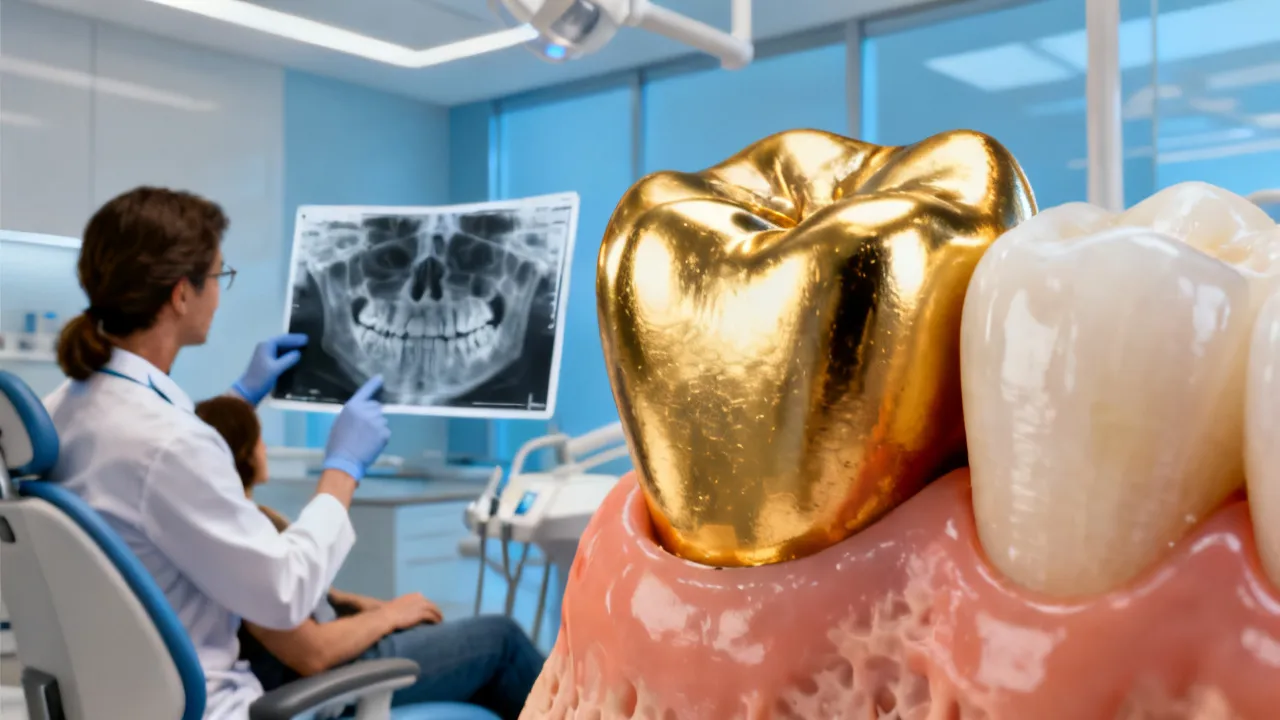
금니 부작용 is a Korean expression commonly used to describe side effects or complications associated with a gold dental crown, gold inlay, gold onlay, or another gold-containing dental restoration. Gold restorations have been used in dentistry for decades because dental alloys can be durable, precisely fitted, and relatively gentle to opposing teeth. Nevertheless, no dental material is suitable for every patient, and a crown can cause problems if the tooth was not properly treated, the restoration does not fit correctly, oral hygiene is inadequate, or the patient develops a material sensitivity.
The most important point is that discomfort after a gold crown should not automatically be attributed to the gold itself. Pain may result from inflammation of the dental pulp, an uneven bite, recurrent decay, a cracked tooth, gum disease, cement failure, or an infection around the root. A dentist usually needs to examine the crown, test the tooth, assess the bite, and sometimes take dental radiographs before identifying the cause.
Some symptoms require prompt dental attention. These include spontaneous or severe toothache, facial swelling, fever, pus, difficulty swallowing, worsening pain, numbness, or an inability to close the mouth comfortably. Breathing difficulty or rapidly spreading swelling is an emergency and requires immediate medical care.
Why the Cause of Symptoms Matters
Several different conditions can feel similar to a patient. A high crown may cause pressure discomfort when chewing, while an inflamed pulp may cause lingering sensitivity to hot or cold. Gum inflammation may produce bleeding and tenderness around the crown, whereas a cracked tooth may cause a sharp, unpredictable pain when biting or releasing pressure. Because these problems require different treatments, simply replacing the restoration may not solve the problem.
For example, if the nerve inside the tooth is irreversibly inflamed, a new crown without root canal treatment may leave the patient in pain. If the problem is only a high bite, root canal treatment would be unnecessarily invasive. If recurrent decay has weakened the tooth, recementing a loose crown without treating the decay may allow the condition to progress. Establishing the diagnosis protects both the tooth and the patient from avoidable procedures.
What Gold Dental Restorations Are Made Of
A dental crown described as a “gold crown” is rarely made from pure gold. Pure gold is too soft for many chewing applications, so dental laboratories generally use an alloy containing gold with other metals. The exact composition may include palladium, platinum, silver, copper, or other components. The alloy category and the individual laboratory recipe can affect color, strength, corrosion resistance, and the possibility of sensitivity.
Gold-containing restorations may be classified broadly as high-noble, noble, or base-metal alloys, depending on their composition. Patients should ask the dental clinic for the material information supplied by the laboratory. This is particularly useful for anyone with a known metal allergy, a history of skin reactions to jewelry, or previous problems with dental alloys.
The term “gold” can therefore be misleading. Two restorations that look similar may have substantially different alloy compositions. A restoration with a high percentage of gold may behave differently from one that contains only a small amount of gold and a larger proportion of other metals. The shade may also vary from bright yellow to pale gold or a more muted metallic color.
Modern restorative dentistry also uses tooth-colored ceramics, zirconia, porcelain-fused-to-metal restorations, and resin-based materials. Each option has potential benefits and limitations. A gold alloy may be selected for strength and conservative preparation, while a ceramic crown may be preferred in a visible front-tooth area for appearance. The decision should consider the tooth’s location, the amount of remaining tooth structure, the bite, gum health, aesthetic expectations, and long-term maintenance.
Common Gold Crown Side Effects
1. Temporary sensitivity after placement
Mild sensitivity to cold, heat, or pressure can occur after a tooth is prepared for a crown. The preparation process may temporarily irritate the pulp, and the cement or bite may need time to settle. Short-lived sensitivity is not necessarily a sign of a material reaction. However, symptoms that intensify, continue for several weeks, occur without stimulation, or keep the patient awake may indicate deeper pulp inflammation or another problem.
Patients should observe the pattern of sensitivity rather than focusing only on its presence. A brief response to cold that disappears quickly may be less concerning than pain that lingers for many seconds or minutes. Pain that starts without eating or drinking, becomes worse at night, or is difficult to locate can be associated with pulp inflammation. This distinction is not diagnostic by itself, but it helps the dentist understand the condition.
2. Gum irritation and inflammation
A crown margin that extends too far under the gum, collects plaque, or is difficult to clean can contribute to redness, bleeding, tenderness, or localized swelling. These symptoms are often related to contour and hygiene rather than gold as a substance. Over-contoured crowns can make flossing difficult and may trap food. A dentist or hygienist can evaluate the margin, periodontal tissues, and cleaning technique.
Gums may also be irritated immediately after the procedure because the area was retracted, dried, or touched during impression-taking and cementation. Mild tenderness should improve as the tissues recover. Persistent bleeding, a bad taste, pus, or a recurring swollen area suggests that further evaluation is appropriate. A crown should have a contour that permits cleaning and should not create a permanent obstacle between the tooth and the surrounding gum.
3. Contact sensitivity or allergic reaction
True allergy to gold or another component of a dental alloy is uncommon but possible. Symptoms may include persistent localized irritation, burning, swelling, redness, or a rash involving other areas of the body. A previous reaction to jewelry does not always predict a reaction to a specific dental alloy, because jewelry and dental materials may contain different metals and concentrations.
Oral contact reactions can be difficult to identify because the mouth is exposed to toothpaste, mouthwash, foods, medications, dental cement, acrylic materials, and multiple metals. A burning sensation may be related to dry mouth, reflux, infection, trauma, or nerve-related conditions rather than an allergy. For this reason, a suspected material allergy should be investigated systematically.
Patients with a known allergy should provide the dentist with the details of the reaction and, when available, allergy-test documentation. If a material reaction is suspected, the clinician may review the laboratory composition and discuss testing or an alternative material. Removing a crown without a clear diagnosis is not always appropriate, because the procedure can sacrifice sound tooth structure and may not resolve symptoms caused by another condition.
4. Bite discomfort or jaw strain
A crown that is slightly too high can feel uncomfortable when the patient bites. The tooth may feel bruised, sensitive to chewing, or more prominent than neighboring teeth. Some people develop muscle fatigue, jaw soreness, or headache when the bite remains uneven. A minor occlusal adjustment may resolve the problem, but the dentist should assess the crown carefully before removing material.
Patients may notice that the crown touches first when they close their teeth or that chewing feels different on one side. They may also unconsciously avoid the restored tooth, which can increase muscle tension elsewhere in the jaw. A dentist uses articulating paper and clinical examination to identify premature contacts. Because a patient’s bite can feel unfamiliar even when it is clinically acceptable, adjustment should be based on examination rather than sensation alone.
Repeated adjustments can weaken some restorations or alter their protective anatomy, so the underlying fit and bite should be reviewed if symptoms persist. Patients should not attempt to file a crown at home.
5. Recurrent decay at the crown margin
A gold crown itself does not develop tooth decay, but the natural tooth beneath or beside it can decay. Plaque accumulation, an open margin, high sugar exposure, dry mouth, or poor flossing can increase the risk. Early recurrent decay may not cause pain. Regular examinations are therefore important, particularly when the crown is several years old or the patient has a history of cavities.
Decay may begin at the edge where the restoration meets the natural tooth. If the margin is difficult to inspect or clean, the condition can advance unnoticed. Fluoride toothpaste, daily interdental cleaning, management of dry mouth, and regular professional examinations can lower risk. Patients who frequently sip sweetened beverages or consume snacks throughout the day may need to modify the frequency of exposure, not just the total amount of sugar.
6. Cement leakage or crown loosening
Dental cement may weaken over time, especially when the tooth has limited retention, the crown is exposed to heavy forces, or decay develops under the restoration. A loose crown may move during chewing, trap food, or produce sensitivity. It should be evaluated promptly. A patient should not rely on household glue, because non-dental adhesives may be toxic, interfere with treatment, or damage the tooth.
If the crown comes off, the patient should keep it in a clean container and contact the dental office. The crown should not be forced back into place if it does not fit easily. Temporary dental cement from a pharmacy may occasionally be discussed with a dental professional, but it is not a substitute for examination. The tooth may be vulnerable to fracture or decay while it is uncovered.
7. Tooth fracture or root-related symptoms
Although gold alloys can be strong, a restoration cannot eliminate the risk of fracture in a heavily compromised tooth. A crack may cause pain on biting or when releasing a bite. Root infection may cause swelling, tenderness, or a pimple-like drainage point on the gum. These problems may require root canal treatment, periodontal care, crown replacement, or extraction depending on the findings.
Cracked teeth are especially challenging because the pain may be intermittent and may not appear on an ordinary radiograph. Bite testing, magnification, transillumination, periodontal probing, and careful examination may be used. If a crack extends below the gum or into the root, the prognosis may be poor. Early assessment is preferable because continued chewing can extend a fracture.
8. Electrical or galvanic sensations between metals
Some patients notice a brief tingling or metallic sensation when different metals contact one another in saliva. This phenomenon is sometimes described as a galvanic response. It is not common, and its clinical importance varies. The dentist should check for loose restorations, corrosion, exposed metal, and other explanations for the sensation. Replacing a sound crown solely because of a vague metallic taste may not be necessary without a clear assessment.
A metallic taste can also come from gum bleeding, medication, sinus drainage, reflux, dry mouth, or an oral infection. A careful history should include when the sensation occurs and whether it is associated with contact between particular teeth. If several restorations are present, the dentist may document their condition before deciding whether any change is warranted.
9. Cosmetic concerns
Gold restorations are visible when a patient smiles or speaks, particularly on premolars. Some patients later decide that the color no longer matches their aesthetic preferences. This is an appearance concern rather than a biological side effect. A replacement restoration may require additional tooth preparation and may not improve function. The risks and benefits should be discussed before treatment.
Replacing a healthy gold restoration solely for cosmetic reasons can be reasonable for some patients, but it remains an irreversible dental procedure. The dentist should explain the amount of tooth structure that would be removed, the possibility of postoperative sensitivity, the expected durability of the alternative material, and whether the new restoration will require future replacement.
Symptoms That Should Not Be Ignored
Some symptoms can be monitored briefly after routine treatment, while others should lead to prompt professional contact. Patients should arrange a dental appointment when discomfort persists, worsens, or affects eating and sleeping. A crown that feels loose, catches floss, repeatedly traps food, or causes a change in the bite should also be checked.
Urgent evaluation is particularly important if there is facial or gum swelling, fever, a bad taste from drainage, severe throbbing pain, difficulty opening the mouth, or swelling beneath the tongue. Emergency medical care is needed if swelling affects breathing or swallowing, spreads rapidly, or is accompanied by severe illness. Antibiotics alone do not permanently correct many dental infections; the source usually requires dental treatment.
How Dentists Investigate Suspected 금니 부작용
An expert evaluation begins with the history. The dentist may ask when the crown was placed, whether symptoms started immediately or gradually, whether pain is triggered by cold or chewing, whether the crown feels mobile, and whether the patient has experienced reactions to metals or dental materials before. Information about medications, dry mouth, teeth grinding, and recent dental work can also be relevant.
The clinical examination may include:
- Inspection of the crown surface, margins, contacts, and surrounding gum tissue.
- Gentle probing to identify bleeding, pockets, food trapping, or periodontal disease.
- Pulp testing, such as cold or electrical testing, when the nerve condition is uncertain.
- Percussion and bite testing to assess inflammation around the tooth root or a possible crack.
- Occlusal analysis to determine whether the crown contacts too early.
- Dental radiographs to assess recurrent decay, root treatment, bone levels, and infection.
- Review of the laboratory material record when a metal sensitivity is suspected.
The dentist may compare the affected tooth with neighboring and opposite teeth. A normal response in a neighboring tooth can help provide context, although pulp testing is not an exact measurement. The clinician may also evaluate tooth mobility, gum recession, contact points, and the condition of nearby restorations. In some cases, a temporary protective material or short observation period helps determine whether symptoms are settling or progressing.
Patch testing or specialist allergy assessment may be considered in selected cases. It should be interpreted cautiously because skin exposure and oral exposure are not identical. A dentist may also consult an allergist, oral medicine specialist, endodontist, or periodontist depending on the findings.
Understanding Dental Tests and Radiographs
A dental radiograph can show the tooth roots, surrounding bone, large areas of decay, and some changes associated with infection. It may not show every crack or early problem. The absence of an obvious finding on an image does not necessarily mean that the tooth is healthy, particularly when symptoms are recent.
Cold testing evaluates how the pulp responds to a temperature stimulus. Lingering pain after the stimulus has been removed can suggest significant inflammation, while no response may indicate loss of pulp vitality, although other factors can affect the result. Percussion and palpation test tissues around the root. Bite tests can be useful when a fracture is suspected. These tests are interpreted together rather than in isolation.
Three-dimensional imaging is not necessary for every crown complaint. It may be recommended when conventional radiographs do not explain symptoms, when a root fracture or complex anatomy is suspected, or when implant planning is being considered. Patients can ask what clinical question the imaging is intended to answer and whether the result would change the treatment plan.
How to Prepare for a Dental Consultation
Patients can make an appointment more productive by recording when symptoms occur and what triggers them. Useful details include sensitivity to cold or heat, pain on biting, night pain, swelling, bleeding, food trapping, a metallic taste, and whether over-the-counter pain medicine changes the symptoms. Bringing information about previous dental procedures and known allergies can also help.
If the crown was placed by another clinic, patients should request copies of radiographs, treatment notes, laboratory records, and the material description. The age of the restoration is relevant, but age alone does not determine whether it should be replaced. A well-fitting crown can remain serviceable for many years, while a newer crown can develop a problem if the tooth or bite is unfavorable.
Patients should tell the dentist about anticoagulants, immune conditions, diabetes, pregnancy, bisphosphonate or antiresorptive medication, allergies, and previous reactions to anesthesia or antibiotics. These details may affect diagnostic and surgical planning.
When a Gold Crown May Need Adjustment, Repair, or Replacement
A crown may only need a minor bite adjustment when the restoration is sound and the symptoms are clearly caused by a high contact. Professional cleaning and improved home care may address inflammation around an otherwise acceptable margin. If the crown is loose but the tooth remains healthy, the dentist may evaluate whether it can be cleaned and recemented.
Repair may be possible for a minor defect, rough area, or limited contact problem. However, repair is not always appropriate when the crown has an open margin, extensive wear, recurrent decay, or inadequate retention. The crown should be assessed together with the tooth underneath it.
Replacement is more likely to be considered when there is recurrent decay, a fractured crown, a severely open margin, persistent inflammation caused by poor contour, significant material sensitivity, or a tooth that requires a different treatment. If the nerve is diseased, replacing the crown alone may not resolve pain. Root canal treatment or another procedure may be necessary, and the crown may then need repair or replacement to obtain access and provide a proper seal.
The safest approach is diagnosis first, intervention second. Patients should request an explanation of the proposed treatment, alternatives, expected longevity, additional costs, and consequences of postponing care.
Choosing an Alternative Material
If a crown must be replaced, the available materials may include another gold alloy, porcelain-fused-to-metal, zirconia, lithium disilicate, or other ceramic systems. The choice depends on the tooth, available space, chewing force, color requirements, gum position, and the dentist’s experience with the material.
Metal-free does not automatically mean risk-free. Ceramic restorations can fracture, chip, wear opposing teeth if poorly designed, or require more tooth reduction depending on the system. Some patients may also experience sensitivity after preparation regardless of the final material. A material change is most useful when it addresses a clearly identified concern, such as a documented allergy or an aesthetic requirement.
Patients should ask whether the proposed material has a history of use in the particular tooth and bite. A visible tooth, a molar subjected to heavy grinding, and a tooth with limited vertical space may require different approaches. The restoration must be designed for function as well as appearance.
Reducing the Risk of Gold Crown Problems
- Provide a complete medical and dental history. Mention metal reactions, eczema, allergies, previous crown problems, grinding, dry mouth, and medications.
- Ask about the alloy. Request the restoration’s material category and whether the laboratory can provide its composition.
- Confirm the fit and bite before leaving. The crown should feel stable and should not prevent comfortable closure.
- Maintain daily plaque control. Brush twice daily with fluoride toothpaste and clean carefully around the crown margin.
- Use interdental cleaning. Floss, interdental brushes, or other tools may help prevent plaque accumulation, subject to professional advice.
- Attend preventive examinations. A dentist can detect marginal decay or periodontal changes before major symptoms develop.
- Manage clenching and grinding. A professionally designed occlusal appliance may be appropriate for selected patients.
- Limit frequent sugar and acidic drinks. Dietary habits affect the natural tooth around the crown even though the alloy itself does not decay.
- Do not self-adjust or self-cement the crown. Home interventions can conceal serious problems and complicate treatment.
Cleaning around a crown does not require aggressive brushing. A soft-bristled toothbrush and fluoride toothpaste are generally suitable, while vigorous scrubbing can contribute to gum recession. Patients who have bridges, tight contacts, orthodontic appliances, or limited dexterity may benefit from individualized instruction about floss threaders, water flossers, or interdental brushes.
People with dry mouth should discuss saliva substitutes, hydration, medication review, and fluoride strategies with a dental professional. Dry mouth increases the risk of decay at restoration margins. Patients who grind or clench may need evaluation of stress, sleep-related bruxism, muscle symptoms, and protective appliances.
Gold Crowns Compared With Dental Implants
A gold crown restores a tooth that generally still has a usable root or foundation. A dental implant replaces the root portion of a missing tooth and is usually restored with an abutment and crown. These are not interchangeable procedures. If a tooth can be predictably restored, preserving it may be preferable. If a tooth is non-restorable or already missing, an implant may be one possible replacement option.
Implant treatment commonly involves examination, imaging, treatment planning, implant placement, healing, and attachment of the final restoration. Bone grafting, treatment of gum disease, or temporary replacement may be required. The total price therefore depends on the complete treatment sequence rather than the implant fixture alone.
Patients concerned about 금니 부작용 should not assume that extraction and implant placement is a simpler solution. Extraction is irreversible, and implant surgery has its own risks, including infection, poor integration with bone, nerve injury, sinus-related complications in selected areas, peri-implant inflammation, and mechanical problems. A second opinion can be valuable when the recommended treatment is extensive or irreversible.
A natural tooth has a periodontal ligament that provides sensory feedback and allows minor movement. An implant is anchored directly to bone and does not behave exactly like a natural tooth. It can restore chewing function effectively, but it requires careful plaque control and long-term maintenance. The decision to extract a tooth should therefore consider restorability, periodontal support, fracture location, remaining tooth structure, cost, and patient preference.
Finding Lower-Cost Dental Implants in English-Speaking Countries
Lower-cost implant care should be approached as a quality-and-safety decision, not merely a search for the smallest advertised number. A quotation may exclude imaging, bone grafting, sedation, temporary teeth, laboratory fees, the abutment, the final crown, aftercare, or treatment of gum disease. Comparing complete treatment plans is more meaningful than comparing a headline price.
Step 1: Define the clinical need
Ask whether the quotation is for one missing tooth, several teeth, or a full-arch restoration. An individual implant generally refers to the implant-supported replacement of one tooth, but clinics may describe the implant fixture, the implant-plus-abutment, or the complete restored tooth as an “implant.” Request an itemized definition.
Also clarify whether extraction is already complete, whether a temporary tooth is required, and whether the implant will be placed immediately after extraction or after a healing period. Immediate placement is not suitable for every patient. Infection, bone defects, gum conditions, and the position of the tooth can affect timing.
Step 2: Obtain a diagnostic examination
A responsible plan normally considers oral examination, periodontal status, remaining teeth, bite, medical history, and appropriate imaging. Three-dimensional imaging may be recommended when anatomy, bone volume, or proximity to a nerve or sinus requires additional evaluation. Patients should ask whether the quoted fee includes these diagnostic steps.
Step 3: Compare accredited and transparent providers
Review the dentist’s qualifications, registration with the relevant professional regulator, infection-control standards, implant system used, laboratory arrangements, emergency access, and written warranty or maintenance policy. A clinic that provides clear exclusions and realistic timelines may be more dependable than one that relies on a very low initial advertisement.
Patients should be cautious about claims of guaranteed success, treatment completed in an unrealistically short time, or prices that are substantially below the cost of necessary surgical and laboratory services. Low cost can result from a legitimate difference in regional fees, but it can also reflect omitted components or inadequate follow-up.
Step 4: Request at least two itemized plans
Each plan should identify the extraction, grafting, implant placement, healing review, abutment, temporary restoration, final crown, sedation, medications, imaging, and follow-up. Ask which services are optional, which are clinically necessary, and which are charged separately. The most useful comparison is the estimated total for the same clinical scope.
Step 5: Check insurance and payment conditions
Dental insurance may have exclusions, waiting periods, annual limits, missing-tooth clauses, or restrictions on implant-related services. Ask the insurer and clinic to clarify coverage in writing. Payment plans can assist with budgeting, but patients should review interest, cancellation, refund, and treatment-completion terms.
Some plans cover the crown or extraction but not the implant surgery. Others may pay toward a bridge or removable appliance rather than an implant. Insurance approval does not necessarily confirm that the proposed treatment is clinically appropriate, and lack of coverage does not mean that an implant is inappropriate. Clinical and financial decisions should be considered separately.
Step 6: Consider a dental school or teaching clinic
University dental clinics may offer supervised treatment at different fee levels, although availability, eligibility, waiting times, and treatment complexity vary. Care is provided within an educational setting under professional supervision. Patients should ask who performs each stage and how urgent problems are handled outside clinic hours.
Teaching clinics may require additional appointments because students are assessed during treatment. This can be suitable for patients who are flexible with scheduling. More complex cases may be accepted selectively, and not every clinic provides all implant components at a reduced fee.
Step 7: Evaluate nearby options before traveling
Traveling to another region or country can reduce the listed treatment charge, but travel introduces accommodation, transport, language, follow-up, and complication-management issues. A local clinic may be more practical if multiple visits are required or if the patient has medical conditions that need coordinated care. The patient should identify a clinician who can provide follow-up after returning home.
Implant treatment frequently involves stages separated by healing periods. A patient may need to return for impressions, soft-tissue assessment, bite adjustment, or management of a loose component. If a complication occurs after returning home, the original clinic may not pay for treatment provided elsewhere. These arrangements should be discussed before surgery.
Step 8: Avoid unnecessary add-ons
Not every patient needs bone grafting, advanced sedation, premium branding, or a particular cosmetic material. At the same time, avoiding a clinically necessary procedure merely to reduce the initial fee can increase the risk of failure. Ask for the reason, evidence, alternatives, and consequences associated with each proposed component.
Patients can ask whether a proposed graft is intended to support implant stability, preserve appearance, or correct an existing defect. They can also ask whether delaying or staging treatment would change the need for grafting. The answer depends on anatomy and timing, so online generalizations should not replace individualized planning.
Step 9: Plan for maintenance
Implant treatment is not a one-time purchase. Professional reviews, hygiene appointments, radiographic monitoring when indicated, and replacement of prosthetic components may be needed. A lower initial price is less attractive if follow-up is difficult or excluded.
Maintenance includes cleaning around the implant crown, checking gum and bone health, evaluating bite forces, and inspecting screws or other prosthetic components. Patients who smoke, grind their teeth, or have a history of periodontal disease may require particularly careful monitoring.
Step 10: Confirm consent and records
Before treatment, obtain copies of the proposed plan, implant brand and model, imaging, laboratory information, invoices, and postoperative instructions. These records help another dentist provide safe care if the patient relocates or develops a complication.
Consent documents should explain the possibility of infection, bleeding, swelling, temporary discomfort, nerve or sinus complications in relevant locations, implant failure, prosthetic fracture, and the need for additional treatment. Consent is a continuing conversation, not merely a signature on a form.
Conditions and Requirements for Lower-Cost Implant Care
Patients are generally better candidates for predictable implant treatment when active decay and gum disease are controlled, oral hygiene is adequate, bone and soft-tissue conditions are suitable, and medical conditions are managed. Smoking, uncontrolled diabetes, certain medications, heavy grinding, and poor attendance at maintenance visits can affect healing or long-term outcomes. These factors do not automatically rule out treatment, but they should be discussed openly.
Bone volume is assessed individually. Some patients have sufficient bone for implant placement, while others may require a graft or a different implant position. A clinician may also recommend treating periodontal disease before surgery. The final decision should follow an examination rather than an online price comparison.
Patients should report medications that influence bleeding or bone metabolism and should follow the surgeon’s instructions about eating, cleaning, and medication use. They should not stop prescribed medication without speaking with the prescribing physician and dental surgeon. Healing may also be influenced by nutrition, sleep, smoking, alcohol use, and the ability to attend follow-up appointments.
Reference Price Ranges for Individual Dental Implants
The following figures are reference ranges for an individual dental implant in selected English-speaking countries. They should not be interpreted as a universal quotation or as a guarantee that all stages of treatment are included. Currency conversion, regional differences, laboratory choices, imaging, grafting, and restoration design can materially change the final amount.
| Country | Currency | Reference price range for one individual dental implant |
|---|---|---|
| United States (US) | USD | $3,000–$6,000 |
| United Kingdom (GB) | GBP | £2,000–£2,500 |
| Australia (AU) | AUD | AU$3,500–AU$6,500 |
| Canada (CA) | CAD | CA$3,000–CA$5,500 |
Interpretation: These amounts may represent different treatment components depending on the provider. Patients should ask whether the figure includes the implant fixture, abutment, crown, extraction, imaging, temporary tooth, grafting, sedation, and follow-up. It is also important to confirm whether sales taxes and laboratory charges are included.
Prices can also differ according to whether the case is straightforward or complex. A front tooth may require additional soft-tissue planning for appearance, while a back tooth may require treatment because of limited bone or proximity to an anatomical structure. Full-mouth treatment and overdentures are priced differently from a single implant-supported crown.
Websites Providing Dental Implant and Dental-Care Information
The following websites illustrate different types of online resources. Some focus on lower-cost implants, some represent dental practices, some provide dental tourism information, and others discuss insurance or treatment education. They should be used for background research rather than as substitutes for an examination. Website content, clinical teams, pricing, and service availability can change.
| Website or organization | Information focus and useful features |
|---|---|
| Dental Views | Discusses lower-cost dental implants, treatment options, expected processes, cost considerations, and common patient questions. |
| Atlantic Dental Group | Provides information about a broad range of dental services, including preventive care, orthodontics, implants, and urgent dental care. |
| DentaVacation | Explains dental tourism concepts, international treatment planning, cost comparisons, and travel-related considerations. |
| American Dental Health Plans | Offers information about dental insurance plans, coverage, applications, and ways insurance may help manage treatment expenses. |
| Rockville Dental Arts | Provides Spanish-language dental information and describes services such as implants, whitening, cleaning, orthodontics, and emergency care. |
| Union City Mini Dental Implants | Focuses on mini dental implant services and explains an approach that may be considered for selected clinical situations. |
| Cigna | Publishes a Spanish-language educational guide intended to help readers understand dental implants and related treatment considerations. |
| Rubi Odonto | A dental clinic in Santo André, São Paulo, describing orthodontics, whitening, implants, and other services in Portuguese. |
| Odontologia Velasco | A São Paulo dental clinic presenting implant, prosthetic, aesthetic, and technology-related services in Portuguese. |
| DentalVidas | Provides information about dental plans for individuals, families, and businesses, together with a network of dental providers and urgent-care information. |
Source: Dental Views
Source: Atlantic Dental Group
Source: DentaVacation
Source: American Dental Health Plans / Rockville Dental Arts reference page
Source: Rockville Dental Arts
Source: Union City Mini Dental Implants
Source: Cigna Spanish-language implant guide
Source: Rubi Odonto
Source: Odontologia Velasco
Source: DentalVidas
How to Compare Implant Websites Responsibly
Online dental information varies in purpose. A clinic website generally presents its own services and may emphasize selected treatment advantages. An insurance website explains coverage and eligibility, but it may not provide individualized clinical guidance. A dental tourism website may focus on international logistics and pricing, while an educational article may describe the procedure without offering treatment.
Readers should examine whether the page identifies the author, date of review, professional credentials, sources, treatment exclusions, and limitations. Claims about success, speed, or exceptionally low prices deserve careful scrutiny. A sound website should not imply that a complex surgical procedure is identical for every patient.
When reviewing a quotation, look for these questions:
- Is the price for the implant fixture only or for the completed tooth?
- Are extraction and bone-preservation procedures included?
- Is three-dimensional imaging included when clinically indicated?
- Who places the implant and who designs the final crown?
- Which implant manufacturer and prosthetic components are used?
- What happens if the implant fails to integrate with bone?
- How are emergencies managed after the patient returns home?
- Are maintenance visits, repairs, or replacement parts covered?
- What are the cancellation and refund conditions?
It is also useful to distinguish patient reviews from clinical evidence. Reviews can describe communication, scheduling, and comfort, but they cannot independently establish the quality of diagnosis or long-term implant survival. A clinic’s photos may show selected outcomes rather than typical results. Patients should use online information to prepare for a consultation, not to make an irreversible decision without professional assessment.
Questions to Ask Before Replacing a Gold Crown
If a patient is concerned about 금니 부작용, the following questions can make the consultation more productive:
- What specific finding explains my symptoms?
- Could the pain come from the nerve, root, gum, bite, or a crack rather than the alloy?
- What metals are present in this restoration?
- Is the crown margin accessible for cleaning?
- Would an adjustment, periodontal treatment, or root canal be appropriate before replacement?
- What tooth structure would be removed to replace the crown?
- Which alternative materials are suitable for my bite and location?
- What are the expected benefits, risks, costs, and maintenance requirements?
A written explanation is especially helpful when symptoms are vague or when more than one treatment option exists. Patients can also seek an independent opinion from a prosthodontist, endodontist, periodontist, or oral medicine specialist, depending on the suspected cause.
FAQs About 금니 부작용
Can a gold crown cause tooth pain?
Yes, but pain does not prove that the gold alloy is responsible. The tooth may have temporary post-treatment sensitivity, an uneven bite, pulp inflammation, recurrent decay, a crack, or a root infection. A dental examination is needed to distinguish these causes.
Is a gold crown safe for most people?
Gold-containing dental alloys are established restorative materials, and many patients use them successfully for years. Suitability depends on the alloy, the patient’s medical and dental history, the tooth’s condition, and the quality of the fit. Patients with suspected metal sensitivity should discuss the material composition before treatment.
How can I tell whether I am allergic to a gold crown?
Persistent irritation, swelling, burning, or a rash may raise suspicion, but these signs can also arise from plaque, cement, trauma, gum disease, or another dental condition. The dentist may review the alloy and coordinate further assessment with an allergy or oral medicine specialist.
Should I remove a gold crown if my gums bleed?
Not necessarily. Bleeding may result from plaque, flossing difficulties, gingivitis, periodontal disease, or a crown margin problem. The clinician should examine the gum and crown first. Professional cleaning or an adjustment may be sufficient in some cases, while other cases require replacement or periodontal treatment.
Is sensitivity after crown placement normal?
Some temporary sensitivity can occur, especially after preparation. It should gradually improve rather than intensify. Spontaneous pain, prolonged hot or cold pain, swelling, or severe chewing pain warrants timely assessment.
Can a gold crown be repaired?
Repair depends on the location and extent of damage. A dentist may be able to polish a minor rough area or adjust the bite. A fractured or poorly fitting crown may need replacement. The tooth beneath it must also be evaluated.
Are dental implants a solution for 금니 부작용?
Only in selected circumstances. An implant is generally considered when a tooth is missing or cannot be predictably restored. Removing a restorable tooth solely because of suspected crown discomfort may create unnecessary surgical and financial risks. Diagnosis and a second opinion are advisable before extraction.
What is the least expensive way to obtain an implant?
There is no universally least expensive safe option. A teaching clinic, insurance benefit, staged treatment plan, or comparison of transparent local providers may reduce expenses. Patients should compare the complete treatment and follow-up plan, not only the advertised implant fixture price.
Can I travel abroad for a lower-priced implant?
International treatment may have a lower listed fee, but travel, accommodation, time away from work, language support, follow-up, and management of complications add cost and complexity. Patients should verify professional registration, infection-control standards, treatment records, emergency arrangements, and who will provide care after returning home.
How long can a gold crown last?
Longevity varies with oral hygiene, bite forces, tooth condition, crown design, diet, grinding, and regular maintenance. No fixed lifespan applies to every patient. A dentist can assess wear, margin integrity, recurrent decay, and periodontal health during routine visits.
Can I eat normally after receiving a gold crown?
Patients should follow the instructions given by the dental office, particularly while temporary cement or local anesthesia is present. Avoiding very hard or sticky foods for the recommended period can help protect a newly cemented restoration. Once the crown is fully set and the dentist confirms the bite, most patients can return to normal eating, although exceptionally hard objects should not be used to test the crown.
What should I do if my crown falls out at night or on a weekend?
Keep the crown, rinse it gently, and avoid chewing on the exposed tooth. Do not use superglue or other household adhesives. Contact the dental office as soon as possible. If there is severe pain, swelling, fever, or trauma, seek urgent dental care rather than waiting for a routine appointment.
Professional Perspective: Balancing Material Choice, Biology, and Cost
From an industry and clinical perspective, the appropriate restoration is selected by balancing biological safety, mechanical demands, aesthetics, maintainability, and total cost over time. A durable alloy may be advantageous in a high-load posterior tooth, but a well-designed ceramic restoration may be more suitable for a visible area. The “best” material cannot be determined by price or appearance alone.
The same principle applies to implants. A lower initial quote may be appropriate when it reflects a straightforward case and clearly includes the necessary components. It becomes concerning when important stages are omitted, when diagnosis is minimized, or when a patient is encouraged to make an irreversible decision without adequate information. Transparent documentation, regulated clinical practice, informed consent, and accessible follow-up are central to safe care.
Patients should also distinguish between an online resource and a treatment recommendation. Websites can help explain terminology, prepare questions, and identify services. They cannot examine a tooth, interpret a radiograph in context, or determine whether symptoms represent an allergy, pulp disease, gum inflammation, or a bite problem. Those decisions require an appropriately qualified dental professional.
Good dental care is not defined solely by the type of material placed in the mouth. The quality of diagnosis, tooth preparation, laboratory work, cementation, bite adjustment, hygiene, and follow-up all influence the result. A technically excellent material can fail in an untreated diseased tooth, while a well-maintained restoration can function successfully for many years.
Final Takeaways
금니 부작용 may refer to sensitivity, gum irritation, bite discomfort, recurrent decay, loosening, cosmetic concerns, or a suspected reaction to a metal component. Many of these problems are treatable, and several are caused by the tooth or crown design rather than gold itself. Prompt evaluation is important when pain is severe, persistent, spontaneous, or accompanied by swelling or fever.
For patients considering implants, careful comparison involves the complete treatment plan, clinician qualifications, material information, imaging, aftercare, insurance conditions, and long-term maintenance. Reference price ranges can support planning, but they do not replace a personalized examination or written quotation.
The most reliable decision-making process is to identify the cause of the current problem, preserve a restorable tooth whenever possible, compare realistic treatment alternatives, and consider the long-term effects of each option. Whether the appropriate solution is an adjustment, periodontal care, root canal treatment, crown replacement, or implant therapy depends on clinical findings rather than the name of the material alone.
Disclaimer
1. The information above comes from online resources, and the data is as of October 2023.
2. Dental implant prices are for reference only and may vary by region, clinic, and doctor. Information about gold crown side effects and implant treatment is educational and does not replace diagnosis, professional dental advice, or emergency care.
Reference Links
- https://dentalviews.com/low-cost-dental-implants/
- https://www.atlanticdentalgrp.com/
- https://www.dentavacation.com/
- https://rockvilledentalarts.com/es/
- https://unioncityminidentalimplants.com/es/
- https://www.cigna.com/es-us/knowledge-center/guide-to-dental-implants
- https://www.rubiodonto.com.br/
- https://odontologiavelasco.com.br/
- https://dentalvidas.com.br/