Gold Crown Side Effects and Affordable Implant Planning
This guide explains 금니 부작용, the possible side effects and clinical concerns associated with gold dental crowns, while also outlining how to compare affordable dental implant options. Gold crowns are generally durable and well tolerated, but sensitivity, gum irritation, bite changes, allergic reactions, and problems caused by poor fit can occur. The article also reviews treatment planning, cost factors, international resources, and questions to discuss with a dentist.
Understanding 금니 부작용: What Gold Crown Side Effects Mean
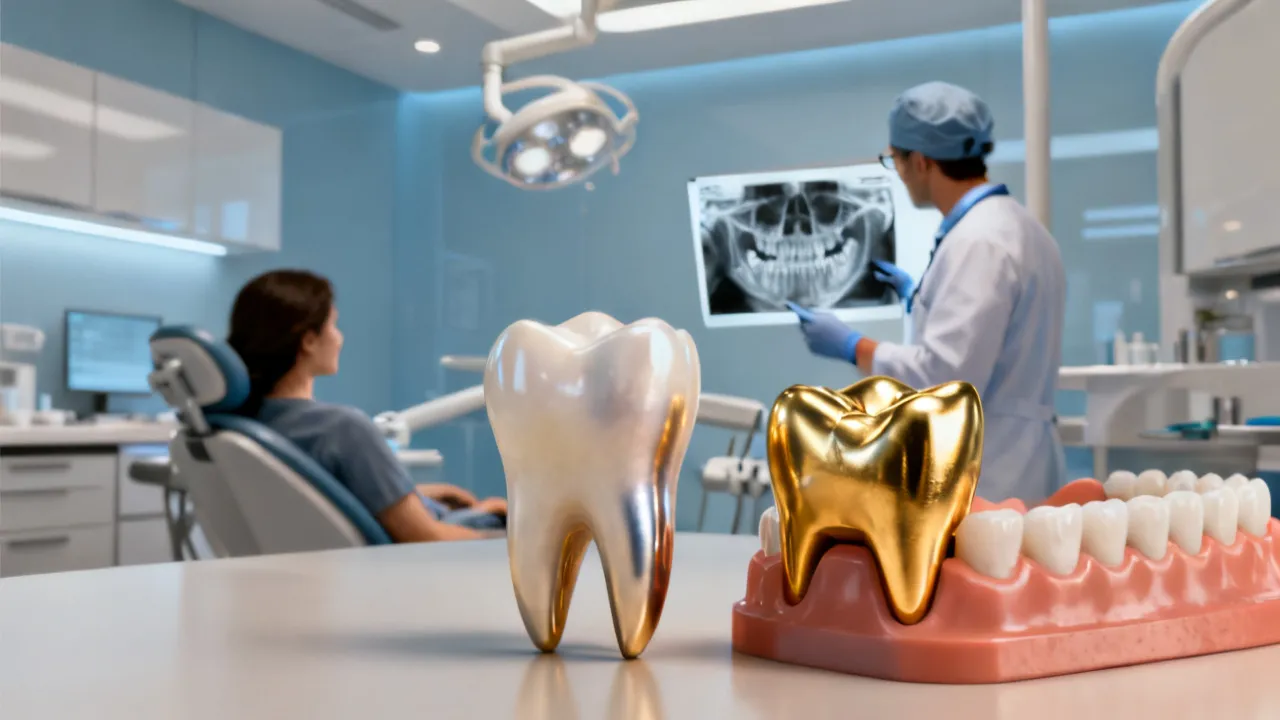
The Korean term 금니 부작용 generally refers to side effects, symptoms, or complications associated with a gold dental crown, gold inlay, gold onlay, or another restoration containing a gold alloy. Gold restorations have been used in dentistry for many decades because they can be durable, precisely fitted, and relatively gentle on opposing teeth. Nevertheless, no dental material is suitable for every patient. A successful result depends on the alloy, the condition of the tooth, the amount of tooth preparation, the laboratory work, the cement, the bite, the health of the gums, and the patient’s oral hygiene.
The most important point is that discomfort after a gold restoration should not automatically be interpreted as a material allergy. Short-term sensitivity may occur because a tooth has recently been prepared, while persistent pain may indicate an inflamed nerve, a high bite, leakage around the restoration, recurrent decay, a crack, gum disease, or another unrelated oral condition. A dentist must identify the cause before deciding whether the crown should be adjusted, monitored, repaired, removed, or replaced.
Gold crowns are not made of pure gold in most dental settings. Pure gold is too soft for many functional applications, so dental laboratories generally use alloys that may contain gold along with metals such as palladium, platinum, silver, copper, or other components. The exact composition varies by product and jurisdiction. Patients with a history of metal sensitivity should ask the dental clinic and laboratory for the material specification rather than relying only on the description “gold crown.”
Key symptoms that deserve professional assessment
- Tooth sensitivity that remains intense or does not gradually improve.
- Sharp pain when biting or releasing the bite.
- Spontaneous throbbing pain, night pain, or pain triggered by heat.
- Swelling, a gum abscess, facial swelling, or a bad taste.
- Bleeding, persistent redness, or a metallic taste around the crown.
- A crown that feels loose, moves, catches floss, or changes the way the teeth meet.
- Rash, itching, lip swelling, or other symptoms that appear after exposure to a dental alloy.
- Food repeatedly becoming trapped around the crown or between the restored tooth and its neighbor.
- A new unpleasant odor from the crown area despite regular brushing.
- Difficulty closing the mouth comfortably or a feeling that the tooth contacts first.
Facial swelling, difficulty breathing or swallowing, fever, or rapidly worsening pain requires urgent dental or medical care. These symptoms can indicate infection or a significant allergic reaction and should not be managed only with home remedies. If swelling extends toward the eye or neck, or if a patient feels generally unwell, urgent assessment is particularly important.
How Gold Dental Crowns Work
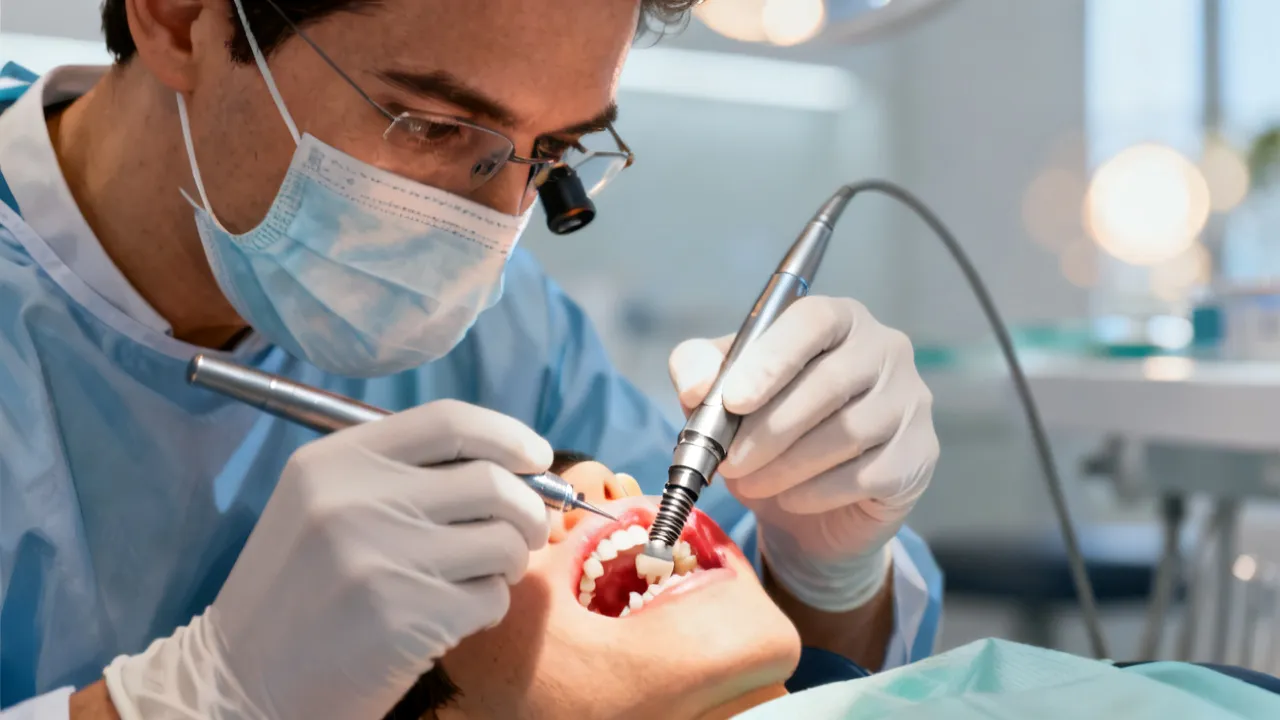
A crown covers and protects a damaged tooth. It may be recommended after extensive decay, a large filling, a fracture, or root canal treatment. A gold alloy crown is shaped to restore the tooth’s contour and chewing function. In some situations, a dentist may use a gold inlay or onlay instead of a full crown when enough healthy tooth structure remains. An inlay generally fits within the cusps of a tooth, while an onlay covers one or more cusps without necessarily covering the entire tooth.
The treatment usually includes examination, X-rays when clinically appropriate, tooth preparation, an impression or digital scan, a temporary restoration, laboratory fabrication, and final cementation. The dentist then checks the margins, contacts with adjacent teeth, chewing surface, and bite. Each stage can affect the final outcome. A technically excellent alloy cannot compensate for untreated decay, an unstable bite, poor isolation from saliva, inadequate tooth preparation, or insufficient home care.
Why gold alloys are used
- Durability: Properly designed gold alloy restorations can withstand substantial chewing forces.
- Adaptation: Some gold alloys can be fabricated with very accurate margins.
- Tooth conservation: A gold restoration may require less reduction than certain other crown materials, depending on the case.
- Wear characteristics: Gold alloys can be relatively kind to opposing enamel when the surface is properly finished.
- Resistance to chipping: Unlike some brittle ceramic materials, gold alloys do not normally chip in the same way.
- Repair considerations: Certain gold restorations may be easier to adjust or repair than some ceramic alternatives.
- Long-term clinical history: Gold restorations have a substantial history of use, particularly on posterior chewing teeth.
These advantages do not mean that gold crowns are universally preferable. Appearance, cost, available space, bite forces, allergies, gum conditions, and the location of the tooth all influence material selection. A molar that is not visible when smiling may be treated differently from a front tooth where appearance is a central concern. The best material is the one that fits the biological and mechanical needs of the particular tooth while also meeting the patient’s expectations.
Common 금니 부작용 and Their Likely Causes
1. Temporary sensitivity
Mild sensitivity to cold or pressure can occur after tooth preparation. The procedure may temporarily irritate the dentin or the pulp, even when the nerve remains healthy. The temporary crown, the cement, or the final crown may also produce a short period of unfamiliar sensation. This type of sensitivity often improves as the tooth settles. The precise time course varies according to the depth of the preparation, the quality of the seal, the health of the pulp before treatment, and the patient’s individual response.
Persistent or worsening sensitivity should be reviewed. A high temporary or permanent crown can place excessive force on the periodontal ligament and create pain when chewing. If the pulp becomes irreversibly inflamed, root canal treatment may be considered after diagnostic testing. Symptoms such as lingering pain after cold, spontaneous pain, heat sensitivity, or pain that wakes a patient during the night deserve more attention than brief sensitivity that disappears immediately after a stimulus is removed.
2. Bite discomfort
A crown that is slightly too high can feel as though it touches first. Patients may describe pressure, soreness, chewing pain, or a sensation that the restored tooth is “too tall.” This can happen even when the difference in height is very small. A dentist can evaluate the contacts with bite-marking materials and make a conservative adjustment when appropriate.
Patients should not attempt to file the crown themselves. Incorrect filing can expose the tooth, damage the restoration, change the relationship with the opposing tooth, or create a new bite problem. If the bite feels different after cementation, contacting the dental office promptly is preferable to waiting until the tooth becomes significantly sore.
3. Gum irritation and inflammation
Gum irritation may result from plaque accumulation, a crown margin that extends too far under the gum, an over-contoured restoration, trapped cement, an inaccurate contact, or pre-existing periodontal disease. The gold itself is not necessarily the cause. If inflammation continues, the dentist may need to assess the margin, clean the area, check for periodontal pockets, and determine whether the restoration requires modification or replacement.
Daily brushing with fluoride toothpaste and careful cleaning between teeth are important. Floss should pass through the contact with a gentle motion rather than being snapped downward. Interdental brushes or a water flosser may be useful for some patients, but the appropriate method depends on gum anatomy and professional advice. If the gum bleeds occasionally during cleaning, a dental professional can determine whether improved plaque removal is needed or whether another issue is present.
4. Allergic or sensitivity reactions
True allergy to dental metals is possible but is not the most common explanation for discomfort around a crown. Some alloys contain nickel or other metals that may cause reactions in susceptible individuals. A medical history of contact dermatitis from jewelry, watches, belt buckles, eyeglass frames, or clothing fasteners can be relevant, although it does not prove that a dental restoration will cause symptoms.
Possible reactions may include localized redness, itching, swelling, burning, or a rash affecting nearby soft tissue. Generalized symptoms are less common but should be taken seriously. Patients with suspected metal allergy should tell the dentist before treatment. The clinic can review the proposed alloy and, when indicated, coordinate medical patch testing or specialist evaluation. A patient should not remove a clinically acceptable crown solely because of a vague concern without diagnostic assessment, because removal may sacrifice additional tooth structure and may not solve the actual problem.
5. Metallic taste or galvanic sensation
When different metals are present in the mouth, some people report a metallic taste or a brief electrical sensation, particularly when restorations contact one another or when acidic foods are consumed. This phenomenon is sometimes described as a galvanic response. The symptom may also come from gum inflammation, medication, dry mouth, reflux, sinus drainage, or another oral condition.
A dentist can inspect the restorations and assess whether direct contact between different metals is involved. It may help to record when the sensation occurs, whether it is associated with particular foods, and whether it is accompanied by burning, swelling, or visible tissue changes. This information can make the examination more efficient.
6. Recurrent decay
A crown does not make the underlying tooth immune to decay. Plaque can accumulate at the crown margin, especially when the margin is difficult to clean or the patient has frequent exposure to fermentable carbohydrates. Recurrent decay may remain hidden until it causes sensitivity, a loose crown, odor, or structural failure. Regular examinations and radiographs when appropriate help identify problems earlier.
Patients should understand that a crown is not a substitute for fluoride exposure or daily plaque control. The edge of the crown still meets natural tooth structure, and that junction can be vulnerable. Frequent sipping of sweetened drinks, dry mouth, smoking, and irregular dental visits may increase the risk of disease around the restoration.
7. Cracks or fracture of the supporting tooth
The visible gold restoration may remain intact while the tooth underneath develops a crack. Large restorations, clenching, grinding, previous root canal treatment, and limited remaining tooth structure can increase mechanical concerns. Pain on release of the bite is one possible sign, but diagnosis can be difficult. The dentist may use bite testing, magnification, transillumination, imaging, and a review of symptoms.
A crack may be limited to the crown of the tooth, extend below the gum, or involve the root. The treatment options and prognosis differ for each situation. Replacing the crown without understanding the crack may not resolve the symptoms. For this reason, a detailed assessment is important before committing to another restoration.
8. Aesthetic concerns
Gold is intentionally visible and may not suit every patient’s preference. Some people later request a tooth-colored ceramic or zirconia restoration. Replacement should be based on a careful assessment of remaining tooth structure, the existing margin, bite forces, gum condition, and the risks of further tooth preparation.
Changing a sound crown for purely aesthetic reasons can involve additional cost and removal of more tooth material. A dentist may discuss whether a conservative inlay, onlay, veneer, or another option could meet the aesthetic goal, although not every alternative is appropriate for every tooth. Patients should also consider that tooth-colored materials can differ in translucency, wear behavior, fracture resistance, and repairability.
9. Food trapping and contact problems
Food repeatedly becoming trapped between a crown and an adjacent tooth can indicate a contact that is too open, an altered tooth contour, gum recession, or movement of the neighboring tooth. This problem can contribute to gum soreness, bad breath, and decay. It is not always a sign of an allergy or a defective alloy.
A dentist can examine the contact with floss, a visual inspection, and, when needed, radiographs. Minor contour or contact corrections may help in some cases. In other cases, the crown may need to be remade, particularly if the contact is substantially inaccurate or if the adjacent tooth has also changed.
When Is a Gold Crown Appropriate?
Material selection should be individualized. Gold alloy may be considered for posterior teeth where strength, conservative preparation, and long-term function are important. It may also be useful for patients who place heavy loads on their teeth or who have limited space for a restoration. Ceramic options can be attractive when appearance is a priority, but their suitability depends on the type of ceramic, thickness available, bite, design, and laboratory quality.
| Clinical factor | Questions for discussion |
|---|---|
| Tooth location | Is the tooth visible during speech or smiling, or is it a posterior chewing tooth? |
| Remaining structure | How much healthy enamel and dentin remain, and is a crown necessary? |
| Bite and habits | Is there clenching, grinding, a deep bite, or a history of fractured restorations? |
| Material history | Has the patient experienced reactions to jewelry, dental metals, or other materials? |
| Periodontal condition | Are the gums healthy enough to support a well-maintained crown margin? |
| Budget and longevity goals | What are the initial fee, expected maintenance needs, and replacement implications? |
| Maintenance ability | Can the patient clean around the restoration and attend periodic review appointments? |
| Future treatment | Could the tooth later require root canal treatment, a post, or another restoration? |
From a clinical-planning perspective, the best restoration is not necessarily the cheapest or the most expensive. It is the option that protects the tooth while respecting biological, mechanical, aesthetic, and financial requirements. A written treatment plan should explain alternatives and the consequences of postponing care.
Gold Crowns and Dental Implants: Different Treatments
A gold crown restores a tooth that is still present or supported by an existing structure. A dental implant replaces the root portion of a missing tooth and usually supports an abutment and crown. These treatments should not be treated as interchangeable. If a tooth can be predictably restored, preserving it may be preferable to extraction and implant placement. If a tooth is non-restorable, an implant may be one possible replacement option, alongside a bridge or removable prosthesis.
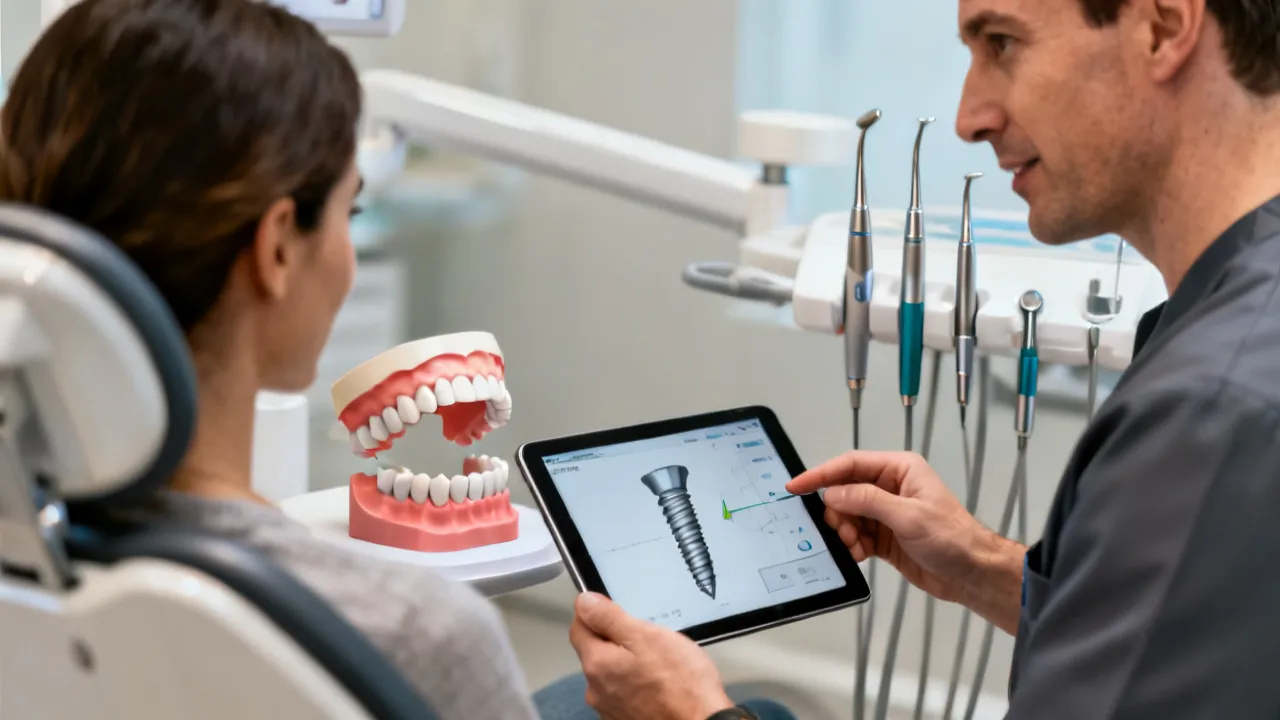
Implant treatment commonly involves a consultation, diagnostic imaging, extraction when necessary, possible bone grafting, implant placement, healing, abutment connection, and fabrication of the final crown. Not every patient needs every stage. The total fee can change substantially depending on bone volume, sedation, laboratory materials, surgical complexity, temporary teeth, and the number of appointments.
Patients researching affordable implants should therefore compare complete treatment plans rather than advertising prices for a single component. A low initial figure may exclude imaging, extraction, grafting, abutment, crown, medication, follow-up, or management of complications. The patient should ask whether the quoted price is for surgery only or for the entire process through delivery of the final tooth.
How to Obtain Dental Implants at Lower Cost in English-Speaking Countries
Affordability should be approached as value and risk management, not simply as the lowest quoted fee. The following sequence can help patients compare care in the United States, the United Kingdom, Australia, and Canada.
Step 1: Confirm that an implant is clinically necessary
Ask for a diagnosis supported by an examination and appropriate imaging. Discuss whether the tooth can be restored, whether a bridge is suitable, and whether a removable option would meet functional needs. A second opinion from a qualified dental professional can be useful when extraction or extensive surgery is proposed.
Step 2: Request an itemized treatment plan
The plan should identify the surgeon or restorative dentist, implant system, abutment, crown material, imaging, bone grafting, temporary restoration, anesthesia, laboratory fees, follow-up visits, and possible maintenance. It should also state whether fees are per tooth, per stage, or for the entire course of care. Ask whether the fee includes treatment of an infection or extraction of a hopeless tooth.
Step 3: Compare accredited providers and transparent clinics
Review professional registration, infection-control information, clinician experience, emergency arrangements, and written consent procedures. Clinic websites can help patients understand services, but online testimonials should not replace independent evaluation. Patients should be cautious when a provider makes guaranteed claims about success, omits risks, or pressures them to pay before receiving a diagnosis.
Step 4: Ask about treatment at dental schools
University dental schools may provide selected treatments under supervision, sometimes at lower institutional fees. Eligibility, waiting times, case complexity, and appointment duration vary. A teaching clinic may not be suitable when urgent treatment, extensive bone reconstruction, or a rapid completion schedule is required. Patients should ask which parts of treatment are performed by students and which are performed or checked by faculty members.
Step 5: Examine dental insurance and payment plans
Insurance often has limitations, waiting periods, annual maximums, exclusions, or restrictions on implant components. Read the benefit schedule carefully and ask whether the plan pays for the implant, abutment, crown, graft, or only an alternative treatment allowance. Payment plans should be reviewed for interest, cancellation terms, and the total amount payable. A monthly payment that appears manageable can still result in a high overall cost.
Step 6: Consider regional travel carefully
Traveling to another region can reduce some fees, but transportation, accommodation, time away from work, and emergency return visits add cost. The patient should know who will provide aftercare and how complications will be handled. Short appointments separated by long travel can make implant treatment difficult because healing and adjustments may require several visits.
Step 7: Evaluate dental tourism conservatively
Cross-border care can have lower quoted prices in some markets, but patients must verify licensing, sterilization standards, implant traceability, communication arrangements, and legal remedies. Follow-up in the home region may be difficult if the overseas clinic uses an unfamiliar implant system or does not provide complete records. Travel should never replace a detailed clinical assessment.
Step 8: Reduce preventable complications
Smoking cessation, control of diabetes where applicable, treatment of gum disease, good plaque control, and attendance at review appointments can improve the conditions for treatment. These measures do not guarantee a particular outcome, but they can help protect the investment and reduce avoidable problems. Patients should also ask how often professional maintenance is recommended after the crown is fitted.
Cost Ranges for One Dental Implant
The following figures are reference ranges for an individual dental implant in the listed countries. They should not be interpreted as a universal quote or as the price of every stage of a complete restoration. Currency, region, clinic, clinician, implant brand, laboratory, imaging, bone grafting, anesthesia, and aftercare can all affect the final amount.
| Country and code | Currency and reference range for one implant |
|---|---|
| United States (US) | US$3,000–US$6,000 USD |
| United Kingdom (GB) | £2,000–£2,500 GBP |
| Australia (AU) | AU$3,500–AU$6,500 AUD |
| Canada (CA) | CA$3,000–CA$5,500 CAD |
| Spain (ES) | €1,500–€2,500 EUR |
| Chile (CL) | CLP$800,000–CLP$1,500,000 CLP |
| Mexico (MX) | MX$15,000–MX$25,000 MXN |
| Colombia (CO) | COP$2,000,000–COP$4,000,000 COP |
| Peru (PE) | S/ 3,000–S/ 6,000 PEN |
| Argentina (AR) | ARS$80,000–ARS$150,000 ARS |
| Brazil (BR) | R$3,000–R$8,000 BRL |
| Portugal (PT) | €1,000–€2,000 EUR |
| Germany (DE) | €2,000–€3,500 EUR |
| France (FR) | €1,500–€2,500 EUR |
| Italy (IT) | €1,500–€3,000 EUR |
| Japan (JP) | ¥300,000–¥700,000 JPY |
Because prices can change with economic conditions and local practice, patients should request current written estimates. A quoted amount that appears low may describe only the implant fixture, while the visible crown and abutment are billed separately. In some clinics, surgery and the final prosthetic stage are priced independently, and a temporary tooth may have a separate fee.
Questions to ask about an implant quotation
- Does the fee include the initial consultation and three-dimensional imaging?
- Is extraction included if the tooth must be removed?
- Is bone grafting included, or is it charged according to the amount required?
- Does the fee include the implant fixture, healing component, abutment, and final crown?
- What type of crown material is being proposed?
- Are sedation, medications, and temporary restorations separate charges?
- How many follow-up appointments are included?
- What happens financially if the implant fails or needs additional treatment?
- Will the patient receive the implant manufacturer and model for future reference?
Online Resources for Comparing Lower-Cost Implant Information
The websites below represent different types of information sources. Some are clinic websites, some provide insurance or educational material, and one focuses on dental travel. They should be used for preliminary research rather than as a substitute for diagnosis, informed consent, or independent verification.
| Website or service | Primary features and appropriate use |
|---|---|
| Dental Views | Discusses lower-cost dental implant concepts, treatment types, cost considerations, benefits, and common questions. |
| Atlantic Dental Group | Clinic-based information about general dentistry, implants, orthodontics, cleaning, and urgent dental services. |
| DentaVacation | Dental tourism information, international treatment comparisons, travel planning, and overseas care considerations. |
| ADHP and Rockville Dental Arts | Dental coverage and clinic information, including insurance-related considerations and services presented for Spanish-speaking readers. |
| Union City Mini Dental Implants | Information about mini dental implants and questions that may arise when a smaller implant design is being considered. |
| Cigna Spanish Guide | Educational information in Spanish about dental implants, treatment stages, and insurance-related questions. |
| Rubi Odonto | Portuguese-language clinic information covering implants, orthodontics, whitening, and general dental services. |
| Odontologia Velasco | Portuguese-language information about implants, prostheses, aesthetic dentistry, and technology used in clinical care. |
| DentalVidas | Dental-plan information for individuals, families, and businesses, including network and emergency-service descriptions. |
Source: www.dentalviews.com/low-cost-dental-implants/, www.atlanticdentalgrp.com/, www.dentavacation.com/, rockvilledentalarts.com/es/, unioncityminidentalimplants.com/es/, www.cigna.com/es-us/knowledge-center/guide-to-dental-implants, www.rubiodonto.com.br/, odontologiavelasco.com.br/, and dentalvidas.com.br/.
How to Assess Implant Information in Different Languages
English-language resources
English-language clinic and educational websites may help patients compare terminology such as implant fixture, abutment, crown, bone graft, sinus lift, maintenance, and prosthetic complications. Dental Views is oriented toward lower-cost implant discussions, while Atlantic Dental Group presents a broader clinic-service model. DentaVacation focuses on cross-border treatment and therefore requires especially careful review of travel, records, and follow-up issues. ADHP-related material can help readers think about dental coverage, although the exact benefits depend on the insurance plan and contract.
When reading an English-language resource, distinguish educational material from an individual treatment recommendation. General statements about success, affordability, or “same-day” procedures may not apply to a patient with gum disease, inadequate bone, uncontrolled diabetes, or complex bite forces. It is useful to write down unfamiliar terms and ask a local dentist to explain how they relate to the individual case.
Spanish-language resources
Rockville Dental Arts provides a Spanish-language presentation of comprehensive dental services, including implants, whitening, cleaning, orthodontics, and emergency care. Union City Mini Dental Implants focuses on a specific implant approach and should be read alongside a clinician’s assessment of bone volume, stability, and prosthetic requirements. Cigna’s Spanish educational guide can help readers understand general implant terminology and insurance questions. Spanish-speaking patients should still confirm whether a quoted price includes the crown, abutment, imaging, extraction, and review visits.
Portuguese-language resources
Rubi Odonto describes services in Santo André, São Paulo, including orthodontics, whitening, and implants. Odontologia Velasco presents implant, prosthetic, and aesthetic services in São Paulo and discusses the use of contemporary technology. DentalVidas is oriented toward dental plans and network access rather than a single implant procedure. Readers in Portuguese-speaking markets should check the professional registration, laboratory arrangements, warranty conditions, and emergency pathway before committing to treatment.
Conditions and Requirements Before Implant Treatment
A safe implant plan begins with health assessment rather than price comparison. The dentist may review medical conditions, medications, smoking, previous radiation treatment, gum health, bone volume, bite, parafunctional habits, and expectations. Imaging may include a panoramic radiograph or three-dimensional imaging when clinically justified.
Oral conditions
- Active gum disease should generally be managed before implant placement.
- Teeth with untreated decay or infection may need treatment first.
- Insufficient bone may require grafting or another treatment plan.
- Clenching and grinding may require a protective strategy after restoration.
- Oral hygiene must be adequate for long-term maintenance.
- Existing cavities in neighboring teeth may need attention before final restoration.
Medical considerations
Diabetes, immune conditions, osteoporosis medication, blood-thinning medication, cardiovascular disease, and previous head-and-neck radiation can influence planning. Patients should provide a complete medication list and should not stop prescribed medication without advice from the prescribing clinician. Pregnancy, smoking, and heavy alcohol use may also affect timing and healing considerations.
Some medical conditions do not automatically prevent implant treatment, but they may require coordination with a physician or changes in timing. The dentist may also ask about previous difficulties with anesthesia, excessive bleeding, wound healing, or infections. Full disclosure allows the team to plan safely and avoid preventable complications.
Documentation for cross-border treatment
Patients traveling for care should request copies of diagnostic images, treatment notes, implant brand and model, lot information when available, laboratory prescriptions, medication instructions, and emergency contact details. A local dentist may be unable to repair or restore an implant if the system cannot be identified. Insurance coverage for complications arising from overseas care should be checked before travel.
Preventing Problems After a Gold Crown or Implant Crown
Maintenance is central to both crown and implant outcomes. Brush twice daily with fluoride toothpaste unless a dental professional has recommended another product. Clean between teeth every day, attend periodic examinations, and report changes early. Patients with implants should receive individualized instruction because the design of the crown, tissue contour, and available spaces determine the best cleaning method.
Avoid using teeth to open packaging or bite hard non-food objects. If grinding is suspected, ask whether a professionally designed occlusal appliance is appropriate. Do not use abrasive polishing products on a gold crown without dental advice. Abrasive materials can alter the surface and may affect opposing teeth or plaque retention.
Dietary habits also matter. Frequent sugary snacks and acidic drinks can increase the risk of decay around a crown. Dry mouth caused by medications or medical conditions can make plaque control more difficult. A clinician can discuss saliva-supportive measures and preventive products suited to the individual. Drinking water, limiting continuous snacking, and following professional fluoride recommendations may help protect natural tooth surfaces adjacent to restorations.
Care during the first days after cementation
A patient may notice a different taste, mild gum tenderness, or an unfamiliar bite during the first days. Unless the dentist gives different instructions, chewing should be cautious until the cement has fully set and the patient is confident that the crown feels stable. Very sticky foods may be best avoided initially. If the temporary crown comes loose before the final appointment, the clinic should be contacted rather than relying on unapproved household glue.
Care around an implant crown
Implant crowns require cleaning around the crown-to-gum junction. A toothbrush, interdental brush, floss designed for implants, or water flosser may be recommended according to the restoration design. Bleeding, swelling, pus, persistent bad breath, or increasing looseness should be reported. An implant does not develop tooth decay in the same way as a natural tooth, but the surrounding gum and bone can develop inflammatory disease, and the visible crown can still fracture or become loose.
When Should a Gold Crown Be Replaced?
Replacement is not automatically required because a crown is old or because it is gold. A dentist may recommend replacement when there is recurrent decay, a poor margin, a fracture, loss of retention, significant wear, repeated inflammation, or a structural problem with the tooth. If the crown is clinically sound and the surrounding tissues are healthy, monitoring may be more conservative than elective removal.
Removing a crown can damage remaining tooth structure, particularly when the restoration is firmly bonded or when access is limited. The dentist should explain the reason for replacement, the likely amount of tooth reduction, alternatives, expected fees, and the possibility that root canal treatment may become necessary if the pulp is compromised.
Before replacement, the dentist may evaluate the crown with visual inspection, probing, bite testing, X-rays, photographs, and comparison with previous records. A crown that appears unattractive may still have an excellent seal and may not require removal for health reasons. Conversely, a crown that looks acceptable may conceal decay or a crack. Appearance alone is not a reliable measure of clinical condition.
When Is Root Canal Treatment Considered?
Root canal treatment may be considered when the pulp inside the tooth is irreversibly inflamed or infected. Symptoms can include spontaneous pain, prolonged sensitivity to temperature, pain that wakes the patient, tenderness to biting, swelling, or a draining sinus. However, symptoms overlap with other problems, so testing is essential.
Tests may include cold or heat testing, electrical pulp testing, percussion, palpation, bite testing, and radiographic examination. A dentist may also compare the affected tooth with neighboring teeth. If the diagnosis remains uncertain, observation, referral to an endodontic specialist, or additional imaging may be recommended.
Root canal treatment does not necessarily mean the crown was incorrectly made or that gold caused the problem. A tooth may have had pre-existing pulp damage, or the preparation may have been close to the nerve. The dentist should explain whether the existing crown can remain, whether an access opening can be repaired, or whether the crown must be replaced after endodontic treatment.
FAQs About 금니 부작용 and Dental Implants
Can a gold crown cause tooth pain?
Yes, but pain does not prove that the gold alloy is responsible. A high bite, pulp inflammation, recurrent decay, crack, loose crown, gum disease, or cement leakage may be involved. Diagnostic testing is necessary.
How long can sensitivity last after a gold crown?
Mild sensitivity may occur temporarily after preparation or cementation. The expected course varies. Sensitivity that is severe, spontaneous, heat-related, worsening, or persistent should be assessed rather than ignored.
Are gold crowns safe for people with metal allergies?
Many patients tolerate dental gold alloys, but some alloys contain metals that can affect susceptible individuals. Tell the dentist about previous reactions to jewelry or other metals and ask for the complete alloy information. A medical allergy evaluation may be appropriate.
Can gum swelling around a gold crown be normal?
Persistent swelling is not considered a desirable long-term finding. Plaque, trapped cement, an over-contoured margin, periodontal disease, or an infection may be present. Arrange a dental examination.
Is a gold crown better than a ceramic crown?
Neither is universally better. Gold may offer strength and conservative preparation in selected posterior cases, while ceramic may better satisfy aesthetic requirements. Tooth position, bite, material thickness, gum condition, and patient priorities determine suitability.
Can an implant be used instead of a gold crown?
An implant is generally considered when a tooth is missing or cannot be predictably restored. It does not simply replace a crown on a healthy, restorable tooth. The dentist should compare tooth preservation with extraction and replacement options.
What does an affordable dental implant quote usually include?
There is no universal definition. Some quotes include the implant, abutment, and crown; others cover only surgery or the implant fixture. Confirm whether the fee includes imaging, extraction, grafting, temporary teeth, anesthesia, medications, follow-up, and management of complications.
Are mini dental implants suitable for everyone?
No. Suitability depends on bone anatomy, the intended prosthesis, bite forces, medical history, and the clinician’s treatment plan. A smaller implant is not automatically a simpler or better solution.
Is dental tourism always less expensive?
Not necessarily. Travel, accommodation, repeat visits, exchange-rate changes, aftercare, and complication management can increase the total cost. Compare complete treatment plans and confirm who will provide follow-up.
How can patients lower implant costs without compromising care?
Obtain a diagnosis and itemized plan, compare qualified providers, ask about supervised university clinics, review insurance carefully, treat gum disease before surgery, and consider timing options. Avoid choosing a provider solely because of the lowest advertised amount.
What should a patient do if a gold crown feels loose?
Contact a dentist promptly. Keep the crown if it comes out, avoid chewing on that side, and do not use household adhesives. The tooth may have decay or structural damage, and the crown may be reusable only after professional evaluation.
Can a gold crown be removed and reused?
Sometimes, but not always. Reuse depends on the crown’s fit, integrity, contamination, the condition of the supporting tooth, and the cementation process. The dentist must make the decision after examination.
Can a metallic taste be caused by something other than a crown?
Yes. Medications, dry mouth, gum inflammation, reflux, sinus problems, dietary changes, and certain infections can cause an altered taste. A dental examination can help determine whether the restoration is involved.
Should a patient wait if pain is mild?
Mild symptoms may be monitored briefly when the dentist has explained that they are expected and are improving. If symptoms do not improve, become more intense, interfere with sleep, or are accompanied by swelling, the patient should contact the dental office.
Practical Checklist for a Dental Consultation
- Describe when the symptom began and what triggers it.
- Explain whether pain occurs with cold, heat, chewing, biting, or release of the bite.
- Bring a list of medications and relevant medical diagnoses.
- Report previous reactions to jewelry, metals, medicines, or dental materials.
- Ask whether the tooth is restorable and whether a crown is necessary.
- Request the proposed alloy or ceramic material in writing.
- Ask how the bite and crown margin will be checked.
- For implants, request a complete treatment sequence and itemized fee.
- Confirm the implant brand, abutment type, crown material, and follow-up plan.
- Ask who will manage urgent problems after treatment.
- Obtain copies of images and clinical records when treatment is completed.
- Ask how long the temporary restoration should remain in place.
- Discuss whether a night guard or other protection is appropriate.
- Ask what symptoms require an urgent call rather than routine follow-up.
Professional Perspective: Choosing Value Over a Single Price
From an industry and clinical-planning perspective, dental treatment should be evaluated through three connected questions: Is the diagnosis sound? Is the proposed procedure technically appropriate? Can the patient maintain the result? A low fee is not useful if the plan omits necessary stages or leaves the patient without a realistic aftercare pathway.
The same principle applies to 금니 부작용. A patient may focus on the gold material, but the decisive issue can be the fit of the restoration, the health of the tooth, the condition of the gums, or the way the teeth contact during chewing. Careful diagnosis prevents unnecessary replacement and helps direct treatment toward the actual cause.
For implants, an affordable plan should be transparent, clinically justified, and supported by qualified care. Comparing providers across English-, Spanish-, and Portuguese-language resources can improve understanding, but the final choice should be based on verified credentials, complete treatment information, communication quality, and a practical plan for maintenance and complications.
Patients should also consider the value of continuity. A dentist who knows the patient’s medical history, previous restorations, bite, and maintenance needs may be able to identify a problem more efficiently. Changing providers for every stage solely to reduce the price can make communication and responsibility less clear. If different clinicians are involved, the patient should confirm who is responsible for the overall plan and who will coordinate records.
Conclusion
Gold dental crowns remain a durable restorative option, but 금니 부작용 such as sensitivity, bite discomfort, gum inflammation, metallic sensations, allergic reactions, recurrent decay, food trapping, and tooth fracture can occur. These symptoms require diagnosis rather than assumptions. Patients considering replacement or dental implants should distinguish restoration of an existing tooth from replacement of a missing tooth, compare complete treatment plans, and examine both clinical quality and total cost.
Careful material selection, accurate crown design, healthy gums, effective daily cleaning, regular reviews, and clear communication provide a stronger foundation than an isolated price or online claim. A dentist can help determine whether monitoring, adjustment, repair, replacement, root canal treatment, or implant treatment is the most appropriate next step.
Disclaimer
1. The information above is compiled from online resources, and the data is presented as of October 2023.
2. Dental implant prices are for reference only and may vary according to region, clinic, doctor, treatment complexity, materials, laboratory fees, imaging, and follow-up requirements. This article is educational and does not replace an examination, diagnosis, or personalized advice from a qualified dental professional.
3. The presence of pain, swelling, sensitivity, or a metallic taste cannot be diagnosed from an article alone. A dentist, physician, allergist, or other appropriately qualified professional should evaluate symptoms that persist or worsen.