IRM Cement and Affordable Implant Planning
This guide explains the composition, indications, advantages, and limitations of IRM 시멘트, while placing the material in the wider context of temporary dental restorations and affordable implant care. IRM cement is a reinforced zinc oxide–eugenol material commonly used for intermediate restorations and temporary cementation. The article also compares dental-information websites, outlines cost-conscious treatment planning in English-, Spanish-, and Portuguese-speaking markets, and presents reference price ranges for individual implants.
Executive Overview
IRM 시멘트, commonly written in English as IRM cement, is a reinforced zinc oxide–eugenol dental material used primarily for intermediate restorations, temporary fillings, and selected temporary cementation procedures. It is not an implant, an implant coating, or a substitute for the surgical components of implant therapy. Its value lies in providing a relatively durable interim seal while a dentist evaluates the tooth, prepares a definitive restoration, or completes a staged treatment plan.
From an industry perspective, the most important point is material selection by indication. IRM cement may be appropriate when a clinician needs a temporary or intermediate restoration with workable handling characteristics and a sedative effect associated with eugenol. It is generally not the preferred material when a definitive adhesive bond, high esthetic quality, or long-term resistance to heavy occlusal forces is required. The dentist must also consider whether eugenol could interfere with a later resin-based procedure.
For patients researching affordable dental implants, IRM cement may appear during the broader treatment journey—for example, when a damaged tooth is stabilized before extraction, when an adjacent tooth receives an interim restoration, or when a provisional restoration is used during staged care. However, the cost of an implant depends mainly on diagnosis, surgery, the implant fixture, the abutment, the crown, imaging, laboratory work, and any bone or gum treatment. IRM cement is only one possible component of a much larger clinical plan.
A safe cost-conscious strategy therefore combines three principles:
- Obtain a diagnosis before comparing prices. A quoted implant price has little value if it excludes imaging, the crown, the abutment, or preparatory treatment.
- Choose materials according to clinical purpose. A lower-cost temporary material should not be treated as a definitive restoration when the tooth requires long-term protection.
- Compare complete treatment plans, not isolated promotional figures. Written estimates, provider credentials, warranty terms, and follow-up arrangements are as important as the headline price.
What Is IRM Cement?
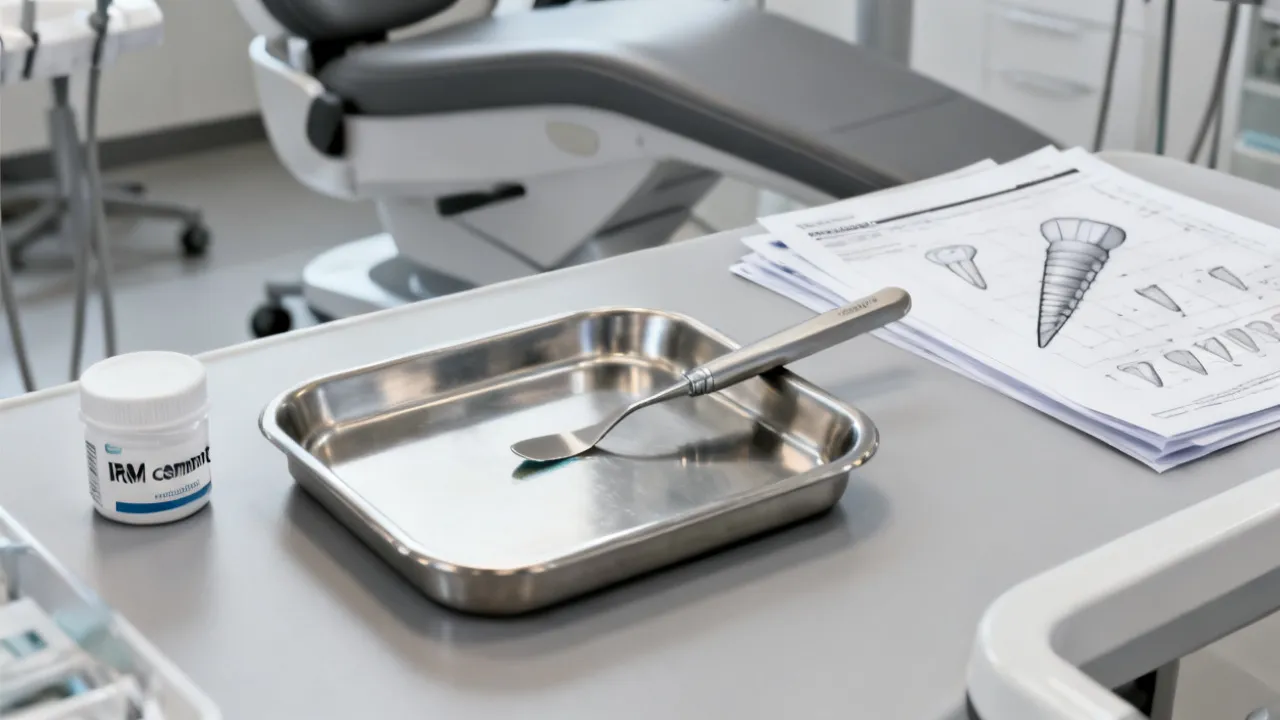
IRM cement is a reinforced form of zinc oxide–eugenol material. In common dental use, the powder contains zinc oxide and reinforcing ingredients, while the liquid contains eugenol or a related formulation. When mixed, the components form a cement matrix that can be shaped and placed in a prepared cavity or used in other temporary applications permitted by the product instructions.
The name “IRM” is often associated with an intermediate restorative material. The exact formulation, mixing ratio, working time, setting behavior, radiopacity, and approved indications depend on the manufacturer. Dental professionals should therefore consult the current instructions for use rather than relying solely on general descriptions.
Patients sometimes interpret the word “cement” as meaning a permanent structural replacement. That interpretation is misleading. Dental cement can serve many roles: temporary filling, luting agent, base, liner, provisional sealing material, or a component of another procedure. IRM cement is usually discussed in relation to temporary or intermediate care rather than as a permanent tooth-colored restoration.
Typical Components
| Component or property | Clinical relevance |
|---|---|
| Zinc oxide base | Contributes to the cement matrix and provides the principal powder component in many formulations. |
| Eugenol-containing liquid | Participates in setting and is associated with the characteristic odor and sedative behavior of zinc oxide–eugenol materials. |
| Reinforcing additives | Improve strength and handling compared with conventional, non-reinforced zinc oxide–eugenol formulations. |
| Radiopaque ingredients | May help the dentist identify the material on dental radiographs, depending on the product. |
The material is normally supplied as a powder and liquid, capsules, or another manufacturer-specific delivery system. Mixing is not merely a cosmetic or administrative step. The powder-to-liquid ratio, mixing time, temperature, humidity, and moisture contamination can influence the consistency and final properties of the cement. For that reason, preparation should be performed by the dental team using the manufacturer’s instructions and appropriate clinical equipment.
Common Dental Uses
The most common use of IRM cement is an intermediate restoration. A dentist may place it after removing decay when the tooth needs observation, when definitive treatment is scheduled later, or when the clinical situation requires staged care. The material may also be selected for temporary sealing after certain endodontic procedures, although the exact application depends on the treatment and product approval.
In some cases, a dentist may use an IRM-type material to stabilize a tooth while treatment planning continues. This can be useful when the clinician must assess symptoms, pulpal status, restorability, periodontal conditions, or the patient’s ability to return for further appointments. It is not a reason to postpone necessary definitive care indefinitely.
Temporary cementation is another possible application for selected zinc oxide–eugenol materials. The dentist must confirm compatibility with the provisional restoration, the tooth substrate, and the later restorative system. A product intended for intermediate restoration should not automatically be used as a luting cement, and a temporary cement should not be assumed to have the same indication as IRM cement.
Situations in Which an Intermediate Restoration May Be Helpful
- A tooth has extensive decay and the dentist wants to observe symptoms before selecting a definitive restoration.
- Emergency treatment has relieved an immediate problem, but a crown, root canal, extraction, or other procedure must be scheduled later.
- A patient needs a temporary seal between appointments during endodontic or restorative treatment.
- The dentist wants to protect a prepared area while laboratory work is completed.
- A tooth must be stabilized while the clinician evaluates the condition of adjacent teeth, the bite, or the supporting tissues.
These uses should be understood as part of a treatment sequence. The material may be successful for its intended interval but unsuitable if it is left in place long after the planned review. A temporary restoration can hide ongoing disease, permit leakage, or fail under chewing forces without producing dramatic symptoms immediately.
Advantages and Limitations
| Potential advantage | Important limitation |
|---|---|
| Practical handling in many dental settings | Working and setting characteristics vary by brand and mixing technique. |
| Useful for intermediate or temporary treatment | It is not automatically suitable as a permanent restoration. |
| Can provide a provisional seal | Marginal breakdown, wear, or loss can occur if follow-up is delayed. |
| May be radiopaque in certain formulations | Radiographic visibility and performance depend on the specific product. |
| Often less complex than definitive restorative procedures | It does not replace crowns, inlays, onlays, implants, or other definitive treatment when those are indicated. |
From an expert standpoint, the chief benefit of IRM cement is clinical flexibility, not indefinite durability. It can support a staged treatment pathway, but its success depends on case selection, moisture control, cavity design, occlusal forces, and timely review. A patient who experiences renewed pain, swelling, sensitivity, a loose restoration, or an unpleasant taste should contact the dental office rather than repeatedly repairing the area independently.
Another limitation is that temporary materials are rarely selected for maximum esthetics. IRM cement may be acceptable in a posterior tooth or for a short clinical interval, but it may not match the shade, translucency, polish, or surface texture of a definitive composite, ceramic, or other tooth-colored restoration. Patients should ask whether the material is intended to be visible and how long it is expected to remain.
IRM Cement and Resin-Based Dentistry
Eugenol deserves particular attention because it may affect the polymerization or bonding behavior of some resin-based materials. The degree of interaction depends on the formulation, the amount of residual material, the surface preparation, and the adhesive system. For this reason, a dentist may remove residual eugenol-containing material and prepare the tooth carefully before placing a resin composite, adhesive restoration, or resin-based cement.
This does not mean that every tooth previously treated with IRM cement is unsuitable for resin dentistry. It means that the transition from an eugenol-containing temporary material to a resin-based definitive restoration requires appropriate surface management and clinical judgment. The treating dentist should know which material was used, how long it remained, and what definitive restoration is planned.
Patients can help by keeping the material’s name, packaging, or treatment record whenever possible. If they change clinics, the new dentist should be told that an eugenol-containing temporary material may have been placed. This information can influence the choice of cleaning method, bonding protocol, temporary cement, or restorative material.
IRM Cement Compared With Other Temporary Materials
Temporary dental materials are not interchangeable. A glass ionomer material may be selected for fluoride release or chemical adhesion in particular situations. A non-eugenol temporary cement may be chosen when a resin-based procedure is expected. Temporary composite or bis-acryl materials may be used for provisional crowns, bridges, or esthetic requirements. Calcium hydroxide or calcium silicate materials may have different roles in vital pulp therapy or endodontic procedures.
The correct choice depends on the clinical objective. A material used to seal a small cavity for a limited period has different performance requirements from a provisional crown that must protect a prepared tooth under chewing forces. A temporary material placed under an implant-supported provisional restoration must also be evaluated for occlusion, hygiene access, retrievability, and the stability of the implant treatment.
| Clinical question | Why it matters |
|---|---|
| Is the restoration intended to be temporary or definitive? | Temporary materials are selected for interim function and may not withstand long-term service. |
| Will a resin adhesive or resin cement be used later? | Eugenol compatibility and surface preparation may affect the later bonding procedure. |
| Is the tooth exposed to heavy chewing forces? | High occlusal load can increase the risk of wear, fracture, or dislodgement. |
| Can the patient return for review? | An interim restoration requires monitoring and timely completion of the treatment plan. |
What Patients Should Expect During Treatment
The dentist normally begins with an examination and, when appropriate, radiographs or other imaging. The tooth is assessed for decay, cracks, pulpal involvement, periodontal status, remaining structure, and restorability. The clinician then explains whether the proposed material is intended for a short-term, intermediate, or longer provisional period.
During placement, the dentist removes infected or unsupported tooth structure as clinically indicated, controls moisture, mixes or dispenses the material according to the manufacturer’s instructions, and adapts it to the prepared area. The bite is checked so that the new restoration does not create an excessive high point. The patient should ask when the material must be reviewed or replaced.
After treatment, mild sensitivity may occur depending on the underlying condition. Persistent or worsening pain, spontaneous throbbing, swelling, fever, difficulty opening the mouth, or difficulty swallowing requires prompt professional assessment. These symptoms may indicate pulpal, periodontal, or infectious problems that cement alone cannot resolve.
It is reasonable for a patient to ask what was found during the appointment, whether decay was deep, whether the nerve was exposed or at risk, and what future treatment is expected. A short appointment for an intermediate restoration may be only one stage of a larger plan. Understanding the next stage helps prevent the temporary filling from becoming an unintended long-term solution.
When a Temporary Restoration May Need Prompt Review
A temporary restoration should be checked promptly if it becomes loose, fractured, rough, painful, or noticeably smaller. A small amount of surface wear may not be urgent, but a large missing section can allow food and bacteria to enter the cavity. The patient should contact the treating practice for individualized advice rather than attempting to push the material back into place.
Urgent dental assessment is particularly important when symptoms include facial swelling, swelling beneath the jaw, fever, severe spontaneous pain, uncontrolled bleeding, difficulty breathing, or difficulty swallowing. In some circumstances, these symptoms require emergency medical care. A temporary dental material is not a treatment for a spreading infection.
How IRM Cement Relates to Dental Implants
IRM cement does not integrate with bone and does not replace an implant fixture. Dental implant treatment usually involves a titanium or ceramic implant placed in the jaw, an abutment, and a prosthetic crown or other restoration. Some patients also require extraction, bone augmentation, soft-tissue management, or treatment of infection before implant placement.
Nevertheless, IRM cement can appear in treatment plans involving missing teeth. For example, a dentist may temporarily restore a neighboring tooth while the patient completes implant planning. A temporary restoration may also be used during a staged sequence in which the clinician first controls disease, then confirms healing, and only afterward proceeds with definitive prosthetic treatment.
Patients should distinguish between:
- Temporary tooth restoration: A provisional measure that protects or seals a natural tooth.
- Temporary implant restoration: A provisional prosthesis connected to an implant or supported by another structure, subject to specific loading requirements.
- Definitive implant restoration: The final crown, bridge, or overdenture designed for longer-term function.
An advertisement that combines “cement,” “implant,” and “low cost” may create confusion. Ask the clinic to identify every component in writing. The estimate should state whether the price includes the implant fixture, abutment, crown, imaging, surgery, anesthesia, temporary restoration, laboratory fees, follow-up, and treatment of complications.
Stages of a Typical Implant Treatment Plan
Although every case differs, a complete implant plan commonly has several stages. First, the dentist confirms that the tooth is missing or cannot reasonably be restored and evaluates the surrounding bone and gum tissue. Second, active decay, gum disease, infection, or other oral problems may be treated. Third, an extraction may be performed if a damaged tooth remains. The clinician then decides whether immediate implant placement is possible or whether healing should occur first.
Implant placement is followed by a healing period during which the implant becomes stable within the bone. In selected cases, a provisional restoration may be placed earlier, but loading is determined by implant stability, bone quality, location in the mouth, and the clinician’s protocol. The final restoration is made after the surgical site and surrounding tissues are sufficiently stable. Impressions or digital scans, shade selection, laboratory design, and bite adjustment are part of this stage.
Each stage can carry a separate fee. A patient comparing prices should ask whether the estimate includes all stages or only the surgical appointment. The cost of an IRM temporary filling, if used elsewhere in the mouth, is generally minor compared with the complete implant pathway and should not be confused with the price of implant treatment.
How to Obtain Dental Implants at Lower Cost in English-Speaking Markets
Patients in English-speaking markets can reduce avoidable expenses without compromising essential diagnosis or safety. Lower cost should result from efficient planning, transparent fees, appropriate provider selection, and comparison of complete treatment plans—not from omitting clinically necessary steps.
-
Request a complete examination.
Begin with a dentist who can evaluate the missing tooth area, neighboring teeth, bone volume, gum health, bite, general health, medications, and smoking status. The initial consultation should identify whether an implant is appropriate and whether alternative treatments may meet the patient’s needs.
-
Ask for an itemized estimate.
Separate the surgical phase from the restorative phase. Confirm whether the quoted amount includes three-dimensional imaging, extraction, bone grafting, implant placement, abutment, provisional tooth, final crown, laboratory charges, medications, and follow-up appointments.
-
Compare like with like.
A quotation for the implant fixture alone is not comparable with a quotation for a completed implant tooth. Ask every clinic to use the same scope of treatment and to identify the manufacturer and type of prosthetic components where relevant.
-
Consider accredited or appropriately licensed providers.
Review professional registration, surgical training, infection-control procedures, and the clinic’s process for managing complications. In the United States, patients may check relevant state licensing information; in Canada, Australia, and the United Kingdom, comparable provincial, territorial, or national registration systems may apply.
-
Ask about treatment at a dental school or teaching clinic.
Dental schools and teaching hospitals may offer supervised care at different fee levels. Eligibility, waiting times, case complexity, and the availability of implant treatment vary substantially, so patients should ask how care is supervised and who provides follow-up.
-
Address gum disease and decay before implant surgery.
Untreated oral disease can complicate the prognosis of both natural teeth and implants. Treating disease early may prevent additional procedures and make the overall plan more predictable.
-
Discuss alternatives openly.
A conventional bridge, removable partial denture, or delayed treatment may be appropriate in some cases. The decision should consider function, esthetics, tooth preservation, maintenance, medical factors, and long-term cost rather than the initial fee alone.
-
Review payment and insurance conditions.
Dental insurance may restrict implant coverage, impose annual limits, or cover only selected components. Financing arrangements should be examined for interest, cancellation terms, and the total amount payable.
-
Plan maintenance.
Professional reviews, home cleaning, interdental care, and prompt management of inflammation support the long-term health of implant restorations. A low initial quotation may become more expensive if maintenance and repair are ignored.
How to Obtain Dental Implants at Lower Cost in Spanish-Speaking Markets
Spanish-speaking patients may seek care in Spain, Mexico, Chile, Colombia, Peru, Argentina, or other markets. Prices and regulations differ by region, and language access should be considered alongside clinical quality. Patients should request documents in Spanish or a language they understand, including the diagnosis, proposed procedures, materials, fees, risks, and follow-up schedule.
- Verify the dental professional and facility. Confirm registration with the applicable national or regional authority and ask who performs surgery, who restores the implant, and who handles emergencies.
- Obtain a written treatment sequence. The plan should identify consultations, radiographs or three-dimensional imaging, extraction, grafting, implant placement, healing time, provisional care, impression or digital scanning, and delivery of the final restoration.
- Clarify whether the quoted price is per implant or per complete tooth. Spanish-language advertisements may use different terms for the fixture, crown, prótesis, pilar, or treatment package. Ask the clinic to define each term.
- Compare local care with cross-border care carefully. Travel may reduce the advertised treatment fee but add transportation, accommodation, time away from work, translation, and the cost of returning for complications.
- Ask about warranty limitations. A warranty may exclude smoking, poor hygiene, missed reviews, accidental damage, or work performed by another clinic. Obtain the terms before treatment.
- Confirm emergency access. Patients traveling for care should know where to seek assistance if a temporary restoration loosens, swelling occurs, or an implant-supported provisional becomes uncomfortable.
How to Obtain Dental Implants at Lower Cost in Portuguese-Speaking Markets
Brazil and Portugal have extensive dental sectors, but fees, professional requirements, laboratory practices, and implant systems vary between regions. Portuguese-speaking patients should ask for a treatment plan using clear terms such as implante dentário, pilar, coroa provisória, coroa definitiva, enxerto ósseo, and manutenção. A clinic should be able to explain which services are included and which are billed separately.
- Start with an implant consultation and imaging review. The clinician should evaluate bone and soft tissue, adjacent teeth, occlusion, and general health before recommending surgery.
- Compare complete packages. Confirm whether a package includes the implant, surgical procedure, abutment, temporary tooth, final crown, laboratory work, imaging, and review appointments.
- Ask whether the implant system is documented. Patients should receive records that identify the implant system and prosthetic components, especially if they may move or seek follow-up elsewhere.
- Use teaching clinics where suitable. University clinics may provide supervised treatment at different rates, but patients should ask about selection criteria and expected scheduling.
- Evaluate dental tourism beyond the advertised fee. Include flights, accommodation, lost income, translation, medication, and possible revision treatment in the financial comparison.
- Maintain continuity of care. Ideally, the surgical and restorative providers coordinate records, healing reviews, and prosthetic adjustments. Fragmented care can create avoidable communication and responsibility problems.
Understanding the Main Components of an Implant Quote
Many pricing disputes arise because patients and clinics use the word “implant” to describe different things. The implant fixture is the portion placed in the bone. The abutment connects the fixture to the crown, although some systems use integrated or customized components. The crown is the visible prosthetic tooth. A complete tooth therefore involves more than the fixture alone.
| Possible fee item | What it may include |
|---|---|
| Consultation and diagnosis | Clinical examination, medical history, photographs, basic radiographs, and treatment planning. |
| Advanced imaging | Three-dimensional imaging used to evaluate bone anatomy, nerves, sinus position, and surgical planning. |
| Extraction | Removal of a non-restorable tooth and possible management of infection or the extraction socket. |
| Bone or soft-tissue treatment | Grafting, sinus-related procedures, ridge preservation, or gum contouring when clinically indicated. |
| Implant surgery | Placement of the implant fixture, local anesthesia, sterile supplies, and surgical follow-up. |
| Provisional restoration | A temporary tooth or removable appliance used during healing or laboratory production. |
| Abutment and crown | The connection component and final visible restoration, often involving a dental laboratory. |
| Maintenance | Reviews, hygiene appointments, adjustments, and management of prosthetic wear or inflammation. |
When asking for a quote, request the total expected cost under the proposed plan as well as the cost of possible additions. It is impossible to predict every clinical event before imaging and examination, but a clinic should explain which findings could alter the estimate. This makes financial planning more realistic and reduces the risk of accepting a low initial price that later expands substantially.
Comparison of Dental Information Websites
The following websites illustrate different types of dental information and service platforms. They should be treated as starting points for research rather than as substitutes for an individualized examination. Their content, pricing, availability, and clinical policies may change, so readers should verify current information directly with each organization.
| Website or organization | Main features and relevance |
|---|---|
| Dental Views | Provides educational information about low-cost dental implants, treatment types, expected stages, and cost considerations. |
| Atlantic Dental Group | Clinic-style information covering general dentistry and possible services such as implants, orthodontics, preventive care, and emergency dentistry. |
| DentaVacation | Dental-tourism information focused on overseas treatment, destination comparisons, travel planning, and affordability considerations. |
| American Dental Health Plans | Information related to dental insurance plans, coverage options, and methods of managing treatment expenses. |
| Rockville Dental Arts | Spanish-language clinic information covering services such as implants, whitening, cleaning, orthodontics, and emergency dental care. |
| Union City Mini Dental Implants | Spanish-language information from a clinic specializing in mini dental implant services and related treatment discussions. |
| Cigna Dental Implant Guide | Spanish-language educational material explaining implant concepts, treatment stages, and questions patients may ask about coverage and care. |
| Rubi Odonto | Brazilian clinic information concerning orthodontics, whitening, implants, and other dental services. |
| Odontologia Velasco | Brazilian clinic information related to implants, prostheses, esthetic dentistry, and technology-assisted care. |
| DentalVidas | Portuguese-language information about dental plans for individuals, families, and companies, including network and emergency-service information. |
Source:
source: www.dentalviews.com
source: www.atlanticdentalgrp.com
source: www.dentavacation.com
source: rockvilledentalarts.com/es
source: unioncityminidentalimplants.com/es
source: www.cigna.com/es-us/knowledge-center/guide-to-dental-implants
source: www.rubiodonto.com.br
source: odontologiavelasco.com.br
source: dentalvidas.com.br
Reference Price Ranges for Individual Dental Implants
The following ranges are presented for an individual dental implant treatment reference point in the listed markets. They should not be interpreted as a universal quote or as a complete treatment package. In practice, a clinic may price the implant fixture, abutment, crown, imaging, surgery, temporary restoration, laboratory work, grafting, and maintenance separately.
| Country | Currency | Reference price range |
|---|---|---|
| United States | USD | $3,000–$6,000 |
| United Kingdom | GBP | £2,000–£2,500 |
| Australia | AUD | AU$3,500–AU$6,500 |
| Canada | CAD | CA$3,000–CA$5,500 |
| Spain | EUR | €1,500–€2,500 |
| Chile | CLP | CLP$800,000–CLP$1,500,000 |
| Mexico | MXN | $15,000–$25,000 |
| Colombia | COP | $2,000,000–$4,000,000 |
| Peru | PEN | S/ 3,000–S/ 6,000 |
| Argentina | ARS | $80,000–$150,000 |
| Brazil | BRL | R$3,000–R$8,000 |
| Portugal | EUR | €1,000–€2,000 |
| Germany | EUR | €2,000–€3,500 |
| France | EUR | €1,500–€2,500 |
| Italy | EUR | €1,500–€3,000 |
| Japan | JPY | ¥300,000–¥700,000 |
These figures are best used to generate questions, not to select a provider solely on price. Currency fluctuations, local labor costs, laboratory arrangements, implant brands, clinical complexity, and the distinction between a surgical implant and a finished implant-supported tooth can all produce substantial differences. A particularly low quote may exclude the final crown or necessary preparatory care.
Prices can also change over time because of inflation, exchange rates, imported component costs, laboratory materials, and changes in local regulation. A website that displays a price should be checked for the date, location, and scope of the offer. Patients should not assume that an online promotional price applies to their anatomy or that it includes grafting, sedation, temporary teeth, or post-treatment care.
Questions to Ask Before Choosing a Clinic
- What exactly is included in the quoted fee?
- Is the price for the implant fixture only or for the completed implant tooth?
- Will a dentist, oral surgeon, periodontist, or prosthodontist perform each stage?
- What imaging is required, and is it included?
- Could bone grafting, sinus augmentation, gum treatment, or extraction be necessary?
- What temporary restoration will be used during healing?
- How long is the expected healing period before the definitive crown?
- Which implant and prosthetic systems are being used?
- What happens if the implant does not integrate or the crown needs adjustment?
- Who provides follow-up if the patient returns home or changes clinics?
- Are payment plans, insurance claims, or dental-plan benefits available?
- What daily cleaning and professional maintenance will be required?
- Will the patient receive copies of radiographs, implant labels, prescriptions, and treatment notes?
- What is the clinic’s process for urgent care outside normal business hours?
Conditions and Requirements for Safe Treatment Planning
Implant candidacy is individualized. The dentist may review medical history, medications, blood sugar control, smoking, previous radiation treatment, periodontal health, bone anatomy, and oral hygiene. Some factors do not automatically prevent implant treatment but may require stabilization or closer monitoring. The patient should provide complete medical information rather than minimizing conditions to obtain a lower quotation.
Good planning also requires realistic expectations. An implant is a long-term medical device and prosthetic treatment, not a one-appointment cosmetic product in every case. Healing time, laboratory stages, temporary restorations, and adjustments may be necessary. The final appearance depends on the position of the implant, gum architecture, neighboring teeth, bite, and the design of the crown.
Patients considering treatment abroad should have a documented plan for postoperative review. Travel soon after surgery may be inconvenient if swelling, bleeding, infection, or a loose provisional restoration develops. The patient should know the local emergency number, the clinic’s after-hours process, and the arrangements for obtaining copies of radiographs and treatment records.
Maintenance of Temporary Restorations and Implant Treatment
Patients with IRM cement should follow the dentist’s instructions about chewing, brushing, and review. Temporary restorations can be vulnerable to hard or sticky foods, especially when they are placed in areas with strong biting forces. This does not mean that a patient should avoid normal oral hygiene. Gentle brushing and carefully selected interdental cleaning are generally important, but the specific technique should be confirmed with the treating clinician.
Implant maintenance includes cleaning around the crown and gumline, attending professional reviews, managing gum inflammation, and monitoring changes in bite or comfort. A dental implant cannot develop tooth decay in the same way as a natural tooth, but the surrounding tissues can become inflamed, and the prosthetic crown or screw-retained components can wear or loosen.
From a professional perspective, the best cost-control measure is prevention of avoidable complications. Patients should not ignore bleeding, persistent bad taste, swelling, mobility, or a change in the way the teeth meet. Early assessment may allow a simpler intervention than delayed treatment.
Patients should also understand the difference between routine maintenance and repair. A routine review may include examination, professional cleaning, radiographs when indicated, and evaluation of the bite. Repair may involve replacing a screw, adjusting or remaking a crown, treating inflammation, or addressing bone loss. The clinic’s maintenance policy and warranty terms should explain which services are included and which are charged separately.
Frequently Asked Questions
Is IRM cement permanent?
IRM cement is generally used as an intermediate or temporary restorative material. Whether it can remain for a particular period depends on the tooth, the restoration design, the patient’s bite, and the manufacturer’s instructions. The dentist should specify when it must be reviewed or replaced.
Can IRM cement be used for a dental implant?
IRM cement is not an implant fixture and does not replace an implant crown or abutment. A dentist may use a temporary material elsewhere in an implant patient’s treatment, but the application must be clinically appropriate and consistent with the product’s approved indications.
Does IRM cement contain eugenol?
Many IRM-type materials use eugenol or a related eugenol-containing liquid, but formulations differ. The packaging and instructions for use should be checked. Patients with known sensitivities should inform the dental team before placement.
Can a composite filling be placed after IRM cement?
It may be possible, but the dentist must manage the transition carefully. Residual eugenol-containing material may affect some resin-based bonding procedures. The clinician may remove the temporary material, clean the cavity, and use a compatible bonding protocol.
How long can IRM cement stay in a tooth?
There is no single duration suitable for every case. The expected service period depends on the indication, cavity size, moisture exposure, occlusion, and the patient’s ability to attend follow-up. The appointment date provided by the dentist should be treated as part of the treatment, not as an optional suggestion.
Is IRM cement suitable for a front tooth?
It may be used as an interim measure in selected situations, but its color and surface characteristics may not provide the esthetic result expected for a visible front tooth. The dentist can discuss alternatives and the appropriate timing for definitive care.
What should I do if the temporary restoration falls out?
Contact the dental office for advice and an appointment. Keep the area clean, avoid placing household adhesives or unapproved materials in the tooth, and avoid chewing hard foods on that side until professional guidance is obtained.
Why do implant prices vary so much?
Prices reflect differences in region, clinician training, facility costs, implant system, laboratory fees, imaging, bone or gum procedures, anesthesia, temporary restorations, and the scope of the quoted package. Exchange-rate changes can also affect international comparisons.
Is the lowest implant quote the best option?
No. A low quote may exclude essential stages or use different assumptions about the final restoration. Patients should compare written, itemized treatment plans and evaluate provider credentials, infection control, follow-up, and complication management.
Can dental tourism reduce total implant costs?
It can sometimes reduce the treatment fee, but the total financial result depends on travel, accommodation, time away from work, currency exchange, communication, follow-up, and possible corrective treatment. Patients should calculate the full cost and assess continuity of care before deciding.
Does dental insurance usually cover IRM cement or implants?
Coverage varies by plan, employer, jurisdiction, and procedure code. Some plans may cover portions of diagnostic or restorative care while excluding implants or limiting annual benefits. Patients should obtain a written pre-treatment estimate from the insurer and the dental provider.
Can I use a temporary filling to delay an extraction or implant indefinitely?
A temporary filling may allow time for diagnosis and scheduling, but it does not eliminate the underlying problem. If the tooth is fractured, infected, or structurally unsound, delaying definitive care may reduce the available treatment options. The dentist should provide a specific review date and explain the consequences of postponement.
Is a mini dental implant the same as a conventional implant?
Mini implants are narrower devices and may have different indications, prosthetic designs, loading considerations, and long-term evidence. They should not be presented as automatically equivalent to conventional implants. A clinician should explain why a particular implant design is suitable for the patient’s bone, bite, and restoration.
Conclusion
IRM 시멘트 is a useful dental material when a clinician needs an intermediate or temporary restoration, but its role must be understood precisely. It offers practical support during staged treatment and may help protect a prepared tooth while a definitive plan is completed. It is not a permanent substitute for every restoration, and it is not a replacement for an implant fixture, abutment, or final crown.
Patients seeking affordable dental implants should focus on complete treatment value. A careful examination, transparent estimate, qualified provider, compatible materials, documented follow-up, and realistic maintenance plan are more important than a headline price. Whether care is arranged in an English-, Spanish-, or Portuguese-speaking market, informed comparison can reduce unexpected expenses while preserving clinical priorities.
The most useful first step is to obtain two or more written treatment plans based on the same diagnostic information. Each plan should identify the condition of the tooth or missing-tooth site, the proposed sequence, the materials and implant system, the expected time frame, the total estimated cost, and the arrangements for follow-up. This approach makes it easier to distinguish a genuinely efficient treatment plan from an incomplete low-price advertisement.
Disclaimer
1. The above information comes from online resources, and the data is as of October 2023.
2. Dental implant prices are for reference only and may vary by region, clinic and doctor.
3. This information is educational and does not establish a diagnosis or replace an examination by a licensed dental professional. Product indications, formulations, prices, regulations, and insurance policies may change. Patients should follow the current instructions provided by their dental team and seek urgent care for severe pain, swelling, fever, uncontrolled bleeding, or difficulty breathing or swallowing.