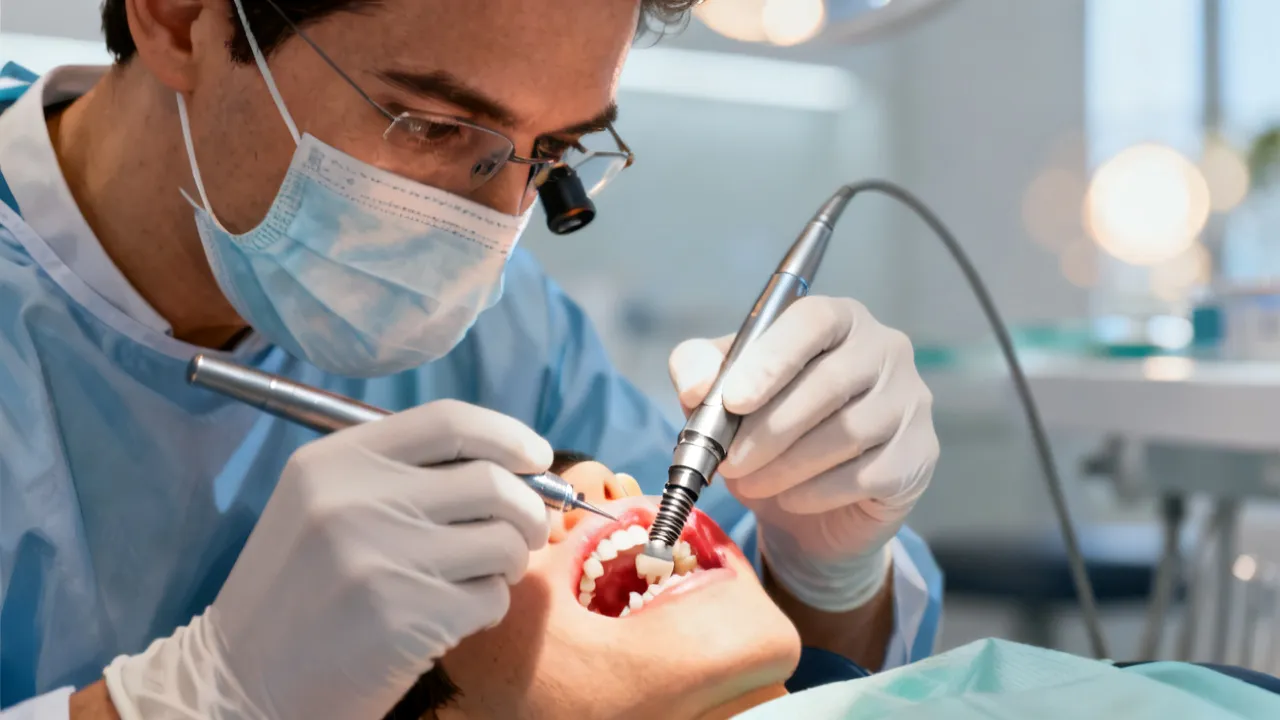
IRM Cement and Low-Cost Dental Implant Planning
This guide explains IRM cement, its clinical role, limitations, and relationship to temporary dental restorations and implant treatment planning. It also compares dental-information websites, outlines practical ways to manage implant costs in English-, Spanish-, and Portuguese-speaking markets, and presents reference price ranges for a single implant. Costs, insurance, treatment sequencing, material selection, and clinician assessment are discussed objectively.
Executive Overview
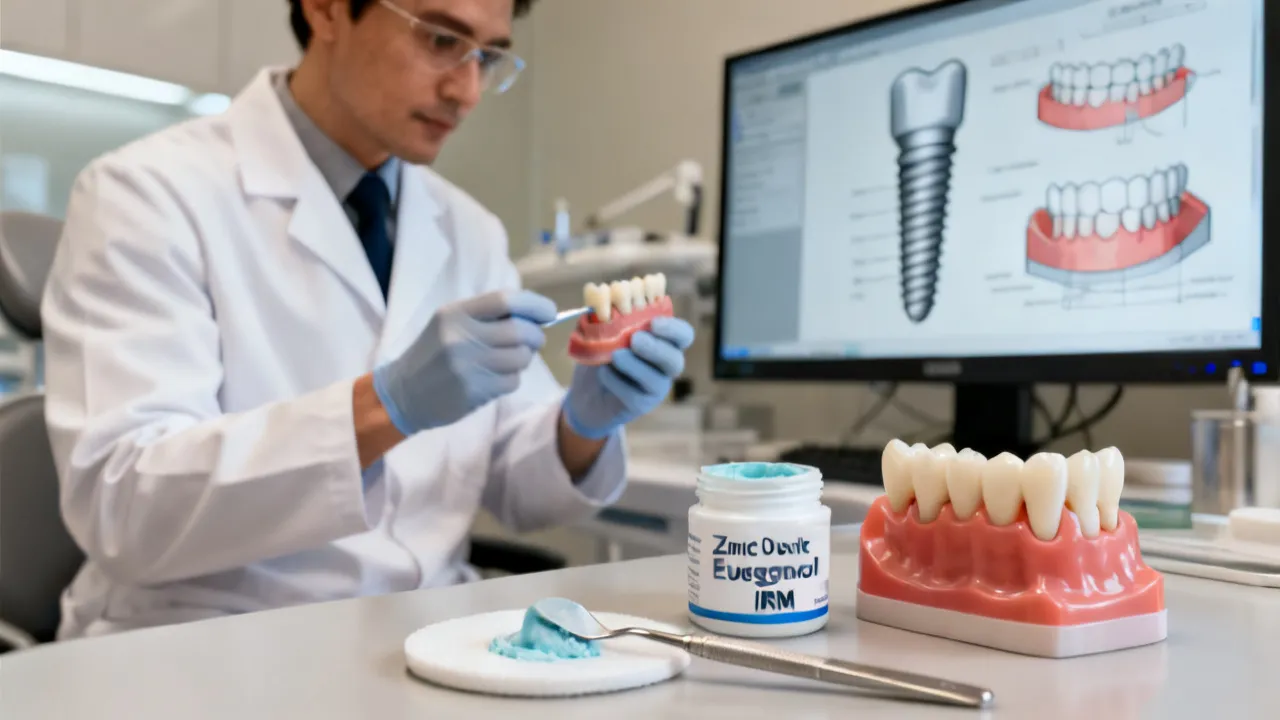
IRM cement, commonly written in Korean as IRM 시멘트, is a reinforced zinc oxide–eugenol dental material used primarily for temporary restorations, intermediate fillings, protective bases, and selected short-term treatment applications. It is not a dental implant, an implant coating, or a substitute for the surgical placement of an implant fixture. Its value lies in temporary sealing, ease of removal, and clinical manageability when a tooth requires staged treatment.
Dental implants address a different problem: the replacement of a missing tooth through a biologically integrated fixture, an abutment, and a crown or other prosthetic restoration. Because implant treatment may involve imaging, extraction, bone preservation, surgery, healing, and laboratory work, patients seeking lower costs should compare the complete treatment pathway rather than focusing on one material or one advertised price.
From an industry perspective, the most reliable cost strategy is not to select a product in isolation. Instead, patients should obtain a written treatment plan, confirm what the quoted price includes, verify the dentist’s qualifications and regulatory standing, and ask how temporary materials such as IRM cement fit into the overall sequence. A lower initial quotation may exclude the crown, diagnostic imaging, bone grafting, sedation, maintenance, or management of complications.
The distinction between temporary dental materials and implant components is especially important for patients researching treatment online. Search results may place terms such as “cement,” “implant,” “temporary tooth,” and “low-cost dentistry” close together, even though these terms describe different stages of care. Understanding the role of each component helps patients avoid misleading comparisons and ask more useful questions during a consultation.
What Is IRM Cement?
IRM is a reinforced zinc oxide–eugenol material. Traditional zinc oxide–eugenol cements are formed when zinc oxide reacts with eugenol, producing a material with a sedative and sealing-oriented clinical profile. Reinforcing agents are added to improve strength and handling compared with conventional, less durable zinc oxide–eugenol formulations.
In routine dentistry, IRM cement is generally associated with temporary or intermediate treatment rather than permanent final restoration. Dentists may use it when a tooth is being monitored, when endodontic treatment is being completed in stages, or when a definitive crown, inlay, onlay, or filling will be placed later. The material may also be used as a temporary base or restorative material in carefully selected situations.
The exact indication depends on the product formulation, the manufacturer’s instructions, the tooth’s condition, and the dentist’s judgment. A material that is suitable for a short-term restoration is not automatically appropriate for a long-term load-bearing application. Moisture control, cavity design, remaining tooth structure, bite forces, and the expected duration of use all influence the decision.
Common Characteristics
- Temporary function: IRM is commonly selected when the restoration is intended to remain for a limited period.
- Practical handling: It can be mixed and placed efficiently in many clinical settings.
- Removal: A temporary material can often be removed more readily than a definitive restoration, which is useful during staged care.
- Sealing role: It can help protect a prepared tooth from oral contamination while treatment is pending.
- Thermal and chemical considerations: Eugenol-containing materials may have a soothing effect in certain circumstances, but they are not suitable for every clinical situation.
- Radiographic visibility: Many formulations are designed to be identifiable on dental radiographs, helping clinicians evaluate the material during follow-up.
- Short-term adaptability: The material can be useful when a clinician needs to observe symptoms, reassess the tooth, or delay a definitive procedure for medical or financial reasons.
Patients should not interpret the word “cement” as meaning that IRM is equivalent to the cement used to retain a permanent crown or to secure an implant-supported restoration. Dental cements have different chemical compositions and indications. A dentist may choose resin cement, glass ionomer cement, resin-modified glass ionomer, zinc phosphate, or another material depending on the restoration and substrate.
IRM is also different from common over-the-counter temporary filling products. Products sold directly to consumers may be designed only for emergency use until a dental appointment. They may have different setting characteristics, limited strength, and no suitability for sealing a deep cavity or treating a root canal. A temporary product can cover an opening without correcting the underlying cause of pain or infection.
IRM Cement in Relation to Dental Implants
IRM cement and implant treatment can appear in the same treatment journey, but they serve separate purposes. For example, a patient may have a damaged natural tooth extracted and receive a temporary restoration while the extraction site heals. Alternatively, a neighboring tooth may require temporary protection while an implant-supported crown is being fabricated. In such cases, IRM may be part of the provisional phase, not the implant itself.
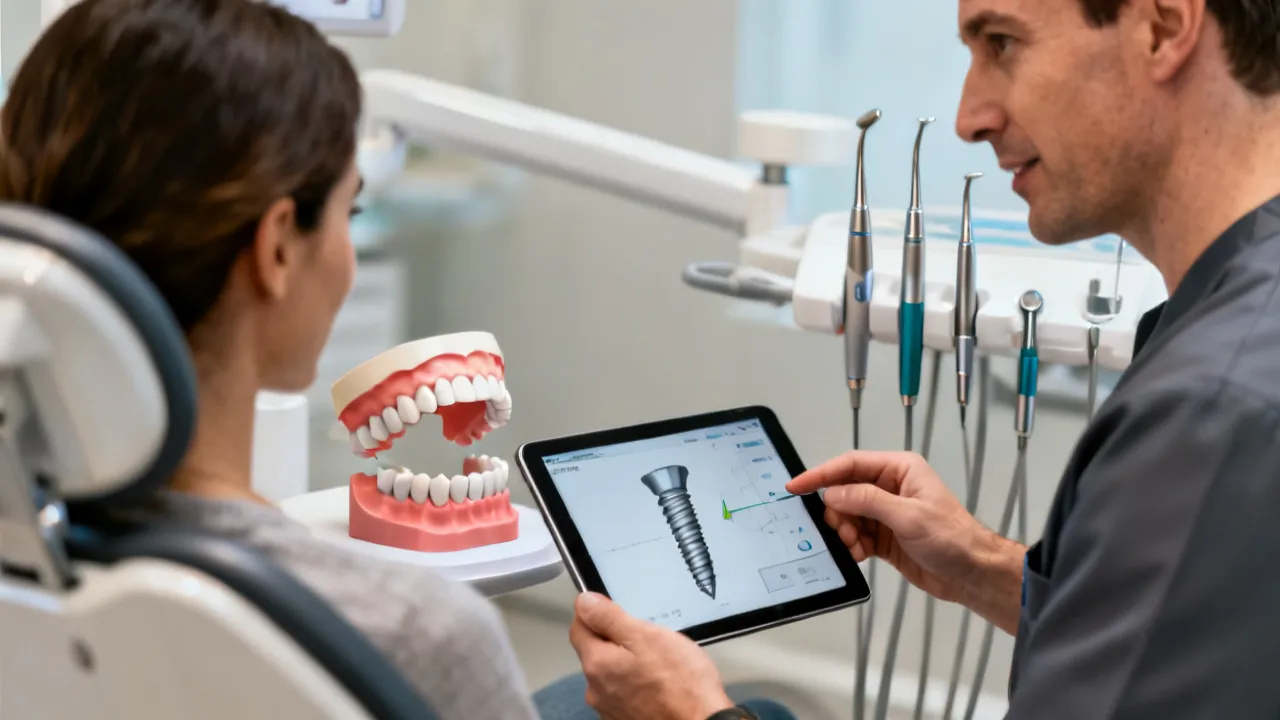
An implant typically consists of three principal elements:
- Implant fixture: A biocompatible component surgically placed in the jawbone.
- Abutment: A connector that links the fixture with the visible restoration.
- Crown or prosthesis: The tooth-shaped component that restores appearance and function.
The fixture is not bonded into place with IRM cement. Its stability depends on surgical positioning and biological integration with bone. The final restoration may be screw-retained or cement-retained, but the materials used for definitive implant prosthetics are selected according to the implant system, restoration design, retrievability requirements, and the dentist’s laboratory protocol.
In some implant cases, a dentist may use a temporary crown or provisional restoration. That provisional component may be attached to an abutment or supported in another way, but it should not be confused with a temporary filling placed inside a natural tooth. The clinical objectives are different. A temporary filling protects internal tooth structure, while an implant provisional may shape the gum tissue, maintain appearance, or help test the bite and appearance before final fabrication.
Why Temporary Materials Matter
Temporary restorations have a strategic role in complex dentistry. They can protect prepared teeth, maintain appearance, preserve occlusal relationships, and allow the clinician to observe symptoms before committing to an irreversible final restoration. During implant planning, a temporary solution may help a patient maintain function while bone and soft tissue heal.
Temporary care can also help coordinate multiple providers. An oral surgeon may perform extraction or implant placement, while a restorative dentist designs the crown. During the interval between these appointments, a provisional material can protect the site and preserve a practical treatment sequence. Clear communication between providers is important so that a temporary restoration does not interfere with later surgery or bonding.
However, a temporary restoration should not be treated as a permanent solution without review. If it becomes loose, fractured, painful, or contaminated, the patient should contact the dental clinic. Delaying assessment can expose the tooth or surgical area to additional damage. The expected replacement date should be written clearly in the treatment plan.
Important Clinical Limitations of IRM Cement
IRM cement is not universally appropriate. Eugenol may interfere with the setting or bonding performance of some resin-based materials. For this reason, clinicians consider the planned definitive material before placing an eugenol-containing temporary material. A dentist may select a non-eugenol temporary cement when a resin-based restoration or adhesive procedure is anticipated.
Other limitations may include lower wear resistance than definitive restorative materials, susceptibility to marginal breakdown over time, and limited suitability in areas exposed to substantial chewing forces. The dentist also needs to assess allergies, pulpal status, periodontal conditions, moisture control, and the amount of sound tooth structure remaining.
The material’s performance depends on preparation and placement. Incorrect powder-to-liquid proportions, inadequate mixing, contamination by saliva or blood, excessive moisture, or insufficient compaction can affect the quality of the restoration. These technical details are one reason professional placement is preferable to self-treatment. A temporary restoration must be shaped so that the patient’s bite remains comfortable and so that surrounding tissues are not injured.
Patients should not purchase dental cement for self-application. Improper placement can trap decay, irritate the pulp, alter the bite, damage soft tissues, or make later treatment more difficult. Temporary dental care should be performed or supervised by a licensed dental professional.
A temporary material can also mask an important symptom. Pain that improves after placement does not necessarily mean that the tooth has healed. The tooth may still have irreversible pulpal inflammation, a crack, an abscess, or advanced decay. The dentist may intentionally use a temporary restoration as part of a diagnostic or staged plan, but the patient should attend the scheduled review even if symptoms appear to resolve.
How Dentists Decide Whether to Use IRM
An industry expert would normally evaluate five connected questions:
- What is the diagnosis? A cracked tooth, deep caries, pulpal inflammation, failed restoration, or post-operative condition may require different care.
- How long must the material remain? A material intended for several days is evaluated differently from one expected to remain for several weeks.
- What will be placed afterward? The planned crown, adhesive filling, onlay, or endodontic restoration affects material compatibility.
- How much functional stress will the tooth receive? Molars, bruxism, and heavy occlusal contacts may increase the risk of temporary failure.
- Can the patient return for review? A temporary treatment plan is safer when follow-up is scheduled and accessible.
These considerations are more important than choosing a product based solely on a label or online description. Brand names, formulations, and regulatory requirements differ by market, so the current manufacturer’s instructions should be followed.
The dentist may also consider whether the tooth is vital, whether root canal treatment has been started, and whether the temporary restoration needs to withstand chewing during a period of observation. In a tooth with a suspected crack, for example, limiting biting forces may be as important as the material itself. In a tooth awaiting a crown, the temporary restoration may need to protect a large area of reduced tooth structure.
Patient preferences can influence the sequence, but they do not replace clinical requirements. A patient may prefer to postpone a crown for financial reasons, yet the dentist should explain the risks of extended delay and identify warning signs. A written plan should distinguish what is clinically urgent from what can reasonably be scheduled later.
Dental Implants: What the Quoted Price Should Include
When patients compare low-cost dental implants, they should ask whether “one implant” means only the fixture or the complete replacement of one missing tooth. A complete single-tooth implant restoration may include consultation, periodontal assessment, radiographs or three-dimensional imaging, extraction, temporary replacement, implant surgery, healing reviews, abutment placement, crown fabrication, fitting, and maintenance.
Possible additional procedures include bone grafting, sinus augmentation, treatment of gum disease, ridge preservation, sedation, or management of an infection. These items can materially change the final cost. A quote that lists only the implant fixture may not be comparable with a quote that includes surgery and the final crown.
Questions to Ask Before Accepting a Quote
- Does the price cover the implant fixture, abutment, and crown?
- Are diagnostic scans and consultation charges included?
- Is tooth extraction included if it is needed?
- Will a temporary tooth or temporary restoration be provided?
- Are bone grafting or gum treatments priced separately?
- Who will perform the surgery and who will design the final restoration?
- What implant system and crown material will be used?
- How many follow-up visits are expected?
- What happens if the implant does not integrate or the temporary restoration fails?
- Will records be supplied if treatment is transferred to another dentist?
- Does the price include local anesthetic, sedation, prescriptions, or emergency appointments?
- How long is the quoted price valid, and can laboratory or material costs change during treatment?
Patients should ask for the estimate in writing and check whether it is an estimate, a fixed fee, or a package subject to exclusions. A fixed fee may still exclude complications or optional procedures. A transparent clinic should be willing to explain the assumptions behind the quotation rather than presenting one unexplained total.
Reference Price Ranges for One Individual Dental Implant
The following table presents the supplied online reference ranges for an individual dental implant in selected language markets. These figures should not be interpreted as universal tariffs or as a promise of the final treatment cost. The definition of “implant” may differ between clinics, and some figures may represent only part of the treatment pathway.
| Country | Currency | Reference price range for one implant |
|---|---|---|
| United States | USD | $3,000–$6,000 |
| United Kingdom | GBP | £2,000–£2,500 |
| Australia | AUD | AU$3,500–AU$6,500 |
| Canada | CAD | CA$3,000–CA$5,500 |
| Spain | EUR | €1,500–€2,500 |
| Chile | CLP | CLP$800,000–CLP$1,500,000 |
| Mexico | MXN | $15,000–$25,000 MXN |
| Colombia | COP | $2,000,000–$4,000,000 COP |
| Peru | PEN | S/ 3,000–S/ 6,000 |
| Argentina | ARS | $80,000–$150,000 ARS |
| Brazil | BRL | R$3,000–R$8,000 |
| Portugal | EUR | €1,000–€2,000 |
| Germany | EUR | €2,000–€3,500 |
| France | EUR | €1,500–€2,500 |
| Italy | EUR | €1,500–€3,000 |
| Japan | JPY | ¥300,000–¥700,000 |
Source: Price ranges supplied in the online reference brief and intended for general comparison. Currency values are shown as provided and are not converted or adjusted for inflation, exchange-rate movements, local taxes, or differences in treatment scope.
Prices can vary inside the same country because of metropolitan location, clinic overhead, laboratory fees, clinician experience, implant system, restorative material, complexity of surgery, and the need for additional procedures. A price range should therefore be used to prepare questions, not to predict an individual patient’s bill.
Exchange rates can also create a misleading impression. A price that appears inexpensive after conversion may become less attractive when card fees, international transfers, transport, accommodation, or currency fluctuations are included. Patients should compare the total cost in the currency they will actually use for payment and should ask how refunds or adjustments are handled.
How to Obtain Dental Implants at Lower Cost in English-Speaking Countries
In English-speaking markets such as the United States, the United Kingdom, Australia, and Canada, the most practical approach is structured comparison rather than selecting the lowest advertised number.
1. Confirm the Diagnosis Locally
Begin with an examination and appropriate imaging. The dentist should identify whether the tooth can be restored, whether extraction is necessary, and whether gum disease or bone loss must be treated. A second opinion may prevent an unnecessary extraction or clarify whether an alternative restoration is clinically reasonable.
2. Compare Complete Treatment Plans
Request itemized estimates from several appropriately qualified clinics. Compare the same components: consultation, scan, extraction, implant fixture, abutment, crown, temporary restoration, follow-up, and possible additional procedures. A quote that omits the crown is not equivalent to a full single-tooth replacement quote.
3. Review Insurance and Dental Plans
Private dental insurance may contribute to some diagnostic or restorative services, although implant coverage varies substantially by plan, waiting period, exclusions, annual maximum, and preauthorization requirements. Patients should ask the insurer for a written benefit estimate rather than relying on a general statement that implants are covered.
Dental plans and clinic membership arrangements may reduce the price of selected services, but they do not necessarily function as comprehensive insurance. Review exclusions, participating providers, maximum benefits, and cancellation terms.
4. Ask About Staged Treatment
Some patients may need treatment in stages: infection control first, extraction second, implant placement after healing, and final restoration later. Staging can help with budgeting, but it may also increase the number of appointments and temporary restorations. The dentist should explain the clinical reason for each phase.
5. Consider Accredited Teaching Clinics
University dental schools and supervised teaching clinics may offer lower fees for eligible patients. Treatment can take longer because procedures may be performed by students under qualified supervision. Patients should ask about waiting lists, available implant services, emergency arrangements, and who is responsible for each stage.
6. Evaluate Financing Carefully
Payment plans can spread the cost, but interest, administration charges, missed-payment consequences, and refund rules should be reviewed before signing. Financing should not encourage a patient to proceed without understanding the diagnosis or the total cost.
7. Avoid Unclear Overseas Arrangements
Traveling abroad may appear less expensive, but airfare, accommodation, repeated visits, currency changes, and aftercare can reduce or eliminate the apparent difference. Complications after returning home may involve additional local costs. A patient considering dental tourism should obtain records, understand the warranty terms, and confirm who will handle complications.
8. Ask About Alternatives
A bridge or removable partial denture may be clinically appropriate in some cases and may have a lower initial cost. The decision should consider the condition of neighboring teeth, bone preservation goals, appearance, cleaning requirements, expected service life, and the patient’s ability to tolerate removable appliances. The cheapest option is not automatically the best value, but an implant is not automatically the only reasonable option.
How to Obtain Dental Implants at Lower Cost in Spanish-Speaking Countries
Spanish-speaking markets are diverse. Spain, Mexico, Chile, Colombia, Peru, and Argentina have different currencies, healthcare systems, professional regulations, urban-rural access patterns, and laboratory costs. A clinic in Madrid cannot be assumed to price or deliver treatment in the same way as a clinic in Bogotá, Santiago, Lima, Mexico City, or Buenos Aires.
1. Use the Correct Local Terminology
When requesting estimates, patients may ask for a presupuesto desglosado or itemized quotation. Clarify whether the quotation refers to the “implante” alone or to the entire “rehabilitación sobre implante,” which may include the abutment and crown. In some clinics, “implant treatment” is presented in phases rather than as one bundled figure.
2. Verify Professional Credentials
Confirm that the treating dentist is licensed in the relevant jurisdiction and ask who will perform surgery, who will provide the prosthetic restoration, and whether a specialist is involved. Professional registration can normally be checked through the competent national or regional authority. Patients should also ask whether the clinic provides written consent forms and radiographic records.
3. Compare Material and Laboratory Specifications
Ask for the implant manufacturer, crown material, laboratory location, and warranty conditions. A lower price may reflect a different crown material or a limited laboratory service. The brand itself is not the only quality indicator, but traceability is important if future maintenance is required.
4. Investigate Public and Private Options
Public dental services may have limited implant availability or eligibility criteria. Private clinics may offer staged payment, seasonal promotions, or treatment packages, but patients should examine the conditions carefully. A promotional price should state whether imaging, provisional teeth, surgery, and the final crown are included.
5. Consider Regional Access
Major cities may provide more specialists and laboratories, while regional clinics may reduce travel time for local patients. The most economical clinic is not necessarily the one with the lowest initial fee; repeat travel for impressions, adjustments, and maintenance can be significant.
6. Plan for Long-Term Maintenance
Implants require professional cleaning and periodic examination. Ask whether maintenance is included in the first year and what happens if the patient moves to another city. A clinic that provides complete records and implant identification details can make future care easier.
7. Check Translation and Consent Arrangements
Patients who are not fluent in the local language should ensure that diagnosis, consent forms, risks, costs, and aftercare instructions are explained in a language they understand. Miscommunication about whether a price covers surgery or the final crown can create serious financial and clinical problems. A qualified interpreter may be more useful than relying on informal translation by a travel companion.
How to Obtain Dental Implants at Lower Cost in Portuguese-Speaking Countries
Brazil and Portugal are the principal Portuguese-speaking markets represented in the supplied information. In Brazil, patients may encounter treatment quotations using “implante dentário,” “pilar,” and “coroa sobre implante.” In Portugal, terminology and professional regulation differ, so the patient should still ask for a detailed written plan.
1. Request an Itemized “Orçamento”
The quotation should identify the surgical stage, prosthetic stage, temporary restoration, imaging, laboratory work, and maintenance. Confirm whether the price is for the implant fixture only or for the finished tooth. This distinction is particularly important when comparing websites and clinic advertisements.
2. Check the Clinic and Dentist
Patients should verify professional registration, infection-control procedures, emergency arrangements, and the availability of follow-up care. A modern website and positive testimonials may be useful for initial research, but neither replaces clinical examination or credential verification.
3. Compare Implant Systems and Restorative Options
Ask whether the clinic uses a traceable implant system and whether replacement components are available in the region. A prosthesis may be screw-retained or cement-retained. The dentist should explain the advantages and limitations of the proposed design, including future access for repair.
4. Review Dental Plan Coverage
Dental plans may help with examinations, cleaning, urgent care, or selected restorative procedures, but implant coverage is plan-specific. Patients should read benefit limits and confirm whether the clinic belongs to the provider network. A plan that includes emergency care does not necessarily cover implant surgery or the final crown.
5. Include Travel and Follow-Up in the Budget
Patients traveling within Brazil or Portugal should calculate transport, accommodation, time away from work, and the cost of returning for adjustments. A nearby clinic may offer better overall value when follow-up is likely to be extensive.
6. Ask About Payment Timing
Some clinics request separate payments at the surgical and prosthetic stages. This can make budgeting easier, but patients should understand the amount due at each appointment and whether a deposit is refundable. Written terms should explain what happens if healing takes longer than expected or if the final restoration must be redesigned.
Comparison of Dental Information Websites
The following websites represent different types of dental information and service providers. They should be used as starting points for research, not as substitutes for an individualized examination. Their content, prices, availability, and service terms may change.
| Website or organization | Primary focus |
|---|---|
| Dental Views | Information on low-cost dental implants, treatment types, benefits, cost considerations, and frequently asked questions. |
| Atlantic Dental Group | General dental clinic information, including preventive care, orthodontics, implants, and emergency dental services. |
| DentaVacation | Dental tourism information, international treatment comparisons, travel planning, and overseas dental services. |
| ADHP / American Dental Health Plans | Dental insurance and plan information intended to help consumers evaluate coverage and reduce treatment expenses. |
| Rockville Dental Arts | Spanish-language information about comprehensive dental care, implants, cosmetic dentistry, cleaning, orthodontics, and emergencies. |
| Union City Mini Dental Implants | Spanish-language information focused on mini dental implant services and treatment considerations. |
| Cigna Dental Implant Guide | Spanish-language educational material explaining implant treatment and related considerations from an insurance-information provider. |
| Rubi Odonto | Portuguese-language clinic information from Santo André, São Paulo, including orthodontics, whitening, and implants. |
| Odontologia Velasco | Portuguese-language clinic information from São Paulo, including implants, prosthetics, aesthetic dentistry, and technology-supported care. |
| DentalVidas | Portuguese-language dental-plan information for individuals, families, and companies, including network and emergency-service details. |
Source: the websites and descriptions supplied in the reference brief.
Source: www.dentalviews.com/low-cost-dental-implants/
Source: www.atlanticdentalgrp.com
Source: www.dentavacation.com
Source: rockvilledentalarts.com/es/
Source: unioncityminidentalimplants.com/es/
Source: www.cigna.com/es-us/knowledge-center/guide-to-dental-implants
Source: www.rubiodonto.com.br
Source: odontologiavelasco.com.br
Source: dentalvidas.com.br
Conditions and Requirements for Safe Implant Planning
Dental implants require a case-specific assessment. General factors that may affect suitability include adequate bone volume, healthy or treated gums, controlled medical conditions, suitable oral hygiene, and the ability to attend reviews. Smoking, uncontrolled diabetes, active periodontal disease, certain medications, and heavy bruxism may influence risk and treatment sequencing. These factors do not automatically exclude a patient, but they should be discussed openly.
Medical History
Patients should disclose prescribed medicines, anticoagulants, allergies, previous reactions to dental materials, osteoporosis treatments, immune conditions, pregnancy, and prior radiation involving the head or neck. The dental team may request medical consultation before surgery. Medication should not be stopped without advice from the prescribing clinician.
Periodontal Health
Active gum disease should be evaluated and managed because inflammation and inadequate plaque control can compromise the long-term health of teeth and implants. Professional maintenance is part of implant care, not an optional cosmetic service.
Bone and Soft Tissue Assessment
Two-dimensional radiographs may be useful for initial assessment, while three-dimensional imaging may be indicated for surgical planning. Imaging should be prescribed when clinically justified. If bone augmentation is proposed, the patient should ask why it is necessary, what material will be used, how it affects healing time, and what it adds to the cost.
Restorative Planning
The final tooth should be designed before surgery whenever possible. Implant position, crown shape, bite, gum contour, and cleaning access are interconnected. A temporary restoration may be used during the process, but it should support the final plan rather than serve as an improvised substitute.
Healing and Loading Considerations
After implant placement, the fixture may require a healing period before it is used to support the final crown. The appropriate timing depends on bone quality, primary stability, surgical circumstances, implant position, and the dentist’s protocol. Immediate loading may be considered in selected cases, but it is not appropriate for every patient. A lower-cost treatment plan that promises an unusually short timeline should be examined carefully rather than accepted solely for convenience.
IRM Cement, Temporary Crowns, and Treatment Timing
After tooth preparation or during staged treatment, a dentist may place a temporary restoration with IRM or another provisional material. The patient should receive instructions about chewing, brushing, flossing, and what to do if the restoration loosens. Sticky foods and excessive pressure may increase the risk of dislodgement, depending on the site and design.
If a temporary restoration is placed before implant surgery, it may protect the adjacent tooth or preserve appearance while the surgical site heals. If it is placed after surgery, the dentist must ensure that it does not apply undesirable pressure to the implant area. The correct design depends on whether the implant is immediately loaded, left undisturbed during healing, or restored through a delayed protocol.
Patients should report persistent pain, swelling, fever, foul taste, bleeding that does not settle, altered bite, or mobility. These symptoms require professional review. IRM cement may cover a tooth temporarily, but it does not eliminate infection or repair a structural fracture.
Good home care is important during the temporary phase. Patients should brush gently but thoroughly, follow any prescribed rinsing instructions, and avoid attempting to “cement” a loose restoration with household glue. If a temporary crown or filling comes out, it should be kept safely and brought to the appointment if possible. The dentist may be able to clean and replace it, although a new temporary restoration may sometimes be necessary.
Dental Tourism: Potential Benefits and Risks
International dental treatment can provide access to clinics in different price environments, but cost comparison must include the entire patient journey. The patient may need multiple trips, and implant treatment often requires healing periods that cannot be compressed safely merely to fit a travel schedule.
Before traveling, request a written diagnosis, proposed sequence, clinician credentials, implant system, total estimated cost, and aftercare policy. Ask whether the clinic will provide digital scans, radiographs, implant passport or component information, operative notes, and a contact for urgent problems.
Patients should also determine whether their home dentist is willing to provide follow-up care. Some dentists may be unable to repair or restore an unfamiliar implant system, and the patient may need to return to the original clinic. Travel insurance may exclude elective dental treatment and related complications, so policy wording should be examined carefully.
Language, legal jurisdiction, and complaint procedures are additional considerations. If a dispute arises, pursuing a remedy across borders may be difficult. Patients should not assume that a warranty covers travel, accommodation, replacement treatment, or care provided by another dentist. The written warranty should identify the circumstances in which it applies and any requirement to attend maintenance visits.
How to Evaluate Online Dental Information
Reliable dental content distinguishes general education from personal medical advice. Look for the author’s professional credentials, the date of review, references to recognized clinical guidance, transparent discussion of risks, and clear explanations of what a quoted price includes.
Be cautious when a page uses one unusually low price to represent an entire implant treatment, guarantees a result without examination, or implies that one material is suitable for every patient. Patient testimonials can describe individual experiences, but they are not equivalent to clinical evidence.
For product information about IRM cement, the manufacturer’s instructions for use are particularly important. They explain indications, contraindications, mixing requirements, setting behavior, storage conditions, and compatibility warnings. The dentist remains responsible for deciding whether the material is appropriate for a specific patient.
Online information is most useful when it helps patients prepare for a consultation. A patient can print an advertised package, identify unclear terms, and ask the clinic to explain each line. This approach turns online research into a practical communication tool rather than treating a webpage as an individualized treatment plan.
Practical Cost-Reduction Checklist
- Obtain a diagnosis before comparing prices.
- Request at least two itemized treatment plans when clinically appropriate.
- Compare the complete tooth replacement, not only the implant fixture.
- Ask whether imaging, extraction, temporary care, abutment, crown, and follow-up are included.
- Check dental insurance, public eligibility, university clinics, and regulated payment plans.
- Ask whether an alternative restoration is clinically suitable.
- Treat gum disease and improve oral hygiene before surgery.
- Confirm the implant manufacturer and obtain component records.
- Include travel, accommodation, time off work, and aftercare in overseas comparisons.
- Do not self-apply IRM cement or delay professional review of a loose temporary restoration.
- Ask whether maintenance fees are included after the first year.
- Confirm the cost of replacing a failed temporary restoration or repairing a chipped crown.
- Keep copies of consent forms, invoices, scans, radiographs, and laboratory information.
- Review financing terms and calculate the total amount payable, including interest.
Questions to Ask During the Consultation
A well-prepared consultation can make both clinical and financial decisions clearer. Patients may ask:
- Is the natural tooth restorable, or is extraction the only reasonable option?
- What is the diagnosis, and what imaging supports it?
- Would a bridge, removable prosthesis, or other restoration be suitable?
- Will the implant be placed immediately or after healing?
- Is bone augmentation required?
- How long will each stage take?
- Will a temporary restoration use IRM cement or another material?
- Could the temporary material affect the planned definitive restoration?
- What symptoms should prompt an urgent call?
- What is the total estimated cost, including possible additional procedures?
- How often will professional maintenance be required?
- Who will be responsible for the surgical and restorative stages?
- What implant brand and model will be recorded in the patient file?
- What happens if the implant fails to integrate or the crown needs replacement?
FAQs
Is IRM cement the same as dental implant cement?
No. IRM is a reinforced zinc oxide–eugenol material commonly used for temporary or intermediate dental restorations. Implant treatment involves a surgically placed fixture and a prosthetic restoration. Materials used in implant prosthetics are selected for that specific restoration and are not interchangeable with IRM.
Can IRM cement be used permanently?
Its suitability depends on the product, tooth, location, bite forces, and treatment plan. It is generally associated with temporary or intermediate use. A dentist should determine whether a definitive restoration is required and when it should be placed.
Can IRM cement be used under a composite restoration?
Compatibility depends on the product and the planned bonding procedure. Eugenol-containing materials may interfere with some resin-based materials. The treating dentist should select the temporary material based on the definitive restoration planned.
Does a low-cost implant quotation include the crown?
Not necessarily. Some advertisements refer only to the fixture or surgical stage. Patients should ask specifically whether the quotation includes the abutment, crown, imaging, extraction, temporary restoration, laboratory work, and follow-up.
Are dental implants cheaper in another country?
The initial clinic price may be lower in some markets, but the final cost depends on travel, accommodation, currency exchange, repeat visits, aftercare, and complication management. A complete written comparison is necessary before making a decision.
What is the least expensive way to replace a missing tooth?
There is no universally suitable least-cost option. A removable partial denture or bridge may have a lower initial cost than an implant, but suitability, durability, maintenance, adjacent teeth, bone conditions, and long-term objectives must be evaluated by a dentist.
How long can a temporary IRM restoration remain in place?
The appropriate duration varies by diagnosis and treatment plan. Patients should follow the dentist’s review schedule. A temporary restoration that becomes loose, painful, fractured, or contaminated should be assessed rather than left unattended.
Does dental insurance usually cover IRM cement?
Coverage depends on the policy and the procedure for which the material is used. IRM is usually part of a broader temporary or restorative service, so patients should ask the insurer and dental office how the procedure will be coded and whether preauthorization is required.
What records should a patient keep after implant treatment?
Keep the treatment plan, invoices, radiographs, clinical notes, implant brand and model, component information, laboratory details, consent forms, and maintenance recommendations. These records are useful if future care is provided by another clinic.
Can a temporary filling repair a cracked tooth?
A temporary filling may protect the tooth for a limited period, but it cannot eliminate the structural crack. The dentist must determine whether the crack is restorable and whether a crown, root canal treatment, extraction, or another option is necessary.
Is an implant always better than a bridge?
Not necessarily. An implant can avoid preparing adjacent teeth in some situations, but it requires surgery, healing, adequate bone, and ongoing maintenance. A bridge may be appropriate when neighboring teeth already require crowns or when surgery is unsuitable. The best option depends on the individual clinical circumstances.
Conclusion
IRM 시멘트, or IRM cement, is best understood as a practical temporary dental material with defined indications and limitations. It may support staged treatment, protect a prepared tooth, or assist during the period before definitive care, but it does not replace an implant fixture or a permanent restoration.
For patients comparing low-cost dental implants, the central issue is treatment completeness. A reliable decision combines diagnosis, clinician qualifications, material compatibility, itemized pricing, insurance review, follow-up access, and long-term maintenance. Whether treatment is considered in an English-, Spanish-, or Portuguese-speaking market, the most useful question is not simply “What is the lowest price?” but “What care is included, who will provide it, and how will the result be maintained?”
Temporary materials have a legitimate and useful place in modern dentistry, particularly when treatment must be divided into stages. Their purpose is to support a carefully planned process, not to replace definitive care indefinitely. Likewise, an implant should be evaluated as a complete restorative pathway rather than as a single inexpensive component. Patients who understand these distinctions are better positioned to compare providers, recognize hidden costs, and make decisions that balance affordability, safety, function, and long-term oral health.
References and Links
The following links were supplied as reference sources for the website comparison and regional dental-service information:
- Dental Views – Low Cost Dental Implants
- Atlantic Dental Group
- DentaVacation
- Rockville Dental Arts – Spanish Website
- Union City Mini Dental Implants – Spanish Website
- Cigna – Guía de Implantes Dentales
- Rubi Odonto
- Odontologia Velasco
- DentalVidas
Disclaimer
1. The above information comes from online resources, and the data is as of October 2023.
2. Dental implant prices are for reference only and may vary by region, clinic, and doctor. The ranges may also differ according to the treatment components included, diagnostic requirements, materials, laboratory charges, taxes, exchange rates, and follow-up arrangements. This article is for general educational purposes and does not replace an examination, diagnosis, or treatment recommendation from a licensed dental professional.
3. Product names and descriptions do not establish that a particular material is appropriate for a particular patient. IRM cement should be used only by dental professionals in accordance with the relevant product instructions and applicable regulations.