Understanding 미니쉬 단점 and Dental Treatment Costs
This guide explains the principal 미니쉬 단점, including treatment suitability, irreversible enamel preparation, repair limitations, maintenance needs, and possible costs. It distinguishes Minish-style ceramic restoration from dental implants and examines how diagnosis, materials, laboratory standards, and clinician experience affect outcomes. It also compares low-cost implant information sources and presents reference price ranges for individual implants in English-, Spanish-, and Portuguese-speaking markets.
Executive Overview
미니쉬 단점 refers to the limitations and potential disadvantages associated with Minish-style dental restoration. The term is commonly used in relation to a minimally invasive cosmetic and restorative approach that places a thin ceramic or similar dental material over a prepared tooth surface. It is not synonymous with a dental implant, which replaces a missing tooth root and normally supports a crown.
The most important conclusion is that Minish treatment is not appropriate for every patient or every cosmetic concern. Its suitability depends on the condition of the enamel, the amount of existing tooth structure, the bite, gum health, tooth colour, tooth position, decay risk, and the type of restoration selected. Even when preparation is conservative, it may still be irreversible. Once enamel has been altered, the patient may require a restoration or another protective treatment in the future.
Other limitations include the possibility of chipping, debonding, marginal staining, sensitivity, colour mismatch, and replacement costs. These risks are not unique to Minish treatment; they can occur with veneers, crowns, inlays, and other bonded restorations. The actual level of risk depends on clinical planning, laboratory quality, occlusal forces, maintenance, and patient habits.
Patients should therefore ask for a diagnosis rather than selecting a procedure solely because it is described as minimally invasive. A dentist should explain whether the proposed treatment is ceramic bonding, a veneer, an overlay, a crown, orthodontic treatment, whitening, or an implant-supported restoration. The least invasive option is usually preferable when it can meet functional and aesthetic goals, but the least invasive option is not automatically the most durable or suitable one.
A further point is that the word “Minish” may not describe one universally standardised treatment. Different clinics can use the term for different materials, preparation protocols, and laboratory workflows. The patient should not assume that two clinics offering “Minish” are recommending identical procedures. The material, thickness, amount of tooth reduction, bonding process, and follow-up policy should all be confirmed before treatment.
What Is Minish-Style Treatment?
“Minish” is used in dental marketing and clinical discussions to describe a conservative approach to improving the appearance or structure of teeth. Depending on the clinic and treatment plan, it may involve ultra-thin ceramic restorations, composite or ceramic additions, selective enamel preparation, digital smile planning, and laboratory-fabricated shells or overlays.
The exact protocol can differ considerably between providers. One clinic may use the term for a thin ceramic veneer placed mainly on the front surface. Another may use it for a broader restorative system intended to correct wear, discolouration, mild shape irregularities, or small fractures. For that reason, patients should request the material name, preparation design, cementation method, laboratory details, and anticipated replacement plan in writing.
A conventional veneer generally covers part of the visible front surface of a tooth. A crown covers most or all of the clinical crown and is normally used when a tooth has substantial structural damage. A dental implant, by contrast, is a surgical device inserted into the jawbone after tooth loss. It is later connected to an abutment and crown. Comparing Minish restoration directly with implant treatment can produce confusion because the procedures address different dental problems.
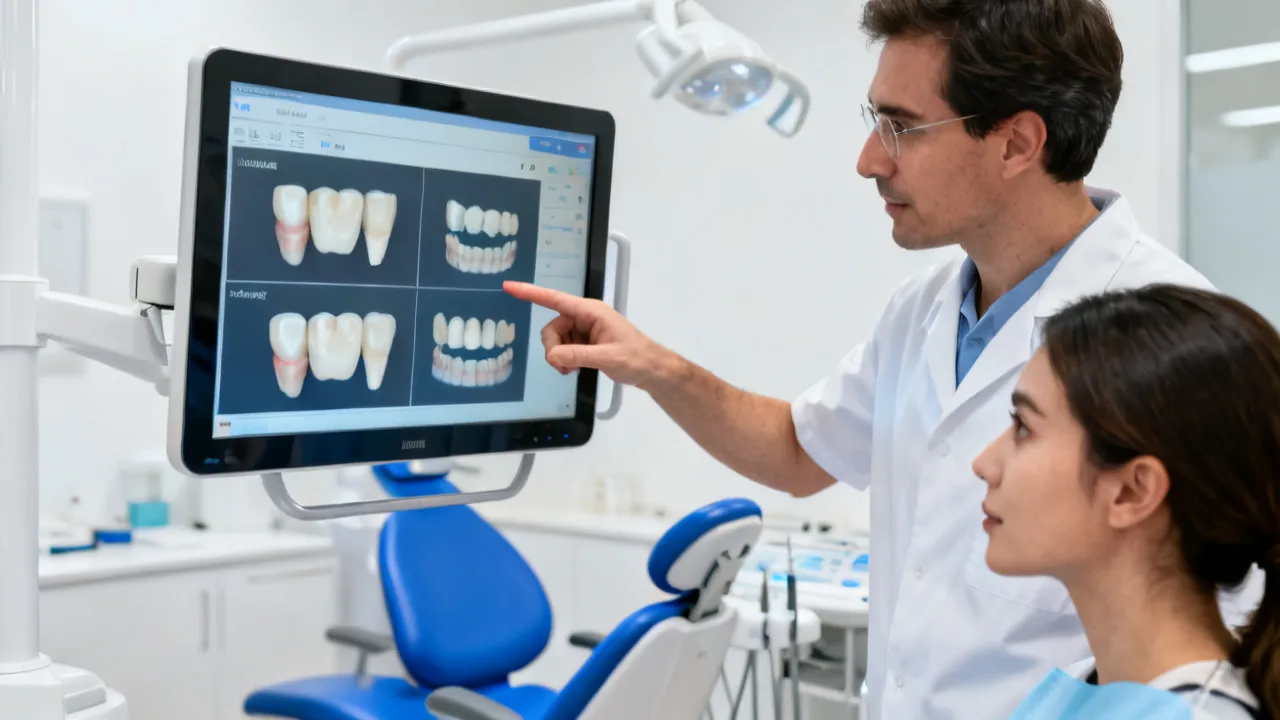
Before treatment, the dentist may use clinical photographs, digital scans, radiographs, facial and smile analysis, study models, and a diagnostic wax-up or mock-up. These records are not merely cosmetic accessories. They help assess whether the proposed tooth length, width, shape, and position will be compatible with speech, lip movement, the opposing teeth, and the patient’s existing bite. A preview can also show that a requested change may require more space or more preparation than initially expected.
Minish-style treatment may be described as additive when material is placed onto the tooth without removing substantial structure. However, adding material can still affect the bite, tooth contour, gum access, and speech. A restoration that is too bulky may make flossing difficult or cause the lips to feel different. A restoration that is too thin or unsupported may be more vulnerable to fracture. Conservative dentistry therefore requires both preservation and careful three-dimensional design.
Principal 미니쉬 단점
1. Treatment May Be Irreversible
The phrase “minimally invasive” does not necessarily mean “reversible.” If enamel is reduced, even in a limited amount, the original tooth surface cannot naturally grow back. Some cases may involve little or no preparation, but this must be confirmed by clinical examination rather than assumed from advertising language.
Patients should ask whether the proposed procedure is additive, non-preparation, or preparation-based. They should also ask how much enamel will be removed from each tooth and whether the dentist expects to remain entirely within enamel. A written treatment plan and photographs or digital mock-ups can help clarify these points.
Irreversibility is important because a restoration may eventually require repair or replacement even when the initial result is successful. Replacement may require further preparation if the new restoration needs additional space or if the underlying tooth has changed. The patient should understand that choosing a conservative restoration may begin a long-term cycle of maintenance rather than provide a one-time cosmetic change.
2. Not Suitable for Every Bite or Tooth Position
Strong deep bites, bruxism, crossbites, severe crowding, and major tooth rotations can place excessive force on thin ceramic restorations. A restoration that looks stable during a static examination may experience repeated stress during chewing, clenching, or nighttime grinding.
In some cases, orthodontic alignment, bite adjustment, a night guard, or another restorative design should be considered first. If a patient has significant malocclusion and proceeds directly to cosmetic restoration, the treatment may have a higher risk of fracture or debonding.
Tooth position can also affect the visual result. A prominent tooth may need space to be reduced or moved before a thin restoration can be placed without creating excessive fullness. Conversely, a tooth positioned too far inward may require orthodontic movement or a different restorative approach. Placing ceramic over a poorly positioned tooth does not necessarily correct the underlying alignment and may make the tooth appear wider or more projecting.
3. Existing Disease Must Be Addressed First
Active decay, untreated gum disease, cracked teeth, poor oral hygiene, and uncontrolled grinding can undermine an otherwise well-made restoration. Covering a diseased tooth does not remove the disease. In some circumstances, placing a restoration before treating the underlying condition can make diagnosis and future access more difficult.
A suitable assessment may include radiographs, periodontal measurements, photographs, a bite examination, vitality testing, and evaluation of previous dental work. A patient who receives only a cosmetic consultation without a broader oral-health assessment should request a second opinion before proceeding.
Root canal problems, leaking fillings, enamel cracks, and hidden decay can remain unnoticed if attention is focused only on the visible front surface. If a tooth later develops infection beneath a restoration, the dentist may need to access the tooth through the ceramic or remove the restoration. This can increase cost and may affect the appearance of the replacement.
4. Ceramic Can Chip or Debond
Ceramic is strong under appropriate loading, but it is not indestructible. Thin edges, unsupported areas, accidental trauma, hard-object chewing, and parafunctional habits can contribute to chipping or debonding. A restoration can also fail if bonding is compromised by moisture contamination or if the design does not provide adequate support.
A chipped restoration may sometimes be polished or repaired with composite. In other situations, replacement is necessary. The patient should ask whether repairs are possible, whether the original laboratory retains digital records, and how replacement will be handled if the restoration fails after the initial appointment period.
Sports injuries, falls, and accidents can damage both natural teeth and restorations. A mouthguard may be appropriate for patients who participate in contact sports, but it should be professionally selected when possible. A night guard designed for grinding is different from an athletic mouthguard, and the dentist should explain which type is suitable.
5. Sensitivity Can Occur
Tooth sensitivity may occur after enamel preparation, bonding, bite adjustment, or exposure of dentine. It is often temporary, but persistent sensitivity can indicate an ill-fitting restoration, excessive occlusal contact, pulp irritation, leakage, or another dental problem.
Patients with a history of sensitivity should mention it before treatment. A dentist may recommend desensitising products, a different preparation approach, staged treatment, or further testing. Severe spontaneous pain or lingering pain after hot and cold exposure requires prompt assessment rather than routine observation.
Sensitivity can also be related to the gum margin. If the restoration or preparation exposes a sensitive area near the gum, the patient may notice discomfort when brushing or consuming cold drinks. The location, duration, and trigger of the sensitivity can help the dentist determine whether it is normal short-term irritation or a sign of a more serious issue.
6. Colour Matching Is More Complex Than It Appears
Thin ceramic restorations are influenced by the underlying tooth colour, the opacity and thickness of the ceramic, the shade of the cement, surrounding teeth, lighting conditions, and dehydration during the appointment. A result that appears satisfactory under clinic lighting may look different in daylight or photographs.
Whitening natural teeth after ceramic placement is generally limited because ceramic does not respond to bleaching in the same way as natural enamel. If whitening is planned, it is usually discussed before shade selection. Patients should also understand that adjacent natural teeth may darken over time while ceramic remains comparatively stable, creating a future mismatch.
Perfectly identical colour across several teeth is not always desirable or achievable. Natural teeth contain subtle variations, translucency, surface texture, and fluorescence. Overly opaque restorations can look artificial, while very translucent restorations may reveal the darker underlying tooth. A shade try-in or temporary preview can help the patient and dentist assess the proposed result before final bonding.
7. Gum Contours and Margins Require Careful Planning
Restorations that extend too close to the gum or have over-contoured margins can retain plaque and irritate the soft tissues. This may contribute to bleeding, inflammation, recession, or an unattractive transition between tooth and gum. Even a technically polished restoration can cause problems if its contour does not respect the patient’s periodontal anatomy.
Gum health should be stable before cosmetic treatment. The dentist should explain where the restoration margin will finish, how the patient will clean around it, and whether interdental brushes or floss threaders are required.
Gum recession can expose the edge of a restoration and create a visible line. The amount of recession cannot always be predicted, particularly in patients with thin gum tissue, aggressive brushing habits, periodontal disease, or a history of orthodontic movement. A periodontal assessment can identify risk factors and may lead to a recommendation for gum treatment or a less extensive restorative design.
8. Longevity Is Not Guaranteed
Dental restorations are not permanent biological structures. Their service life varies according to material, design, bonding, bite, hygiene, diet, trauma, and maintenance. A clinic may provide an internal warranty, but a warranty is not the same as a guarantee that treatment will last for a particular number of years.
Patients should ask what the warranty covers and excludes. Common exclusions may include untreated grinding, accidents, failure to attend reviews, poor hygiene, or treatment performed elsewhere. A realistic treatment plan should include the possibility of future maintenance and replacement.
Longevity also depends on the tooth beneath the restoration. Even if the ceramic remains intact, the underlying tooth can develop decay, fracture, gum recession, or pulpal disease. A long-lasting cosmetic result therefore depends on preserving both the restoration and the biological health of the tooth.
9. Multiple-Tooth Treatment Can Increase Complexity
When several teeth are restored at once, the dentist must coordinate midline position, tooth length, smile arc, phonetics, occlusion, shade, gingival display, and facial proportions. A small error repeated across many teeth can become visually prominent. If the patient later wants one restoration replaced, achieving a seamless match may be difficult.
Large cosmetic cases also require a substantial financial and time commitment. Temporary restorations, laboratory communication, try-in appointments, adjustments, and follow-up care should be included in the discussion before consent is given.
Patients should ask whether all visible teeth need treatment. Sometimes the desired improvement can be achieved by treating fewer teeth, combining whitening with limited bonding, or using orthodontics before restoration. Reducing the number of restorations may lower cost and preserve more natural structure, although the final decision must account for symmetry and function.
10. It May Not Be the Best Solution for Missing Teeth
Minish-style restoration generally preserves or enhances an existing tooth. It does not replace a missing tooth root. If a tooth is absent, possible treatments may include an implant-supported crown, a fixed bridge, or a removable partial denture. Each option has different surgical, biological, financial, and maintenance considerations.
A patient with missing teeth should be cautious if a cosmetic treatment is presented as an alternative to a full assessment of bone, gums, adjacent teeth, and bite. Implant treatment can also have disadvantages, including surgery, healing time, bone requirements, peri-implant disease, and significant cost. The appropriate choice depends on diagnosis rather than terminology.
11. Speech and Bite Adaptation May Be Necessary
Changes to the length or thickness of front teeth can affect pronunciation, particularly sounds involving the tongue and the edges of the incisors. Many patients adapt quickly, but a bulky or poorly positioned restoration may continue to interfere with speech. Testing the design with a temporary mock-up can identify problems before final fabrication.
A change in tooth shape can also alter how the teeth meet. If the patient feels that the teeth touch too early, the jaw feels tired, or chewing is uncomfortable, an occlusal review is appropriate. Repeated grinding against a high restoration can damage the restoration or irritate the tooth.
12. Future Dental Procedures May Be More Complicated
Once a tooth has a bonded restoration, future dentists need accurate information about the material, margins, preparation, and bonding system. A restoration can make it more difficult to see early decay or assess the colour and condition of the underlying enamel. It may also complicate procedures such as orthodontic bonding, replacement of fillings, or root canal treatment.
Patients should keep copies of their dental records, photographs, scans, laboratory prescriptions, and restoration details. This information is particularly valuable when changing dentists, moving to another country, or requiring emergency care.
When Minish Treatment May Be Considered
A conservative ceramic restoration may be considered when the tooth is structurally sound, the cosmetic concern is limited, the bite is manageable, the patient has adequate enamel for bonding, and oral hygiene is reliable. Typical concerns may include mild shape irregularity, small fractures, localised discolouration, modest spacing, or wear that does not require full-coverage treatment.
It may be less appropriate where there is extensive decay, severe enamel loss, large fillings, advanced gum disease, untreated bruxism, major malocclusion, poor plaque control, or insufficient tooth structure. In those circumstances, alternatives may include preventive care, composite bonding, orthodontics, whitening, a crown, an onlay, periodontal therapy, or an implant-supported restoration.
Patients with realistic expectations may be better candidates than patients seeking a completely uniform appearance without accepting maintenance. The dentist should discuss what the treatment can and cannot change. For example, a thin restoration may improve colour and shape but may not correct severe crowding, major jaw discrepancy, or functional tooth wear.
Age, occupation, lifestyle, and medical history may also influence planning. A person who frequently plays contact sports, works in an environment with a high risk of facial injury, or has a history of repeated restoration failure may need additional protection or a different sequence of care.
Professional Assessment: Questions to Ask Before Treatment
- What exact dental material will be used?
- Is tooth preparation required, and how much enamel will be removed?
- Will the restoration be additive, partial-coverage, or full-coverage?
- Are X-rays, periodontal measurements, and bite records included?
- What conditions must be treated before the cosmetic procedure?
- How will bruxism or a deep bite affect the design?
- Can the restoration be repaired, or will it require replacement if damaged?
- Who fabricates the restoration, and can the laboratory provide shade and design records?
- What is included in the quoted fee?
- What follow-up care and maintenance are expected?
- What does the clinic’s warranty cover?
- What alternatives could preserve more natural tooth structure?
- What happens if I dislike the shape or colour at the try-in stage?
- Will a temporary mock-up or provisional restoration be provided?
- How will the restoration affect flossing, speech, and the bite?
- What records will I receive after treatment?
- How will emergency problems be managed outside normal office hours?
How to Reduce Dental Implant Costs in English-, Spanish-, and Portuguese-Speaking Markets
Because Minish treatment and implants serve different purposes, cost planning should begin with the correct diagnosis. The following process is designed for patients who genuinely need an individual dental implant and want to manage expenses responsibly.
Step 1: Confirm Whether an Implant Is Necessary
Request a complete examination from a licensed dentist or oral-health professional. The assessment should consider whether the tooth can be restored, whether a bridge or removable prosthesis is reasonable, and whether an implant is clinically indicated. Saving money on an unnecessary procedure is not a meaningful saving.
For a recently damaged tooth, ask whether a filling, onlay, crown, or root canal treatment could preserve it. Extraction should not be treated as the default route to an implant unless the tooth is genuinely non-restorable or has a poor prognosis. Preserving a natural tooth may involve treatment costs, but it can avoid surgery and the long-term maintenance associated with an implant.
Step 2: Request an Itemised Treatment Plan
An implant quote may include several separate components: consultation, imaging, extraction, bone grafting, implant fixture, abutment, temporary tooth, crown, sedation, medications, laboratory fees, and follow-up appointments. Ask the clinic to separate each item and identify possible additional charges.
The plan should state whether prices are fixed, estimated, or conditional. It should also identify who performs each stage. An oral surgeon, periodontist, prosthodontist, general dentist, and dental laboratory may each have a role. Understanding the sequence makes it easier to compare competing quotes accurately.
Step 3: Compare Complete Treatment Packages
Comparing only the advertised implant fixture price can be misleading. A lower initial figure may exclude the crown or diagnostic imaging. Compare the full pathway from examination to final restoration, including likely ancillary treatment. Ask whether the quoted crown is acrylic, porcelain-fused-to-metal, zirconia, or another material.
Also ask whether the temporary tooth is included and whether additional appointments are charged separately. Some treatment plans require a provisional restoration during healing, while others use a removable temporary appliance. The appropriate option depends on the location of the missing tooth, the patient’s appearance concerns, and the surgical plan.
Step 4: Consider Accredited Teaching or Public Dental Services
Dental schools, university clinics, public hospitals, and community dental programmes may offer selected treatments at lower fees, although eligibility and waiting periods vary. Treatment is generally supervised, but appointments can take longer and the range of available cases may be limited.
Patients should ask whether the clinic accepts complex implant cases or only selected straightforward cases. They should also ask about the experience of the supervising clinician, the availability of emergency appointments, and whether the final crown is fabricated within the teaching programme or by an external laboratory.
Step 5: Check Insurance and Dental Plans Carefully
Dental insurance may cover part of the restoration, extraction, or prosthetic component, while excluding the implant fixture or imposing waiting periods. Patients should verify annual maximums, exclusions for missing teeth, pre-existing conditions, reimbursement rates, and network requirements. Dental discount plans are not the same as insurance and should be evaluated under their own terms.
Some plans pay benefits only after a waiting period, which may be relevant when a tooth has already been lost. Other plans apply a missing-tooth clause or limit coverage for implants to specific circumstances. Patients should obtain written confirmation from the insurer rather than relying solely on a clinic’s verbal estimate.
Step 6: Evaluate Nearby Clinics Before Travelling
Dental tourism can appear economical when treatment fees are compared across borders. However, travel, accommodation, translation, repeat visits, emergency care, and treatment complications can change the total cost. A nearby clinic may be financially preferable if it allows easier examinations, adjustments, and management of complications.
Patients considering treatment abroad should verify professional registration, infection-control procedures, implant brand traceability, written consent documents, emergency arrangements, and the process for follow-up care after returning home. They should not select a provider solely on the basis of a promotional price.
Implant placement and final crown delivery may need to occur at separate appointments over several months. A short visit may be insufficient for appropriate diagnosis, healing assessment, or management of unexpected bone and gum findings. Patients should be cautious about plans that promise completion in an unusually short period without explaining the clinical circumstances.
Step 7: Ask About the Implant System and Records
Patients should receive the implant brand, model, dimensions, lot information where available, and final prosthetic details. These records are important if future treatment is required in another clinic. An unfamiliar or poorly documented component can make maintenance more difficult.
The patient should also ask whether replacement parts remain available in the country where follow-up treatment will occur. Implant systems can differ in connection design, screw type, driver, and component availability. A modest saving at the placement stage may become expensive if the restoration later requires parts that are difficult to obtain.
Step 8: Maintain the Natural Teeth and Gums
Preventive care is one of the most reliable ways to control long-term dental spending. Regular examinations, professional cleaning when clinically indicated, daily plaque removal, smoking cessation, and management of diabetes or other relevant conditions can reduce the likelihood of complications. Implant treatment does not eliminate the need to care for the surrounding teeth.
Implants can develop inflammation around the surrounding tissues. Patients should ask how to clean beneath and around the crown and how often professional monitoring is recommended. A well-maintained implant may function for many years, but maintenance is an ongoing responsibility rather than a one-time event.
Step 9: Avoid Unusually Low Prices Without Explanation
A price far below the local range deserves detailed questions. It may reflect a limited promotional consultation, an implant fixture without a crown, a different material, a trainee appointment, or omitted laboratory and surgical fees. Low cost is not inherently unsafe, but unexplained pricing creates avoidable uncertainty.
Patients should be wary of pressure to pay a large non-refundable deposit before receiving a diagnosis and written treatment plan. Transparent providers should be able to explain the stages, risks, alternatives, cancellation rules, and circumstances that could change the price.
Conditions and Requirements for Cost-Conscious Implant Care
Patients should generally be prepared for an examination, diagnostic imaging, adequate bone volume or a discussion of grafting, healthy or treatable gums, and a realistic healing schedule. Smoking, uncontrolled systemic disease, active periodontal infection, poor oral hygiene, and certain medications may affect treatment planning. These factors do not automatically rule out implants, but they require individual evaluation.
Patients should also understand that implant treatment can involve multiple stages. Tooth removal may occur first, followed by healing. In selected cases, an implant can be placed at the extraction appointment, but this is not suitable for every site. Bone integration may require a healing period before the final crown is attached. The precise timeline depends on the site, surgical approach, bone quality, and clinical stability.
Bone grafting may be recommended when the jaw has lost volume after extraction or long-term tooth absence. A graft can add cost and healing time, but it may improve the ability to position an implant safely and support the surrounding tissues. Patients should ask whether grafting is necessary, what material will be used, and whether the quoted fee includes membranes, imaging, and review appointments.
Medical history should be discussed openly. Diabetes control, immune conditions, osteoporosis medications, previous radiation therapy, smoking, and cardiovascular medication can influence healing or surgical decisions. Patients should not stop prescribed medication without advice from the prescribing clinician and implant dentist.
Comparison of Online Dental Information Sources
The following sites represent different types of dental information and service providers. They should be used as starting points for questions, not as substitutes for an examination. The information presented by a commercial clinic, insurance organisation, dental plan provider, or dental-tourism company may reflect its own services and business model.
| Website or organisation | Primary features and practical use |
|---|---|
| Dental Views | Discusses low-cost dental implants, treatment types, benefits, expected processes, and cost considerations. Useful for developing an initial list of questions about implant care and affordability. |
| Atlantic Dental Group | Clinic-based information covering general dentistry and possible services such as implants, orthodontics, cleaning, and emergency care. Useful for understanding how a full-service clinic presents treatment options. |
| DentaVacation | Focuses on dental tourism, international treatment planning, price comparisons, and travel-related considerations. Useful for identifying questions about overseas care, while requiring independent verification of clinical credentials. |
| American Dental Health Plans | Provides information related to dental coverage and plans. Useful for reviewing how insurance or plan structures may affect out-of-pocket costs. |
| Rockville Dental Arts | Spanish-language dental information and clinic services, including implants, whitening, cleaning, orthodontics, and emergency care. Useful for Spanish-speaking patients seeking accessible clinical explanations. |
| Union City Mini Dental Implants | Spanish-language information focused on mini dental implants. Useful for understanding how mini-implant services are described, although suitability must be confirmed by a clinician. |
| Cigna | Spanish-language educational information about dental implants, treatment stages, and general considerations. Useful as an insurance-sector reference for basic implant terminology. |
| Rubi Odonto | Brazilian clinic information covering orthodontics, whitening, implants, and other dental services. Useful for reviewing the service range of a Portuguese-speaking clinic. |
| Odontologia Velasco | Portuguese-language information about implants, prostheses, aesthetic dentistry, and technology-supported care. Useful for comparing the way restorative services are described. |
| DentalVidas | Portuguese-language dental-plan information for individuals, families, and businesses, with a network model and emergency-related services. Useful for exploring plan-based approaches to dental expenses. |
source: www.dentalviews.com/low-cost-dental-implants
source: www.atlanticdentalgrp.com
source: www.dentavacation.com
source: www.rockvilledentalarts.com/es
source: www.unioncityminidentalimplants.com/es
source: www.cigna.com/es-us/knowledge-center/guide-to-dental-implants
source: www.rubiodonto.com.br
source: odontologiavelasco.com.br
source: www.dentalvidas.com.br
Reference Price Ranges for One Dental Implant
The following figures are reference ranges for an individual dental implant in selected English-, Spanish-, and Portuguese-speaking markets. They should not be interpreted as a universal quote. The phrase “individual dental implant” can mean different things in published material: some prices refer to the fixture alone, while others may include the abutment and crown. Patients must confirm what is included.
| Market | Currency | Reference range for one implant |
|---|---|---|
| United States | USD | $3,000–$6,000 |
| United Kingdom | GBP | £2,000–£2,500 |
| Australia | AUD | AU$3,500–AU$6,500 |
| Canada | CAD | CA$3,000–CA$5,500 |
| Spain | EUR | €1,500–€2,500 |
| Chile | CLP | CLP$800,000–CLP$1,500,000 |
| Mexico | MXN | $15,000–$25,000 |
| Colombia | COP | $2,000,000–$4,000,000 |
| Peru | PEN | S/ 3,000–S/ 6,000 |
| Argentina | ARS | $80,000–$150,000 |
| Brazil | BRL | R$3,000–R$8,000 |
| Portugal | EUR | €1,000–€2,000 |
How to Interpret Implant Prices
Regional price differences can result from labour costs, rent, laboratory fees, implant brands, taxation, regulation, material selection, imaging requirements, surgical complexity, and currency movements. A lower quoted amount does not necessarily represent an equivalent treatment plan. The patient should compare scope, credentials, materials, aftercare, and documentation.
Bone grafting is one of the most common reasons that an initial estimate increases. Other additional procedures may include sinus augmentation, periodontal treatment, extraction, temporary prostheses, sedation, treatment of infection, or replacement of an old restoration. A responsible quote should identify which elements are confirmed and which are conditional.
For patients in the United States, insurance reimbursement may be limited by annual maximums and waiting periods. In the United Kingdom, private fees vary substantially by practice and region, while National Health Service eligibility for implant treatment is restricted to specific clinical circumstances. In Australia and Canada, coverage and public access also depend on the policy and clinical indication. In Spanish- and Portuguese-speaking markets, private clinic fees can vary according to city, material, laboratory, and provider experience.
Currency conversion can make an overseas quotation appear particularly attractive at one point in time, but exchange rates can change between the consultation and final payment. Patients should request the price in writing, establish whether it is fixed in local currency or another currency, and ask about payment timing. Credit-card fees, bank transfer costs, and taxes may also affect the final amount.
A complete financial comparison should include the cost of correcting a complication. For example, if an implant fails, the patient may need removal, infection management, bone grafting, a temporary replacement, and a second implant. The likelihood of failure is not the same in every case, but the possibility should be included in informed financial planning.
Minish Treatment Compared With Other Options
| Option | Typical purpose and principal consideration |
|---|---|
| Minish-style ceramic restoration | Enhances or protects an existing tooth with a conservative bonded restoration. It may still involve irreversible enamel alteration and requires careful bite and gum assessment. |
| Composite bonding | Adds tooth-coloured resin directly to the tooth. It can be conservative and repairable, but may stain, wear, or require periodic polishing and replacement. |
| Conventional veneer | Improves the visible surface of an existing tooth. Preparation varies and may be irreversible; ceramic fracture and shade considerations remain relevant. |
| Crown | Provides broader coverage for a heavily damaged or weakened tooth. More tooth structure may be removed than with a conservative veneer or partial restoration. |
| Orthodontic treatment | Moves teeth into a more favourable position and may reduce the need for extensive cosmetic preparation. Treatment requires time and patient compliance. |
| Dental implant | Replaces a missing tooth root and supports a crown or other prosthesis. It involves surgery, healing, maintenance, and possible grafting. |
| Professional whitening | Lightens natural tooth structure without changing its shape. It does not correct fractures, crowding, or worn edges, and existing restorations may not change colour. |
| Inlay or onlay | Restores part of a damaged back tooth while preserving more structure than a full crown in selected cases. It is not normally intended as a solution for a missing tooth. |
An industry-informed treatment plan should prioritise disease control, preservation of sound tooth structure, predictable function, and long-term maintenance. Cosmetic appearance is important, but it should be evaluated alongside oral biology. A very white or uniform smile does not necessarily indicate a healthy or durable result.
Composite bonding may be particularly useful when the patient wants a reversible or easily repairable adjustment, although composite has its own limitations. It can absorb stains, lose surface gloss, chip, and require polishing. Orthodontic treatment may require more time but can move the natural teeth into a position that allows a smaller and more conservative restoration later. Whitening can address colour without removing enamel, but it cannot change tooth shape or alignment.
Maintenance After Minish or Ceramic Restoration
Patients should brush twice daily with a fluoride toothpaste and clean between teeth using floss, interdental brushes, or another method recommended by the dental team. Abrasive products and aggressive brushing may affect the margins or irritate the gums. Professional examinations should be scheduled according to individual risk rather than a fixed promotional timetable.
Patients who clench or grind may benefit from a professionally designed night guard. A generic appliance may not provide the intended protection and can sometimes alter contacts. Hard objects such as ice, pens, and unpopped kernels should not be used to test the strength of ceramic restorations.
Any change in bite, movement, roughness, sensitivity, bleeding, swelling, or pain should be reported. Early assessment may allow a minor adjustment or repair before a larger complication develops. Patients should retain photographs, treatment plans, laboratory details, and material information for future clinicians.
Dietary habits can influence the maintenance of ceramic and composite restorations. Frequent exposure to acidic drinks may contribute to erosion of exposed natural tooth surfaces, while sticky or very hard foods can place additional stress on restoration margins. Patients do not necessarily need to avoid all favourite foods, but they should follow individual advice and avoid using restored teeth to open packages or bite hard non-food objects.
Daily care is particularly important where several teeth have been restored. A patient may feel that ceramic is resistant to decay, but the natural tooth at the margin remains vulnerable. Plaque can collect at the junction between restoration and tooth, especially if the margin is over-contoured or difficult to clean. Regular monitoring helps identify early marginal problems.
Safety and Communication When Seeking Treatment Abroad
Patients who travel internationally for dental care should arrange a remote consultation only as an initial information step. A definitive treatment plan normally requires an in-person examination and diagnostic records. The patient should allow time for unexpected reviews rather than scheduling a return flight immediately after a surgical procedure.
Before booking, verify the clinician’s licence with the relevant professional authority, ask how complications are managed, and confirm whether the clinic has an agreement with a local hospital or specialist service. Written documents should explain the procedure, materials, fees, risks, alternatives, and follow-up arrangements in a language the patient understands.
Travel insurance may exclude planned medical or dental treatment. Patients should examine those exclusions and consider the consequences of delayed healing, infection, lost work, or a need for treatment after returning home. A price comparison should include transportation, accommodation, meals, medication, local transfers, and the cost of any follow-up care.
Language access is also part of safety. Patients should be able to discuss allergies, medications, previous dental procedures, pain, consent, and postoperative instructions accurately. If interpretation is needed, a qualified interpreter is preferable to relying on informal translation for complex medical information. Consent should never be rushed because of a language barrier or a limited travel schedule.
Patients should ask for a written emergency contact and a plan for managing swelling, bleeding, pain, loose temporary teeth, or suspected infection. If the patient returns home before the treatment is complete, the overseas provider should explain how records will be transferred and whether a local dentist can access the relevant implant and laboratory information.
FAQs About 미니쉬 단점
Is Minish treatment the same as a dental implant?
No. Minish-style treatment generally restores an existing tooth using a bonded ceramic or similar restoration. An implant replaces a missing tooth root and usually supports a crown. The two procedures should be assessed for different clinical indications.
Is Minish treatment completely non-invasive?
Not necessarily. Some treatment plans may require little preparation, while others remove part of the enamel or involve gum contouring and bite adjustment. Patients should ask for the planned preparation depth and whether the change is reversible.
What is the most important 미니쉬 단점?
For many patients, the most important limitation is that tooth preparation may be irreversible despite the conservative description. Other significant concerns include suitability for the bite, maintenance, repairability, sensitivity, and the future cost of replacement.
Can Minish restorations be placed over cavities?
Active decay should generally be treated before a cosmetic restoration is placed. Covering a cavity without addressing its cause may allow the disease to progress. The dentist should evaluate decay, gum health, tooth vitality, and existing fillings first.
Can ceramic restorations be whitened later?
Ceramic does not whiten like natural enamel. If whitening is desired, it is usually discussed before the final shade is selected. Existing ceramic may need replacement if the surrounding natural teeth are later whitened substantially.
Do patients with bruxism need special planning?
Yes. Grinding and clenching can place considerable force on thin restorations and implants. The dentist may recommend a night guard, bite management, alternative materials, or another treatment sequence. Untreated bruxism can increase the risk of fracture or debonding.
How long do Minish restorations last?
No single lifespan applies to every case. Longevity depends on design, material, bonding, bite, hygiene, trauma, diet, and maintenance. The dentist should explain expected service, review intervals, and the likely replacement process rather than promise a fixed outcome.
Are low-cost dental implants safe?
Cost alone does not establish safety or danger. Safety depends on diagnosis, clinician training, infection control, implant system, laboratory work, informed consent, and follow-up care. A patient should investigate unusually low quotes and compare the complete treatment scope.
Is dental tourism always less expensive?
No. The initial treatment fee may be lower, but travel, accommodation, additional visits, complications, and follow-up care can increase the total expense. Patients should compare the complete financial and clinical pathway with treatment at a nearby clinic.
What should an implant quote include?
Ask whether it includes the consultation, imaging, extraction, grafting, implant fixture, abutment, temporary tooth, final crown, laboratory fees, sedation, medication, review appointments, and management of complications. Written clarification is more reliable than a short promotional headline.
Can a Minish restoration be repaired?
Some chips or small defects may be polished or repaired with composite, but not every failure is repairable. Replacement may be required if the restoration is fractured, poorly bonded, recurrently stained, or incompatible with the bite.
Should a patient obtain a second opinion?
A second opinion is reasonable when treatment involves multiple teeth, significant enamel alteration, a large financial commitment, unclear pricing, conflicting recommendations, or pressure to decide quickly. The second clinician should receive complete diagnostic records where possible.
Can a patient change their mind after a digital smile preview?
Yes. A digital preview or mock-up is an aid to communication, not a promise that the final result will be identical. Patients should have sufficient time to consider the shape, colour, tooth length, and treatment extent before any irreversible preparation or final bonding occurs.
Does a thin restoration protect a weak tooth?
It may provide protection in selected situations, but thickness alone does not determine strength. The remaining tooth structure, crack pattern, bonding surface, occlusion, and restoration design are all relevant. A heavily weakened tooth may require an onlay or crown rather than a thin front-surface restoration.
Conclusion
Understanding 미니쉬 단점 requires more than reviewing before-and-after photographs. Patients need to know exactly what is being placed, how much natural tooth structure will be changed, how the bite and gums will be protected, and what maintenance will be required. A conservative restoration can be appropriate in carefully selected cases, but it is not automatically reversible, permanent, or suitable for missing teeth.
For implants, the most responsible approach to cost reduction is careful comparison of complete treatment plans, verification of professional credentials, consideration of accredited or plan-based services, and realistic budgeting for follow-up care. Whether treatment is performed locally or internationally, diagnosis and long-term support should carry greater weight than the lowest advertised fee.
The best decision is usually the one that balances appearance, function, biological preservation, expected durability, and affordability. Patients should feel comfortable asking for alternatives and taking time to review the information. A responsible dentist will explain uncertainties, identify conditions that must be treated first, and describe what will happen if the restoration or implant needs adjustment in the future.
Disclaimer
1. The information above is compiled from online resources, and the data is as of October 2023.
2. Dental implant prices are provided for reference only and may vary according to region, clinic, doctor, treatment complexity, materials, laboratory fees, insurance, and currency conditions. This article is educational and does not replace an examination, diagnosis, or personalised treatment plan from a licensed dental professional.
3. The term “Minish” may be used differently by different clinics and may not identify one identical material or universally standardised procedure. Patients should verify the exact restoration, preparation method, laboratory process, risks, and follow-up policy with the treating dentist.
References and Links
- Dental Views: Low-Cost Dental Implants
- Atlantic Dental Group
- DentaVacation
- Rockville Dental Arts, Spanish-language site
- Union City Mini Dental Implants, Spanish-language site
- Cigna: Guide to Dental Implants in Spanish
- Rubi Odonto
- Odontologia Velasco
- DentalVidas
- American Dental Health Plans reference link