Affordable Dental Implants and Oral Disease Care
This guide explains how to compare low-cost dental implants while protecting oral health and managing 구강 질환, the Korean term for oral diseases. It outlines treatment components, screening requirements, financing and insurance considerations, country-specific reference prices, and questions to ask a clinic. Prices and services differ according to materials, clinical complexity, location, and professional expertise, so a written treatment plan and independent clinical evaluation remain essential.
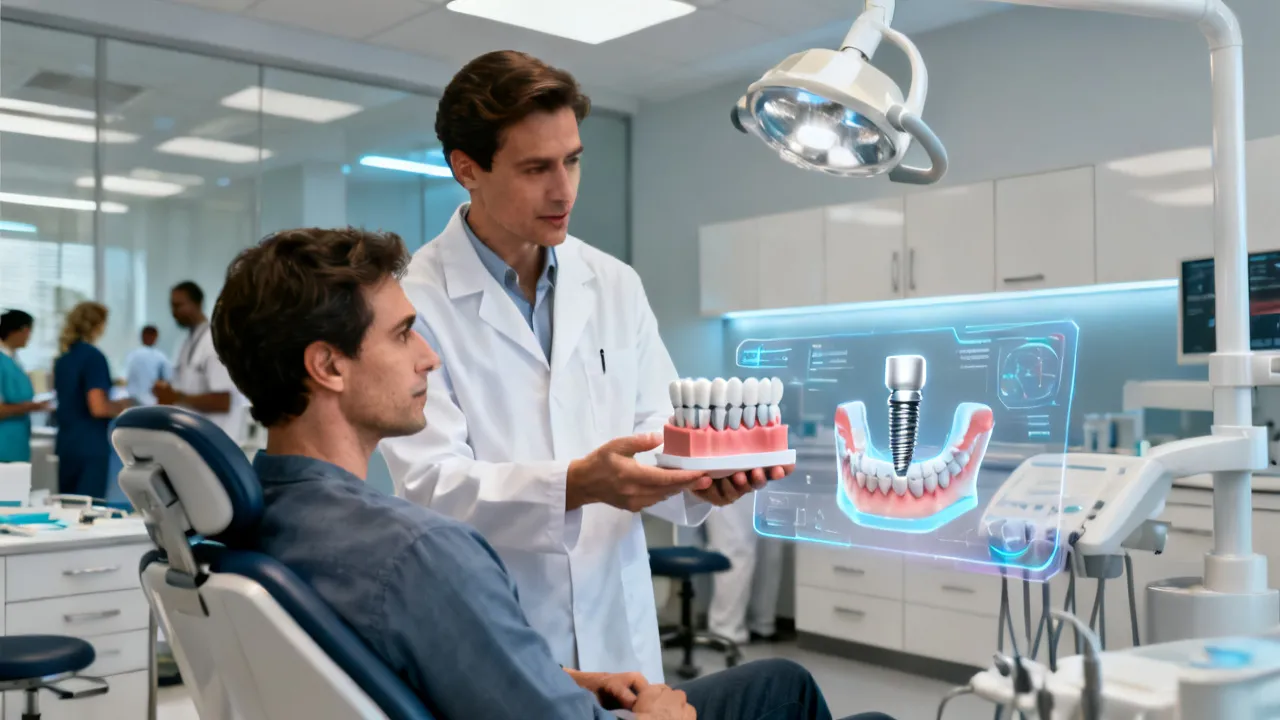
Affordable Dental Implants: The Essential Points
Dental implants can replace a missing tooth, support chewing, improve speech, and help restore a stable bite. They may also help preserve the shape of the jaw after tooth loss by transferring functional forces to the supporting bone. However, the lowest advertised price is not necessarily the lowest overall cost or the safest choice. An implant is a multi-stage treatment involving diagnosis, preparation, surgery, a restorative component, and continuing maintenance. A reliable comparison must therefore examine the complete treatment plan rather than one headline figure.
The term 구강 질환 means “oral disease” in Korean. It includes conditions affecting the teeth, gums, supporting bone, oral mucosa, and related structures. Tooth decay, periodontal disease, oral infections, and tooth loss often influence one another. Before implant surgery, active disease should be diagnosed and controlled because inflammation, inadequate hygiene, and insufficient bone can compromise healing and long-term stability. Replacing a tooth does not automatically resolve the disease that caused the tooth to be lost.
From an industry expert’s perspective, patients seeking affordable dental implants should prioritize five issues:
- A complete clinical examination: The dentist should assess the gums, remaining teeth, bite, bone volume, oral hygiene, medical history, and suitability for surgery.
- A transparent quotation: The written estimate should specify whether it includes imaging, extraction, bone grafting, the implant fixture, abutment, crown, temporary restoration, medication, and follow-up visits.
- Qualified clinical care: Patients should verify the professional’s licensing, surgical experience, infection-control standards, and access to appropriate diagnostic technology.
- A maintenance plan: Implants require brushing, interdental cleaning, professional reviews, and management of gum inflammation.
- A realistic financial comparison: Travel expenses, exchange rates, revision treatment, insurance limits, and time away from work may alter the apparent saving.
A lower-cost implant can be reasonable when it results from efficient clinic operations, transparent package pricing, competitive local fees, or insurance participation. It becomes a concern when the price excludes essential stages, relies on unclear materials, uses poorly documented components, or discourages patients from asking about complications and follow-up care. A patient should never feel pressured to choose a provider solely because an offer expires quickly.
What Is a Dental Implant?
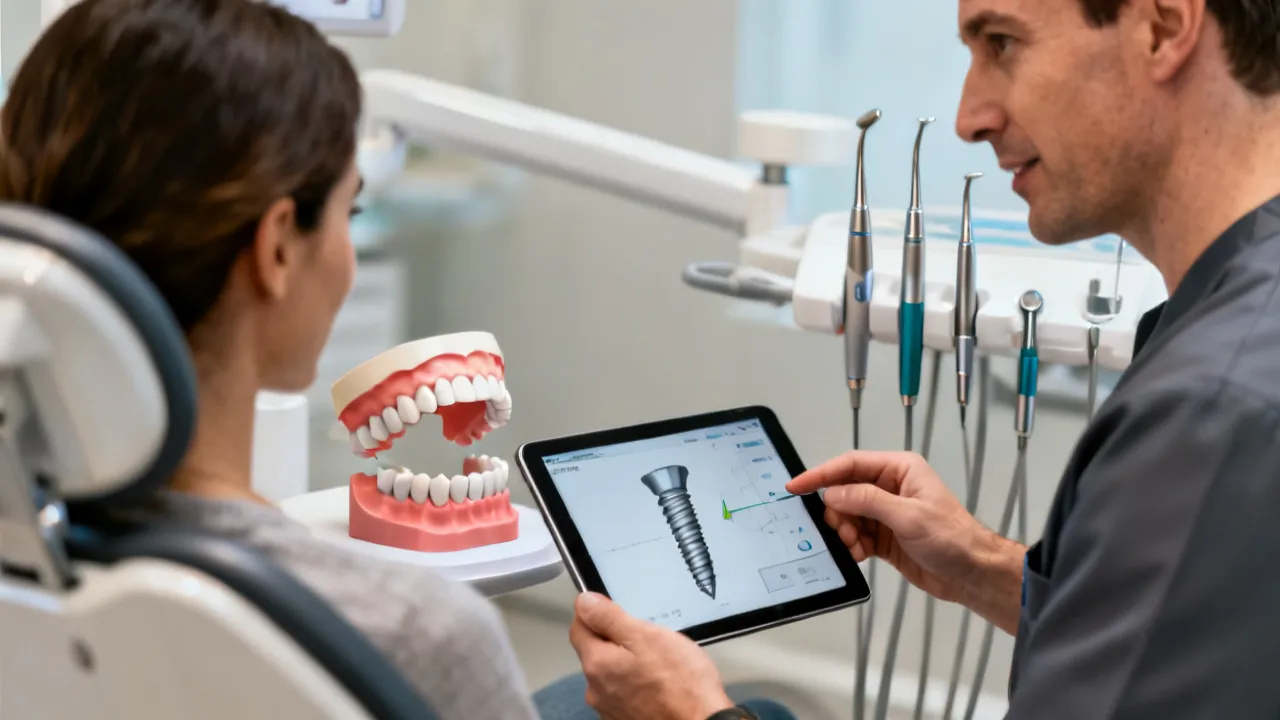
A conventional dental implant usually has three principal parts:
- Implant fixture: A biocompatible post, commonly made from titanium or a titanium alloy, placed in the jawbone.
- Abutment: A connector attached to the fixture after healing or, in selected protocols, during the same general treatment period.
- Crown: The visible tooth-shaped restoration fabricated to fit the patient’s bite, appearance, and functional requirements.
Some treatment plans also include a temporary tooth, extraction, bone grafting, sinus augmentation, guided surgery, laboratory fees, sedation, medication, gum treatment, or treatment of neighboring teeth. A quoted “implant price” may refer only to the fixture, while another clinic may quote the complete restored tooth. Comparing these figures without checking their scope can produce a misleading result.
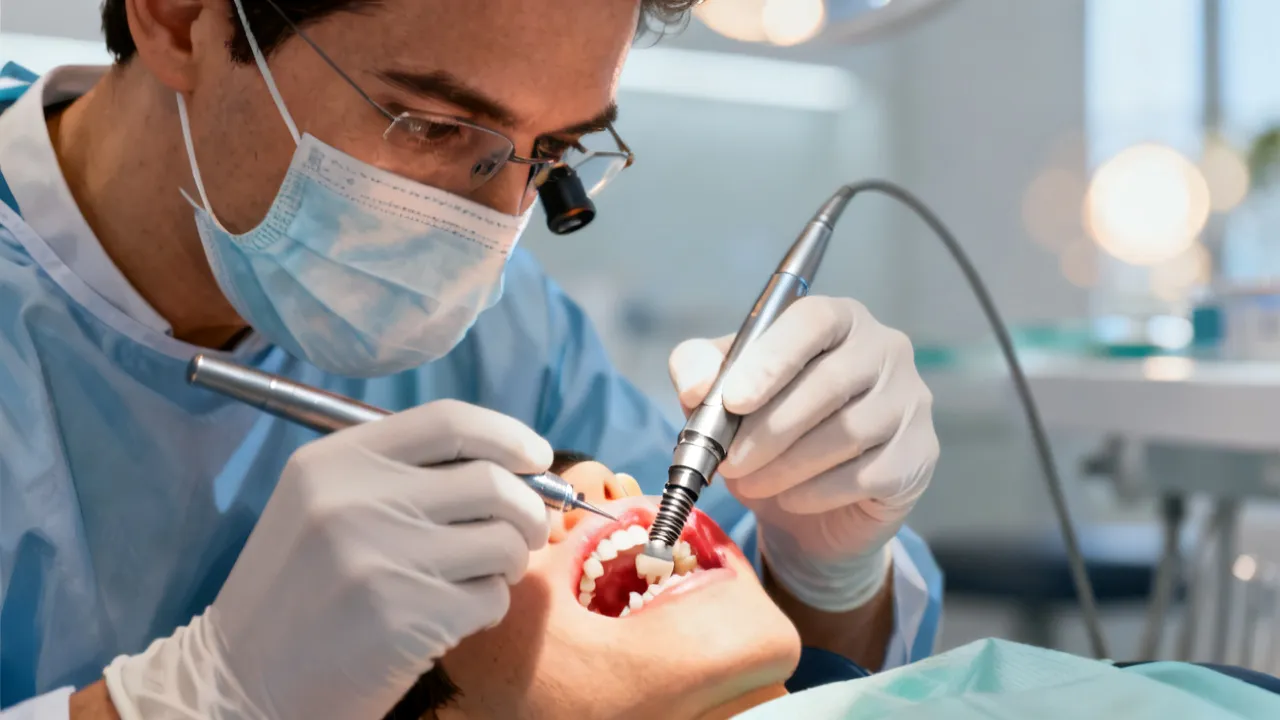
Implant treatment generally begins with a consultation and diagnostic imaging. The dentist then develops a plan based on bone anatomy, the location of the missing tooth, the condition of adjacent teeth, oral hygiene, the patient’s bite, and the patient’s medical history. If a tooth must be removed, the timing of implant placement varies. Some patients may be candidates for immediate placement, while others need a period of healing or additional bone treatment first.
Healing and integration with the bone can take several months, although timelines vary. During this period, the patient may use a temporary restoration. Once the implant is sufficiently stable, the abutment and crown are fitted. The final result depends not only on surgical placement but also on restorative design, bite control, hygiene, the quality of the laboratory work, and maintenance after treatment.
Implants can be used to replace one tooth, several teeth, or, in selected situations, to support a removable or fixed full-arch restoration. The number of implants needed does not always equal the number of missing teeth. A dentist may use a bridge supported by multiple implants rather than placing one fixture for every tooth. This can affect cost, surgery, cleaning requirements, and the final design.
How Oral Disease Affects Implant Eligibility
Oral disease should be treated as part of implant planning rather than as an unrelated issue. Untreated periodontal disease can cause inflammation and bone loss around natural teeth. Similar inflammation around an implant is known as peri-implant mucositis or peri-implantitis. These conditions require professional assessment and may lead to bleeding, swelling, discomfort, bone loss, or implant instability.
Common oral conditions relevant to implant treatment include:
| Condition | Why it matters before or after implant treatment |
|---|---|
| Tooth decay | Untreated decay in neighboring teeth can create infection and complicate the overall treatment plan. |
| Gum disease | Inflammation and bone loss may reduce implant support and increase the need for periodontal care. |
| Dental abscess | An active infection may require urgent treatment before elective implant surgery. |
| Insufficient bone volume | Bone grafting or another surgical approach may be considered after imaging and clinical evaluation. |
| Dry mouth | Reduced saliva can increase the risk of decay, discomfort, and oral infection, requiring preventive planning. |
| Oral mucosal lesions | Persistent or unusual lesions should be evaluated promptly and should not be ignored during implant planning. |
| Teeth grinding | Clenching or grinding can increase force on the implant and crown, requiring bite assessment and possible protection. |
Patients should report persistent sores, unexplained bleeding, facial swelling, numbness, difficulty swallowing, or a lump that does not resolve. These symptoms do not automatically indicate a serious condition, but they warrant timely examination. Implant consultation should not replace diagnosis of broader oral health problems.
Periodontal disease deserves particular attention because it can affect both the teeth that remain and the implant that is planned. A patient who has previously lost teeth because of gum disease may require more frequent maintenance visits than a patient with low periodontal risk. The clinician may also recommend improved brushing technique, professional cleaning, smoking cessation, or treatment by a periodontist before implant surgery.
How to Obtain Dental Implants at Lower Cost in English-Speaking Countries
Cost reduction should come from informed planning, not from omitting clinically necessary care. The following process can help patients compare options in the United States, the United Kingdom, Australia, and Canada.
1. Obtain a complete diagnosis first
Begin with an examination by a licensed dentist or appropriately qualified implant professional. Ask whether the assessment includes periodontal measurements, dental radiographs, and three-dimensional imaging when clinically justified. A scan is not automatically required for every case, but the clinician should explain why a particular imaging method is appropriate.
Patients should disclose medications, allergies, diabetes, osteoporosis treatment, smoking or vaping habits, previous radiation therapy, pregnancy, immune-related conditions, and any history of difficult healing. These factors do not necessarily exclude implant treatment, but they can affect timing, precautions, and monitoring. A patient should also mention previous reactions to anesthetics, antibiotics, or pain medicines.
Diagnosis should include an assessment of the proposed implant site and the teeth around it. A missing tooth may have caused neighboring teeth to tilt, the opposing tooth to over-erupt, or the bite to change. These factors can influence the available space and the design of the final crown. Treating the missing tooth without considering the whole bite may lead to an uncomfortable or difficult-to-clean restoration.
2. Treat active oral disease before surgery
Managing cavities, gum disease, abscesses, and poor oral hygiene may add an initial expense, but it can reduce the risk of avoidable complications. A cost comparison that ignores disease control is incomplete. In some cases, preserving a natural tooth may be more appropriate than extracting it and placing an implant.
Patients should ask whether a tooth can be restored with a filling, crown, root canal treatment, or periodontal treatment. Extraction may be appropriate when a tooth cannot be predictably repaired, but implants should not be presented as an automatic replacement for every painful or damaged tooth. A careful treatment plan compares the expected longevity, maintenance, risk, and total expense of each reasonable alternative.
3. Request an itemized treatment plan
Ask each clinic to identify every component in writing. The quotation should answer the following questions:
- Is the consultation included?
- Are two-dimensional or three-dimensional scans included?
- Does the price cover extraction if extraction is necessary?
- Is bone grafting included, or is it charged separately?
- Does the fee include the implant fixture, abutment, and permanent crown?
- Are temporary teeth, laboratory charges, sedation, medication, and follow-up visits included?
- What happens if the implant does not integrate with the bone?
- How are repairs, replacements, and adjustments handled?
- Does the quoted price include taxes or administrative charges?
- How long is the quotation valid?
A written plan makes quotations more comparable and reduces the chance of unexpected charges. Patients should be cautious about deposits that are difficult to recover or treatment contracts that do not explain cancellation and revision policies. If a clinic refuses to separate surgical, restorative, laboratory, and additional-procedure fees, the patient may have difficulty understanding the true financial commitment.
4. Compare several licensed clinics
Patients can contact general dental practices, specialist practices, university-affiliated clinics, and clinics that participate in dental insurance networks. Training clinics may offer lower fees under supervision, but patients should understand who performs each stage and who is responsible for the final result. The relevant regulatory body in the patient’s jurisdiction can help verify professional registration.
In the United States, patients can investigate state dental board registration and insurance network participation. In the United Kingdom, they can check registration with the General Dental Council. In Australia, registration is overseen through the Australian Health Practitioner Regulation Agency, and in Canada, dental regulation is handled by provincial or territorial bodies. Verification should be performed through official regulator websites rather than relying only on marketing claims.
Patients should also ask about the experience of the specific clinician who will perform the surgery. A clinic may advertise implants generally, but the person who evaluates the patient, places the fixture, and restores the tooth may be different professionals. This arrangement can be entirely appropriate when responsibilities are clear and communication is coordinated.
5. Examine dental insurance and payment plans
Dental insurance may cover portions of examinations, extractions, bone procedures, or restorations, but implant coverage varies considerably. Some plans impose waiting periods, annual maximums, missing-tooth clauses, exclusions, or requirements to use a participating provider. A patient should ask the insurer for a written pre-treatment estimate before authorizing major work.
Insurance may pay for an alternative treatment, such as a bridge or removable partial denture, even when it does not cover the implant itself. Patients should ask how the plan applies its “alternate benefit” rules and whether the insurer uses a fee schedule. The patient may still choose an implant, but knowing the expected benefit can make budgeting more accurate.
Clinic payment plans can spread costs over several months, but the patient should review interest, administration charges, cancellation rules, and the consequences of missed payments. A financing arrangement should not pressure a patient into treatment before receiving an independent diagnosis. The total amount repaid may be significantly higher than the advertised treatment price.
6. Consider teaching clinics carefully
Dental schools and university clinics may provide selected procedures at lower fees because care is delivered in an educational environment. Treatment usually takes longer, appointments may be less flexible, and acceptance criteria can be strict. Patients should ask whether a qualified supervisor reviews the treatment plan and whether the same clinic can provide follow-up care.
Teaching clinics may be especially useful for examinations, preventive care, periodontal treatment, or certain restorative procedures. Implant cases can be more selective because they require coordination between surgery and prosthodontics. A lower fee should be weighed against the longer schedule and the possibility that the clinic may not accept every case.
7. Compare treatment nearby before considering overseas care
Dental tourism can appear economical when treatment fees abroad are lower. However, the full calculation should include flights, accommodation, local transportation, companion costs, time away from work, travel insurance, exchange-rate changes, and the cost of managing complications after returning home.
Implant treatment often requires multiple visits. If a patient develops infection, a loose component, poor bite alignment, or a crown fracture after returning home, a local dentist may need to diagnose and repair the problem without being involved in the original treatment. The overseas provider’s warranty may also have conditions requiring additional travel. A local consultation is advisable before making a cross-border decision.
Patients should verify whether the clinic follows the infection-control requirements of its jurisdiction and whether the treating professionals are legally authorized to provide the advertised services. They should not assume that a modern website, luxury accommodation, or large number of online testimonials demonstrates clinical quality.
8. Select a clinically appropriate implant system
Patients should ask which implant system is being used and whether replacement components are reasonably accessible in the region where they live. A very low initial price may be less practical if future maintenance requires uncommon parts or travel to a particular provider. Brand familiarity alone does not determine treatment quality, but clear documentation supports continuity of care.
The patient should receive the implant brand, model, dimensions, and relevant documentation after placement. This information can be important if the crown needs repair or if another dentist must manage a complication. A clinic that is unwilling to provide basic treatment records may not be a suitable choice for long-term care.
9. Follow preventive care instructions
After restoration, patients should brush twice daily with fluoride toothpaste, clean between teeth or around the implant using suitable aids, attend professional examinations, and report bleeding or discomfort. Smoking cessation or reduction may be recommended because tobacco exposure can adversely affect oral healing and periodontal health. The dentist should tailor advice to the patient’s anatomy, dexterity, and risk profile.
Patients should not assume that an implant is maintenance-free. Although the implant itself cannot develop tooth decay in the same way as a natural tooth, plaque can cause inflammation in the surrounding tissues. The crown can also wear, chip, loosen, or fracture. Preventive care is usually less expensive and less disruptive than treating advanced complications.
Reference Price Ranges for One Dental Implant
The following figures are reference ranges supplied for an individual dental implant in selected English-speaking countries. They should not be interpreted as a universal quotation. The definition of “one implant” differs between sources: some figures may represent the implant procedure alone, while others may be closer to a restored tooth. Patients must confirm whether the crown, abutment, imaging, grafting, extraction, and aftercare are included.
| Country | Currency | Reference price range for one dental implant |
|---|---|---|
| United States (US) | USD | $3,000–$6,000 |
| United Kingdom (GB) | GBP | £2,000–£2,500 |
| Australia (AU) | AUD | AU$3,500–AU$6,500 |
| Canada (CA) | CAD | CA$3,000–CA$5,500 |
Source: The reference ranges provided for this article and the linked dental information resources listed below.
source: dentalviews.com/low-cost-dental-implants
source: atlanticdentalgrp.com
source: dentavacation.com
source: rockvilledentalarts.com/es
source: unioncityminidentalimplants.com/es
source: cigna.com/es-us/knowledge-center/guide-to-dental-implants
Price ranges are influenced by regional wages, rent, laboratory charges, the complexity of the case, the experience of the clinical team, the implant system, and the type of crown. A front tooth may require highly detailed shade and contour matching, while a back tooth may be designed primarily around chewing forces. Bone grafting, sedation, digital planning, and treatment of other teeth can increase the final price.
Comparing Dental Websites and Service Providers
Online dental resources serve different purposes. Some explain treatment and pricing, some operate as clinics, some promote dental travel, and others discuss insurance or provide dental plans. A website is useful as an initial information source, but it is not a substitute for an examination. Patients should distinguish educational content from a personalized recommendation.
| Website or provider | Primary features and points for comparison |
|---|---|
| Dental Views | Discusses lower-cost dental implants, treatment types, potential benefits, pricing considerations, the implant process, and common questions. Useful for building an initial list of questions before a consultation. |
| Atlantic Dental Group | Clinic-oriented information covering general dental services, cleaning, orthodontics, implants, emergency care, appointments, locations, and dental professionals. Patients should confirm the exact scope and fees for implant treatment. |
| DentaVacation | Dental tourism information, country comparisons, procedure options, travel planning, and treatment coordination. Patients should separately assess licensing, complication management, travel requirements, and continuity of care. |
| American Dental Health Plans | Information related to dental plans, coverage options, applications, and ways insurance may help manage dental expenses. Coverage terms should be confirmed directly with the insurer or plan administrator. |
| Rockville Dental Arts | Spanish-language clinic information describing services such as implants, whitening, cleaning, orthodontics, and emergency dentistry. Spanish-speaking patients may use the site to assess communication options and request a consultation. |
| Union City Mini Dental Implants | Spanish-language information focused on mini dental implants. Suitability depends on anatomy, the missing-tooth pattern, bite forces, and the clinician’s examination; mini implants are not appropriate for every case. |
| Cigna dental implant guide | Spanish-language educational material explaining general implant concepts and treatment considerations. Patients should review policy-specific benefits separately because educational information is not a coverage determination. |
| Rubi Odonto | Portuguese-language clinic information from Santo André, São Paulo, describing orthodontics, whitening, implants, and general dental care. Patients can ask about professional qualifications, technology, treatment stages, and maintenance. |
| Odontologia Velasco | Portuguese-language information from São Paulo concerning implants, prostheses, aesthetic dentistry, and the use of contemporary dental technology. A patient should request an itemized estimate and clarify laboratory and follow-up fees. |
| DentalVidas | Portuguese-language dental-plan information for individuals, families, and companies, including access to a provider network and emergency support. Patients should verify waiting periods, exclusions, annual limits, and implant benefits. |
source: dentalviews.com/low-cost-dental-implants
source: www.atlanticdentalgrp.com
source: www.dentavacation.com
source: rockvilledentalarts.com/es
source: unioncityminidentalimplants.com/es
source: www.cigna.com/es-us/knowledge-center/guide-to-dental-implants
source: www.rubiodonto.com.br
source: odontologiavelasco.com.br
source: dentalvidas.com.br
Spanish- and Portuguese-Speaking Options for Comparison
Although the main price table above focuses on English-speaking countries, patients may also research providers in Spanish- and Portuguese-speaking markets. Language access can make it easier to understand consent documents, postoperative instructions, medication directions, and financial terms. Language should complement, not replace, verification of clinical quality.
Spanish-speaking resources: Rockville Dental Arts presents information in Spanish for patients considering implants, tooth whitening, cleaning, orthodontics, and emergency dental services. Union City Mini Dental Implants focuses on mini implants and explains a treatment category that may be appropriate for selected patients with limited tooth loss. Cigna’s Spanish-language guide offers general educational material about implants and related treatment decisions.
Portuguese-speaking resources: Rubi Odonto, located in Santo André, São Paulo, describes services including orthodontics, whitening, and implants. Odontologia Velasco, based in São Paulo, discusses implants, prostheses, and aesthetic dentistry, including the use of contemporary technology. DentalVidas provides dental-plan information for individuals, families, and companies, with a network of dental professionals and emergency-related services described by the provider.
Patients considering care in another language should request translated consent forms where necessary and confirm who will explain risks, alternatives, medication, and follow-up. A bilingual appointment coordinator can help with logistics, but clinical communication should ultimately be clear between the patient and the treating dental team. Patients should be able to explain their medical history and describe symptoms without depending entirely on informal translation.
Additional Reference Price Ranges by Language Market
The following ranges are included as comparative background for the listed Spanish-, Portuguese-, German-, French-, Italian-, and Japanese-speaking markets. They are not currency conversions and should not be compared by number alone. Local purchasing power, materials, regulation, laboratory costs, and the scope of treatment can differ substantially.
| Country | Currency | Reference price range for one dental implant |
|---|---|---|
| Spain (ES) | EUR | €1,500–€2,500 |
| Chile (CL) | CLP | CLP$800,000–CLP$1,500,000 |
| Mexico (MX) | MXN | $15,000–$25,000 MXN |
| Colombia (CO) | COP | $2,000,000–$4,000,000 COP |
| Peru (PE) | PEN | S/ 3,000–S/ 6,000 |
| Argentina (AR) | ARS | $80,000–$150,000 ARS |
| Brazil (BR) | BRL | R$3,000–R$8,000 |
| Portugal (PT) | EUR | €1,000–€2,000 |
| Germany (DE) | EUR | €2,000–€3,500 |
| France (FR) | EUR | €1,500–€2,500 |
| Italy (IT) | EUR | €1,500–€3,000 |
| Japan (JP) | JPY | ¥300,000–¥700,000 |
Source: Reference ranges supplied for this article. Confirm current prices, inclusions, and local requirements directly with a licensed clinic and relevant insurer.
Conditions and Requirements Before Implant Surgery
There is no single checklist that guarantees eligibility. The dentist should evaluate each case individually. Nevertheless, several conditions commonly influence the decision.
Bone and gum assessment
The implant requires adequate bone support and healthy soft tissue. If bone volume is limited, the dentist may discuss grafting, a shorter or narrower implant, an alternative restoration, or another surgical approach. Gum disease must be assessed and treated because inflammation can undermine both natural teeth and implants.
Bone can shrink after a tooth is removed, especially when the tooth has been missing for a long time. The amount and location of bone loss vary. A clinician may discuss socket preservation after extraction, a later graft, or an implant design that avoids a particular anatomical structure. These choices should be based on imaging and not on a standard package offered to every patient.
Medical history and medications
Patients should provide a complete medication list. Blood-thinning medication, treatments affecting bone metabolism, poorly controlled diabetes, immune suppression, and certain cardiovascular conditions may require coordination with a physician. Patients should not stop prescribed medication without medical advice.
Good communication is especially important when several healthcare professionals are involved. The dentist may request medical clearance or advice about timing, but the patient’s physician must make decisions about systemic medicines. A patient should ask who is responsible for communicating with the physician and how urgent questions will be handled.
Smoking and nicotine exposure
Nicotine exposure can interfere with oral healing and is associated with increased oral-health risks. The dental team may recommend a cessation plan or a period of reduced exposure before and after surgery. The appropriate advice depends on the individual’s health and the procedure.
Smoking may also worsen gum inflammation and stain the restoration. Patients who cannot stop immediately should discuss realistic reduction and cessation support with the dental team rather than hiding their tobacco use. Accurate information allows the clinician to plan monitoring and discuss risks honestly.
Oral hygiene and recall care
A patient should demonstrate a practical ability to maintain the implant and surrounding teeth. A clinician may recommend a professional cleaning, an electric toothbrush, interdental brushes, floss alternatives, or a customized preventive schedule. Long-term maintenance is part of the treatment, not an optional extra.
Accessibility matters. For example, a person with limited hand mobility may need a water flosser, specialized interdental aids, or help from a dental hygienist. The best maintenance plan is one the patient can perform consistently. A clinic should explain how to clean under and around the crown without damaging the gum tissue.
Expectations and informed consent
Patients should understand that an implant does not behave exactly like a natural tooth. It can restore function effectively, but it may still develop mechanical or biological complications. The dentist should explain alternatives, including a conventional bridge, a removable partial denture, or, where appropriate, preserving the existing tooth.
Informed consent should cover expected benefits, possible discomfort, infection, bleeding, nerve-related symptoms, sinus-related concerns, implant failure, crown or screw problems, and the possibility of additional treatment. A patient should be given enough time to read the consent material and ask questions before surgery.
Mini Dental Implants Versus Conventional Implants
Mini dental implants have a smaller diameter and may be used in selected situations, including certain removable denture-stabilization cases. They are not automatically a lower-cost substitute for a conventional implant in every missing-tooth case. Suitability depends on bone anatomy, loading forces, restoration design, hygiene, and the clinician’s experience.
Patients should ask:
- What problem is the mini implant intended to solve?
- Will it support a single crown, a removable denture, or another restoration?
- What evidence and clinical experience support the proposed use?
- What are the alternatives and their complete costs?
- Are replacement components available nearby?
- What happens if the mini implant becomes loose or fails?
A responsible clinic should explain why a particular implant design is recommended instead of presenting a smaller device as universally better or simpler. Patients should also learn whether the proposed treatment is reversible and whether converting to another restoration would require additional surgery.
Dental Tourism: Financial and Clinical Risk Review
Dental tourism requires more than comparing procedure prices. A patient should investigate the clinic’s regulatory status, the treating dentist’s qualifications, implant-system documentation, sterilization protocols, emergency arrangements, and communication process. The patient should also identify a local dentist willing to provide postoperative assessment if problems occur.
Travel timing deserves particular attention. Surgery, suture removal, impressions, temporary restorations, and final crown placement may require separate visits. A short trip may be insufficient for complications or changes in the treatment plan. Air travel, strenuous activity, and dietary restrictions after surgery should be discussed with the treating team.
Patients should receive copies of radiographs, treatment notes, implant labels, lot numbers, prescriptions, and restoration specifications. These records can help a local dentist continue care. A vague warranty, verbal promises, or pressure to complete multiple procedures during one visit should prompt careful reconsideration.
Travel insurance may not cover complications resulting from elective dental care, and standard medical insurance may have limitations outside the patient’s home country. Patients should read exclusions carefully. They should also consider whether a companion is needed, whether postoperative pain could make travel difficult, and whether a return trip would be affordable if a laboratory remake or surgical revision became necessary.
How to Judge a Low-Cost Implant Advertisement
Marketing language can make a price look more comprehensive than it is. Before responding to an advertisement, check whether it states the treatment location, currency, duration of the promotion, clinical limitations, and items included. Phrases such as “starting from” generally indicate that the final fee may be higher after examination.
Useful questions include:
- Is the offer for one tooth or a complete arch?
- Does it include the crown and abutment?
- Are diagnostic images and laboratory work included?
- Does it apply only to patients with adequate bone?
- Are extraction and temporary teeth billed separately?
- Who performs the surgical and restorative stages?
- What follow-up is available if pain, swelling, or looseness occurs?
- Are the materials and implant system identified in the treatment contract?
- Is the advertised price limited to cash payments or a particular insurance arrangement?
Reviews may reveal communication and scheduling experiences, but they cannot establish whether a treatment plan is clinically suitable. Patients should consider reviews as one source of background information rather than proof of clinical outcomes. Before-and-after photographs can be useful for discussing the appearance of restorations, but they do not demonstrate that the same treatment will work for every patient.
Managing the Total Cost of Treatment
The total cost can be divided into several categories:
| Cost category | Examples |
|---|---|
| Diagnosis | Consultation, radiographs, three-dimensional imaging, photographs, and treatment planning. |
| Preparatory care | Gum treatment, fillings, extraction, infection management, or bone grafting. |
| Surgical stage | Implant fixture placement, anesthesia or sedation, surgical materials, and medication. |
| Restorative stage | Abutment, impressions or digital scanning, laboratory work, temporary restoration, and permanent crown. |
| Maintenance | Professional cleaning, examinations, adjustments, replacement of worn components, and management of oral disease. |
| Travel-related costs | Transport, accommodation, meals, companion expenses, currency conversion, and time away from work. |
Patients can improve value by consolidating appointments when clinically appropriate, using an insurance network, asking about staged payment, comparing equivalent treatment plans, and maintaining natural teeth where they can be predictably restored. Delaying necessary care, however, can allow infection or bone loss to progress and may increase later treatment needs.
Patients should budget for possible unexpected expenses even when the initial plan appears straightforward. A temporary crown may need adjustment, a graft may be recommended after imaging, or a crown may require additional laboratory work for appearance or fit. A contingency fund does not imply that complications are expected; it simply prevents a minor change from becoming a financial emergency.
It is also useful to compare the expected cost over several years. A cheap crown that requires frequent repairs may not provide better value than a more carefully designed restoration. Similarly, a low-cost clinic located several hours away may create repeated travel expenses for maintenance. Value includes durability, convenience, communication, and the availability of future care.
Questions to Ask During the Consultation
A consultation is an opportunity to evaluate the clinic as well as the proposed treatment. Consider asking the following:
- What caused the tooth loss, and how does that cause affect the proposed implant?
- Can the natural tooth be preserved?
- What oral diseases must be treated first?
- Which imaging studies are recommended, and why?
- Will bone grafting or gum treatment be necessary?
- Who will place the implant and who will make the crown?
- Which implant system and restorative materials will be used?
- What is the complete estimated cost?
- How many visits are expected?
- What symptoms require urgent contact after surgery?
- What is the clinic’s policy if the implant fails to integrate?
- How often will maintenance visits be required?
- Will I receive copies of my records and implant information?
- What alternatives are available, and why is the implant preferred?
An experienced professional should be willing to explain alternatives in understandable language and provide time for questions. A second opinion may be appropriate when the plan involves extraction of a restorable tooth, extensive grafting, multiple implants, or a substantial financial commitment.
Patients can bring a written list of medications, previous dental records, insurance information, and questions about their priorities. They should tell the dentist whether appearance, chewing, treatment speed, avoidance of surgery, or predictable budgeting is most important. This information helps the clinician explain trade-offs rather than recommending a plan based only on the advertised price.
Aftercare and Long-Term Oral Health
Postoperative instructions vary, but patients commonly receive guidance about oral hygiene, diet, physical activity, swelling, pain relief, and medication. The patient should follow the specific instructions provided by the treating clinician rather than relying on general online advice.
Contact the clinic promptly if pain worsens rather than improves, swelling becomes severe, fever develops, bleeding is difficult to control, numbness persists, or the implant or temporary restoration feels loose. Urgent symptoms should not be postponed because the treatment was obtained at a lower price or in another jurisdiction.
Long-term care includes regular dental examinations and professional cleaning. The dentist may inspect the gum tissue, bite, crown, screws, and surrounding bone. Patients should report bleeding during cleaning, bad taste, persistent odor, tenderness, or mobility. Early assessment can help identify problems before more extensive intervention is required.
Patients should avoid using an implant crown as a tool for opening packages or biting unusually hard objects. If clenching or grinding is present, the dentist may discuss a night guard or other strategy. The crown and implant should be cleaned as carefully as the natural teeth, including the areas where plaque can collect beneath or beside the restoration.
Frequently Asked Questions
Are low-cost dental implants safe?
They can be safe when the treatment is delivered by qualified professionals using an appropriate plan, documented materials, adequate diagnosis, and reliable follow-up. Price alone does not establish quality. The patient should compare the complete scope of care and verify regulatory credentials.
What is usually excluded from an advertised implant price?
Common exclusions include imaging, extraction, bone grafting, sinus procedures, gum treatment, temporary teeth, abutments, crowns, laboratory fees, sedation, medication, and later maintenance. The only dependable way to identify exclusions is to request an itemized written estimate.
Can dental insurance cover an implant?
Some plans cover selected components, while others exclude implants or impose waiting periods and annual limits. Coverage may also vary according to the reason for tooth loss and the participating provider. Request a written pre-treatment estimate from the insurer before treatment begins.
Are dental implants better than bridges?
Neither option is universally better. Implants may avoid preparation of adjacent teeth, while bridges can be suitable when anatomy, health, finances, or treatment preferences make them appropriate. A dentist should compare benefits, risks, maintenance, duration, and total cost for the individual case.
Are mini dental implants suitable for everyone?
No. Mini implants may be useful in selected situations but are not a universal replacement for conventional implants. Bone quality, restoration type, bite forces, and oral hygiene must be evaluated first.
How long does implant treatment take?
The timeline ranges from several weeks to many months. It depends on extraction, bone healing, grafting, implant integration, gum condition, laboratory production, and the selected surgical protocol.
Can a patient travel immediately after implant surgery?
Travel timing should be discussed directly with the treating dentist. The patient may need early review, and complications can occur during the healing period. International travel also creates practical challenges if urgent local care becomes necessary.
What records should a patient request?
Request copies of imaging, clinical notes, prescriptions, implant brand and model, lot information, abutment details, laboratory records, consent documents, and the maintenance plan. These records are especially important when treatment is performed away from the patient’s usual dental practice.
Does replacing a missing tooth cure oral disease?
No. An implant replaces a missing tooth but does not cure cavities, gum disease, oral infections, or other forms of 구강 질환. These conditions require their own diagnosis and treatment plan.
When should a patient seek a second opinion?
A second opinion can be useful when the diagnosis is uncertain, the proposed treatment is extensive, the price is substantially different from comparable quotations, the plan involves removal of a potentially restorable tooth, or the patient feels pressured to proceed quickly.
Is the cheapest quotation usually the best choice?
No. The best value is the quotation that accurately describes suitable care, uses documented components, provides competent surgery and restoration, and includes a realistic plan for follow-up. A very low fee can be appropriate, but it must be understood in context.
Can an implant fail after it has healed?
Problems can occur during healing or later. Biological inflammation, bone loss, excessive biting forces, poor hygiene, smoking, and mechanical damage may contribute. Regular reviews and early reporting of symptoms can improve the chance of effective management.
Conclusion
Affordable dental implants should be evaluated through the lens of complete care, not an isolated promotional figure. Diagnosis, control of 구강 질환, professional qualifications, implant-system documentation, restorative quality, aftercare, and financial clarity all contribute to value. Patients in English-speaking countries can compare licensed clinics, insurance plans, university settings, and carefully assessed travel options, but each quotation must be standardized before it is compared with another.
The most practical next step is to obtain a clinical examination and two or more itemized treatment plans. Confirm what is included, ask how complications are managed, and consider whether preserving the natural tooth or selecting another restoration would be more suitable. An informed decision can reduce unnecessary expense while protecting oral function and long-term health.
Patients should remember that affordability has more than one meaning. It may involve reducing the initial fee, using insurance, choosing staged care, receiving treatment at a teaching clinic, or selecting a restoration that provides appropriate function without unnecessary procedures. It also involves avoiding preventable revision treatment. A clear diagnosis and honest communication are therefore central to both safety and cost control.
References and Links
- Dental Views – Low Cost Dental Implants
- Atlantic Dental Group
- DentaVacation
- Rockville Dental Arts, Spanish-language site
- Union City Mini Dental Implants, Spanish-language site
- Cigna Spanish Dental Implant Guide
- Rubi Odonto
- Odontologia Velasco
- DentalVidas
Disclaimer
1. The information above comes from online resources, and the data is as of October 2023.
2. Dental implant prices are for reference only and may vary by region, clinic, doctor, treatment complexity, materials, insurance terms, and the services included in the quotation. This article is educational information and does not replace an examination, diagnosis, or individualized advice from a qualified dental professional.